


From Lab to Plant: How Citric Acid Manufacturer Capabilities Impact Scale-Up Success in Pharmaceutical Excipient Production
Scale-Up Isn’t Just Bigger Equipment — It’s a Manufacturer Capability Test
If you’re managing a pharmaceutical excipient scale-up project — especially one where citric acid serves as a pH adjuster, chelating agent, or co-processed functional excipient — your biggest bottleneck isn’t chemistry. It’s the gap between what works in a 500 mL bioreactor and what delivers consistent, compliant batches at 10,000 L. That gap doesn’t close with engineering alone. It closes only when your citric acid manufacturer operates as an extension of your process development team — not just a supplier of bags.
Project managers often underestimate how deeply manufacturing capability affects downstream performance: crystallization kinetics shift; residual moisture profiles change; trace metal impurities that were negligible in lab-grade material become critical in final dosage forms; even subtle variations in particle size distribution impact blend uniformity and tablet disintegration. These aren’t theoretical concerns — they’re root causes behind delayed tech transfers, failed validation runs, and costly rework during commercial launch.
What “Capability” Really Means for Citric Acid — Beyond Purity Specs
Purity (e.g., ≥99.5% USP/EP grade) is table stakes. What separates a commodity supplier from a true scale-up partner lies in three operational dimensions:
- Process continuity: Can the same crystallization, drying, and milling conditions used in pilot production be replicated — without modification — across multiple production lines and annual volumes? Or does each batch require recalibration?
- Regulatory embeddedness: Is quality assurance built into the process (e.g., real-time NIR monitoring of hydrate content), or bolted on post-production via lab testing? Does the manufacturer maintain full traceability back to fermentation strain, carbon source, and purification cycle — not just COA data?
- Infrastructure flexibility: Can they accommodate staggered delivery windows for phased facility commissioning? Adjust packaging formats (e.g., from 25 kg lined bags to 500 kg super sacks with nitrogen purge) without lead-time penalties? Support dual-sourcing protocols with identical specifications — not just “equivalent” ones?
These aren’t nice-to-haves. They’re the difference between validating a single batch in Q2 and scrambling through three failed attempts while GMP inspection looms.
Why Lab-to-Plant Handoff Fails — And Where It’s Most Vulnerable
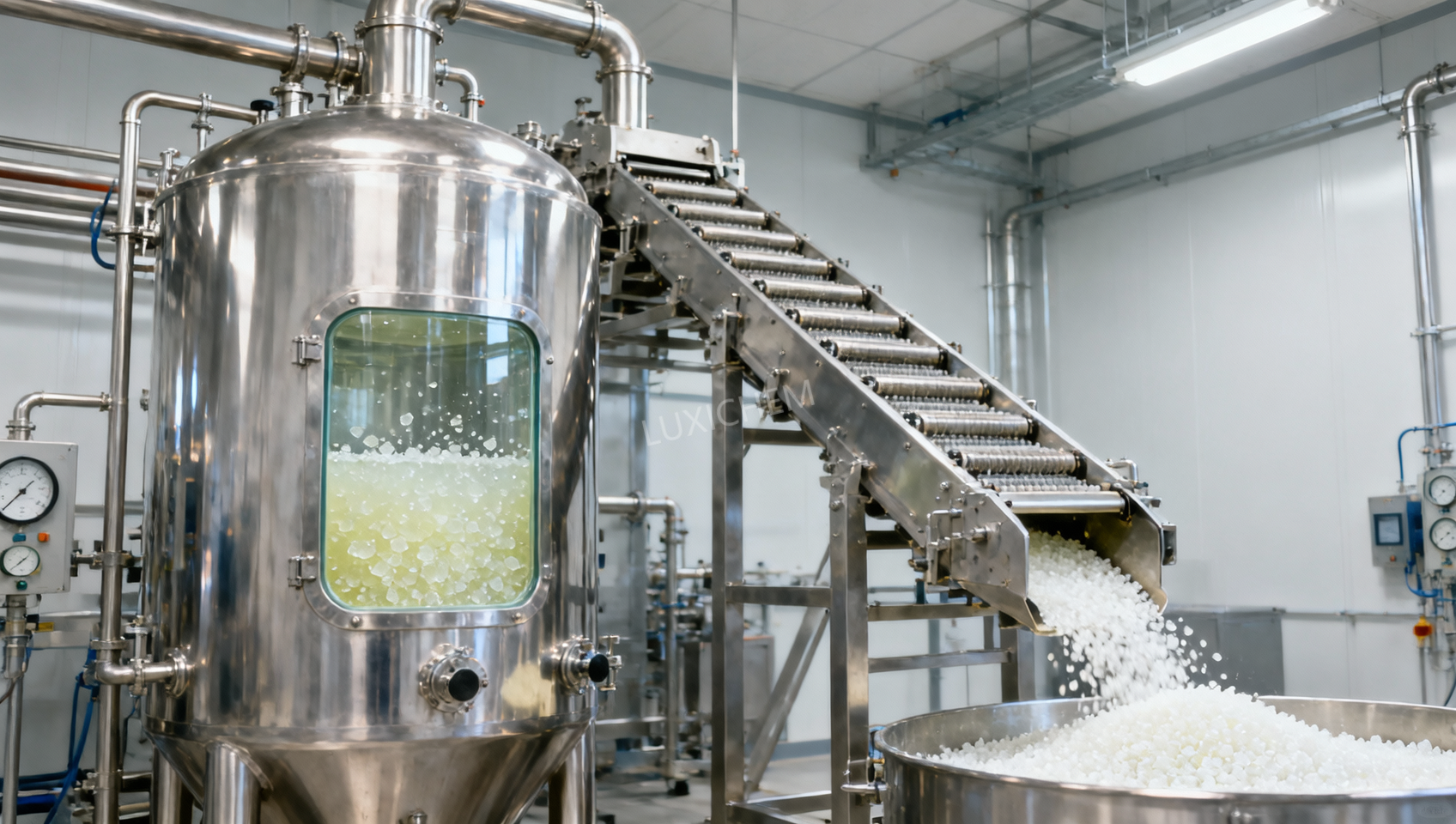
The most common failure point isn’t in synthesis — it’s in downstream processing. Citric acid monohydrate is hygroscopic. In lab-scale vacuum drying, moisture removal is predictable. At plant scale, airflow dynamics, bed depth, and heat transfer gradients create localized over-drying or residual hydration pockets. If your citric acid manufacturer lacks in-line moisture mapping and adaptive drying control, your final product may pass assay but fail flowability specs — derailing capsule fill rates or causing segregation in high-potency blends.
Another silent risk: microbial load consistency. Lab batches are sterile-filtered or autoclaved. Commercial batches rely on validated sterilization-in-place (SIP) cycles and cleanroom-grade packaging. A manufacturer without ISO 13485-aligned environmental monitoring or terminal sterilization validation can introduce variability no QC test catches until stability studies reveal unexpected degradation.
Luxi Chemical: Designed for Predictable Scale-Up — Not Just Volume
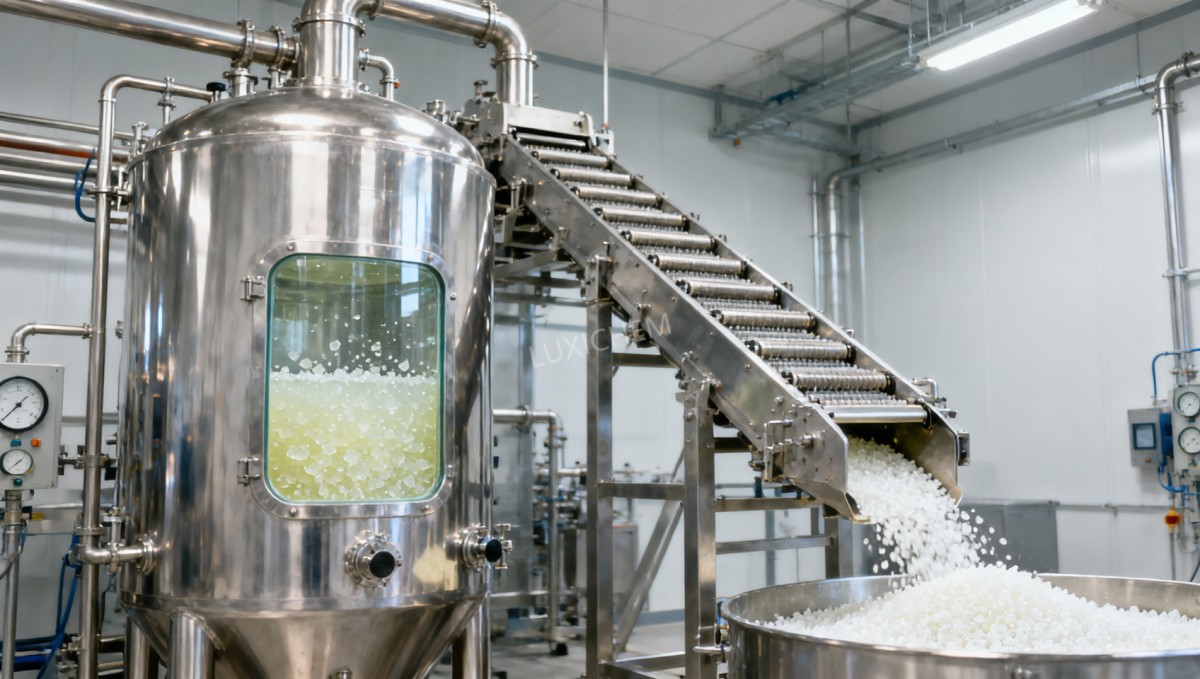
Luxi Chemical (Shandong) Co., Ltd. operates as a vertically integrated citric acid producer — from proprietary Aspergillus niger strain management through continuous crystallization and GMP-aligned packaging. Their infrastructure reflects scale-up reality, not just capacity:
- Integrated R&D-to-Production Workflow: Pilot plant data (e.g., seed crystal size distribution, mother liquor composition) directly inform commercial dryer setpoints and centrifuge residence time — eliminating empirical “scaling factors.”
- Batch Consistency Anchored in Fermentation Control: Real-time dissolved oxygen and pH profiling during fermentation ensure reproducible organic acid profile — minimizing diacetyl or oxalic acid byproducts that affect chelation efficiency in parenteral formulations.
- Flexible Packaging & Logistics Alignment: Options include nitrogen-flushed HDPE drums for moisture-sensitive applications, USP-grade double-bagged 25 kg containers for cleanroom use, and bulk pneumatic discharge for direct charging into fluid bed dryers — all with documented particulate and endotoxin controls.
This isn’t about having more reactors. It’s about having the right feedback loops — where analytical data from commercial lots informs upstream process adjustments, not just batch release decisions.
When You Should Look Beyond Citric Acid — And Why Lithium Hydroxide Matters Too
While citric acid dominates excipient applications, some advanced formulation platforms require complementary pH modifiers — particularly where strong alkalinity is needed for controlled ester hydrolysis or CO2 scrubbing in closed-system manufacturing environments. In those cases, material stability, solubility predictability, and compatibility with stainless steel or Hastelloy equipment become critical.
For example, in pressurized water reactor coolant systems or spacecraft life-support modules, precise CO2 absorption relies on consistent reactivity — which demands tightly controlled crystalline form, moisture content, and particle morphology. Lithium hydroxide CAS#1310-65-2 is available in both anhydrous and monohydrate forms, each with distinct solubility and thermal stability profiles — enabling engineers to select based on operating temperature, hydration sensitivity, and required reaction kinetics.
Practical Steps for Project Managers — Before You Finalize Your Supplier
Don’t wait until tech transfer starts. Ask these questions early — and verify answers with evidence, not statements:
- “Show me your last three commercial batches’ full traceability records — including fermentation run logs, crystallizer parameters, and final drying curves.” Look for consistency in key variables (e.g., cooling rate ±0.5°C/min, final bed temperature ±2°C). Wild swings signal process drift.
- “How do you handle deviations in raw carbon source (e.g., molasses vs. glucose syrup)?” A robust process adapts without reformulation. A fragile one triggers specification renegotiation.
- “Can you supply reference standards from your own production line — not third-party certified material?” This confirms their ability to characterize their own output meaningfully.
- “What’s your longest lead time for emergency replacement batches — and under what conditions does it apply?” If it’s >6 weeks, factor in buffer stock — but know that extended storage increases moisture uptake risk.
Remember: Your citric acid manufacturer isn’t just delivering a chemical. They’re delivering part of your process control strategy. Choose based on how much uncertainty they remove — not how many certifications they list.
Final Thought: Scale-Up Success Is Measured in Time Saved, Not Tonnes Shipped
A reliable citric acid manufacturer doesn’t make scale-up easy — it makes it predictable. When crystallization behavior, residual solvent profiles, and microbial limits hold across batches and scales, your team spends less time troubleshooting and more time optimizing formulation performance. That predictability accelerates not just first-batch success, but long-term supply resilience — especially when regulatory audits, seasonal demand spikes, or global logistics disruptions test your continuity plan.
For project managers, the question isn’t “Can they supply citric acid?” It’s “Can they supply the *same* citric acid — reliably, traceably, and in sync with your process timeline — every single time?” That’s the capability no spec sheet captures. But it’s the one that determines whether your next launch hits the market — or misses it.
Related Picks
 Butylated Hydroxytoluene Price Drivers: Supply, Purity, and Purchasing Risk FactorsOct 21, 2026Butylated Hydroxytoluene price trends depend on supply stability, purity, logistics, and purchasing risk. Learn how to compare quotes wisely and reduce sourcing costs.
 Sodium Tripolyphosphate Price Trends: Raw Material and Energy ExposureOct 20, 2026Explore sodium tripolyphosphate price trends, from phosphate and soda ash costs to energy exposure. Learn how to compare quotes, manage sourcing risks, and make smarter purchasing decisions.
 Acetonitrile Shipment to Vietnam Successfully Dispatched; RCEP Benefits Boost Fine Chemical Trade with ASEANSep 16, 2026A shipment of industrial-grade acetonitrile from our company has recently been loaded and dispatched following the completion of standardized hazardous material packaging and container securing procedures.
 Nigerian Client’s Order of 4 Containers of Vinyl Acetate Successfully Loaded and Shipped to West AfricaSep 16, 2026We recently completed the loading of a vinyl acetate order for a Nigerian client; four containers of the product have been successfully packed and are ready for shipment to Nigeria.




Question Consultation
Send Us Your Inquiry Today

Luxi Chemical is a professional chemical product supplier with ample stock of all chemical categories and excellent quality, welcome your purchase inquiry.

