


Butylated Hydroxytoluene Price Drivers: Supply, Purity, and Purchasing Risk Factors
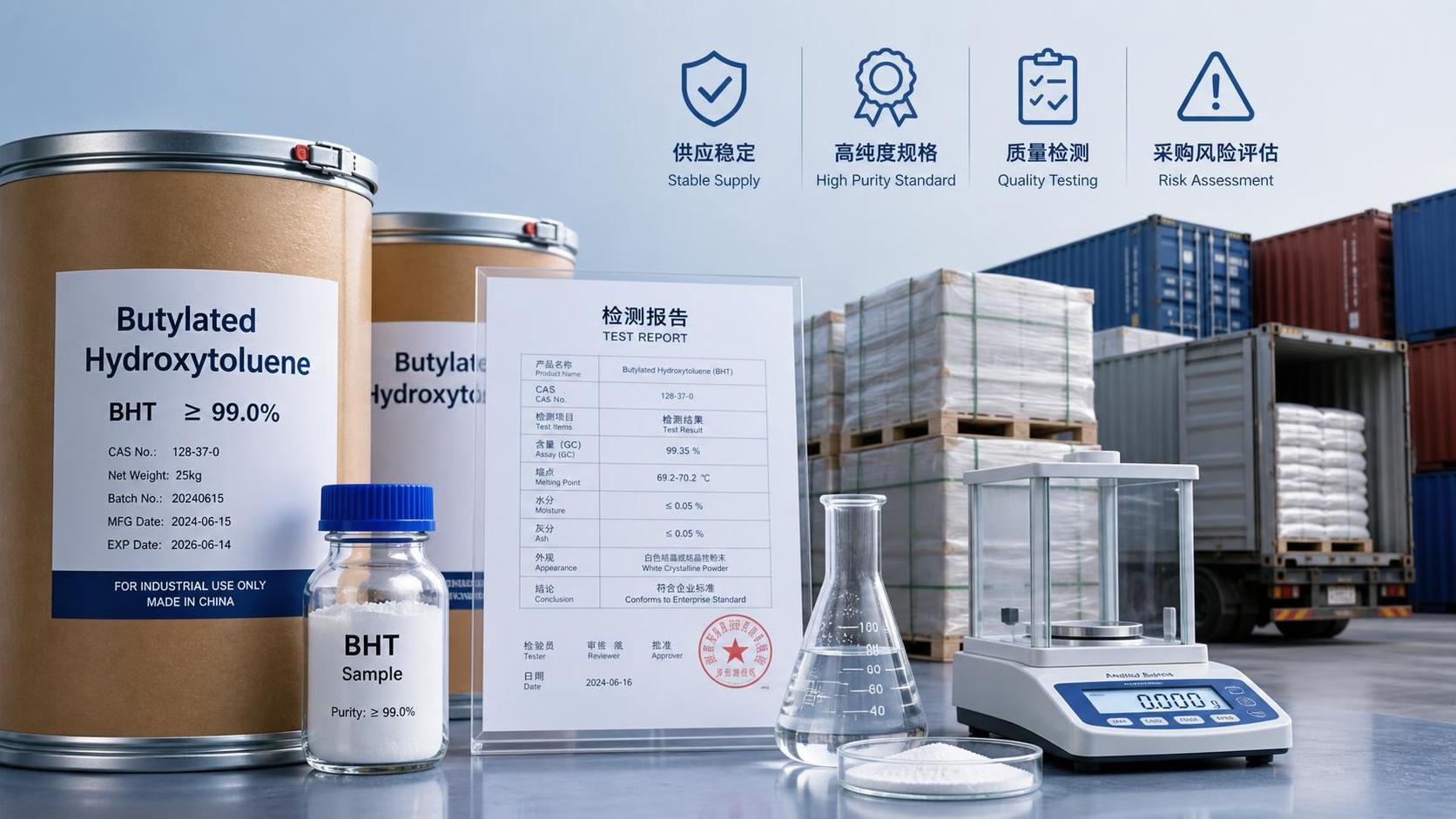
Butylated Hydroxytoluene Price Drivers: Supply, Purity, and Purchasing Risk Factors
If you are evaluating Butylated Hydroxytoluene for sourcing or budget planning, market quotes alone will not tell you enough. Price movement is usually tied to a small group of practical factors: how stable upstream supply is, what purity level your application actually requires, how the material is packaged and shipped, and how much purchasing risk sits behind the offer. For business evaluators, the real question is not “What is the current price?” but “What price level is commercially reasonable for the grade, supplier, and risk profile I am accepting?”
That distinction matters because two offers for the same product name can lead to very different total costs once documentation, consistency, lead time, and claim handling are taken into account. In the chemical trade, a low unit price can quickly become an expensive buying decision if the supply chain is weak or the specification is not aligned with end use.
Why Butylated Hydroxytoluene prices rarely move for just one reason
Many buyers assume Butylated Hydroxytoluene pricing rises or falls mainly because of raw material cost. That is only part of the picture. In practice, the market is shaped by a combination of upstream feedstock pressure, plant operating rates, export conditions, quality expectations, and buyer behavior.
A short answer is this: Butylated Hydroxytoluene prices tend to strengthen when supply tightens, higher purity or tighter quality control is required, and buyers place urgent or small-volume orders through less efficient channels. Prices tend to be more manageable when specifications are clear, procurement is planned in advance, and suppliers can offer stable production and export support.
For business evaluation work, this means the right comparison is not quote versus quote. It is specification-adjusted quote versus risk-adjusted quote.
Supply conditions: the first driver buyers usually underestimate
In antioxidant markets, supply stability often matters more than headline price. If a producer has consistent operating rates, reliable access to upstream raw materials, and established export experience, its quote may look slightly higher at first glance, but the commercial outcome is often better. That is especially true when your internal teams are measuring supplier performance across months rather than across one purchase order.
Butylated Hydroxytoluene can be affected by common chemical-market disruptions: maintenance shutdowns, utility constraints, environmental inspections, freight volatility, and regional export congestion. None of these are unusual in themselves. The problem begins when buyers treat them as temporary noise and do not build them into sourcing decisions.
In actual procurement reviews, one recurring issue is overreliance on a single low-cost source. This works until availability tightens. Then the buyer is forced into spot purchasing at a worse price, often with less time for document checks or sample evaluation. From a business perspective, that is not a pricing issue alone; it is a continuity risk.
That is one reason many global buyers prefer working with suppliers that can support broader procurement planning instead of only shipping one isolated item. Luxi Chemical (Shandong) Co., Ltd., for example, operates as a comprehensive chemical enterprise covering chemical raw materials, chemical products, and import/export trade, with product categories spanning food additives, organic intermediates, and fertilizers. For evaluators, that kind of portfolio breadth can matter because one-stop procurement often reduces coordination cost, lead-time uncertainty, and fragmented supplier management.
[图片占位符1:采购团队评估Butylated Hydroxytoluene供应稳定性、规格文件与国际物流方案的会议场景,alt="business evaluation of Butylated Hydroxytoluene supply and purchasing risk"]
Purity and specification: where price comparisons often go wrong
A common mistake is to compare Butylated Hydroxytoluene offers without checking what is actually being promised. Purity level, test methods, appearance requirements, impurity limits, packaging format, and supporting documents can all influence price. If one supplier is quoting a tighter specification and another is quoting a broader one, the numbers are not directly comparable.
This matters even more when the product is intended for regulated or quality-sensitive applications. A buyer serving food processing, daily chemicals, or export-oriented manufacturing may need stronger document support and more consistent batch performance than a buyer using the same material in a less demanding application. The lower quote may still be the wrong quote if it increases the chance of internal rejection, customer complaint, or delayed customs clearance.
Experienced evaluators usually ask three quiet but important questions before judging price competitiveness:
- Is the quoted material aligned with the actual application requirement, or is the business paying for unnecessary specification?
- Are the certificate set, compliance documents, and batch traceability adequate for the destination market?
- Is the sample quality representative of normal supply, or only of a best-case batch?
These questions save more money than aggressive price negotiation in many cases.
Channel structure affects price more than many non-technical teams expect
Where the product comes from also changes the cost structure. Direct producer purchases, trader offers, distributor stock, and mixed-container export shipments all create different pricing logic. A trader may be competitive when demand is urgent or order volume is small. A producer may be stronger when annual usage is stable and documentation requirements are clear. A distributor may offer speed, but that speed often carries a premium.
For business evaluators, the issue is not whether one channel is always better. The issue is whether the channel matches the purchase scenario.
If your company buys Butylated Hydroxytoluene only occasionally, paying a little more for local availability may be rational. If your company has repeat consumption and predictable demand, a longer-term supply arrangement often produces a better landed-cost result. This is where companies with broad export and product-handling experience can help by consolidating multiple procurement needs under one supplier relationship, rather than making the buyer manage several small-risk points separately.
That same logic is often useful beyond a single antioxidant purchase. For example, when a buyer is already reviewing adjacent categories such as botanical or specialty ingredients, a reference item like Silybin CAS#22888-70-6 may simply serve as a marker of how broad and organized a supplier’s portfolio is, not as a substitute product. For evaluators, portfolio visibility can be part of supplier due diligence.
The hidden cost is purchasing risk
Some of the most expensive Butylated Hydroxytoluene purchases do not look expensive on the quotation sheet. They become expensive later.
Typical risk factors include inconsistent batches, incomplete export paperwork, long response times during claims, unclear Incoterms, and weak packaging protection for long-distance transport. None of these issues is theoretical. They directly affect acceptance rates, production scheduling, and internal handling cost.
There is also a timing risk. When buyers enter the market only after inventory pressure appears, they lose negotiating room. At that point, even a fair supplier may not be able to offer the same lead time or commercial flexibility as during a normal planning cycle. Urgency almost always makes Butylated Hydroxytoluene more expensive in practical terms, whether through unit price, expedited freight, or lower tolerance for supplier screening.
Another overlooked point is claim economics. If a cargo problem occurs, the practical value of a supplier depends on response speed, replacement capability, and document discipline. A low-cost order from a seller with weak after-sales handling can create losses well beyond the initial material value.
What business evaluators should watch in the current market
Market trend analysis for Butylated Hydroxytoluene should stay grounded. Without verified real-time data, it is risky to make hard claims about price direction. What can be said with confidence is that buyers should watch a set of indicators rather than any single quote trend:
- Upstream raw material and energy cost pressure
- Producer operating stability and maintenance schedules
- Export freight and port efficiency
- Regional compliance expectations for the target market
- Changes in order behavior, especially panic buying or delayed replenishment
When several of these indicators tighten at the same time, offers can firm quickly even if end-user demand has not dramatically changed. When logistics ease and production normalizes, the market often becomes more negotiable, especially for planned-volume buyers.
This is also where internal alignment matters. Procurement, quality, and commercial teams do not always define “best price” the same way. The procurement team may focus on purchase cost, quality may focus on conformance risk, and finance may focus on working capital or supplier reliability. A useful business evaluation brings those three views together before supplier selection is finalized.
How to judge whether a quote is actually competitive
A practical evaluation framework is better than chasing an ideal market number that may not even reflect your buying reality. When reviewing Butylated Hydroxytoluene quotations, compare them across five dimensions:
- Specification fit: the grade should match application needs without paying for unnecessary tightness.
- Supply continuity: check whether the supplier can support repeated orders, not just one shipment.
- Documentation and compliance: especially important for regulated or export-facing uses.
- Landed cost: include packaging, freight, payment terms, and claim exposure.
- Response quality: speed and clarity during sampling, document review, and negotiation usually predict post-order performance.
Buyers who use this approach usually make steadier decisions than those who anchor too strongly on the first low quote they receive.
There is also value in asking what should not be optimized. If your application is sensitive and customer-facing, this may not be the category where you want to push every supplier to the pricing floor. The short-term savings can be offset by a single quality incident.
Final view on Butylated Hydroxytoluene pricing
Butylated Hydroxytoluene price movement is best understood as a mix of supply conditions, purity expectations, channel structure, and purchasing risk. That is why two offers that look similar in a spreadsheet can carry very different business value. For a business evaluator, the better decision is usually the one that balances reasonable price with stable supply, clear specification, and manageable execution risk.
If you are comparing suppliers now, confirm the specification first, then review documentation depth, shipment capability, and claim handling before treating any quote as truly competitive. In the Butylated Hydroxytoluene market, disciplined purchasing often protects margin more effectively than aggressive bargaining alone.
FAQ
Is the lowest Butylated Hydroxytoluene quote usually the best buying option?
No. It may be the lowest entry price, but not the lowest total cost once quality consistency, lead time, documentation, and claim risk are considered.
Does higher purity always justify a higher price?
Only if your application truly requires it. Paying for tighter specification without a real use-case need adds cost without improving purchasing efficiency.
What is the biggest mistake in evaluating this market?
Comparing offers by product name alone. The meaningful comparison is grade, documents, supply stability, and landed cost together.
Should business evaluators prefer producers over traders?
Not automatically. Producers may suit stable volume programs, while traders can be useful for urgent or smaller orders. The right choice depends on purchase frequency and risk tolerance.
Image Placeholder List
- 图片占位符1:Recommended near the section on supply conditions and procurement review; content shows a team assessing supplier documents, logistics, and Butylated Hydroxytoluene sourcing risk; alt="business evaluation of Butylated Hydroxytoluene supply and purchasing risk"
Internal Link Anchor Text Suggestions
- Butylated Hydroxytoluene sourcing checklist: procurement guide or supplier selection page
- Food additive compliance documentation: compliance or certification topic page
- Chemical import and export trade services: service introduction page
- Organic intermediates product portfolio: category overview page
- Silybin CAS#22888-70-6: product detail page
External Authority Source Suggestions
- Government regulatory agency pages covering food additive or chemical compliance requirements
- Industry association reports on antioxidant markets, chemical logistics, or raw material trends
- Official technical documentation from established manufacturers or recognized testing bodies
Related Picks
 Butylated Hydroxytoluene Price Drivers: Supply, Purity, and Purchasing Risk FactorsOct 21, 2026Butylated Hydroxytoluene price trends depend on supply stability, purity, logistics, and purchasing risk. Learn how to compare quotes wisely and reduce sourcing costs.
 Sodium Tripolyphosphate Price Trends: Raw Material and Energy ExposureOct 20, 2026Explore sodium tripolyphosphate price trends, from phosphate and soda ash costs to energy exposure. Learn how to compare quotes, manage sourcing risks, and make smarter purchasing decisions.
 Acetonitrile Shipment to Vietnam Successfully Dispatched; RCEP Benefits Boost Fine Chemical Trade with ASEANSep 16, 2026A shipment of industrial-grade acetonitrile from our company has recently been loaded and dispatched following the completion of standardized hazardous material packaging and container securing procedures.
 Nigerian Client’s Order of 4 Containers of Vinyl Acetate Successfully Loaded and Shipped to West AfricaSep 16, 2026We recently completed the loading of a vinyl acetate order for a Nigerian client; four containers of the product have been successfully packed and are ready for shipment to Nigeria.



Question Consultation
Send Us Your Inquiry Today

Luxi Chemical is a professional chemical product supplier with ample stock of all chemical categories and excellent quality, welcome your purchase inquiry.

