


How Organic Intermediates Enable Custom Synthesis of Agrochemicals — From Lab Scale to Pilot Batch Production
2026.09.11
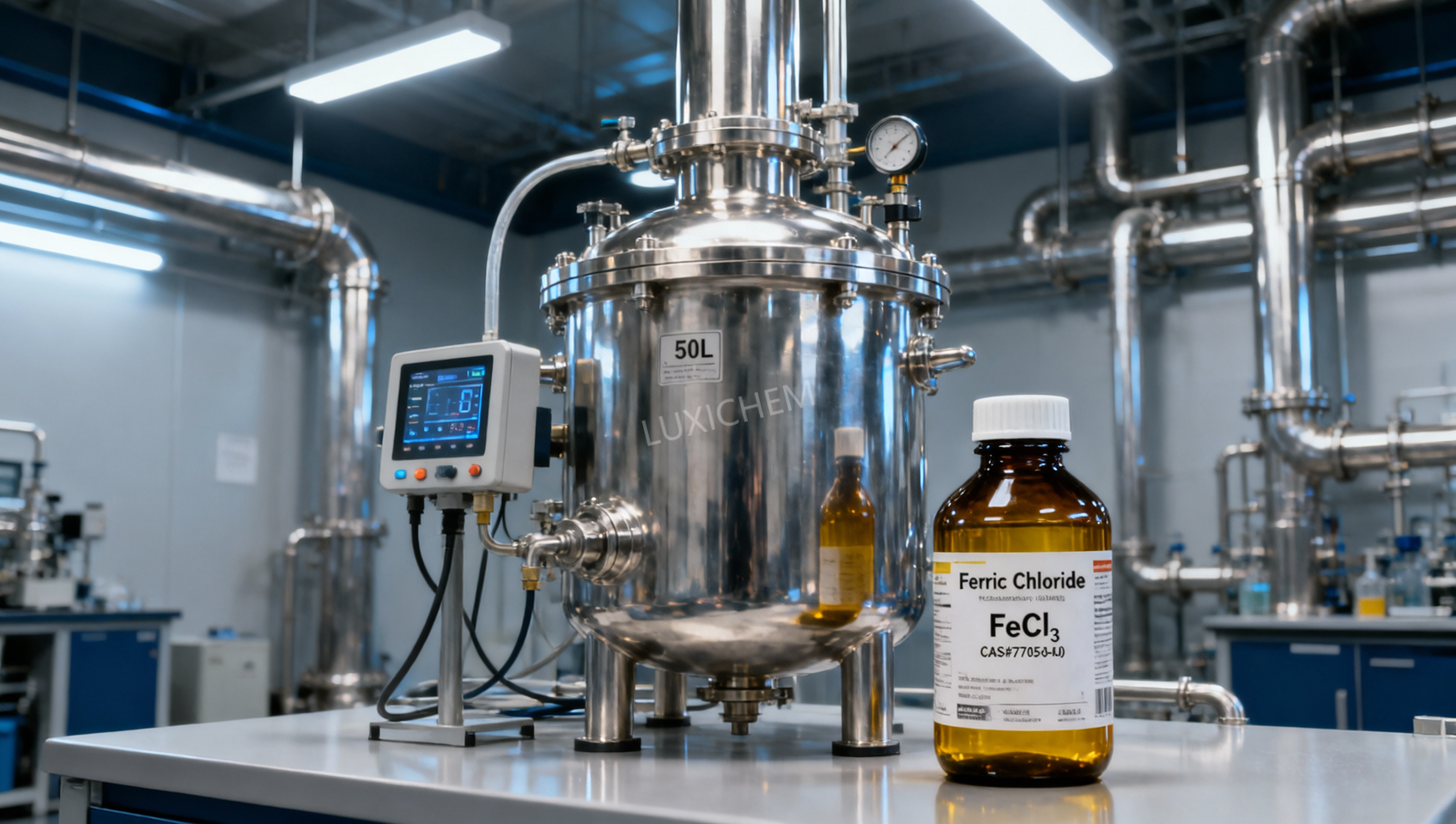
For project managers overseeing agrochemical development, the transition from lab-scale synthesis to pilot batch production is rarely a linear scaling exercise—it’s a series of tightly coupled technical and operational judgments. Organic intermediates are not mere building blocks; they are *process determinants*. Their purity profile, batch-to-batch consistency, functional group tolerance, and regulatory documentation directly govern whether a synthetic route developed in a 50-mL flask will survive transfer to a 50-L reactor—without yield collapse, impurity accumulation, or uncontrolled exotherms.
This is where selection criteria diverge sharply from academic or pharmaceutical contexts. In agrochemical custom synthesis, intermediates must support structural modifications that preserve pesticidal activity while meeting stringent environmental fate requirements—low persistence, minimal bioaccumulation, and hydrolytic stability under field-relevant pH and temperature ranges. A single impurity—such as residual metal catalysts, chloride salts, or regioisomeric by-products—can trigger crystallization failure during isolation, compromise formulation stability, or invalidate toxicological data generated in earlier stages. That makes traceability, analytical method validation (e.g., GC-MS, HPLC-UV with reference standards), and documented compliance with ICH Q3A/B and ISO/IEC 17025—not just supplier claims—non-negotiable.
Scale-up risk is rarely about the final active ingredient alone. It concentrates at the *junction points*: where one intermediate feeds into the next transformation. For example, Friedel–Crafts acylations or electrophilic chlorinations—common steps in synthesizing pyrethroid analogues or triazole-based fungicides—demand precise stoichiometric control and thermal management. Here, the choice of catalyst or halogenating agent becomes a process bottleneck. Ferric chloride CAS#7705-08-0 serves not only as a Lewis acid catalyst but also as a controlled chlorinating agent in aromatic ring functionalization. Its high solubility in polar aprotic solvents (e.g., nitrobenzene, sulfolane) enables homogeneous reaction conditions at pilot scale, reducing localized hot spots common with heterogeneous alternatives. However, its hygroscopic nature and sensitivity to moisture mean that storage conditions, handling protocols, and real-time water content monitoring (Karl Fischer titration) must be embedded into the pilot batch protocol—not treated as ancillary logistics.
That level of integration separates viable intermediates from merely available ones. Many suppliers offer catalog-grade organic intermediates certified to ≥98% purity—but without specifying residual solvent profiles, heavy metal thresholds (e.g., Pd < 5 ppm for subsequent cross-coupling), or polymorphic form stability across temperature cycling. In pilot production, such omissions translate to failed crystallizations, inconsistent filtration rates, or unexplained degradation during drying. Project managers cannot afford to treat intermediate qualification as a procurement checkbox. It requires early alignment between synthetic chemists, process engineers, and quality assurance: defining acceptable impurity vectors *before* first batch ordering, verifying analytical methods against in-house standards, and mapping how each intermediate’s physical properties—bulk density, flowability, thermal decomposition onset—affect dosing accuracy and reactor charging safety.
Regulatory alignment adds another layer. Agrochemical registrations demand full substance identification per OECD SIDS, including isomeric composition, stereochemical assignment, and genotoxic impurity assessment (e.g., mutagenic alkyl halides, nitrosamines). Intermediates used in late-stage coupling or chiral resolution steps must carry full CoA packages with spectroscopic confirmation (NMR, IR, HRMS), not just chromatographic purity. A “custom-synthesized” intermediate lacking batch-specific spectral data may delay registration dossiers by months—especially when regulators request raw spectral files or retest samples. Suppliers with ISO 9001-certified manufacturing and audit-ready documentation systems reduce this exposure significantly.
Supply chain resilience matters differently at pilot scale than at commercial scale. A six-week lead time for a 5-kg intermediate batch is manageable in discovery; it stalls a pilot campaign dependent on sequential reactions. But speed alone isn’t sufficient. What matters is *predictable availability*—not just of the primary intermediate, but of structurally related analogues needed for SAR expansion or backup routes. This requires suppliers with flexible small-batch capacity, multi-step synthesis capability, and inventory buffers for high-demand scaffolds (e.g., substituted benzenes, heteroaromatic boronic esters, chiral epoxides). It also demands clarity on substitution policies: if a batch fails QC, can an equivalent grade be shipped within 72 hours—or does the entire sequence reset?
Logistics complexity compounds these technical constraints. Many organic intermediates are temperature-sensitive (e.g., acid chlorides, diazonium precursors), air-sensitive (e.g., organolithium reagents), or classified as hazardous goods (Class 8 corrosives, Class 6.1 toxics). Ferric chloride CAS#7705-08-0, for instance, carries UN 2582 classification and requires III packaging group compliance. Misdeclaration—even minor discrepancies in SDS versioning or transport labeling—triggers customs holds, especially in key agrochemical markets like Brazil, India, and Vietnam, where regulatory enforcement has tightened around chemical import documentation. A supplier with in-house regulatory affairs support and pre-cleared shipping lanes mitigates delays that otherwise derail pilot timelines.
The bottom line for project managers is not whether an intermediate is “available,” but whether it *enables reproducible, auditable, and registrable process execution* at pilot scale. That means prioritizing suppliers who embed analytical rigor, regulatory documentation, and supply continuity into their core offering—not as add-ons, but as built-in features of material delivery. It means treating intermediate sourcing as part of process design, not procurement. And it means recognizing that the most critical decision point often occurs before the first gram is ordered: when the team defines what “fit for purpose” actually means—not for the molecule, but for the *process*, the *timeline*, and the *regulatory pathway*.

Previous page:Already the first
Next page:Already the last
Related Picks
 Butylated Hydroxytoluene Price Drivers: Supply, Purity, and Purchasing Risk FactorsOct 21, 2026Butylated Hydroxytoluene price trends depend on supply stability, purity, logistics, and purchasing risk. Learn how to compare quotes wisely and reduce sourcing costs.
 Sodium Tripolyphosphate Price Trends: Raw Material and Energy ExposureOct 20, 2026Explore sodium tripolyphosphate price trends, from phosphate and soda ash costs to energy exposure. Learn how to compare quotes, manage sourcing risks, and make smarter purchasing decisions.
 Acetonitrile Shipment to Vietnam Successfully Dispatched; RCEP Benefits Boost Fine Chemical Trade with ASEANSep 16, 2026A shipment of industrial-grade acetonitrile from our company has recently been loaded and dispatched following the completion of standardized hazardous material packaging and container securing procedures.
 Nigerian Client’s Order of 4 Containers of Vinyl Acetate Successfully Loaded and Shipped to West AfricaSep 16, 2026We recently completed the loading of a vinyl acetate order for a Nigerian client; four containers of the product have been successfully packed and are ready for shipment to Nigeria.




Question Consultation
Send Us Your Inquiry Today

Luxi Chemical is a professional chemical product supplier with ample stock of all chemical categories and excellent quality, welcome your purchase inquiry.

