


Sodium Bicarb in Industrial Processing: Uses, Handling, and Storage Risks
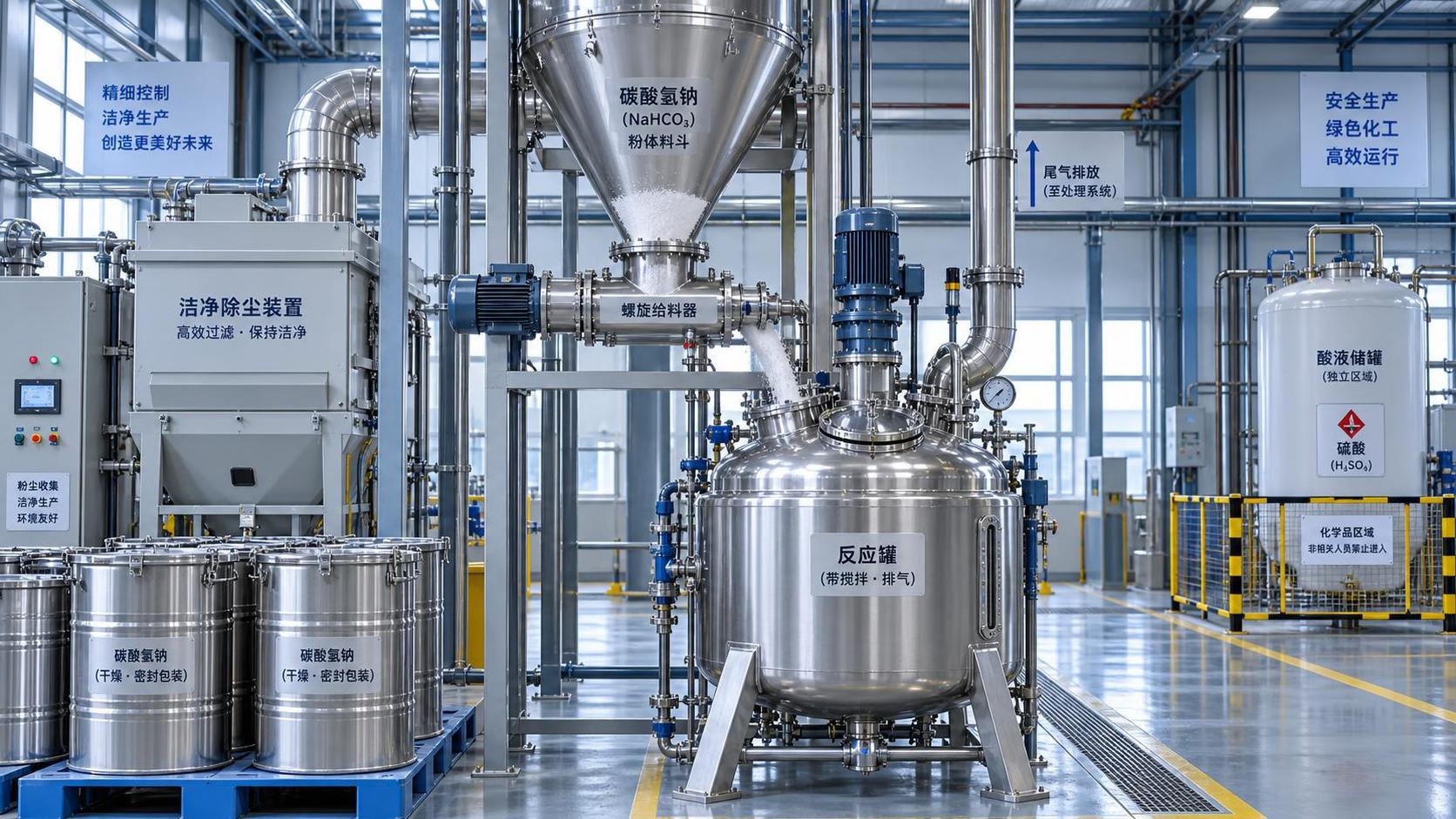
Sodium bicarb is often chosen because it is a mild alkaline material, easy to dissolve in many process streams, and less aggressive than stronger bases. That does not make it a universal fix. Its value depends on whether the process needs gentle buffering, controlled neutralization, odor reduction, or dry cleaning action, rather than a rapid and large pH shift.
For operators, the practical questions are usually more specific: Will it react too slowly? Can it be fed as a dry powder? Why has a stored batch become lumpy? Is dust the main exposure concern? Can it be used near acids or other treatment chemicals? A reliable sodium bicarbonate application starts by matching the material to the reaction conditions and then protecting it from moisture, contamination, and uncontrolled contact with acids.
Where sodium bicarb works well in industrial processing
Sodium bicarbonate, commonly called sodium bicarb, releases alkalinity gradually in water. In acidic conditions it neutralizes acid and produces carbon dioxide. This behavior is useful when operators need to reduce acidity without the abrupt pH rise that may occur with caustic soda or soda ash.
Its most appropriate industrial applications usually fall into four groups:
- pH adjustment and buffering: It can support processes that need a moderate upward correction in pH or a more stable pH range. It is often suitable where avoiding local high-pH zones matters.
- Acid neutralization: Sodium bicarb can neutralize small or controlled acidic streams, residues, and wash waters. Because carbon dioxide is generated, the vessel and feed rate must allow for foaming and gas release.
- Dry and wet cleaning: Its mild abrasiveness and alkalinity can assist with removal of light soils, acidic deposits, oils, and odors. It is not a replacement for a purpose-designed cleaner when heavy grease, mineral scale, or microbial sanitation is the primary problem.
- Food-related processing: Where the required grade and documentation match the intended application, it may be used for leavening, acidity control, and processing functions. Industrial-grade material should never be assumed suitable for food contact or food manufacture.
The material is also used in selected chemical production steps where a controlled alkali source or carbon dioxide-generating reaction is useful. In each case, the operating decision should be based on reaction stoichiometry, required final pH, temperature, mixing quality, and the effect of added sodium ions on the downstream process.
Do not treat it as a weaker version of every alkali
A common mistake is choosing sodium bicarb solely because it appears safer or easier to handle than stronger alkaline chemicals. It is milder, but its reaction profile changes the process. When it contacts acid, carbon dioxide is released. In an open, well-agitated vessel this may be manageable. In a confined line, a closed container, or a tank with inadequate headspace, the same reaction can create pressure, foam, carryover, and inconsistent dosing.
It may also be the wrong choice when rapid neutralization is needed, when the process requires a strongly alkaline pH, or when sodium addition is tightly limited. For example, a wastewater process may need a stronger base to meet a fast pH-correction duty, while sodium bicarbonate is better used as a buffer in a less demanding adjustment step. The process objective, rather than the chemical's reputation for mildness, should determine the choice.
Control the feed point, not just the dose
The most useful operating improvement is often at the addition point. Dry sodium bicarb can bridge in hoppers, cling to damp transfer equipment, and form soft or hard lumps after exposure to humidity. If powder is added directly to a liquid tank, poor agitation can leave floating powder, localized concentration zones, or material trapped around the tank wall.
For batch work, adding the powder slowly to a well-mixed liquid is usually easier to control than dropping a full charge into a weakly agitated vessel. For continuous treatment, a suitably designed dry feeder or prepared solution system can give more consistent dosing. The preferred arrangement depends on consumption rate, available mixing, cleaning access, and whether the solution can be used soon after preparation.
When making a solution, use clean water and avoid introducing the powder into a system that already contains concentrated acid. The neutralization reaction can become vigorous at the contact point. Adding acid to a sodium bicarbonate slurry or solution requires the same caution: control the feed rate, maintain mixing, preserve venting, and avoid sealing a reacting container.
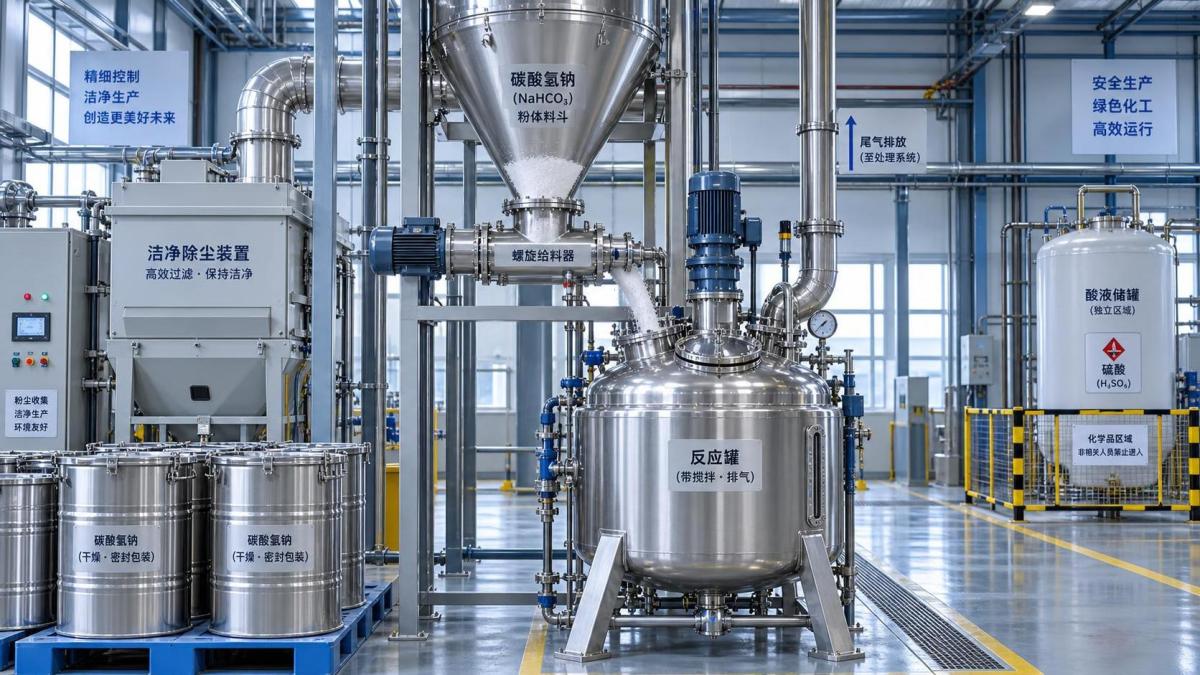
Dust is the routine handling risk
Sodium bicarb is not usually handled like a highly corrosive alkali, but airborne dust can still irritate the eyes, nose, throat, and skin. Fine powder becomes especially troublesome during bag opening, manual charging, hopper filling, sweeping, and maintenance on conveying equipment. A visible dust cloud is not only a housekeeping issue; it means material is escaping the process and workers are more likely to be exposed.
Use local extraction where powder is transferred or discharged. Keep bags close to the charging point, open them carefully, and avoid throwing or compressing packages that can release dust. Equipment should be cleaned with methods that capture powder rather than dispersing it into the air. Dry sweeping and compressed-air cleaning usually create the same exposure problem again.
Eye protection, gloves, and suitable respiratory protection should be selected for the task and local site procedures. Operators should also wash hands before breaks, especially where the same facility handles food ingredients, active chemical intermediates, or corrosive treatment chemicals. Segregation and clear labeling are more reliable than relying on appearance; sodium bicarbonate is a white powder and can be mistaken for other powdered materials.
Storage failures usually begin with moisture
Sodium bicarb should be stored in a cool, dry area in closed packaging or a moisture-protected bulk system. It absorbs moisture from humid air, which can cause caking, poor flow, and variable feeding. A partially opened bag left near a washdown area may still look usable while feeding inconsistently through a screw feeder or producing an off-target solution concentration.
Keep it away from water leaks, condensation, wet floors, and direct contact with incompatible chemicals. Strong acids are the most obvious separation requirement because contact produces carbon dioxide. Acidic vapors can also affect exposed product over time. Separate storage is particularly important where acid transfer, acid cleaning, or acid waste treatment happens nearby.
Do not reuse contaminated bags, scoops, or containers. A scoop used for an acid salt, a reactive cleaner, or another process chemical can change the behavior of the sodium bicarb batch. For operations that require traceability, retain the material identification, lot information, and opening date so operators can distinguish a newly received lot from partly used stock.
A practical storage and use check before each shift
- Check that bags, drums, or bulk connections are closed and free of moisture damage.
- Look for caking, hard lumps, unusual color, or foreign material before charging equipment.
- Confirm the correct grade for the process, especially when food-related and industrial materials are both present on site.
- Inspect extraction, ventilation, and dust-collection points before powder handling begins.
- Verify that acid lines, acid containers, and acidic waste streams cannot backflow into the sodium bicarbonate system.
- Confirm that the receiving vessel is vented and mixed before neutralization work starts.
When sodium bicarb shares a chemical area with acids
Some facilities use both sodium bicarbonate and acidic chemicals in water treatment, metal processing, or chemical manufacturing. They should not be treated as interchangeable pH-control materials. Sodium bicarb provides mild alkaline buffering, while acids may be used to lower pH, dissolve deposits, supply a particular anion, or drive a reaction that sodium bicarbonate cannot perform.
For example, Hexafluorosilicic acid CAS#16961-83-4 is used in applications including water treatment, metallurgy, and chemical manufacturing. It is a corrosive fluoride-containing acid and requires dedicated handling and storage controls. It should be physically segregated from sodium bicarbonate. Accidental contact is not a neutral storage condition; it can release carbon dioxide, generate heat, and create a difficult-to-control reaction at the point of mixing.
This comparison illustrates an important operating principle: choose the chemical for its process role, then design the storage and dosing system around its reactivity. Using sodium bicarbonate to offset an acid is possible only where the reaction has been deliberately designed for the required final chemistry, gas handling, and safety controls. It is not an appropriate response to an unplanned acid spill or a mixing error unless the site emergency procedure specifically directs it.
What to confirm before changing a process
Before substituting sodium bicarb for another alkali, increasing feed rate, or moving from manual charging to bulk handling, establish the actual process target. Identify the inlet chemistry, required final pH, expected reaction time, available mixing energy, vessel headspace, and downstream sensitivity to sodium salts or dissolved solids. These conditions determine whether the material will give stable results or simply move the problem downstream.
Then review the physical side of the operation. A product that performs correctly in a beaker can still fail in production because humid air reaches the hopper, a feeder is undersized for the powder flow behavior, or the addition point does not have enough turbulence to disperse the material. A small controlled trial under normal operating conditions is generally more informative than assuming a dry-powder calculation will translate directly to a process line.
For procurement and routine supply, consistency of grade, packaging integrity, and documentation matters as much as nominal chemical identity. Suppliers such as Luxi Chemical (Shandong) Co., Ltd. provide chemical raw materials across multiple industrial categories; the useful procurement discussion is not simply “sodium bicarbonate available,” but the required grade, intended application, packaging format, handling method, and compatibility with the receiving process.
Sodium bicarb is most reliable when it is used for the job it actually performs well: controlled alkalinity, measured neutralization, and mild cleaning support. Keep it dry, control its dust, isolate it from acids, and treat carbon dioxide generation as a process-design issue rather than an afterthought.
Related Picks
 Butylated Hydroxytoluene Price Drivers: Supply, Purity, and Purchasing Risk FactorsOct 21, 2026Butylated Hydroxytoluene price trends depend on supply stability, purity, logistics, and purchasing risk. Learn how to compare quotes wisely and reduce sourcing costs.
 Sodium Tripolyphosphate Price Trends: Raw Material and Energy ExposureOct 20, 2026Explore sodium tripolyphosphate price trends, from phosphate and soda ash costs to energy exposure. Learn how to compare quotes, manage sourcing risks, and make smarter purchasing decisions.
 Acetonitrile Shipment to Vietnam Successfully Dispatched; RCEP Benefits Boost Fine Chemical Trade with ASEANSep 16, 2026A shipment of industrial-grade acetonitrile from our company has recently been loaded and dispatched following the completion of standardized hazardous material packaging and container securing procedures.
 Nigerian Client’s Order of 4 Containers of Vinyl Acetate Successfully Loaded and Shipped to West AfricaSep 16, 2026We recently completed the loading of a vinyl acetate order for a Nigerian client; four containers of the product have been successfully packed and are ready for shipment to Nigeria.




Question Consultation
Send Us Your Inquiry Today

Luxi Chemical is a professional chemical product supplier with ample stock of all chemical categories and excellent quality, welcome your purchase inquiry.

