News
Sodium Tripolyphosphate Price Risks Before You Buy
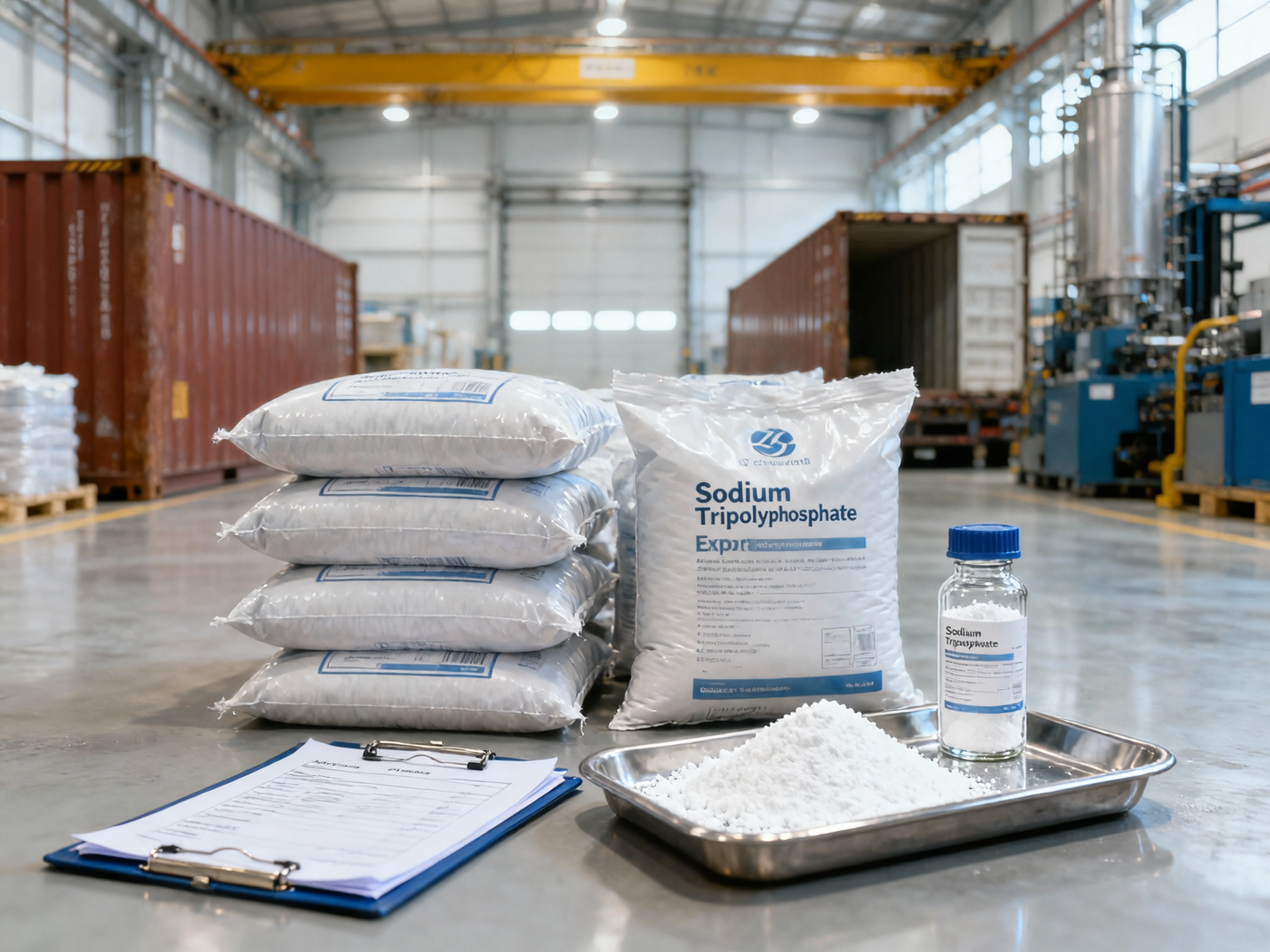
Before committing to a Sodium tripolyphosphate purchase, understanding price risks is essential for buyers, distributors, and business evaluators. Market fluctuations in chemical raw materials can affect sourcing decisions across products such as Polyvinyl chloride, Sodium tripolyphosphate, and Polyglutamic Acid. This article helps you identify key pricing factors, supply risks, and procurement considerations so you can make more informed, cost-effective decisions before placing an order.
Why can Sodium Tripolyphosphate prices change so quickly?
For many chemical buyers, the first mistake is treating Sodium Tripolyphosphate price as a fixed number instead of a moving procurement variable. In practice, STPP pricing often shifts within short purchasing cycles such as 2–4 weeks, especially when upstream raw materials, energy costs, export demand, or shipping conditions change at the same time. This matters even more for importers, distributors, and contract manufacturers that work with tight margin controls.
Sodium Tripolyphosphate is widely used in food processing, detergents, water treatment, and some industrial formulations, so demand is not driven by a single downstream sector. When several sectors increase purchases in the same quarter, available supply can tighten and quotations may rise faster than expected. Buyers comparing several products, including Polyvinyl chloride or Polyglutamic Acid, often see a similar pattern: the listed price is only one part of the total sourcing risk.
Another reason for price volatility is that the same product name can cover different procurement realities. Technical grade and food grade STPP may follow different cost structures, quality controls, and documentation requirements. A low quotation may exclude testing, export packaging, or compliance documents, while a higher quotation may include these items and reduce downstream operating risk.
For business evaluators, this means the real question is not simply “What is the current Sodium Tripolyphosphate price?” but “What is the probable landed cost over the next 30–90 days?” That broader view helps avoid false savings that later turn into extra freight charges, delayed shipments, rejected batches, or reformulation costs.
The 4 price drivers buyers should monitor
- Raw material and energy inputs: phosphate-related feedstocks, utilities, and plant operating costs can reshape quotations within one procurement cycle.
- Grade and specification differences: food-grade purchasing usually involves stricter documentation, packaging discipline, and quality consistency than some industrial uses.
- Export logistics: container availability, port schedules, and destination-specific documentation can alter the final cost by more than buyers expect.
- Order size and timing: sample orders, trial orders, and container-scale orders rarely receive the same quotation structure or lead time.
A practical sourcing plan should therefore compare at least 3 layers of cost: ex-works or FOB price, logistics-related adjustments, and quality or compliance-related add-ons. This framework is especially useful for dealers and agents who need to quote confidently to their own customers without exposing themselves to avoidable margin erosion.
What should buyers evaluate beyond the quoted Sodium Tripolyphosphate price?
A competitive quotation is valuable only when it is tied to stable quality, clear specifications, and predictable delivery. In the chemical industry, procurement teams typically assess at least 5 key checkpoints before approving an order: product grade, purity-related indicators, packaging method, documentation scope, and lead time. Missing any one of these can turn a low price into a high-cost purchase.
For Sodium Tripolyphosphate, the specification sheet should be reviewed together with the intended application. A formulation used in food processing or export-sensitive channels may require tighter control and cleaner documentation than a standard industrial application. Procurement teams should confirm whether the quotation reflects routine batch consistency or only a one-time offer based on current stock.
Lead time is another hidden variable. A supplier offering an attractive unit price but requiring 3–5 weeks for production and release may not be suitable for customers operating on monthly replenishment cycles. By contrast, a slightly higher quotation with more stable inventory planning may reduce stockout risk and preserve customer contracts.
Documentation also influences procurement value. Depending on destination market and application, buyers may need product specifications, packing lists, certificates typically used in trade practice, or other compliance-related papers. The cost of correcting missing documents after shipment is often much higher than clarifying them during supplier evaluation.
A practical buyer checklist before confirming an STPP order
The following table helps procurement teams compare quotations on a decision basis rather than a price-only basis. It is especially useful when evaluating two or more STPP suppliers within a 7–15 day quotation window.
This comparison method gives purchasing managers and distributors a more reliable negotiation basis. Instead of asking for the lowest Sodium Tripolyphosphate price only, they can ask for the most complete and risk-adjusted quotation, which usually leads to better cost control over 1–3 purchasing cycles.
Questions worth asking suppliers during evaluation
- Is the quoted STPP suitable for my exact application, and is the grade clearly stated in the offer?
- What is the normal lead time for trial quantity, repeat order, and container-scale shipment?
- Which documents are included before shipment and which are prepared after order confirmation?
- How stable is supply across the next 30–60 days if market conditions tighten?
How do supply chain and compliance risks influence total procurement cost?
In chemicals trade, price risk is often only the visible part of the problem. The less visible part includes shipment timing, packaging suitability, destination-market requirements, and replacement cost if the cargo does not match use conditions. A procurement team may save on the initial STPP quotation but lose that advantage through delayed loading, re-documentation, or customer-side rejection.
For distributors and agents, supply continuity is especially critical. If your local customers purchase on monthly or quarterly schedules, a one-time low-cost deal is less valuable than a supplier that can support repeat planning. In many cases, the safer commercial strategy is to secure a stable source for 2–3 order cycles rather than to chase every short-term market dip.
Compliance considerations also differ by application. Where food processing or more controlled end uses are involved, buyers should verify whether documentation and product handling are aligned with the destination requirement. Even where no special local filing is needed, internal purchasing standards often require consistent specifications, traceable packaging information, and clear batch-level records.
A business evaluator should therefore estimate total procurement risk under three scenarios: stable market, delayed shipment, and specification mismatch. This scenario planning is simple, but it can prevent contract disputes and preserve customer confidence in trading or distribution channels.
Common procurement risk scenarios for Sodium Tripolyphosphate
The table below shows how different risks can change the real procurement outcome, even when the initial Sodium Tripolyphosphate price looks attractive.
These scenarios are not rare exceptions. They are routine procurement realities in international chemical trade. Buyers who evaluate supply chain readiness and compliance together usually make stronger decisions than those comparing unit price alone.
3 signs a quotation may carry hidden risk
- The supplier gives a price quickly but does not define grade, packaging, or document scope clearly.
- The offer is much lower than the market range but the lead time is uncertain or frequently revised.
- Sample quality, repeat-order quality, and export packaging details are not linked in one written confirmation.
How should different buyers manage Sodium Tripolyphosphate price risk?
Not every buyer faces the same procurement pressure. An information researcher may need supplier transparency and application clarity. A purchasing manager may care more about repeatability, lead time, and total landed cost. A business evaluator may compare supplier stability across several products, while a distributor or agent often needs margin room, order flexibility, and consistent export support.
Because of these differences, Sodium Tripolyphosphate sourcing should be matched to role-specific decision logic. For trial projects or new market entry, small-batch verification and documentation review may be more important than pushing for the lowest number. For mature product lines, the focus may shift toward annual volume planning, shipment scheduling, and multi-product procurement efficiency.
This is where a one-stop chemical supplier can create real commercial value. When a buyer also evaluates related products such as food additives, organic intermediates, fertilizers, Polyvinyl chloride, or Polyglutamic Acid, consolidating inquiries through one experienced export-oriented supplier can reduce communication time and transaction friction across 3–6 procurement steps.
Luxi Chemical (Shandong) Co., Ltd. serves customers in over 60 countries and regions and focuses on chemical raw materials, chemical products, and import/export trade. For procurement teams, that means the discussion can move beyond a single quote into a more structured conversation about product alignment, documentation, scheduling, and combined sourcing efficiency.
Recommended sourcing approach by buyer type
The table below shows how different decision-makers can control STPP procurement risk more effectively.
Role-based purchasing decisions help reduce avoidable errors. They also make internal approval easier, because the buying rationale is tied to operational need rather than only to a short-term quoted Sodium Tripolyphosphate price.
A 4-step process to reduce buying uncertainty
- Define the exact application, required grade, packaging expectation, and target delivery window.
- Request a complete quotation package, including specification summary, trade term, and document scope.
- Compare 2–3 offers by landed cost and operational risk, not by unit price alone.
- Lock timing, quality confirmation, and shipment schedule before final order execution.
Common questions buyers ask before placing an STPP order
The questions below reflect common search intent and practical concerns from procurement teams, distributors, and market evaluators. They are also useful when screening new suppliers in the chemical trade.
How can I judge whether a low Sodium Tripolyphosphate price is reliable?
Start by checking whether the quotation clearly states grade, packaging, trade term, lead time, and document support. If two offers differ significantly, ask whether one includes only current stock, different packaging, or a narrower documentation scope. In many cases, a reliable quotation remains valid for 7–15 days, while an unstable one changes as soon as the buyer requests shipment details.
What lead time should I expect for Sodium Tripolyphosphate procurement?
Lead time depends on stock status, order size, and shipment route. A trial order may move faster if inventory is available, while regular production orders often require a scheduled cycle. Buyers should ask for both production timing and loading timing, because these are not always the same. For international trade, planning with a 2–5 week operational window is generally more prudent than assuming immediate dispatch.
Should I lock a price now or wait for a better market point?
If your business depends on stable monthly delivery, waiting for a perfect price can create a larger commercial loss than accepting a workable price today. A practical approach is to separate demand into trial volume, current operational volume, and forecast volume for the next 30–90 days. This allows buyers to balance price opportunity with supply security instead of making an all-or-nothing decision.
What is the most common mistake in STPP procurement?
The most common mistake is evaluating Sodium Tripolyphosphate only by quoted price and not by use suitability and total delivery reliability. This often leads to late-stage problems such as document gaps, unclear specification alignment, or repeat-order inconsistency. A better approach is to approve suppliers only after technical fit, commercial term clarity, and delivery feasibility are all confirmed together.
Why work with a supplier that supports both pricing clarity and broader chemical sourcing?
For many B2B buyers, a Sodium Tripolyphosphate purchase is not an isolated transaction. It is part of a larger sourcing program involving food additives, organic intermediates, fertilizers, or other chemical raw materials. Working with a supplier that understands both product-level detail and export execution can save time across inquiry handling, sample coordination, compliance communication, and shipment planning.
Luxi Chemical (Shandong) Co., Ltd. focuses on high-quality, stable chemical products and related services for global customers. Its business structure is particularly relevant for buyers who want one-stop procurement support, because consolidating multiple product discussions through one channel can reduce communication cycles, internal approval delays, and fragmented vendor management. This is often valuable when procurement teams are balancing cost pressure with delivery urgency.
If you are reviewing Sodium Tripolyphosphate price risks before buying, a useful next step is to request a quotation package that goes beyond price. Ask for grade confirmation, packaging details, applicable documentation, expected lead time, sample options if needed, and the possibility of combining inquiries with other chemical products you purchase regularly. That gives you a stronger basis for technical review and commercial comparison.
You can contact Luxi Chemical (Shandong) Co., Ltd. to discuss Sodium Tripolyphosphate product selection, application matching, quotation terms, normal delivery cycles, export document support, sample arrangements, and multi-product sourcing plans. This kind of structured inquiry is especially useful for purchasers, business evaluators, and distributors who want to reduce uncertainty before placing an order.
What you can ask us to confirm
- Whether the Sodium Tripolyphosphate grade matches your intended industry or formulation use.
- Which quotation basis is more suitable for your destination market and procurement model.
- Expected lead time, packaging options, and shipment planning for trial, repeat, or larger-volume orders.
- How to combine STPP procurement with other chemical products to improve sourcing efficiency.
Related Picks
 Common PVC Buying Mistakes and How to Avoid ThemApr 20, 2026Polyvinyl chloride buying mistakes can raise cost and risk. Learn how to compare specs, suppliers, and logistics while sourcing Sodium tripolyphosphate and Polyglutamic Acid more confidently.
 Polyglutamic Acid: Who Is It Best Suited For?Apr 20, 2026Polyglutamic Acid: discover who benefits most, key B2B uses, and sourcing tips—plus smart comparisons with Sodium tripolyphosphate and Polyvinyl chloride for better buying decisions.
 Sodium Tripolyphosphate Price Risks Before You BuyApr 20, 2026Sodium tripolyphosphate price risks explained before you buy. Compare supply, compliance, and sourcing factors across Polyvinyl chloride and Polyglutamic Acid for smarter chemical purchasing.
 How to Choose Polyvinyl Chloride for 2026 ProjectsApr 20, 2026Polyvinyl chloride sourcing for 2026 starts with grade fit, compliance, and supply reliability. Discover how Sodium tripolyphosphate and Polyglutamic Acid sourcing support one-stop chemical procurement.

Question Consultation
Send Us Your Inquiry Today

Luxi Chemical is a professional chemical product supplier with ample stock of all chemical categories and excellent quality, welcome your purchase inquiry.