News
Common PVC Buying Mistakes and How to Avoid Them
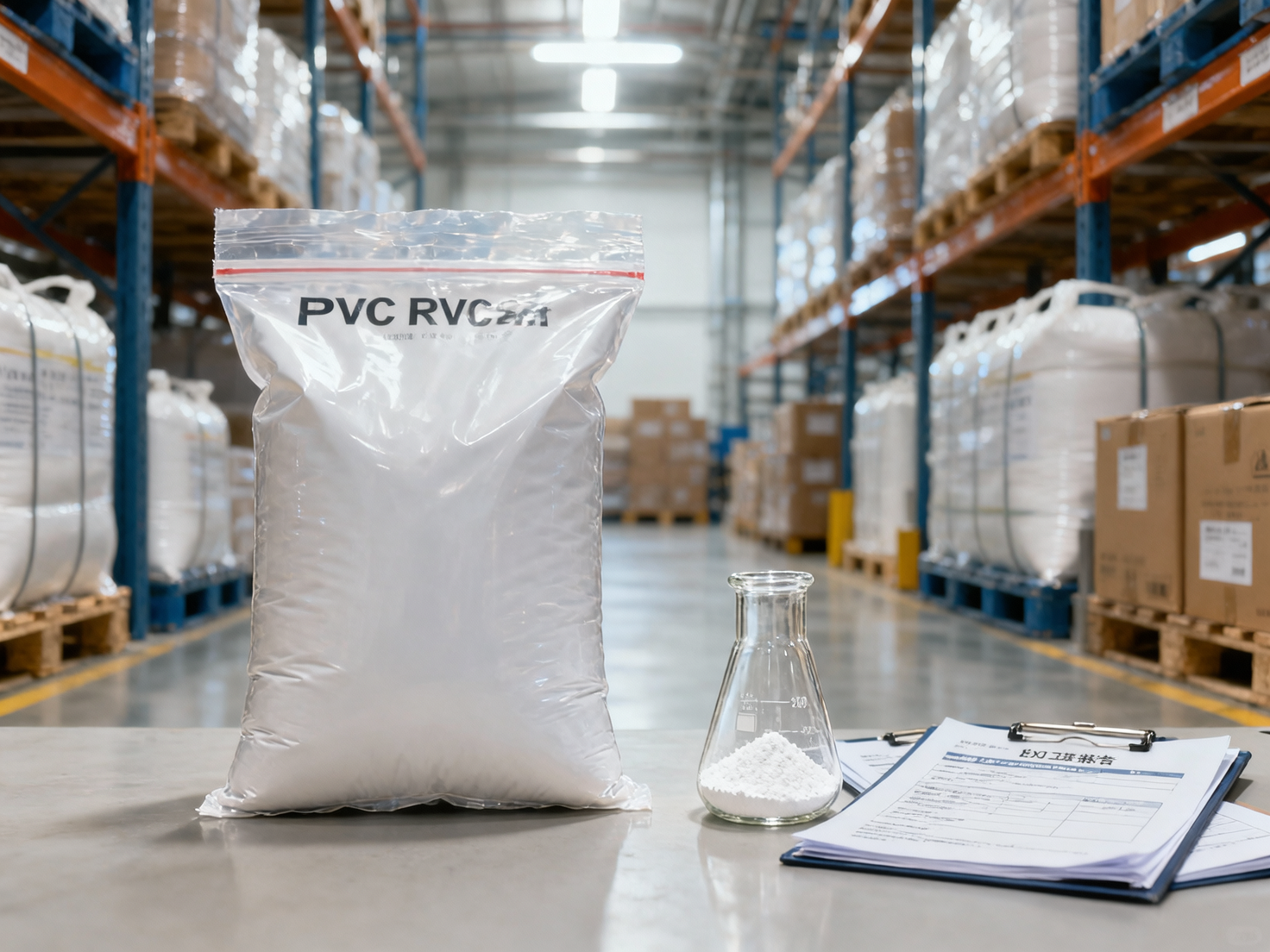
Buying Polyvinyl chloride without a clear specification checklist can lead to costly quality, compliance, and supply issues. For buyers comparing materials across chemical categories, understanding common purchasing mistakes is essential. From evaluating application fit to checking supplier reliability for products such as Sodium tripolyphosphate and Polyglutamic Acid, this guide helps researchers, procurement teams, and distributors make smarter, lower-risk sourcing decisions.
Why do PVC buying mistakes happen so often in chemical procurement?
PVC is often treated as a standard commodity, but procurement risk usually appears in the details. In B2B chemical sourcing, buyers may compare prices from 3–5 suppliers without aligning grade, K-value, processing route, packaging form, or documentation scope. What looks like a simple material purchase can quickly turn into a quality complaint, delayed customs clearance, or an unsuitable batch for the intended process.
This problem is especially common for information researchers, procurement managers, commercial evaluators, and distributors who handle multiple product lines at the same time. A team may be sourcing PVC today, food additives next week, and organic intermediates after that. When categories vary, evaluation habits become inconsistent. As a result, key chemical procurement checks are skipped, even though the financial exposure may last for one order cycle of 2–8 weeks.
In chemical trade, the mistake is rarely just “buying the wrong product.” More often, the issue is buying with incomplete information. For PVC, this includes missing target application data, unclear performance requirements, unverified logistics compatibility, and insufficient supplier assessment. A purchasing error may affect processing stability, product appearance, compliance review, warehousing conditions, and downstream customer acceptance at the same time.
For companies engaged in broader raw material sourcing, one practical lesson matters: the evaluation logic used for compliant products such as Sodium tripolyphosphate or Polyglutamic Acid should also be applied to PVC. That means checking not only product identity, but also specification consistency, intended use, document readiness, and long-term supply reliability. In many cases, these 4 dimensions are more decisive than the quoted unit price.
The 5 procurement conditions that usually trigger avoidable mistakes
- The buyer requests “PVC resin” only, without confirming application, processing method, target performance, or grade preference.
- The supplier quotation is compared mainly by price per ton, while packaging, delivery terms, and technical documents are not standardized.
- Sample review is skipped for urgent orders, even though a 1–5 kg evaluation batch could reduce larger shipment risk.
- Commercial teams assess only the first shipment, but do not review supply continuity across 3–6 months.
- Importers check basic documents but overlook practical details such as labeling language, packing integrity, and moisture exposure during transit.
Once these conditions appear together, PVC buying mistakes become much more likely. A structured purchasing process is therefore not optional. It is a commercial control tool that protects quality, lead time, and resale credibility.
What are the most common PVC buying mistakes?
The most frequent mistake is assuming that all PVC grades are interchangeable. In reality, different grades are designed for different processing routes and end uses. Suspension PVC selected for one application may not perform the same way in another. If the buyer does not define whether the material will be used in pipes, profiles, film, cable compounds, or other products, the procurement decision starts from the wrong baseline.
A second mistake is relying on generic technical language. Terms such as “industrial grade,” “regular packing,” or “standard quality” do not give enough information for purchasing. In chemical transactions, ambiguous wording creates room for misalignment. Buyers should request measurable or verifiable items, such as specification sheets, batch consistency information, package size, moisture protection method, and standard commercial documents for export.
A third mistake is ignoring total procurement cost. A lower ex-works price may still lead to a higher landed cost if the material requires repacking, extra inspection, urgent replacement, or extended storage. This is a familiar issue across chemical categories. The same logic applies whether a buyer is sourcing PVC, food additives, fertilizer inputs, or organic intermediates. Procurement teams should compare cost over the full order chain, not only the invoice unit price.
The fourth mistake is poor supplier due diligence. Some buyers verify business registration but do not examine export coordination ability, response speed, document support, or communication consistency. For cross-border chemical purchasing, these factors matter during every stage: inquiry, sample review, production scheduling, booking, shipping, customs, and after-sales handling. A dependable supplier is not just a manufacturer or trader with stock. It is a partner that can reduce operational friction over 4–7 process steps.
Mistakes that cause the highest practical risk
The table below summarizes common PVC sourcing errors and their operational consequences. This format is useful for procurement teams that need to align technical, commercial, and logistics review before placing a bulk order.
For most B2B buyers, these mistakes are preventable. The key is to convert vague purchasing habits into a repeatable review framework. That framework should work not only for PVC buying, but also for the broader chemical sourcing portfolio.
How should buyers evaluate PVC before placing an order?
A good PVC procurement process starts with the application, not the quotation. Buyers should first define where the material will be used, what production method it will enter, and which downstream issue would be most costly if the material is unsuitable. For some companies, appearance consistency is the main concern. For others, the real concern is shipment continuity within 7–15 days or document readiness for import review.
The second step is to separate technical screening from commercial comparison. Technical screening asks whether the grade can match the intended process and whether the supplier can provide a stable specification package. Commercial comparison then evaluates unit price, packaging terms, payment conditions, lead time, and logistics support. When buyers combine these two stages too early, low-price offers often distort decision quality.
The third step is to validate consistency. In chemical procurement, one acceptable sample does not automatically guarantee bulk shipment performance. Buyers should ask whether the sample and shipment come from the same production basis, how batch variation is controlled, and which documents will accompany cargo. Even a simple 3-point check covering sample, order confirmation, and pre-shipment information can reduce avoidable risk.
Finally, evaluate the supplier as a service system rather than a single quote. A supplier capable of supporting multiple chemical categories can simplify procurement coordination, especially for distributors and industrial buyers with broad portfolios. This matters when one purchasing team needs to manage PVC along with additives, intermediates, or fertilizer-related products through one procurement window.
A practical PVC buying checklist for procurement teams
The following table can be used as a pre-order screening tool. It helps information researchers and procurement officers turn product discussion into a documented decision process.
Using a checklist like this creates a measurable purchasing process. It also makes cross-functional review easier when technical staff, purchasing officers, and business managers need to sign off on the same order.
A 4-step review process before bulk PVC sourcing
- Define the application and operating requirements, including expected processing route and quality sensitivity.
- Request and review specifications, sample policy, packaging details, and commercial terms.
- Compare at least 2–3 qualified offers on total procurement value rather than price alone.
- Confirm pre-shipment details, lead time, document set, and communication responsibility before final order release.
This structured process is especially useful when procurement deadlines are tight. It saves time later by reducing avoidable back-and-forth after cargo has already been booked or dispatched.
What should buyers check beyond the PVC product itself?
One of the biggest sourcing blind spots is treating the product as the only thing that matters. In chemical trade, successful purchasing also depends on packaging suitability, storage conditions, shipping coordination, documentation, and responsiveness. For example, if packaging does not protect against humidity or handling stress during transit of 2–4 weeks, even a suitable PVC grade may arrive in unsatisfactory condition.
Documentation is another high-impact area. Buyers should confirm what commercial and technical documents are available before the order is finalized, not after shipment. The exact document set depends on destination and transaction terms, but the principle is universal: if a document may affect customs, internal compliance review, or customer acceptance, it should be listed in advance. This is standard good practice across chemical raw materials, not only PVC.
Supply stability also deserves close attention. Distributors and repeat buyers should ask whether the supplier can support regular shipments every month or every quarter, what the usual lead time range is, and how substitutions are handled if upstream conditions change. A supplier with broad product coverage can often support scheduling efficiency, because the buyer does not need to coordinate separate vendors for every chemical line.
This is where a comprehensive chemical partner adds value. Luxi Chemical (Shandong) Co., Ltd. serves customers in more than 60 countries and regions and focuses on chemical raw materials, chemical products, and import/export trade. For buyers managing multiple sourcing categories, a one-stop procurement model can reduce communication complexity, shorten vendor comparison time, and improve order planning across related products.
Key non-product checks that affect procurement success
- Packaging format and handling suitability, especially for export routes with multiple transfer points.
- Estimated lead time range, such as 7–15 days for some orders or longer for scheduled production and ocean shipment.
- Document completeness, including the commercial and technical papers commonly required for cross-border trade.
- Communication rhythm during inquiry, order confirmation, shipment update, and post-delivery follow-up.
- Portfolio support if the buyer also sources products such as food additives, organic intermediates, or fertilizers.
When these items are reviewed together, buyers gain a more realistic picture of procurement risk. In many cases, non-product control points are what determine whether a transaction runs smoothly from quotation to delivery.
How can distributors and commercial evaluators reduce PVC sourcing risk?
Distributors, agents, and commercial reviewers often face a different challenge from end users. They are not only buying for one production run. They are evaluating whether a supplier can support market continuity, account credibility, and customer response speed. For them, the best PVC procurement decision is not simply a technically acceptable one. It is one that remains manageable over repeated transactions across 3, 6, or 12 months.
A useful method is to assess supplier capability through a portfolio lens. Can the supplier support adjacent demand if the customer later requests other compliant chemical products? Can the same supplier coordinate on products used in agriculture, food processing, or daily chemical sectors? A broader chemical supply platform can help distributors consolidate sourcing and reduce fragmented supplier management.
Commercial evaluators should also look at problem-handling capability. Every chemical supply chain can experience scheduling changes, transit delays, or document clarification requests. The real question is how quickly the supplier responds and whether the process is organized. A supplier that can provide timely quotation updates, parameter confirmation, and shipment communication often reduces hidden business cost far more effectively than a marginally lower unit price.
Luxi Chemical (Shandong) Co., Ltd. operates as a comprehensive chemical enterprise with experience in chemical raw materials, chemical products, and international trade support. For buyers who need stable products and related service coordination, this model is practical because it combines product availability with procurement efficiency. It is particularly relevant when buyers want to reduce sourcing time while maintaining consistent communication across multiple product categories.
Decision signals that a supplier may be a better long-term fit
The table below highlights evaluation points that matter to distributors and business decision-makers when comparing PVC suppliers in a broader chemical sourcing context.
For many buyers, these factors are what transform a single PVC deal into a reliable supply relationship. They support not only technical acceptance, but also commercial predictability.
FAQ: what do buyers ask most when trying to avoid PVC purchasing errors?
How do I choose the right PVC grade if I am still in the research stage?
Start with the application and processing route rather than with price or generic grade names. List 3 key requirements: intended use, production method, and the most critical quality risk if the material is unsuitable. Then request a technical discussion with the supplier and compare 2–3 realistic options. This is more effective than asking for a “best grade” without process context.
What should I ask a PVC supplier before requesting a quotation?
At minimum, ask about product specification, application fit, packaging, sample availability, lead time, export documents, and supply continuity. If you are a distributor or procurement manager, also ask whether the supplier can support adjacent chemical products. That wider support can save time over a 1–2 quarter procurement cycle.
Is the lowest PVC price usually the best purchasing option?
Not necessarily. The lowest quoted price may exclude important cost items such as documentation support, packing suitability, sampling, or stable repeat supply. In chemical sourcing, total cost and transaction reliability often matter more than a small difference in unit price. A lower quote can become more expensive if it causes delay, inconsistency, or claim handling.
How long is a typical PVC procurement timeline?
It depends on stock status, order volume, packaging requirements, and destination. In practice, buyers often review samples or documents first, then move through quotation, confirmation, and shipment scheduling over several days to several weeks. For international orders, total procurement cycles commonly extend into 2–4 weeks or longer when sea freight and customs coordination are involved.
Why work with a comprehensive chemical supplier for PVC and related sourcing needs?
If your team is comparing PVC suppliers, the decision should include more than one product inquiry. Many buyers in the chemical sector manage several material categories at once and need a partner that can support stable products, clear communication, and efficient trade coordination. This is where a comprehensive supplier model becomes valuable. It reduces fragmented sourcing and helps standardize procurement review across multiple product lines.
Luxi Chemical (Shandong) Co., Ltd. focuses on chemical raw materials, chemical products, and import/export trade, serving customers in over 60 countries and regions. Its product scope covers compliant chemical products across food additives, organic intermediates, and fertilizers, with applications in agriculture, food processing, and daily chemical industries. For procurement teams, this means one-stop sourcing support that can reduce purchasing time and coordination effort.
If you are evaluating PVC procurement risk, you can also use this opportunity to improve your wider sourcing process. A supplier able to discuss product fit, document requirements, order scheduling, sample support, and multi-category procurement planning can help you make faster and safer decisions. That is especially useful for procurement officers, business evaluators, and distributors who need consistent service rather than isolated transactions.
You can contact Luxi Chemical (Shandong) Co., Ltd. to discuss PVC buying questions and related chemical sourcing needs, including parameter confirmation, product selection, sample support, packaging details, estimated delivery cycle, export documentation expectations, and quotation communication. If your team is comparing several options, sharing your target application and order plan will help build a more accurate and lower-risk sourcing proposal.
Related Picks
 Common PVC Buying Mistakes and How to Avoid ThemApr 20, 2026Polyvinyl chloride buying mistakes can raise cost and risk. Learn how to compare specs, suppliers, and logistics while sourcing Sodium tripolyphosphate and Polyglutamic Acid more confidently.
 Polyglutamic Acid: Who Is It Best Suited For?Apr 20, 2026Polyglutamic Acid: discover who benefits most, key B2B uses, and sourcing tips—plus smart comparisons with Sodium tripolyphosphate and Polyvinyl chloride for better buying decisions.
 Sodium Tripolyphosphate Price Risks Before You BuyApr 20, 2026Sodium tripolyphosphate price risks explained before you buy. Compare supply, compliance, and sourcing factors across Polyvinyl chloride and Polyglutamic Acid for smarter chemical purchasing.
 How to Choose Polyvinyl Chloride for 2026 ProjectsApr 20, 2026Polyvinyl chloride sourcing for 2026 starts with grade fit, compliance, and supply reliability. Discover how Sodium tripolyphosphate and Polyglutamic Acid sourcing support one-stop chemical procurement.

Question Consultation
Send Us Your Inquiry Today

Luxi Chemical is a professional chemical product supplier with ample stock of all chemical categories and excellent quality, welcome your purchase inquiry.