


Bulk Citric Acid Powder Handling Best Practices: Dust Control, Static Mitigation, and Explosion Risk Assessment per NFPA 652
Dust Isn’t Just a Nuisance—It’s the First Clue
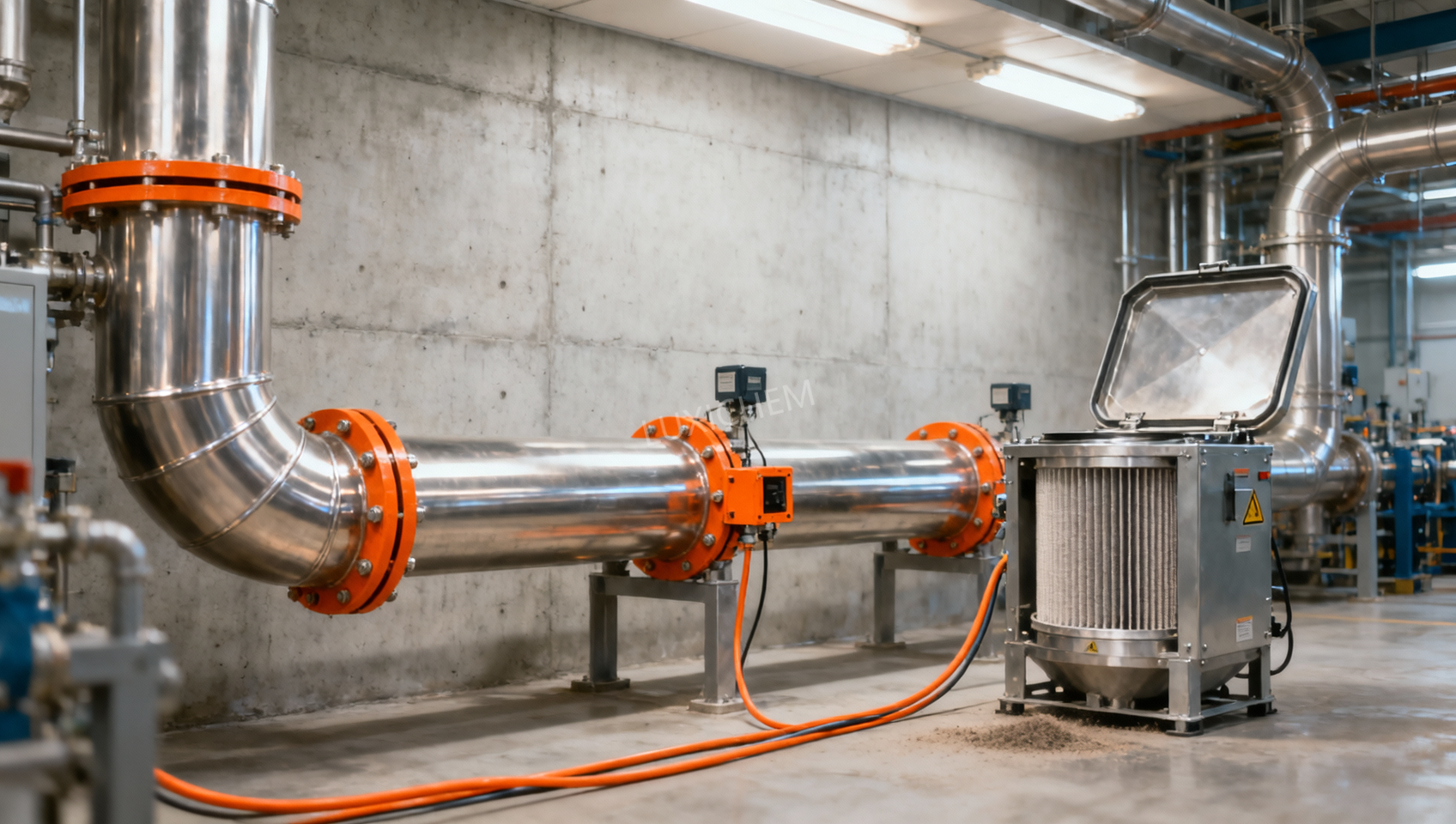
Citric acid powder looks benign. White, fine, widely accepted in food and pharma. But when you move it in bulk—through pneumatic conveyors, into silos, during blending or bagging—the dust cloud isn’t just an OSHA housekeeping issue. It’s the primary fuel in a potential deflagration. We’ve seen facilities treat citric acid like table salt until a near-miss during a routine bin transfer forced a full NFPA 652 re-evaluation. The surprise? Its MIE (minimum ignition energy) sits around 30–50 mJ—well within range of common static discharges from ungrounded hoses or operator footwear.
Why NFPA 652 Changes the Game for Citric Acid Users
NFPA 652 doesn’t classify materials—it mandates that *every facility* handling combustible dusts perform a Dust Hazard Analysis (DHA), regardless of historical incident record. That means even if your plant has run citric acid for 20 years without fire, compliance starts with documenting why it *could* ignite—not assuming it won’t. Luxi Chemical supports this not by supplying “safe” batches (citric acid is chemically consistent), but by providing technical documentation aligned with ASTM E1226 and EN 14034 test methods—so your DHA team can input real Kst, Pmax, and MIE values rather than defaulting to generic food-grade dust tables.
Three Real-World Levers You Can Adjust Today
You don’t need a capital project to lower risk. Start with what’s controllable:
1. Grounding Isn’t Optional—It’s Systemic
We once audited a blending line where operators wore ESD shoes, but the flexible suction hose connecting the drum to the hopper had no conductive wire embedded—and its outer jacket wasn’t rated for static dissipation. Result? A spark jumped between the hose ferrule and grounded frame during high-flow transfer. Fix: Use only hoses with ≤10⁶ Ω resistance end-to-end, verify continuity weekly with a megohmmeter (not just a multimeter), and bond *all* metal components—including filter housings and load cells—even if they seem “isolated.” Grounding clamps on plastic drums? Not enough. Bonding wires must be permanent, visible, and tested.
2. Dust Control Starts Before the Filter
High-efficiency cartridge filters catch dust—but they don’t stop generation. In one client’s warehouse, 70% of airborne citric acid came from palletizing, not processing. Their solution wasn’t bigger filters; it was slowing down the bag-filling nozzle velocity, installing localized vacuum hoods at discharge points, and switching from open-top FIBCs to Type C bags with verified grounding paths. Humidity control helps too: keeping RH above 55% reduces dust lift-off, but don’t rely on it alone—citric acid’s hygroscopic nature means surface moisture can mask true electrostatic risk in low-RH shifts.
3. Explosion Protection Must Match Your Actual Scenario
Don’t default to venting just because it’s common. If your mixer is inside a ventilated room with no isolation, venting could redirect flame into occupied space. Suppression works better for enclosed vessels—but only if sensors detect ignition within 5 ms. For smaller-scale operations (e.g., lab-scale blending or R&D dosing), inerting with nitrogen may be overkill, but purging before opening hatches is non-negotiable. One overlooked point: citric acid decomposition releases CO₂ and water vapor above 175°C—so thermal runaway in confined storage isn’t theoretical.
When Ionic Liquids Enter the Picture
While citric acid demands rigorous dust control, some advanced formulations require solvents that behave very differently—like 1-ETHYL-3-METHYLIMIDAZOLIUM BIS(TRIFLUOROMETHYLSULFONYL)IMIDE CAS#174899-82-2. Its negligible vapor pressure and thermal stability (>200°C flash point) eliminate inhalation and flammability concerns typical of volatile organics. In electrochemical or gas-absorption research, it replaces acetone or DMF precisely because it removes *two* hazard vectors at once: volatility and static charge buildup. That said, its high density (1.53 g/cm³) and low water solubility mean spill response requires different containment protocols—not less vigilance.
The “Quiet” Risk: Static Buildup in Non-Metallic Equipment
Plastic-lined chutes, HDPE hoppers, and fiberglass ducts are common in citric acid handling—but they’re static traps. Unlike metal, they can’t be grounded conventionally. Surface resistivity matters more than color or thickness: aim for ≤10⁹ Ω/sq for dissipative liners, and verify with a surface resistance meter (not visual inspection). Also watch for “hidden” static sources: compressed air blow-downs, especially with dry air, generate charge faster than most realize. A 30-psi blast across a plastic chute can easily exceed 100 mJ—enough to ignite citric acid dust.
What Your DHA Team Needs From Suppliers
Luxi Chemical provides batch-specific particle size distribution (PSD) reports—not just “fine powder”—because PSD directly impacts MIE and explosibility. A sample with >15% sub-75µm particles behaves very differently than one with median D50 = 120µm. We also share moisture content data, as citric acid monohydrate loses water above 40°C, altering flow and dusting behavior downstream. None of this replaces your DHA—but skipping it forces your team to guess.
No “One-Size” Venting or Grounding Spec Exists
A 200-L mixing vessel needs different protection than a 50-ton silo. And a facility in Singapore’s humid climate faces different static challenges than one in Riyadh’s arid air. Don’t copy another site’s spec sheet. Instead, map your process step-by-step: where does dust generate? Where does it concentrate? What’s the longest uninterrupted path a spark could travel? Then layer controls—engineering first, administrative second, PPE last. And remember: citric acid’s low melting point (~153°C) means thermal events can propagate faster than expected in poorly ventilated enclosures.
Final Note: Compliance Is a Process, Not a Document
Your DHA report isn’t shelfware. It’s the baseline for every maintenance change, every new supplier evaluation, every shift in ambient conditions. When humidity drops below 40% for three days straight, revisit your static mitigation plan. When you switch from 25-kg bags to 500-kg super sacks, re-validate bonding. And if your citric acid supplier changes packaging without notification—ask why. Because in bulk handling, the quietest risks aren’t the ones that explode first. They’re the ones you stop noticing.
Related Picks
 Butylated Hydroxytoluene Price Drivers: Supply, Purity, and Purchasing Risk FactorsOct 21, 2026Butylated Hydroxytoluene price trends depend on supply stability, purity, logistics, and purchasing risk. Learn how to compare quotes wisely and reduce sourcing costs.
 Sodium Tripolyphosphate Price Trends: Raw Material and Energy ExposureOct 20, 2026Explore sodium tripolyphosphate price trends, from phosphate and soda ash costs to energy exposure. Learn how to compare quotes, manage sourcing risks, and make smarter purchasing decisions.
 Acetonitrile Shipment to Vietnam Successfully Dispatched; RCEP Benefits Boost Fine Chemical Trade with ASEANSep 16, 2026A shipment of industrial-grade acetonitrile from our company has recently been loaded and dispatched following the completion of standardized hazardous material packaging and container securing procedures.
 Nigerian Client’s Order of 4 Containers of Vinyl Acetate Successfully Loaded and Shipped to West AfricaSep 16, 2026We recently completed the loading of a vinyl acetate order for a Nigerian client; four containers of the product have been successfully packed and are ready for shipment to Nigeria.




Question Consultation
Send Us Your Inquiry Today

Luxi Chemical is a professional chemical product supplier with ample stock of all chemical categories and excellent quality, welcome your purchase inquiry.

