


Bulk insecticides logistics: minimum order volume vs. storage safety limits
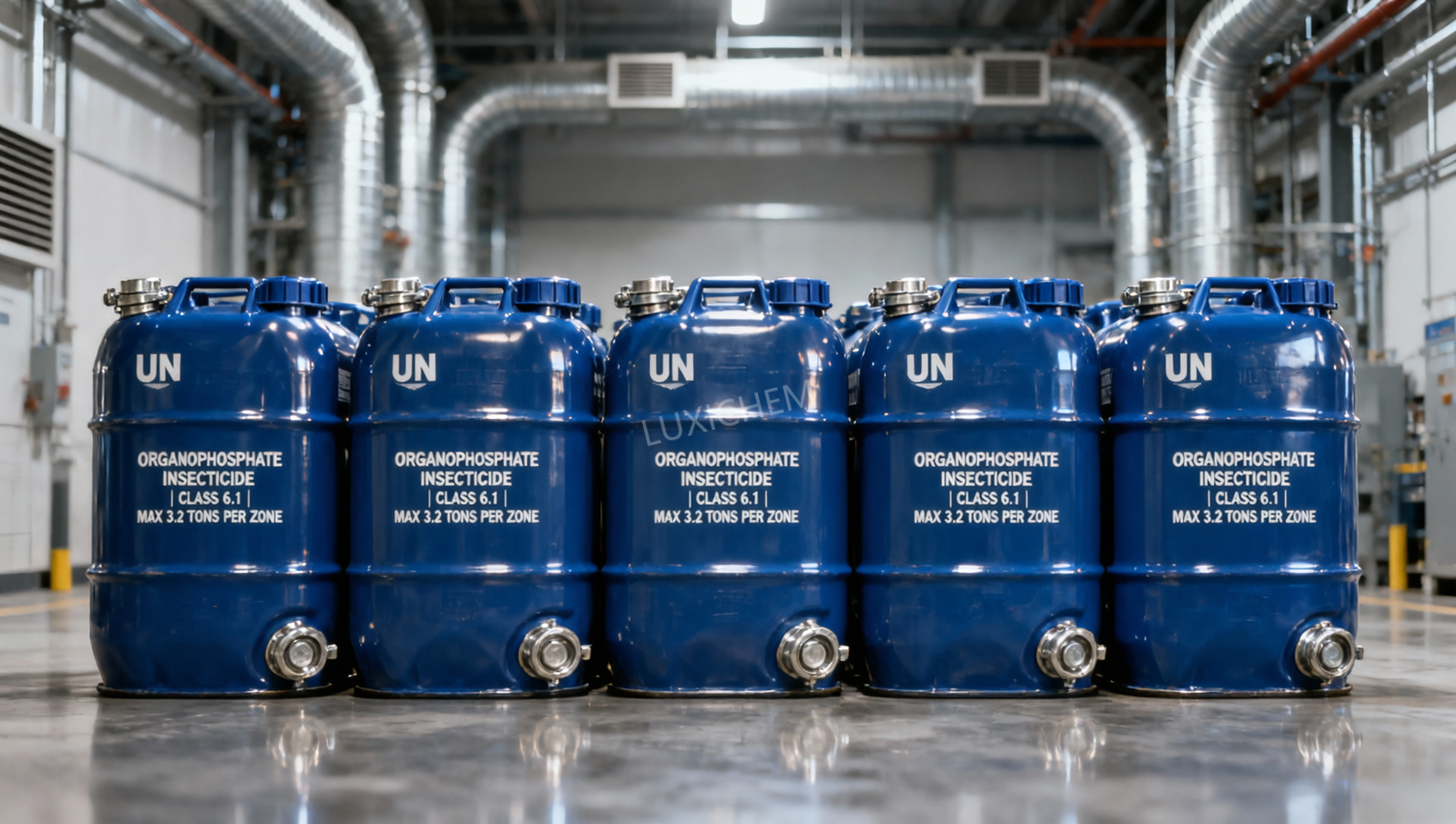
Bulk insecticides logistics: where volume meets vigilance
For project managers overseeing large-scale agricultural or public health initiatives, optimizing bulk insecticides logistics is critical—not just for cost efficiency, but for regulatory compliance and on-site safety. At Luxi Chemical (Shandong) Co., Ltd., we help balance the operational tension between minimum order volume requirements and storage safety limits for bulk insecticides—ensuring your supply chain remains both economical and hazard-aware. With ISO-compliant products, global logistics expertise, and deep experience across 60+ countries, we support engineering teams in designing scalable, safe, and audit-ready chemical procurement strategies.
This isn’t theoretical. It’s daily reality: a regional vector control program orders 12 metric tons of organophosphate-based bulk insecticide to treat 50,000 hectares—but local warehouse capacity allows only 8 tons under Class 6.1 toxic substance storage rules. Or a food processing facility procures chlorpyrifos for perimeter pest management, only to find its existing containment area lacks ventilation specs required for >5-ton stored volumes per OSHA 1910.1200. The gap between what you *need* and what you’re *allowed to hold* becomes a bottleneck—not at the border, not in customs, but inside your own compound.
Minimum order volume: economics vs. physical constraint
Bulk insecticides are rarely sold in “just enough” increments. Suppliers set minimum order volumes (MOVs) based on production batch economics, packaging efficiency, and transport unit optimization—typically 1, 5, or 10 metric tons for liquid formulations; 2–20 tons for technical-grade powders. These aren’t arbitrary. A 5-ton MOV often reflects the smallest economically viable drumming run for a stabilized emulsifiable concentrate—or the lowest container load that maintains freight cost parity across Asia-Europe routes.
But MOVs don’t negotiate with fire codes. In many jurisdictions—including EU ADR Annex A, U.S. NFPA 400, and China GB 15603—the quantity of acutely toxic substances (Class 6.1) permitted in a single storage location is capped by toxicity category, physical state, and ventilation class—not purchase volume. For example, a warehouse classified as “ventilated, non-explosive zone, fire-rated walls” may allow only 3.2 tons of WHO Class II insecticide (e.g., malathion technical) indoors—even if your contract MOQ is 5 tons.
That mismatch forces trade-offs: split deliveries (increasing handling risk and documentation burden), third-party bonded warehousing (adding lead time and audit complexity), or holding excess stock beyond safety thresholds (triggering unplanned inspections). None are ideal. All require early alignment—not with procurement alone, but with EHS officers, site engineers, and local regulatory liaisons.
Storage safety limits: more than square meters
“Storage limit” sounds like a number on a label. In practice, it’s a dynamic calculation involving five variables:
- Toxicity classification: Is the active ingredient Acute Tox. 2 or 3? Oral LD50? Dermal? Inhalation? This determines base allowance per cubic meter.
- Physical form: Liquid concentrates pose higher vapor and spill risks than granules—requiring tighter containment and secondary bunding.
- Stability profile: Does the formulation degrade under heat/humidity? Some pyrethroids hydrolyze above 35°C, increasing volatility—and thus exposure risk—over time.
- Compatibility matrix: Storing carbamates adjacent to strong oxidizers or alkaline cleaners can trigger decomposition. Compatibility isn’t assumed—it’s verified.
- Local jurisdictional nuance: A 10-ton limit in Thailand’s Ministry of Industry notification may shrink to 4 tons under Vietnam’s Circular 31/2021/TT-BCT for the same CAS number.
None of this appears on the SDS Section 7. It lives in annexes, national decrees, and facility-specific risk assessments—not datasheets. That’s why procurement teams need access not just to product specs, but to localized storage guidance calibrated to their site’s classification, climate, and enforcement history.
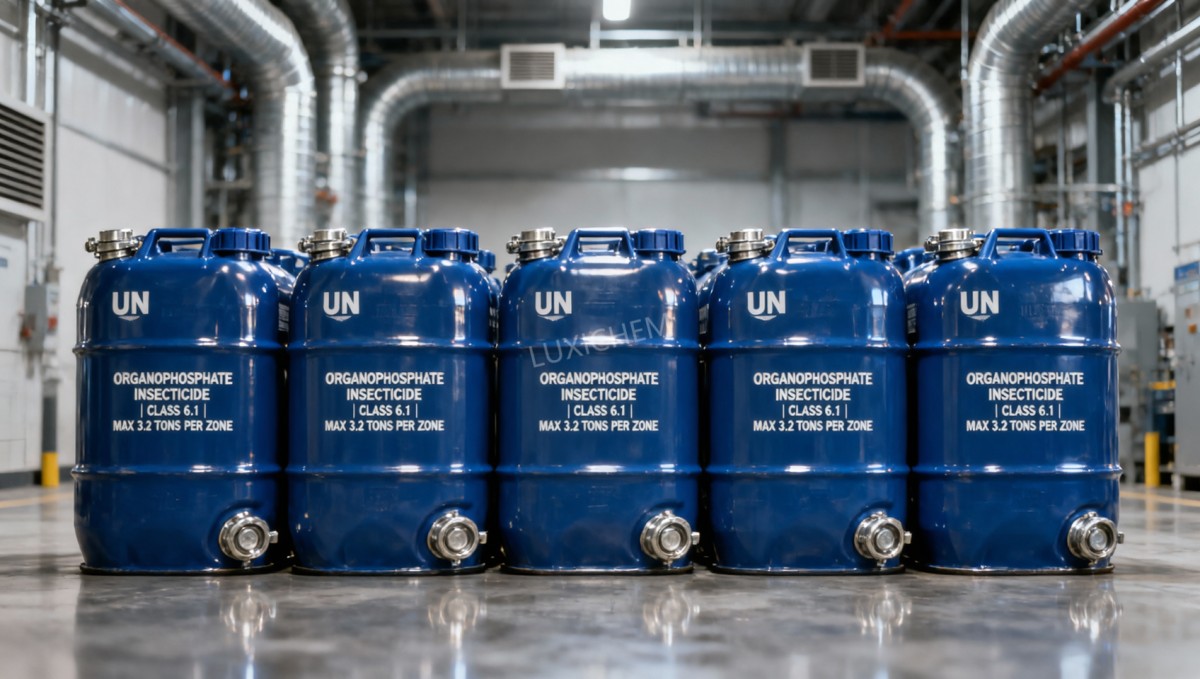
When insecticide logistics meet industrial chemistry
The same principles apply across chemical categories—even when the application shifts from pest control to metal processing. Consider Potassium hexafluorozirconate CAS#16923-95-8, a stable white crystalline solid used in zirconium production and catalytic systems. Though not an insecticide, its storage logic mirrors the challenge: classified as UN 3288, 6.1/PG III, with Acute Tox. 3 and Skin Irrit. 2 hazards. Its 840°C melting point and low water solubility make it physically robust—but its WGK 2 rating and TWA 5 mg/m³ exposure limit still constrain stack height, bin spacing, and ventilation rates in storage areas. You wouldn’t store it alongside flammables. You wouldn’t exceed 1.2 tons per 100 m² without verifying local fire department clearance—even if your supplier ships in 2-ton pallets.
That parallel isn’t coincidental. Bulk chemical logistics share underlying physics: vapor pressure, thermal stability, dust generation potential, and degradation pathways. Whether managing 10 tons of lambda-cyhalothrin or 8 tons of potassium hexafluorozirconate, the core question remains: does your physical infrastructure match the hazard profile—not just today, but across seasonal temperature swings, humidity cycles, and planned maintenance windows?
Practical levers for project managers
You don’t need to redesign your warehouse to ship bulk insecticides safely. But you do need to map three layers before placing the first order:
1. Site-level storage certification: Obtain written confirmation—not just internal EHS notes—of your facility’s current classification (e.g., “ADR-compliant Class 6.1 Storage Zone, Category B, max 6.5 tons”). Verify it covers the specific formulation, not just generic “toxic solids.”
2. Supplier flexibility on packaging and staging: Can the MOV be delivered in multiple UN-certified IBCs instead of one bulk tank? Does the supplier offer staggered delivery windows aligned with your consumption forecast? Luxi Chemical, for instance, structures multi-phase shipments for agrochemical clients—releasing inventory against verified usage logs, not calendar dates.
3. Real-time parameter validation: Don’t rely on legacy SDS versions. Confirm current exposure limits (ACGIH/NIOSH), updated transport classifications (RID/ADR/IATA), and revised storage groupings (e.g., recent EU CLP reclassifications for neonicotinoids). Parameters shift—and audits cite the latest revision, not the one printed on your shelf copy.
None of this requires waiting until RFP stage. Start with your current SDS library. Cross-check CAS numbers against updated GHS portals. Run a 30-day internal audit: how many stored bulk insecticide lots exceed local quantity thresholds *right now*? That gap—measured in tons, not percentages—is where operational risk crystallizes.
No universal formula. Just grounded coordination.
There’s no master table converting MOVs to safe storage volumes. The relationship depends on your geography, your building, your ventilation, your team’s training—and the precise formulation you’re handling. What works for a 10-ton order of imidacloprid in a Chilean vineyard won’t scale to a 15-ton shipment of deltamethrin in a Nigerian urban vector program.
What *does* scale is method: treating bulk insecticides not as commodities, but as engineered materials requiring coordinated input from procurement, engineering, safety, and regulatory affairs *before* the first container is booked. Luxi Chemical supports that coordination—not with fixed answers, but with verified parameters, documented compliance pathways, and logistics design that respects both tonnage targets and toxicity thresholds. Because in chemical logistics, the most efficient shipment isn’t the largest one. It’s the one that arrives, stores, and deploys—without incident, without exception, and without surprise.
Related Picks
 Butylated Hydroxytoluene Price Drivers: Supply, Purity, and Purchasing Risk FactorsOct 21, 2026Butylated Hydroxytoluene price trends depend on supply stability, purity, logistics, and purchasing risk. Learn how to compare quotes wisely and reduce sourcing costs.
 Sodium Tripolyphosphate Price Trends: Raw Material and Energy ExposureOct 20, 2026Explore sodium tripolyphosphate price trends, from phosphate and soda ash costs to energy exposure. Learn how to compare quotes, manage sourcing risks, and make smarter purchasing decisions.
 Acetonitrile Shipment to Vietnam Successfully Dispatched; RCEP Benefits Boost Fine Chemical Trade with ASEANSep 16, 2026A shipment of industrial-grade acetonitrile from our company has recently been loaded and dispatched following the completion of standardized hazardous material packaging and container securing procedures.
 Nigerian Client’s Order of 4 Containers of Vinyl Acetate Successfully Loaded and Shipped to West AfricaSep 16, 2026We recently completed the loading of a vinyl acetate order for a Nigerian client; four containers of the product have been successfully packed and are ready for shipment to Nigeria.




Question Consultation
Send Us Your Inquiry Today

Luxi Chemical is a professional chemical product supplier with ample stock of all chemical categories and excellent quality, welcome your purchase inquiry.

