


Contact vs. Systemic Fungicides: Choosing Protection for Grapevines
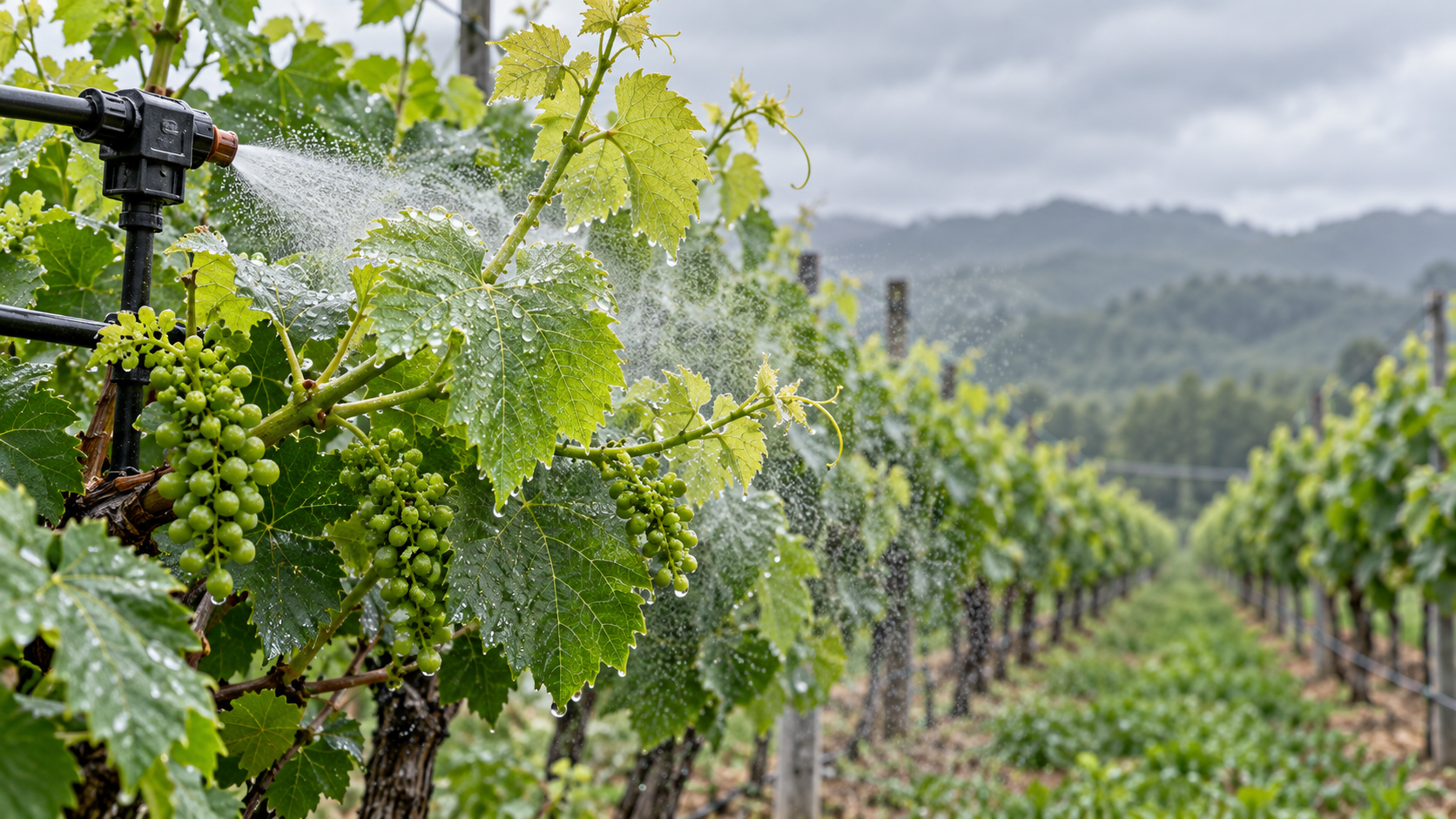
A forecast of rain during rapid shoot growth can turn a routine vineyard spray decision into a difficult trade-off. Will a surface protectant remain effective long enough? Does a penetrating product protect new growth? And if infection may already have occurred, is there still a useful treatment window?
Choosing between contact and systemic fungicides for grapevines requires more than comparing product labels. Technical evaluators need to match disease targets, movement within plant tissues, application timing, weather exposure, and resistance risk. The practical objective is not to identify one universally superior category, but to determine which protection strategy fits each vineyard situation without creating avoidable gaps, residue problems, or resistance pressure.
Start with the pathogen, not the contact–systemic distinction
“Grapevine disease” is not a single target. Powdery mildew, downy mildew, black rot, and Botrytis bunch rot differ in biology, infection conditions, and sensitivity to active ingredients. A product’s ability to enter a leaf says little about whether it controls the organism threatening the crop.
Downy mildew, for example, is caused by an oomycete rather than a true fungus. Many active ingredients used against powdery mildew will not provide useful downy mildew control. Conversely, a downy mildew program may leave powdery mildew unaddressed unless it includes an appropriate partner.
Before assessing mobility, establish three essentials: the diagnosed or forecast disease, the susceptible vine tissues, and whether the proposed product is registered for that crop–disease combination locally. Then examine local efficacy guidance and resistance reports. Laboratory activity alone does not establish dependable vineyard performance.
What contact and systemic fungicides actually protect
Contact fungicides remain primarily on treated surfaces. They create a protective deposit that interferes with susceptible pathogen stages arriving at those surfaces. Their performance therefore depends heavily on coverage, deposit retention, and application before infection.
Systemic fungicides penetrate plant tissues, but their movement varies. The term can obscure important differences. Some products redistribute only locally; others move across a leaf or upward through the water-conducting system. Entry into tissue does not mean unrestricted movement throughout the vine.
Common contact examples include sulfur for powdery mildew and copper-based products for downy mildew, where registered. These examples are not interchangeable recommendations: disease spectrum, crop tolerance, environmental restrictions, and permitted uses differ.
Read movement claims precisely
Translaminar activity describes movement through the leaf blade, potentially helping protect the opposite surface. Local systemic activity indicates limited redistribution around the deposit. Xylem-mobile activity generally moves upward with the transpiration stream. None automatically implies reliable downward movement or complete protection of berries, rachises, and expanding shoots.
This distinction matters in a dense canopy. An evaluator should ask whether demonstrated movement reaches the tissue at risk—not simply whether the brochure uses the word “systemic.”
Timing often matters more than penetration
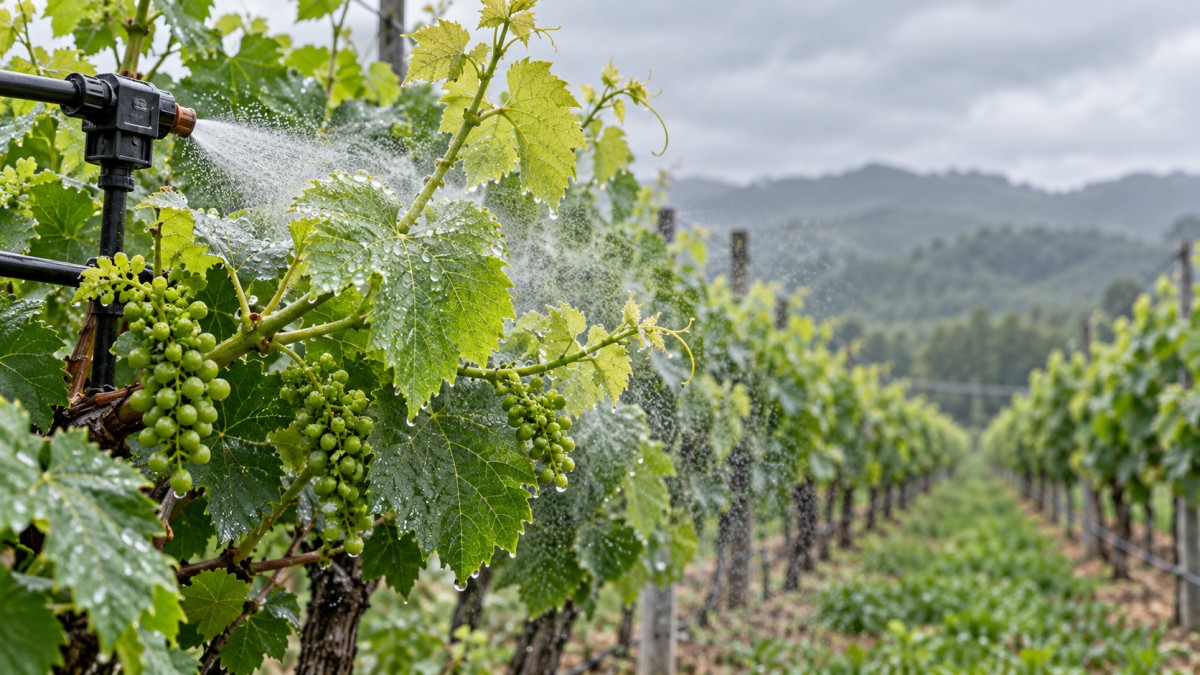
A well-timed contact treatment can outperform an otherwise suitable systemic product applied after its useful treatment window. Preventive positioning remains the foundation of dependable disease management, including for many penetrating fungicides.
Some systemic products provide limited post-infection activity. That does not mean they can restore damaged tissue, reliably eliminate established colonies, or prevent every subsequent infection. The relevant window depends on the active ingredient, pathogen, temperature, and local sensitivity. Use label-supported claims and regional extension guidance rather than a generic “curative” description.
Growth stage changes the decision as much as weather does. Around bloom and early berry development, susceptible tissues can face substantial infection risk, and disease consequences may be difficult to reverse. Later, bunch architecture and access to internal surfaces may constrain spray deposition. A product effective on exposed leaves is not automatically an adequate bunch-protection strategy.
When infection is suspected, reconstruct the event: rainfall or humidity conditions, temperature, time since the last application, growth since spraying, and the previous product’s target spectrum. This is more informative than simply switching from a contact product to a systemic one.
Rainfastness is a product characteristic, not a category guarantee
Contact deposits can lose effectiveness through rainfall, weathering, and dilution as tissues expand. However, formulations differ in adhesion and persistence. Likewise, a systemic product may be vulnerable before sufficient uptake occurs. An unexpected shower shortly after spraying can compromise either approach.
Evaluate the label’s rain-free period together with spray drying conditions, canopy wetness, formulation, and any restrictions on adjuvants. Do not transfer a rainfastness claim from one product to another merely because they contain related active ingredients.
- Before a forecast infection event: prioritize sufficient time for deposition, drying, and any required uptake.
- After substantial rainfall: reassess residual protection using product guidance, growth, disease pressure, and permitted application intervals.
- During rapid shoot expansion: recognize that newly exposed surfaces may become vulnerable even without rain.
- In dense canopies: verify sprayer setup and penetration before attributing poor results to fungicide chemistry.
Avoid treating systemic movement as insurance against inadequate application. Nozzle selection, calibrated output, travel speed, canopy management, and access to bunch zones remain central to performance.
Separate resistance risk from movement within the vine
The most useful resistance question is not “contact or systemic?” but “which mode of action, against which pathogen, with what local sensitivity?” FRAC codes identify mode-of-action groups and help reveal repeated selection pressure that brand names can hide.
Many traditional contact fungicides act at multiple sites and present relatively low resistance risk. Many penetrating products act at a specific biochemical target and carry greater risk. These are useful tendencies, not universal rules. Movement and mode of action are different properties.
For technical approval, review the complete seasonal program rather than an isolated application:
- Track FRAC groups across all products, including premixes.
- Follow label limits on total applications, consecutive applications, rates, and intervals.
- Consult current pathogen-specific FRAC and regional recommendations.
- Use mixture partners only where permitted and where each contributes effective control of the intended target.
- Account for known cross-resistance; changing brands may not change selection pressure.
A low-resistance-risk partner cannot reliably rescue an ineffective active ingredient. Nor does adding a contact product automatically make repeated use of a compromised systemic mode of action acceptable. Where local resistance is documented, selection must reflect the remaining effective options.
Three vineyard situations that change the preferred approach
Low pressure, accessible canopy, preventive timing
A registered contact fungicide may provide an appropriate foundation when coverage is achievable and the application precedes infection. Its suitability depends on the target disease, expected weather, growth rate, and how soon another application can realistically be made. Lower purchase price alone is insufficient justification if maintaining coverage requires impractical spray frequency.
Repeated wet weather and expanding growth
A penetrating product with demonstrated activity against the relevant pathogen may offer useful protection within treated tissues. It may be positioned alongside or in alternation with suitable contact protection, following label and resistance-management requirements. However, rapid growth still demands close monitoring: internal movement should not be interpreted as unlimited protection of emerging leaves.
Visible disease near harvest
This is not simply a reason to choose the “stronger systemic.” Confirm the diagnosis, assess whether useful intervention remains possible, and check preharvest intervals and destination-market residue requirements. Removing severely affected material where practical and improving canopy conditions may be necessary alongside a permitted treatment. A late spray cannot reverse existing fruit damage.
Formulation quality belongs in the evaluation—but is not disease efficacy
Technical buyers also need to examine how the formulated product handles in practice. Storage stability, suspensibility, dispersibility, wet-sieve performance, foaming, and compatibility can affect consistent delivery. A sound active ingredient can perform poorly if the formulation settles irreversibly or fails to distribute evenly.
For formulation teams, appropriately selected silica grades can serve functions such as flow improvement, anti-caking, or rheology adjustment. Luxi Chemical (Shandong) Co., Ltd. supplies Silicon dioxide CAS#7631-86-9 as a chemical raw material. Any proposed use in an agrochemical formulation requires grade-specific assessment of particle characteristics, moisture, impurities, processing behavior, and applicable regulatory requirements.
Silica is not a substitute for a registered grapevine fungicide active ingredient. Its presence does not establish disease control, rainfastness, systemic movement, or crop safety. Likewise, suitability for food, cosmetic, or other industrial applications does not by itself establish suitability for pesticide formulation. Request current specifications, safety documentation, and formulation compatibility evidence before approval.
Make the final choice at program level
A defensible selection compares complete protection programs, not just container prices. Include product cost, application frequency, labor, machinery access, weather-related respraying, and the consequences of control failure. Check worker re-entry intervals, preharvest intervals, maximum seasonal use, and environmental precautions before scheduling applications.
For export grapes, confirm both legal use in the production country and acceptability in the destination market. Maximum residue limits and buyer protocols may differ; compliance with one market does not guarantee acceptance elsewhere. Maintain traceable spray records and obtain current requirements rather than relying on last season’s list.
The final approval record should state the target disease, expected infection period, tissues requiring protection, relevant movement characteristics, FRAC position, application conditions, and residue constraints. If any of those remain unclear, the product is not yet fully evaluated.
Contact fungicides are often valuable preventive tools; systemic and other penetrating products can extend the available options where their specific properties fit the risk. Reliable grapevine protection comes from combining those properties with accurate diagnosis, timely application, sound coverage, and disciplined resistance management—not from choosing one category for the entire season.
Related Picks
 Butylated Hydroxytoluene Price Drivers: Supply, Purity, and Purchasing Risk FactorsOct 21, 2026Butylated Hydroxytoluene price trends depend on supply stability, purity, logistics, and purchasing risk. Learn how to compare quotes wisely and reduce sourcing costs.
 Sodium Tripolyphosphate Price Trends: Raw Material and Energy ExposureOct 20, 2026Explore sodium tripolyphosphate price trends, from phosphate and soda ash costs to energy exposure. Learn how to compare quotes, manage sourcing risks, and make smarter purchasing decisions.
 Acetonitrile Shipment to Vietnam Successfully Dispatched; RCEP Benefits Boost Fine Chemical Trade with ASEANSep 16, 2026A shipment of industrial-grade acetonitrile from our company has recently been loaded and dispatched following the completion of standardized hazardous material packaging and container securing procedures.
 Nigerian Client’s Order of 4 Containers of Vinyl Acetate Successfully Loaded and Shipped to West AfricaSep 16, 2026We recently completed the loading of a vinyl acetate order for a Nigerian client; four containers of the product have been successfully packed and are ready for shipment to Nigeria.




Question Consultation
Send Us Your Inquiry Today

Luxi Chemical is a professional chemical product supplier with ample stock of all chemical categories and excellent quality, welcome your purchase inquiry.

