


Dodecyl Dimethyl Benzyl Ammonium Chloride in Wastewater Treatment: Microbial Kill Rate vs. Biodegradability Trade-offs
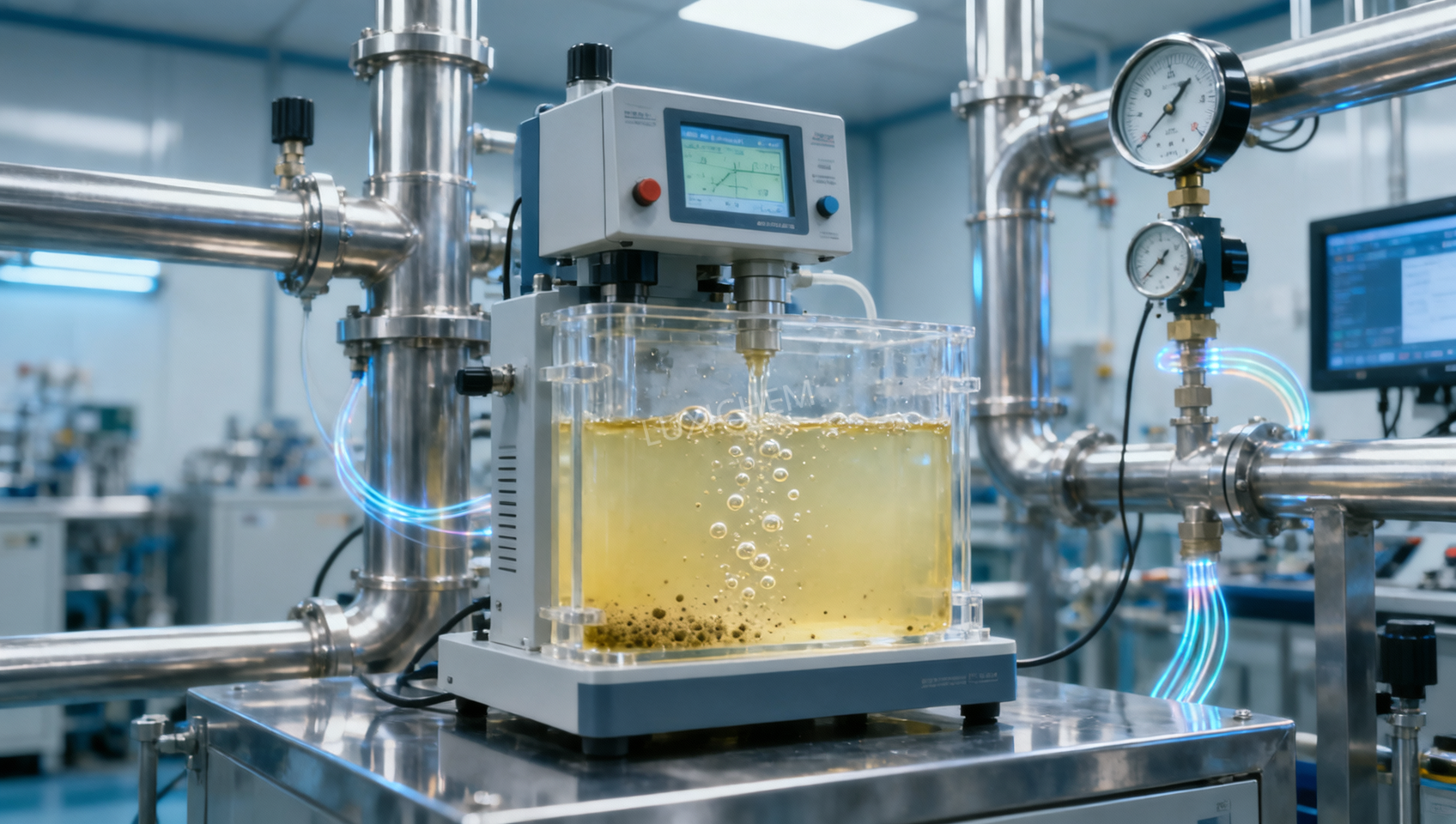
Dodecyl Dimethyl Benzyl Ammonium Chloride (DDBAC) is not a “plug-and-play” disinfectant in wastewater treatment—it’s a performance-versus-persistence decision point. For technical evaluators sizing up biocidal agents, the real question isn’t whether DDBAC kills microbes (it does, effectively), but whether its antimicrobial strength comes at an environmental cost that compromises downstream compliance, sludge management, or discharge permitting. That tension—between rapid log-reduction and slow environmental breakdown—is where practical selection happens.
What DDBAC Actually Delivers in Real Wastewater Streams
DDBAC belongs to the quaternary ammonium compound (QAC) family, and its structure gives it two key operational traits: strong cationic surface activity and moderate hydrophobicity (log P ~4–5). In practice, this means it binds rapidly to negatively charged bacterial membranes—especially Gram-positive organisms like Staphylococcus aureus and Bacillus subtilis—disrupting membrane integrity within minutes. Lab studies under controlled conditions often report >4-log reduction of these pathogens at 10–25 ppm dosing within 15–30 minutes. But wastewater isn’t a lab buffer. Real influent contains suspended solids, organic load (BOD/COD), competing ions (Ca²⁺, Mg²⁺), and surfactants—all of which can sequester or neutralize DDBAC before it reaches target microbes. Field trials show efficacy drops noticeably when total suspended solids exceed 150 mg/L or when COD exceeds 800 mg/L. So while DDBAC’s kill rate is high *in principle*, its effective dose in complex industrial effluents may be 2–3× higher than nominal lab values suggest—and that directly affects residual persistence.
The Biodegradability Gap Isn’t Academic—It Shapes Your Sludge and Discharge
Unlike chlorine or peroxide-based oxidants, DDBAC doesn’t decompose spontaneously in water. Its degradation depends on microbial action—and here’s where data diverges from assumptions. OECD 301B (ready biodegradability) tests show only 20–35% mineralization over 28 days for technical-grade DDBAC. More telling is OECD 302B (inherent biodegradability): under aerobic activated sludge conditions, DDBAC degrades slowly, with half-lives commonly exceeding 7–12 days. That’s not inherently disqualifying—but it matters for process design. In systems with short hydraulic retention times (HRT < 8 hours), significant DDBAC residues exit with treated effluent. In longer HRT systems (>24 h), more degrades—but the compound also accumulates in biomass. Studies tracking DDBAC in sequencing batch reactors (SBRs) found elevated concentrations in waste sludge, correlating with reduced nitrification efficiency and lower SVI (sludge volume index), likely due to membrane disruption in nitrifying bacteria.
This creates a functional trade-off no spec sheet resolves: if you prioritize immediate pathogen knockdown (e.g., for intermittent discharge or high-risk effluent), DDBAC delivers. If your site faces strict end-of-pipe limits for QAC residuals—or relies on biological polishing downstream—you’re trading short-term control for long-term operational friction.
Where DDBAC Fits (and Where It Doesn’t)
Not all wastewater streams are equal—and DDBAC’s suitability hinges on three operational anchors:
- Effluent composition: Works best in low-COD, low-solids streams—like cooling tower blowdown, pharmaceutical rinse water, or pre-treated food processing effluent. Avoid in high-fat, high-protein, or high-anionic-surfactant streams (e.g., detergent manufacturing), where binding losses spike.
- Downstream treatment stage: Most appropriate as a tertiary disinfectant *after* biological treatment—not as a primary biocide in activated sludge basins. Using it upstream risks suppressing nitrifiers and increasing ammonia slip.
- Regulatory context: Some jurisdictions (e.g., EU REACH Annex XIV considerations, certain U.S. state NPDES permits) flag persistent QACs for monitoring. If your discharge permit includes screening for alkylbenzyldimethylammonium compounds—or if you export treated water to reuse applications (irrigation, industrial makeup)—residual DDBAC becomes a compliance checkpoint, not just a performance metric.
For evaluators weighing alternatives, consider this: sodium hypochlorite offers faster decay (hours vs. days) but introduces chloride and DBPs; peracetic acid degrades cleanly but costs more and requires precise dosing control; ozone achieves broad-spectrum kill but adds capital and energy. DDBAC sits in the middle—not the most persistent, not the most transient—but operationally convenient where residual tolerance exists.
Why “Compliant DDBAC” Isn’t Just Marketing Language
Technical-grade DDBAC varies widely in impurity profile—especially in residual unreacted dimethylbenzylamine or dodecylamine, which can be more toxic and less biodegradable than the parent compound. At Luxi Chemical (Shandong) Co., Ltd., our DDBAC is manufactured under ISO 9001-controlled synthesis with post-purification steps to limit amine impurities to <0.3%. Each batch undergoes GC-MS verification and meets OECD 301B screening thresholds (≥25% DOC removal at 28 days) as part of release testing. That doesn’t make it “readily biodegradable”—but it ensures consistency in both kill kinetics and degradation behavior across batches. For technical teams building repeatable treatment protocols, that reproducibility matters more than theoretical maxima.
A Practical Selection Checklist for Technical Evaluators
Before specifying DDBAC, ask—not just “does it kill?” but:
- What’s the measured BOD₅ and TSS of your *actual* influent over the past 3 months—not design specs?
- Does your biological treatment stage operate near its nitrification capacity? (If yes, avoid upstream DDBAC dosing.)
- Are there discharge limits—formal or emerging—for QACs, alkylamines, or total organic nitrogen in your receiving water body?
- Do you monitor sludge health (e.g., respiration rate, nitrifier FISH counts)? Persistent DDBAC residues correlate with suppressed endogenous respiration in mixed liquor.
- Is your dosing system calibrated for variable flow? DDBAC’s narrow effective window means overdosing wastes cost and increases residuals; underdosing fails disinfection.
If the answer to three or more of these is “uncertain” or “no,” pilot testing isn’t optional—it’s the only way to quantify the kill rate/biodegradability trade-off *in your system*.
When You Might Consider Alternatives—Without Leaving QAC Chemistry Behind
Some facilities need QAC-like contact-killing without the persistence burden. Emerging options include ester-quats (e.g., ethyl lauroyl arginate), which hydrolyze rapidly in water to benign amino acids and fatty acids. While less potent than DDBAC against spores, they achieve >3-log reduction of vegetative bacteria at similar doses and degrade >90% within 72 hours. They’re not drop-in replacements—pH sensitivity and foaming behavior differ—but for sites with tight residual limits, they shift the trade-off curve meaningfully.
And for non-disinfection roles in water treatment—like stabilizing polymer flocculants or preventing biofilm in storage tanks—hydrocolloids with inherent antimicrobial synergy can reduce reliance on dedicated biocides. For example, CARRAGEENAN CAS#9000-07-1, derived from red seaweed, functions as a natural thickener and stabilizer in formulations where viscosity control supports uniform biocide dispersion. Its high water-binding capacity helps maintain consistent contact time in gel-based delivery systems—indirectly supporting disinfection efficiency without adding persistent chemistry.
The Bottom Line for Technical Decision-Making
DDBAC remains a high-value tool—not because it’s universally optimal, but because it solves specific, well-defined problems: reliable, rapid kill in relatively clean, low-organic-load streams where regulatory tolerance for residual QACs exists. Its value erodes when applied outside those boundaries. The most experienced evaluators don’t ask “Is DDBAC good?” They ask: “What problem am I solving *right now*, what happens to the molecule after dosing, and what downstream process will handle the residue?” Answering those three questions—grounded in your site’s actual data, not catalog claims—is how sustainable, evidence-based selection actually works.
Related Picks
 Butylated Hydroxytoluene Price Drivers: Supply, Purity, and Purchasing Risk FactorsOct 21, 2026Butylated Hydroxytoluene price trends depend on supply stability, purity, logistics, and purchasing risk. Learn how to compare quotes wisely and reduce sourcing costs.
 Sodium Tripolyphosphate Price Trends: Raw Material and Energy ExposureOct 20, 2026Explore sodium tripolyphosphate price trends, from phosphate and soda ash costs to energy exposure. Learn how to compare quotes, manage sourcing risks, and make smarter purchasing decisions.
 Acetonitrile Shipment to Vietnam Successfully Dispatched; RCEP Benefits Boost Fine Chemical Trade with ASEANSep 16, 2026A shipment of industrial-grade acetonitrile from our company has recently been loaded and dispatched following the completion of standardized hazardous material packaging and container securing procedures.
 Nigerian Client’s Order of 4 Containers of Vinyl Acetate Successfully Loaded and Shipped to West AfricaSep 16, 2026We recently completed the loading of a vinyl acetate order for a Nigerian client; four containers of the product have been successfully packed and are ready for shipment to Nigeria.




Question Consultation
Send Us Your Inquiry Today

Luxi Chemical is a professional chemical product supplier with ample stock of all chemical categories and excellent quality, welcome your purchase inquiry.

