


Food Additives Compliance: How to Review Purity, Limits, and COA Data
Why Food Additives Compliance Review Fails in Practice
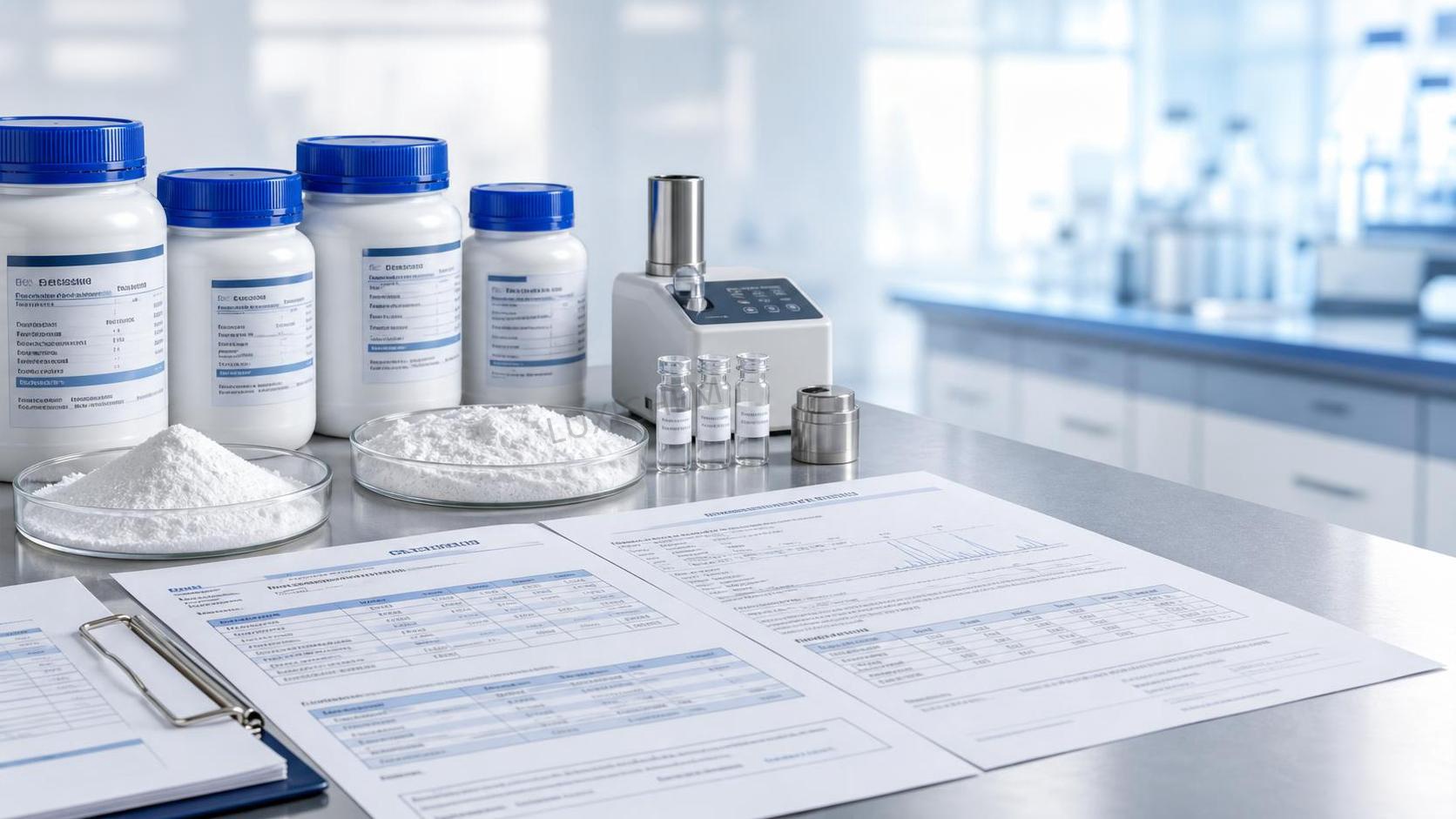
The weak point is rarely the product name. It is the assumption that a compliant label, a tidy specification sheet, and a COA with passing numbers automatically describe the same thing. In Food Additives procurement and quality review, they often do not. A material may be correctly identified yet still present a compliance problem because the purity basis is unclear, impurity limits are incomplete, test methods do not match the applicable standard, or the COA reflects a batch profile that does not answer the intended end use.
That is why experienced quality and safety teams read three layers together: the identity of the additive, the standard that governs it, and the evidence package behind the batch. Looking at only one layer creates blind spots. Looking at all three usually reveals whether the supplier understands food-grade control or is simply adapting an industrial chemical document for a regulated application.
Purity Is Not a Standalone Verdict
A common misunderstanding is that higher assay means better compliance. In regulated food applications, purity matters, but only in context. An assay value tells you how much of the declared substance is present. It does not tell you enough about what makes up the remainder, whether that remainder is permitted, or whether the test basis is aligned with the standard your market expects.
For example, some additive standards define acceptable content on a dried basis, some on an as-is basis, and some alongside related compositional requirements such as alkalinity, insoluble matter, loss on drying, or pH. If a COA reports a strong assay result without clarifying basis or associated quality indicators, the number looks useful but is not yet decision-grade. The review should ask: pure relative to which monograph, tested by which method, and interpreted under which moisture condition?
This is where quality teams often separate food-grade discipline from general chemical trading practice. A supplier serving multiple sectors may provide stable chemical products and broad sourcing support, but for food applications the document set has to show that the batch was evaluated against the right food additive framework, not just against internal factory release criteria.
Limits Matter More Than a Single Passing Result
Compliance review becomes more meaningful when attention shifts from “Did the assay pass?” to “Which limits define suitability?” Food additive standards are built around boundaries. Those boundaries may include heavy metals, specific toxic elements, fluoride, chloride, sulfate, arsenic, lead, insoluble residues, microbiological criteria where relevant, and process-related carryover depending on the additive category and jurisdiction.
The practical problem is that many COAs do not present the full set of limits that a buyer needs for regulatory or customer audit purposes. Some list only the tested result. Some show a company specification but not the external standard reference. Others omit units, reporting limits, or test methods. A result such as “Lead: Pass” is not enough. A reviewer needs at least the measured value or a properly defined non-detect statement, the specification limit, and ideally the analytical method or method source. Without that, it is difficult to assess whether the result is robust or merely formatted to look acceptable.
This is especially important when the material will enter a customer system that audits against FCC, JECFA-linked expectations, local food additive standards, or buyer-specific limits that are stricter than the baseline regulation. Compliance is often a layered requirement. A batch can be legally saleable in one context and still unsuitable for another.
How to Read a COA Without Overtrusting It
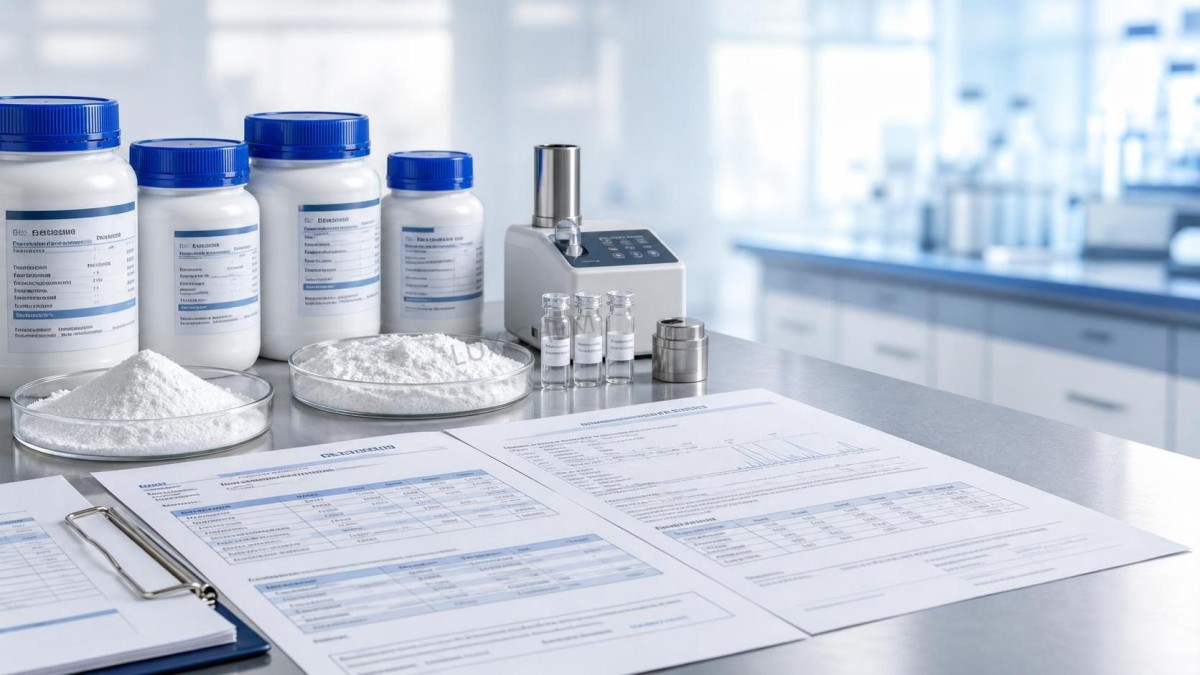
A COA is not just proof that testing happened. It is a statement of what the manufacturer considers controlled, what was actually measured for the lot, and how transparently that information is being communicated. Good reviewers read it less like a certificate and more like a technical summary that must be cross-checked.
The first check is identity consistency. Product name, CAS number, lot number, manufacturing date, shelf life, and packaging description should agree across the COA, specification, label, and purchase documents. Mismatches here are not minor clerical noise. They are early signals that document control may be weak.
The second check is standard alignment. The COA should make clear which specification the batch was released against. An internal enterprise standard may be acceptable in some trade settings, but for Food Additives the buyer usually needs traceability to a recognized food-grade requirement or a documented equivalence review. If the standard reference is absent, the burden of interpretation shifts back to the buyer.
The third check is analytical completeness. Not every batch document includes every possible parameter, and some companies manage part of the data through periodic verification rather than lot-by-lot testing. That can be workable, but only if the supplier explains which items are batch tested, which are monitored by schedule, and how that control model fits the buyer’s approval procedure. A COA with selective data and no explanation tends to create audit friction later.
What Experienced Reviewers Compare Side by Side
This side-by-side reading is more useful than relying on a single “pass” column because it exposes the gap between numerical compliance and usable compliance. Those are not always the same thing.
Where Product Knowledge Meets Standard Review
Some additives are easy to classify by name but harder to approve in application because they sit close to industrial chemical categories. Phosphates are a good example. In food processing, their functional role may relate to buffering, sequestration, texture control, or moisture retention depending on the formulation and local regulations. Yet from a sourcing perspective, the buyer still has to distinguish between food-suitable material and chemically similar grades intended for technical use.
When reviewing a phosphate source such as Trisodium Phosphate CAS#7601-54-9, the key question is not whether the substance is widely known. It is whether the supplied grade, specification limits, and COA data support the exact food application, market destination, and customer audit expectations. That distinction sounds obvious, but in cross-border procurement it is still one of the most common sources of avoidable rework.
Common Mistakes in Approval Workflows
One mistake is treating historical supply performance as proof of current compliance. A material that was acceptable last year may still require re-evaluation if standards, customer specifications, or testing scope have changed. Another is assuming that a COA from the manufacturer and a third-party report are interchangeable. They serve different functions. A manufacturer COA supports batch release; third-party verification may strengthen confidence, but it does not replace the need for clear, lot-specific factory data.
There is also a tendency to review documents in isolation. Procurement checks price and availability, QA checks the COA, regulatory checks labeling, and no one fully reconciles the package. That is how inconsistencies survive. The cleaner approach is a combined review logic: intended use, target market, standard reference, batch evidence, and supplier control capability should all point in the same direction.
What a Reliable Supplier Discussion Should Cover
A useful supplier conversation goes beyond asking for “the latest COA.” It should cover how the product is classified internally, whether food-grade and non-food-grade materials are segregated, which parameters are tested per lot, how out-of-specification events are handled, and which standard edition or customer specification the release decision follows. For companies operating across many chemical categories, this discipline matters because a one-stop sourcing model only works well when document control is as consistent as product supply.
That is also where an enterprise with broad chemical product experience can be useful if it understands the difference between general trading documentation and food application documentation. Buyers do not only need supply continuity. They need stable, reviewable evidence that can survive internal QA checks and downstream customer scrutiny.
A Better Way to Judge Food Additives Data
The most practical mindset is to stop asking whether a Food Additives document set looks complete and start asking whether it supports a defensible release decision. Purity should be read with basis and method. Limits should be read with units, threshold values, and applicability. COA data should be read with traceability, standard reference, and end-use context. Once those pieces are connected, approval becomes faster and more reliable.
For quality and safety managers, that approach reduces a familiar problem: documents that appear acceptable until a customer questionnaire, audit, or incident review exposes what was never actually confirmed. In this area, careful reading is not bureaucracy. It is the technical work that keeps compliant sourcing genuinely compliant.
Related Picks
 Butylated Hydroxytoluene Price Drivers: Supply, Purity, and Purchasing Risk FactorsOct 21, 2026Butylated Hydroxytoluene price trends depend on supply stability, purity, logistics, and purchasing risk. Learn how to compare quotes wisely and reduce sourcing costs.
 Sodium Tripolyphosphate Price Trends: Raw Material and Energy ExposureOct 20, 2026Explore sodium tripolyphosphate price trends, from phosphate and soda ash costs to energy exposure. Learn how to compare quotes, manage sourcing risks, and make smarter purchasing decisions.
 Acetonitrile Shipment to Vietnam Successfully Dispatched; RCEP Benefits Boost Fine Chemical Trade with ASEANSep 16, 2026A shipment of industrial-grade acetonitrile from our company has recently been loaded and dispatched following the completion of standardized hazardous material packaging and container securing procedures.
 Nigerian Client’s Order of 4 Containers of Vinyl Acetate Successfully Loaded and Shipped to West AfricaSep 16, 2026We recently completed the loading of a vinyl acetate order for a Nigerian client; four containers of the product have been successfully packed and are ready for shipment to Nigeria.




Question Consultation
Send Us Your Inquiry Today

Luxi Chemical is a professional chemical product supplier with ample stock of all chemical categories and excellent quality, welcome your purchase inquiry.

