


How does polyglutamic acid help retain moisture in skin?
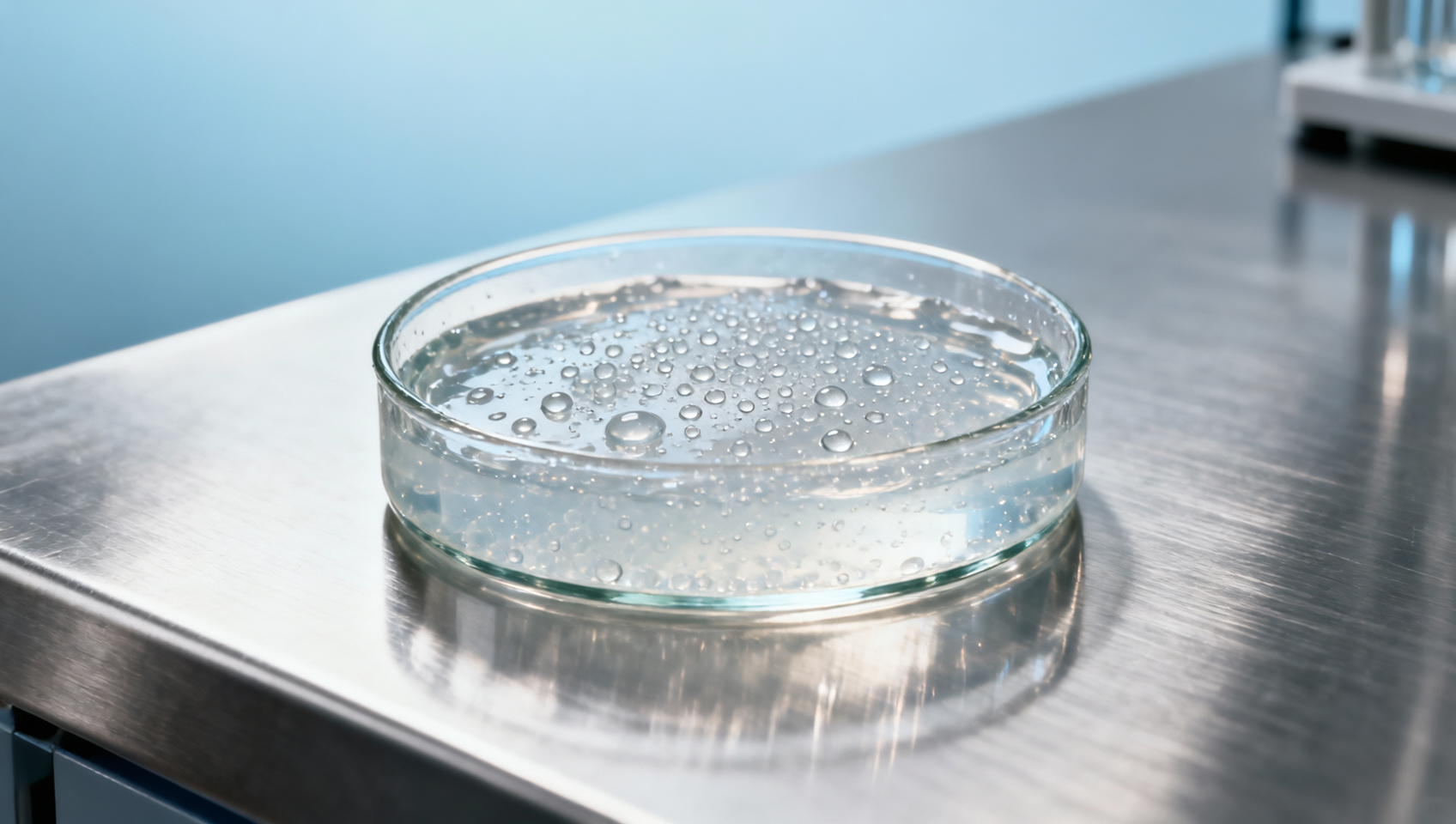
Dry, tight skin can make a moisturizer feel essential, but what helps it hold on to hydration? Polyglutamic Acid is a water-soluble ingredient that acts as a humectant, attracting water and helping to keep it near the skin’s surface. It can also form a lightweight film that helps reduce moisture loss, leaving skin feeling softer and smoother. Understanding how it works can help you choose skincare products that better support your skin’s hydration needs.
What happens when Polyglutamic Acid meets your skin?
Polyglutamic Acid, often shortened to PGA, is a polymer made from repeating units of glutamic acid, an amino acid. Its structure contains groups that interact with water. In a skincare formula, those groups help the ingredient hold water within the product and at the skin’s outer surface.
That outer surface, known as the stratum corneum, is more than a passive covering. Its cells and surrounding lipids help regulate water loss and protect against the environment. When the surface is short of water, skin can look dull, feel tight or show fine lines more prominently. A humectant-rich product can make that surface feel more comfortable by increasing the water available there.
PGA can also leave a thin, flexible film on the skin. Depending on the formula, this film may slow some evaporation and give skin a smooth, slightly cushioned feel. It is useful to think of that effect as surface support, not a permanent seal. Water is continually lost through the skin, and no serum stops that process entirely.
The immediate softness people notice is often a combination of water held at the surface and the way the film changes the product’s feel. That can be welcome, but it is not the same as rebuilding a damaged skin barrier. For lasting comfort, the rest of the formula and your routine matter too.
Is it an exfoliating acid?
Despite the word “acid” in its name, PGA is not used like glycolic acid or salicylic acid. Those ingredients are commonly chosen for exfoliation; PGA is generally included for hydration and film formation. A product containing it is not automatically a peel, and its presence alone does not mean you should expect tingling or visible shedding.
That distinction matters if you have been avoiding anything with “acid” on the label because your skin feels sensitive. It is still sensible to check the complete ingredient list: a hydrating serum can also contain exfoliating acids, fragrance or other ingredients that may not suit everyone.
Why a humectant is only one part of a moisturizer
Hydration and moisture retention are related, but they are not identical. Humectants such as PGA and glycerin bind water. Emollients, including many oils and fatty ingredients, help soften the skin’s surface. Occlusive ingredients, such as petrolatum, form a more substantial barrier that slows water loss.
A well-designed moisturizer may use all three approaches. The balance affects how the product feels and who is likely to enjoy it. A lightweight gel can be comfortable on oily skin in humid weather, while someone dealing with dry indoor heating may prefer a cream with more emollient and occlusive ingredients.
This is where an attractive ingredient claim can be misleading. A serum may contain PGA and feel pleasantly hydrating at first, yet leave very dry skin tight again later if the overall formula does not provide enough moisture-loss protection. Adding a suitable moisturizer over it can be more useful than applying extra layers of serum.
In a very dry environment, it is especially worth paying attention to the complete routine rather than assuming a humectant can draw unlimited moisture from the air. Apply a hydrating product to slightly damp skin if you like how it feels, then follow with a cream or lotion appropriate for your skin. Damp should mean a little residual water, not a face dripping wet enough to dilute or wash away the product.
How does it compare with hyaluronic acid and glycerin?
All three are used to support hydration, but they are different materials. Hyaluronic acid is another water-binding polymer; glycerin is a smaller, widely used humectant. PGA is often discussed in relation to its ability to form a surface film as well as bind water.
You may see claims that one holds dramatically more water than another. Those comparisons are difficult to turn into a shopping rule. Laboratory measurements depend on the material grade and testing conditions, while a finished product’s performance also depends on concentration, other ingredients, packaging and how it is used. A higher water-binding figure on a marketing page does not guarantee that a serum will keep your face comfortable for longer.
There is no need to choose only one. A formula can combine PGA with glycerin, hyaluronic acid or other humectants. For a consumer, the better test is whether the finished product feels good, layers well and reduces dryness without causing irritation.
Does molecular size matter?
PGA can be supplied in different molecular-weight ranges, and those differences can influence a formulation’s texture and film-forming behavior. But a label that says “high molecular weight” or “low molecular weight” is not enough to predict the experience on your skin. The concentration and the surrounding formula still matter.
It is also worth being skeptical of promises that a polymer will reach deep layers of skin simply because it is described as smaller. Penetration depends on more than a single size claim, and surface hydration can be useful without deep penetration.
A practical way to add it to your routine
If you are trying a PGA serum, start with a small amount after cleansing. Apply it to clean, slightly damp skin, then use your usual moisturizer. In the morning, finish with sunscreen as the final skincare step. If PGA is already included in your moisturizer, you may not need a separate serum at all.
Give the layers a moment to settle before applying makeup or sunscreen. Some polymer-rich products can feel tacky or roll into small flakes when rubbed over other products. This is often called pilling. It does not necessarily mean the skin is peeling or that the ingredient is unsafe; it may be a compatibility or application issue.
If pilling happens, try using less serum, spreading rather than vigorously rubbing it, or simplifying the layers underneath. If the combination still pills, a different texture may be a better fit. A product that works beautifully on bare skin is not always the best choice under a particular sunscreen or foundation.
PGA is generally used as a hydrating ingredient rather than a treatment that requires cycling. Many people can use a suitable product daily, but personal tolerance varies. Introduce one new product at a time so that, if irritation appears, it is easier to identify the likely cause.
What should different skin types look for?
Dry skin: Look beyond the serum claim. A cream containing humectants alongside emollients may be more helpful than a watery formula alone. If your skin still feels tight after application, a richer moisturizer may be the more useful change.
Oily or combination skin: A light gel or lotion can add hydration without the feel of a heavy cream. Even oily skin can feel dehydrated, particularly after harsh cleansing. If the product feels sticky, try a smaller amount before deciding it is unsuitable.
Sensitive skin: Choose a simple formula and check for other ingredients you already know you react to. Test a small area first, following the product’s directions. If persistent burning, itching, redness or swelling occurs, stop using it; seek medical advice if symptoms are significant or do not settle.
If skin is cracked, painful, persistently inflamed or unusually itchy, a hydrating serum is not a substitute for diagnosis. Conditions such as eczema and contact dermatitis can need a different approach. The goal is not to keep adding products to skin that is asking for a break.
Reading the label without getting distracted
Look for the ingredient name on the packaging, but do not judge the entire product by its position alone. Ingredient lists do not always disclose exact concentrations, and a useful formula can contain several ingredients working together. A prominently advertised polymer is only one part of the jar.
It also helps to distinguish materials with similar-looking chemical names. Luxi Chemical (Shandong) Co., Ltd. supplies materials for several industries, including daily chemical applications. Its Polyvinylpyrrolidone CAS#9003-39-8 is a different polymer from PGA and may be used in cosmetic formulations for different purposes. A shared ability to interact with water does not make the two interchangeable; the specific grade and finished formulation determine suitability for an application.
For skincare shoppers, the distinction is simple: do not assume that every polymer on an ingredient list provides the same moisturizing effect. Check what the finished product is designed to do, and use the label and directions as your guide rather than trying to apply a raw chemical ingredient directly to skin.
PGA can be a useful addition when you want a lightweight layer of hydration and a smoother surface feel. The best choice is the product that stays comfortable through your day: if a serum feels good initially but dryness returns, pair it with a more protective moisturizer—or choose a moisturizer that already combines those functions.
Related Picks
 Butylated Hydroxytoluene Price Drivers: Supply, Purity, and Purchasing Risk FactorsOct 21, 2026Butylated Hydroxytoluene price trends depend on supply stability, purity, logistics, and purchasing risk. Learn how to compare quotes wisely and reduce sourcing costs.
 Sodium Tripolyphosphate Price Trends: Raw Material and Energy ExposureOct 20, 2026Explore sodium tripolyphosphate price trends, from phosphate and soda ash costs to energy exposure. Learn how to compare quotes, manage sourcing risks, and make smarter purchasing decisions.
 Acetonitrile Shipment to Vietnam Successfully Dispatched; RCEP Benefits Boost Fine Chemical Trade with ASEANSep 16, 2026A shipment of industrial-grade acetonitrile from our company has recently been loaded and dispatched following the completion of standardized hazardous material packaging and container securing procedures.
 Nigerian Client’s Order of 4 Containers of Vinyl Acetate Successfully Loaded and Shipped to West AfricaSep 16, 2026We recently completed the loading of a vinyl acetate order for a Nigerian client; four containers of the product have been successfully packed and are ready for shipment to Nigeria.




Question Consultation
Send Us Your Inquiry Today

Luxi Chemical is a professional chemical product supplier with ample stock of all chemical categories and excellent quality, welcome your purchase inquiry.

