


How polyester polyol supplier lead times affect production planning
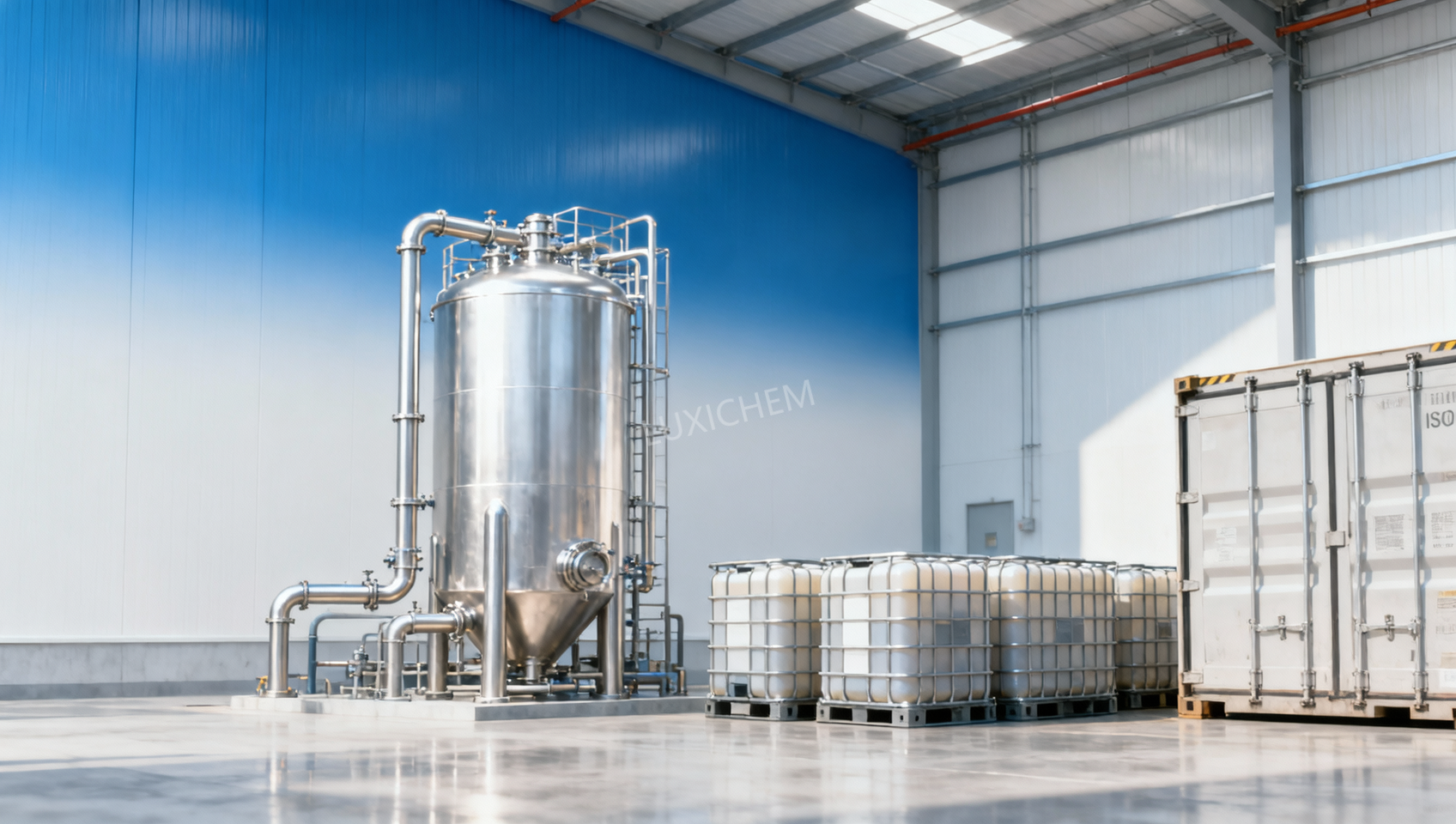
How Polyester Polyol Supplier Lead Times Affect Production Planning
For many chemical projects, polyester polyol is not simply another line item on a purchase order. It is a schedule-setting raw material. When a planned delivery moves by one or two weeks, the consequence can extend well beyond the warehouse: formulation trials are postponed, reactor campaigns are reshuffled, blending lines sit underused, and downstream delivery dates become harder to defend.
Project managers often discover this too late. The nominal supplier lead time may look acceptable at the quotation stage, but it may not include raw-material allocation, quality release, packaging availability, export documentation, port congestion, or the time needed to approve an incoming batch. A polyester polyol supplier that can make the product is not necessarily a supplier that can support the project timeline.
The practical question is therefore not “What is the lead time?” It is “Which part of the lead time is fixed, which part is variable, and how much uncertainty can the production plan absorb?” Getting that distinction right is central to cost control in polyurethane systems, coatings, adhesives, elastomers, and other applications where resin chemistry and delivery commitments are closely linked.
Lead Time Is More Than Manufacturing Time
A supplier may describe a lead time as the period between purchase order confirmation and cargo readiness. That definition is useful, but it is incomplete for project planning. The operational lead time begins much earlier: with technical alignment, material approval, commercial confirmation, and sometimes a credit or compliance review. It ends only when usable material has passed receiving inspection and is available for the intended production batch.
For polyester polyols, the manufacturing window itself can vary with molecular-weight range, hydroxyl value, acid value, viscosity target, feedstock selection, and whether the required grade is routinely produced or made against order. A standard grade with recurring demand may be supplied from inventory or from a regular production campaign. A tailored grade, even if chemically similar, may need a dedicated run and additional quality checks. Teams should not assume that “polyester polyol” represents one interchangeable supply category.
Transportation creates another layer. Bulk tanker deliveries, IBCs, drums, flexitanks, and ISO tanks each have different booking, cleaning, handling, and transit considerations. International projects also need to account for document preparation, local import requirements, customs clearance, and the possibility that a shipment reaches the port on time but cannot be released to the plant as planned.
The most reliable planning method is to separate supplier production lead time from total landed lead time. Combining them into a single optimistic number makes schedules look cleaner than they really are.
Why a Late Polyol Delivery Disrupts More Than One Production Order
Polyester polyols are typically used within a formulated system. When one grade is unavailable, the impact may spread to isocyanate scheduling, pigment or additive inventory, packaging reservations, and customer shipment planning. In some formulations, substitution is possible only after laboratory verification. Even where another polyol appears similar on paper, changes in reactivity, flexibility, hydrolysis resistance, adhesion, or processing viscosity may affect the finished product.
This is why a delayed delivery can produce hidden costs that are larger than expedited freight. A plant may keep labor and utilities committed to a campaign that cannot start. It may run a less efficient sequence of smaller batches. It may also consume safety stock intended for another customer program, leaving the business exposed to a second disruption. The cost discussion should include these knock-on effects, not only the price difference between standard and urgent logistics.
There is also a quality risk in treating late material as interchangeable material. Pressured teams sometimes try to qualify an alternate grade immediately before production. That can be a reasonable contingency when change-control procedures are in place, but it should not become the normal sourcing model. The closer a formulation is to a customer-approved specification, the less room there is for rushed substitutions.
The Variables a Project Team Should Ask About Before Awarding Business
A procurement comparison based only on unit price and stated delivery date misses the issues that cause most avoidable surprises. Before committing volume, project leaders should ask the polyester polyol supplier how the grade is produced and released. Is it a regular campaign product? Is there finished inventory? Are key feedstocks sourced internally, contractually secured, or purchased as needed? What happens when an order is placed just after a campaign has closed?
The answers do not need to be overly detailed, but they should be specific enough to identify exposure. “Lead time depends on production” is not a planning answer. A useful answer distinguishes normal production timing from exceptional timing and identifies the steps that must occur before shipment can be authorized.
One overlooked point is the difference between a confirmed date and a forecast date. Forecasts are helpful for capacity planning, but they should not trigger irreversible downstream commitments unless the supplier has confirmed production allocation, logistics readiness, and any required documentation. This is particularly relevant for project launches, where a missed commissioning window may be expensive to recover.
Build Inventory Around Risk, Not Habit
Safety stock is the conventional response to lead-time uncertainty, but excessive stock can create its own problems. Polyester polyols need appropriate storage conditions, and inventory decisions should consider viscosity change, moisture management, tank turnover, heating requirements where relevant, and segregation by grade. Holding extra material is only useful if the plant can store and consume it safely within its own quality-control framework.
A better approach is to classify materials according to the real consequence of interruption. A high-volume, easily qualified grade may need a different buffer than a low-volume grade used in a time-critical customer-approved system. Likewise, a product sourced domestically may require less cover than a material crossing multiple borders, even when quoted manufacturing lead times are similar.
The inventory calculation should include the supplier’s reliability pattern, not just its average lead time. A supplier that consistently ships within a narrow window is easier to plan around than one with a slightly shorter average but frequent variation. Procurement teams sometimes focus on the fastest stated lead time; production teams usually value the most dependable one.
Use Supplier Communication as an Early-Warning System
Good sourcing relationships are operational, not merely commercial. A capable supplier should be able to discuss forecast volumes, changing consumption rates, packaging plans, and likely demand peaks without waiting for an emergency purchase order. This does not mean asking a supplier to guarantee every forecast. It means creating enough visibility for both sides to make sensible capacity and logistics decisions.
For global buyers, working with a broad chemical supply partner can simplify this process when several product categories must arrive within the same project window. Luxi Chemical (Shandong) Co., Ltd. supplies chemical raw materials and chemical products to customers in more than 60 countries and regions, with offerings spanning organic intermediates, food additives, fertilizers, and related chemical requirements. For procurement teams, the potential benefit of this type of portfolio is not simply fewer suppliers; it is the ability to coordinate specifications, shipping documentation, and purchasing activity across multiple materials. That said, each product’s production and transport cycle should still be assessed independently.
Communication should become more frequent when a project approaches a critical production milestone. A monthly forecast may be enough during steady consumption, while a new plant startup or a customer qualification run may justify weekly confirmation of production status, release status, and shipment booking. Silence is not confirmation, especially when material is moving through a long international supply chain.
Do Not Ignore Supporting Chemicals and Plant Readiness
Polyol availability is only one part of production readiness. Utilities, cooling-water systems, storage tanks, transfer lines, and cleaning procedures can delay a campaign even when the primary raw material arrives on time. This is most visible during commissioning, maintenance turnarounds, or when plants switch between products with different handling requirements.
Water-treatment chemicals can be relevant in this wider planning picture. For example, Diethylenetriaminepenta(methylene phosphonic acid) CAS#15827-60-8 is supplied as a 50% aqueous solution and is used in industrial water-treatment contexts for scale inhibition and metal corrosion control. Its high water solubility and ability to suppress calcium carbonate and sulfate scale formation may be relevant where water-system condition affects equipment availability. Any selection, storage, handling, and compatibility review must be based on the plant’s actual water chemistry, equipment materials, and safety procedures rather than on a generic maintenance assumption.
This broader view matters because project schedules often fail at interfaces. A material planner may have secured the polyester polyol, while the maintenance team is still resolving a fouled heat exchanger or the site has not cleared the receiving tank. Integrated readiness reviews are less glamorous than supplier negotiations, but they prevent many costly last-minute discoveries.
A Practical Sourcing Position: Plan for the Exception
The best time to understand a polyester polyol supplier’s lead-time limits is before a critical order is issued. Build the production schedule using the expected lead time, but protect it using the plausible exception: a delayed campaign, an extended release process, unavailable packaging, a missed vessel booking, or a slower-than-expected import clearance. Not every project needs large inventories or dual sourcing. Some need only earlier forecast sharing, a confirmed allocation window, or a pre-approved alternate grade.
For project managers, the decision is ultimately about where to place risk. Paying a lower purchase price can be sensible if the schedule has flexibility and the material is readily substitutable. If the project has a fixed startup date, limited storage, or customer-sensitive formulations, the more valuable supplier may be the one that gives realistic dates, communicates deviations early, and understands what a missed delivery does to the entire production plan.
That is the standard worth applying when evaluating supply: not whether the quoted lead time looks attractive on a spreadsheet, but whether it remains workable when the project stops being routine.
Related Picks
 Butylated Hydroxytoluene Price Drivers: Supply, Purity, and Purchasing Risk FactorsOct 21, 2026Butylated Hydroxytoluene price trends depend on supply stability, purity, logistics, and purchasing risk. Learn how to compare quotes wisely and reduce sourcing costs.
 Sodium Tripolyphosphate Price Trends: Raw Material and Energy ExposureOct 20, 2026Explore sodium tripolyphosphate price trends, from phosphate and soda ash costs to energy exposure. Learn how to compare quotes, manage sourcing risks, and make smarter purchasing decisions.
 Acetonitrile Shipment to Vietnam Successfully Dispatched; RCEP Benefits Boost Fine Chemical Trade with ASEANSep 16, 2026A shipment of industrial-grade acetonitrile from our company has recently been loaded and dispatched following the completion of standardized hazardous material packaging and container securing procedures.
 Nigerian Client’s Order of 4 Containers of Vinyl Acetate Successfully Loaded and Shipped to West AfricaSep 16, 2026We recently completed the loading of a vinyl acetate order for a Nigerian client; four containers of the product have been successfully packed and are ready for shipment to Nigeria.




Question Consultation
Send Us Your Inquiry Today

Luxi Chemical is a professional chemical product supplier with ample stock of all chemical categories and excellent quality, welcome your purchase inquiry.

