


Industrial Sodium Bicarbonate: Choosing Grades for Flue Gas and Water Treatment
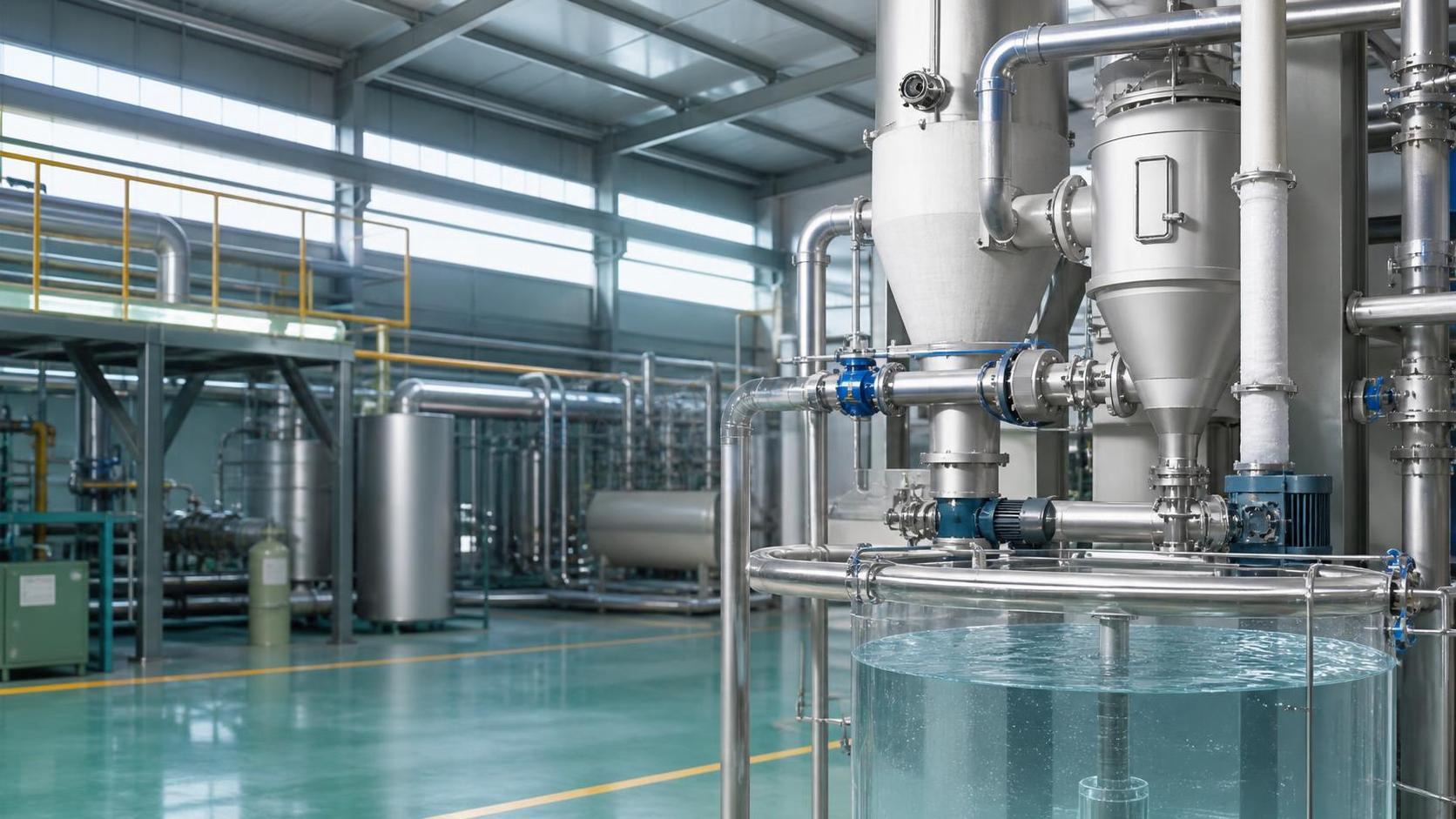
Selecting industrial natrium bicarbonate for flue gas treatment or water treatment is not a simple purity comparison. A grade that looks acceptable on a certificate of analysis can still create poor injection behavior, inconsistent removal performance, excess residue, or handling problems after commissioning. The right decision comes from matching particle size, reactivity, purity, moisture control, packaging, and supply reliability to the actual process design.
For environmental applications, the cheapest quoted material is rarely the lowest-cost option over the life of the system. A slightly less expensive powder can increase material consumption, block conveying lines, leave unreacted solids, or make compliance margins difficult to maintain. The practical question is not “Which grade is best?” but “Which grade behaves predictably in this equipment, under this load, with this operating target?”
Where Industrial Natrium Bicarbonate Performs Best
Natrium bicarbonate, also called sodium bicarbonate or sodium hydrogen carbonate, is widely used as a dry sorbent and pH-adjustment chemical. Its value in environmental systems comes from its ability to react with acidic components while remaining comparatively straightforward to store and dose when the material specification is appropriate.
In flue gas cleaning, it is commonly considered for dry or semi-dry treatment of acidic gases, particularly where the process needs flexible operation, rapid response to changing inlet conditions, or a relatively compact retrofit arrangement. Depending on the full process configuration, sodium bicarbonate may be used to help control acid gases such as hydrogen chloride, sulfur oxides, and hydrogen fluoride. Actual removal results depend on gas composition, temperature, residence time, injection location, downstream filtration, and the quality of the sorbent preparation. A supplier should not promise a removal rate without reviewing these conditions.
In water treatment, the material is generally selected when a controlled alkaline buffer is needed. It may be used to support pH adjustment, alkalinity management, neutralization, or biological treatment stability. It is often preferred where a less aggressive alkali source is desirable, but it is not automatically the correct choice for every low-pH stream. High acidity, rapid neutralization requirements, dissolved solids limits, and downstream chemistry may point to another reagent or a blended treatment strategy.
The same chemical can therefore be suitable for both applications while requiring very different grade decisions. That distinction is where many procurement specifications become too vague.
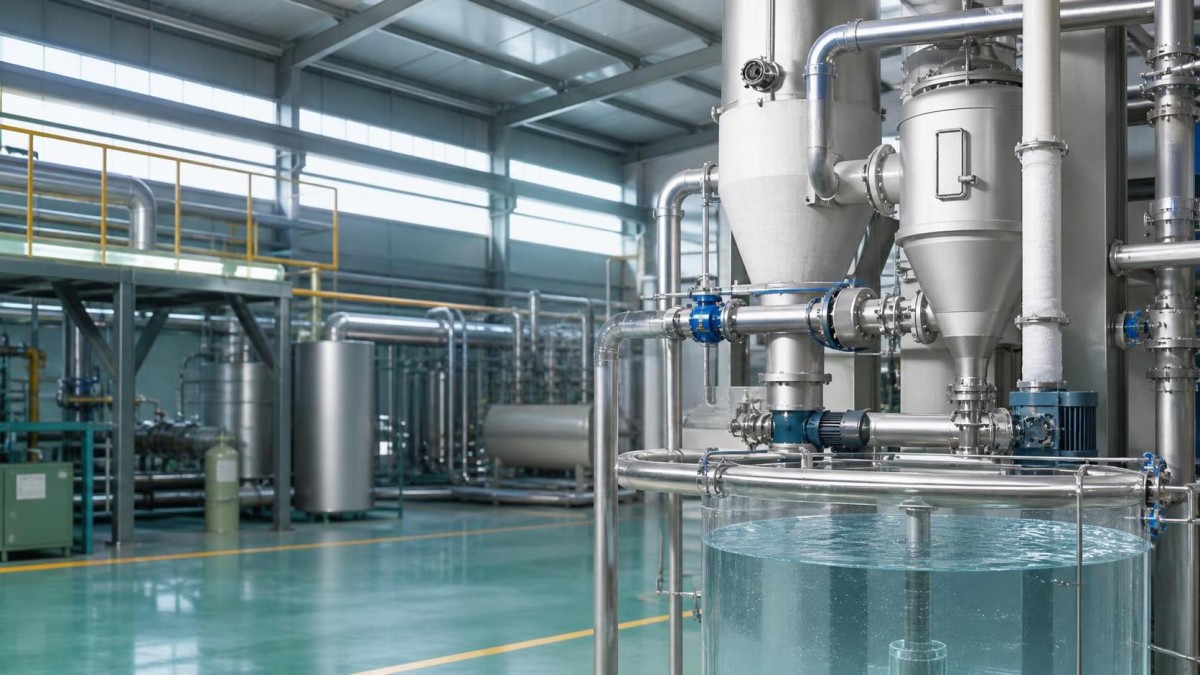
Grade Selection Starts With the Process, Not the Product Sheet
A common mistake is to request “industrial grade sodium bicarbonate” and assume that this defines a usable product. It does not. Industrial grade is a broad commercial description. The meaningful specification must reflect the application and the equipment.
For flue gas systems, particle size distribution often matters more than buyers initially expect. Finer material can offer more surface area and faster reaction potential, but excessive fines can create dusting, poor flow, filter loading, or losses during pneumatic transport. Coarser material may be easier to handle but can react too slowly if there is limited contact time between sorbent and gas.
There is no universally ideal mesh size. A product suited to direct duct injection may not be suited to a milling-and-injection arrangement. Some systems rely on on-site grinding to activate or reduce particle size before injection; others need a ready-to-use fine powder. The supplier should understand which arrangement is installed before recommending a grade.
For water treatment, dissolution behavior can be more relevant than fine particle size alone. A product that dissolves too slowly may create uneven dosing in a short retention system. A very fine powder may dissolve well but introduce handling challenges in humid storage areas. In a batch neutralization tank, the operating team may accept a slower dissolution rate. In automated continuous dosing, they may not.
A practical specification discussion should begin with a few operating facts:
- What is the target contaminant or treatment objective?
- Is the system dry injection, slurry preparation, batch dosing, or continuous dissolved dosing?
- What are the normal and peak loading conditions?
- What contact time is available before filtration, discharge, or the next process stage?
- Can the current feeder, screw, rotary valve, and conveying line handle fine powder reliably?
- What waste stream or spent sorbent disposal constraints apply?
These questions are more useful than simply asking for a “high-quality” grade. High quality means stable performance against an agreed specification, not just a high assay number.
Purity Matters, But It Is Not the Whole Story
Purity is important because unwanted salts, insoluble matter, moisture, and trace contaminants can affect handling and process control. In water applications, impurities may contribute to conductivity, sludge volume, or downstream water-quality concerns. In flue gas treatment, they can influence ash composition, residue management, or the reliability of metering equipment.
Still, an assay value should not be treated as a complete predictor of field performance. Two materials with similar sodium bicarbonate content can behave differently due to particle shape, bulk density, moisture uptake, flowability, and lot-to-lot consistency.
For that reason, request more than a standard certificate of analysis when the application is critical. Ask for the test methods used, typical ranges rather than only maximum limits, and whether the producer can provide recent batch data. If a plant is operating close to an emissions or discharge limit, it is reasonable to retain samples from early deliveries and compare actual operating consumption against design assumptions.
Moisture deserves special attention. Sodium bicarbonate can cake when exposed to poor storage conditions, and caked material does not dose consistently. A specification should address not only moisture at shipment but also the packaging barrier, pallet protection, storage time, and local warehouse humidity. A grade that performs well in a dry inland facility may require different storage discipline at a humid coastal site.
Flue Gas Treatment: Evaluate Reactivity in the Real System
Dry sorbent injection is often judged by a simple chemical ratio: how much sodium bicarbonate is required for a given acid gas load. That ratio is useful for early calculations, but it should not become the final purchasing basis. Actual consumption is affected by incomplete reaction, gas distribution, mixing quality, particle size, recirculation, temperature, and filter operation.
In practice, an apparently low-cost grade can become expensive when the material has poor dispersion or inconsistent fine content. The operator responds by increasing feed rate to protect the compliance margin. Consumption rises, residue volume rises, and the baghouse may experience additional loading. The initial purchase saving can disappear quickly.
Before approving a grade for a new installation or retrofit, review the following points with the engineering and operations teams:
- Injection point: Confirm whether the grade has enough time and turbulence to react before collection.
- Temperature window: Material behavior and reaction conditions should be assessed against actual duct temperatures, not design values alone.
- Grinding requirement: Determine whether the system depends on milling and whether the supplied grade is compatible with the mill.
- Conveying behavior: Check bulk density, flowability, dust control, and segregation risk in hoppers and feeders.
- Residue handling: Assess the impact on ash classification, storage volume, transport, and disposal routes.
A short controlled trial is often more informative than a long technical discussion. Trial planning should define inlet conditions, feed rate steps, sampling methods, filter performance, and acceptable residue characteristics. Comparing products only during unusually low inlet loading can produce misleading results. The trial should include conditions that reflect realistic operating variability.
Water Treatment Has Different Failure Modes
In a water treatment system, natrium bicarbonate is often selected because it provides alkalinity without the sharp pH swing associated with stronger alkaline chemicals. That can be useful when protecting biological processes or when a gradual adjustment is preferred. Yet “gentler” does not mean “better in every tank.”
If the incoming water is strongly acidic or the process needs immediate pH correction, sodium bicarbonate may require more dosing capacity or more residence time than the system can provide. If the objective is to stabilize alkalinity for biological treatment, it may be a sensible choice. If the objective is rapid bulk neutralization, another alkali source may be technically or economically more appropriate.
Review the full water chemistry before setting the grade requirement. Key checks include raw-water pH, acidity or alkalinity, hardness, dissolved carbon dioxide, target pH range, mixing energy, retention time, and the tolerance of downstream processes to added sodium. Bench testing or a pilot run is particularly useful when the water contains variable industrial contaminants.
Do not overlook how the material will be introduced. Dry feeding into an inadequately mixed tank can leave undissolved solids and unstable readings. Preparing a solution may improve control, but it adds equipment, cleaning needs, and operating steps. The best choice is usually the one that fits the existing dosing architecture without creating a new maintenance problem.
Procurement Requirements That Protect the Project
A sound purchase specification should include chemical and physical requirements, but it should also define the commercial controls that keep the treatment system running. A stable grade is of limited value if deliveries arrive late, packaging changes without notice, or batch documentation is inconsistent.
For recurring consumption, set clear acceptance criteria for sodium bicarbonate content, moisture, particle size range, bulk density where relevant, insoluble matter, packaging type, net weight tolerance, and documentation. The correct limits need to be determined from process needs and verified through supplier data; arbitrary values copied from an old specification can create unnecessary cost or fail to address the real risk.
Packaging deserves a process-level review. Small bags can be practical for low-volume or trial use but may increase manual handling and dust exposure. Bulk bags reduce handling frequency but require compatible lifting equipment, discharge stations, and dry storage. Tanker or silo delivery can offer efficiency at high consumption rates, provided the unloading system protects the product from moisture and avoids cross-contamination.
Luxi Chemical (Shandong) Co., Ltd. supports global chemical sourcing across chemical raw materials, chemical products, food additives, organic intermediates, and fertilizers. For buyers managing multiple materials across a project, a broader product portfolio can simplify supplier coordination, documentation flow, and shipment planning. The useful question is whether the supplier can consistently meet the agreed sodium bicarbonate specification and service requirements for the intended treatment duty.
Where procurement teams source multiple unrelated chemicals, catalog management should remain separate from technical approval. For example, Artemisinin CAS#63968-64-9 is a distinct chemical product and should not be treated as relevant to flue gas or water-treatment bicarbonate selection. Keeping product approval records application-specific prevents a common documentation error: assuming that a supplier’s availability of many products substitutes for fit-for-purpose technical validation.
Do Not Let a Trial Become an Uncontrolled Experiment
When changing suppliers or grades, avoid switching full-scale operations based only on laboratory paperwork. Start with a defined qualification sequence. Confirm the certificate of analysis, inspect packaging and powder condition on arrival, conduct a limited operational trial, then compare consumption and system behavior against the current baseline.
The comparison should include more than outlet readings. Track feeder stability, dust generation, pressure drop, residue volume, cleaning frequency, operator intervention, and material losses. A grade may meet the immediate removal target while creating a maintenance burden that becomes visible only after several weeks.
It is also wise to distinguish between a product issue and a system issue. If treatment efficiency drops after a delivery, verify the material, but also check hopper bridging, injector wear, air leaks, milling performance, gas flow changes, and instrument calibration. Blaming the powder too early can delay the real correction.
FAQ
Can food-grade sodium bicarbonate be used for flue gas treatment?
It may be chemically usable, but it is not automatically the right economic or physical fit. Food-grade requirements do not necessarily match the particle size, bulk handling, packaging, or cost needs of a dry sorbent system.
Is a higher purity grade always more effective?
No. High purity can be valuable, particularly where water quality is sensitive, but flue gas performance also depends heavily on particle size, dispersion, contact time, and equipment condition.
Should particle size be specified as one number?
Usually not. A particle size distribution is more useful than a single average value because too many coarse particles and too many fines can create different operational problems.
How much safety stock should be held?
That depends on daily consumption, delivery lead time, storage capacity, demand variability, and the consequence of treatment interruption. It should be calculated from the site’s actual supply risk rather than copied from another facility.
Make the Final Decision on Total Operating Fit
The best industrial natrium bicarbonate grade is the one that achieves the treatment target with predictable feeding, manageable residue, suitable storage, and a dependable supply plan. For flue gas work, prioritize reactivity in the actual injection and filtration system. For water treatment, prioritize dissolution, buffering behavior, and compatibility with the wider water chemistry.
Ask suppliers for meaningful batch data, not just a generic statement of compliance. Validate important grades under representative operating conditions. Then write the lessons from that trial into the procurement specification. That is how a chemical purchase becomes a controlled engineering decision rather than a recurring source of operational uncertainty.
Related Picks
 Butylated Hydroxytoluene Price Drivers: Supply, Purity, and Purchasing Risk FactorsOct 21, 2026Butylated Hydroxytoluene price trends depend on supply stability, purity, logistics, and purchasing risk. Learn how to compare quotes wisely and reduce sourcing costs.
 Sodium Tripolyphosphate Price Trends: Raw Material and Energy ExposureOct 20, 2026Explore sodium tripolyphosphate price trends, from phosphate and soda ash costs to energy exposure. Learn how to compare quotes, manage sourcing risks, and make smarter purchasing decisions.
 Acetonitrile Shipment to Vietnam Successfully Dispatched; RCEP Benefits Boost Fine Chemical Trade with ASEANSep 16, 2026A shipment of industrial-grade acetonitrile from our company has recently been loaded and dispatched following the completion of standardized hazardous material packaging and container securing procedures.
 Nigerian Client’s Order of 4 Containers of Vinyl Acetate Successfully Loaded and Shipped to West AfricaSep 16, 2026We recently completed the loading of a vinyl acetate order for a Nigerian client; four containers of the product have been successfully packed and are ready for shipment to Nigeria.




Question Consultation
Send Us Your Inquiry Today

Luxi Chemical is a professional chemical product supplier with ample stock of all chemical categories and excellent quality, welcome your purchase inquiry.

