


Sodium Tripolyphosphate for Detergents: Which Specifications Matter?
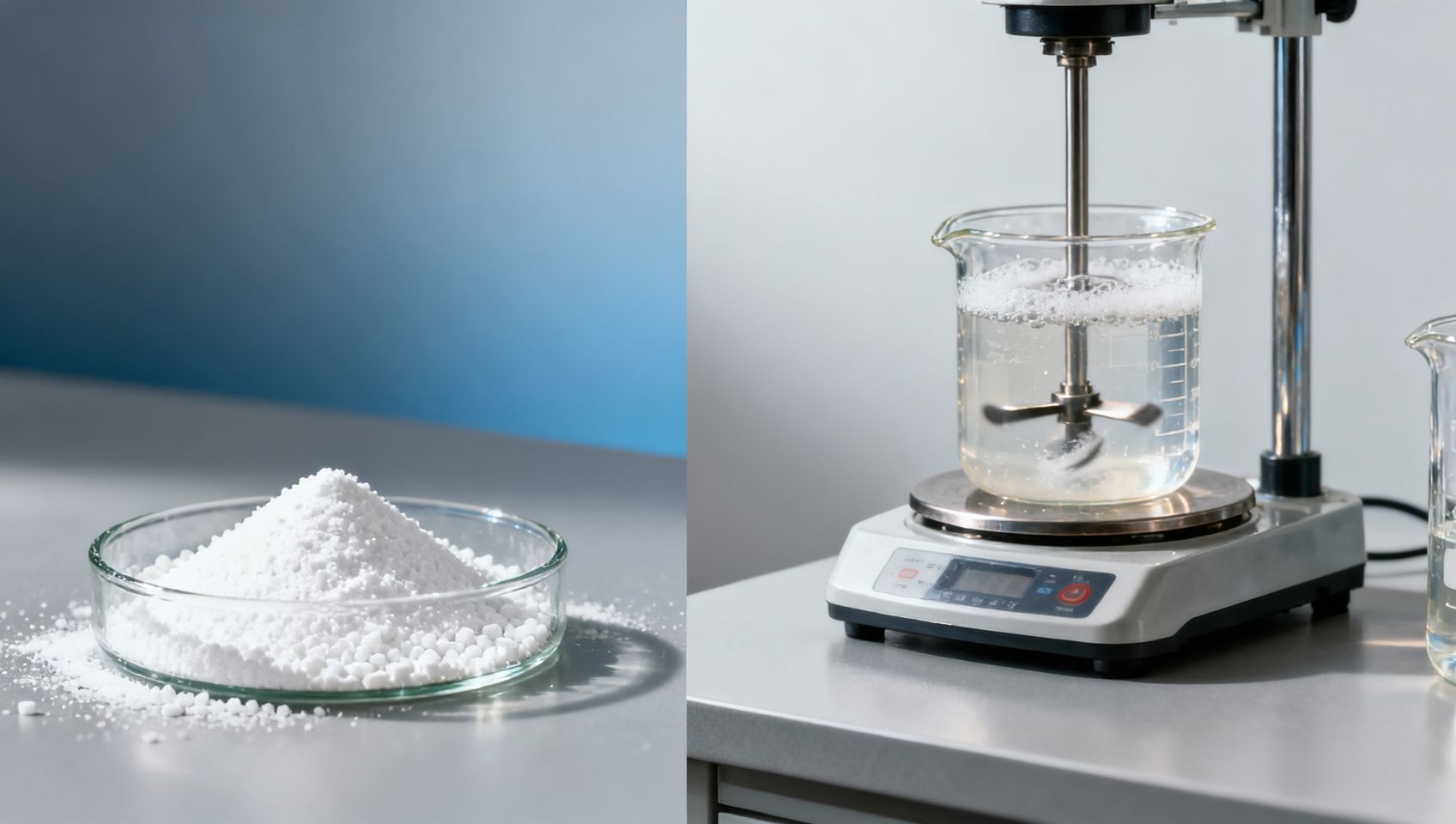
Selecting sodium tripolyphosphate for detergents starts with the production process: a grade that performs well in a spray-dried powder may behave differently in a dry blend or a concentrated slurry. Purity matters, but phase composition, hydration behavior, particle size, and bulk density can determine whether that material runs consistently through the plant.
The most useful specification therefore combines chemical composition with measurable processing properties. A high P₂O₅ result alone does not establish suitability, and a certificate showing only “detergent grade” leaves too much undefined. Before comparing offers, identify the conditions the material must tolerate and the finished-product properties it must support.
Match the specification to how the detergent is made
Sodium tripolyphosphate, commonly called STPP, acts as a detergent builder. It binds calcium and magnesium ions that would otherwise interfere with cleaning, contributes to alkalinity, and helps keep removed soil dispersed. Its contribution depends on the formulation, water hardness, dosage, and wash conditions.
During manufacturing, however, STPP is also a powder that must be stored, conveyed, metered, wetted, and sometimes hydrated. These handling requirements explain why two batches with similar chemical analyses can produce different operating results.
For a clear liquid detergent, begin with formulation compatibility. STPP has finite solubility, while concentrated mixtures of salts and surfactants can create additional stability constraints. A powder grade with excellent assay results may still be unsuitable for the required liquid composition.
Read P₂O₅ content alongside STPP assay
P₂O₅ content expresses phosphorus content on a phosphorus pentoxide equivalent basis. It is a useful composition check, but it does not identify how all that phosphorus is distributed among phosphate species. Other phosphates can contribute to the reported result.
Total P₂O₅ and STPP assay answer different questions. The first indicates phosphorus content; the second, when measured by a suitable method, describes the proportion present as sodium tripolyphosphate. If a supplier reports “purity,” establish whether this means a direct STPP determination or a value calculated from another measurement.
Other phosphate species, including pyrophosphate and orthophosphate, can change builder behavior and formulation response. They should not automatically be treated as interchangeable with STPP. Where performance is sensitive to composition, request a phosphate composition profile or suitable impurity limits alongside the main assay.
Also align the reporting basis. Results expressed on an as-received basis and a dry basis cannot be compared directly without accounting for moisture. The analytical method, sample preparation, and reporting basis should be part of the agreed specification, especially when qualifying an alternative source.
Phase composition matters because hydration changes processing
Anhydrous STPP occurs in two crystalline forms, commonly called Phase I and Phase II. They share the same chemical formula but differ in crystal structure and hydration behavior. Phase I generally hydrates more rapidly, which can affect heat release and the way a mixture develops during wetting.
This difference becomes relevant when STPP enters a detergent slurry. Hydration can influence temperature, viscosity, and mixing demand. If hydration occurs unevenly or at an unsuitable stage, the process may develop lumps or an unexpected viscosity increase. A phase ratio that works at one addition point may behave differently after a change in water temperature or mixing sequence.
Neither a higher nor a lower Phase I content is universally preferable. A process designed around rapid hydration may benefit from one balance, while another process needs a slower, more controlled response. Selecting the highest Phase I value without a process reason can create unnecessary variability.
Request both the phase specification and the method used to determine it. Then evaluate hydration under conditions that resemble production: water temperature, solids concentration, addition rate, mixing intensity, and the presence of other ingredients. A simple water test helps compare lots, but it cannot fully reproduce a concentrated detergent slurry.
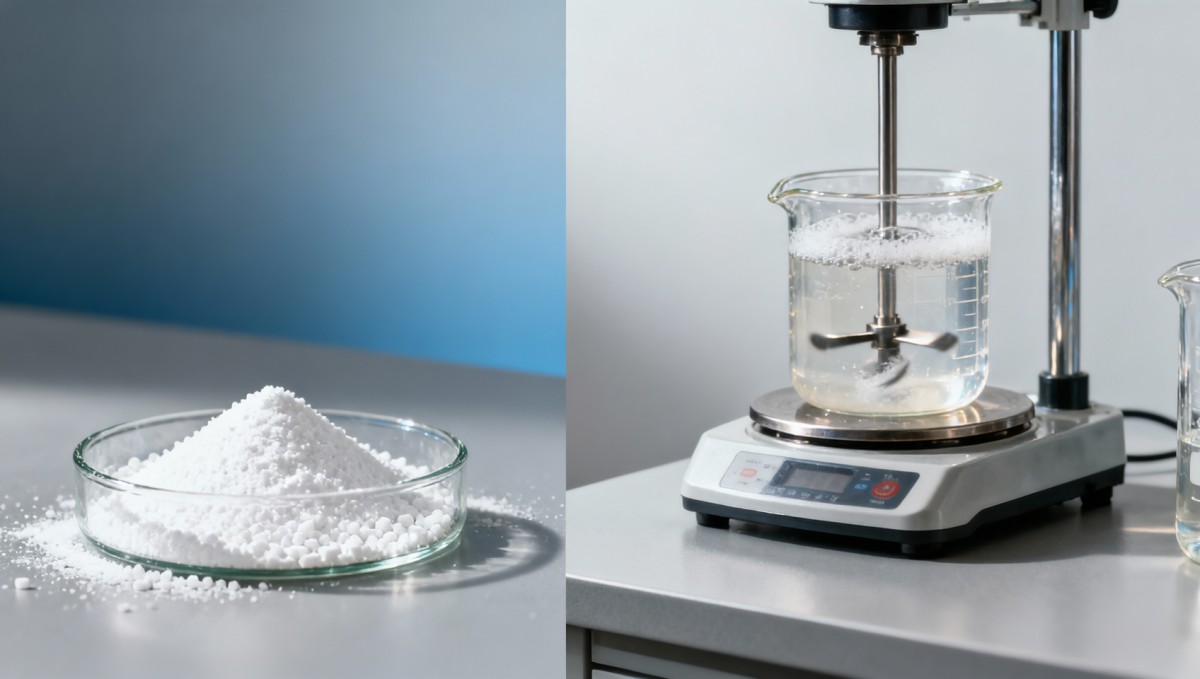
If the current material runs reliably, characterize its hydration response before replacing it. That gives the purchasing specification a practical reference and helps distinguish a harmless analytical difference from a change likely to affect production.
Particle size and bulk density must be assessed together
Particle size distribution influences wetting, dissolution, dust, and blending behavior. Fine particles provide more surface area, but they can also increase dust generation and form agglomerates when added too quickly to water. Coarse particles may handle more cleanly yet take longer to dissolve under some conditions.
An average particle size can conceal both problems. A batch containing substantial fines and oversized particles may have an acceptable average while behaving inconsistently. Specify the distribution through agreed sieve fractions or another defined measurement method, including limits for the fine and coarse ends where relevant.
For dry blends, compare STPP particle size and density with those of the other major ingredients. Large differences can encourage segregation during transport, hopper discharge, and packaging. A blend may appear uniform immediately after mixing but become less consistent as it moves through the plant.
Bulk density affects storage capacity, feeder output, and the mass delivered by volumetric dosing equipment. It is not a substitute for purity. Loose bulk density and tapped density also describe different conditions, so a density value without a test procedure has limited purchasing value.
When evaluating a replacement grade, check actual feeder behavior. Even where dosing is controlled by weight, changes in powder flow can affect refill cycles and delivery consistency. For compacted products, assess filling and pressing behavior together with disintegration; easier compression does not automatically produce the desired wash performance.
Separate insoluble matter from slow dissolution
Water-insoluble matter deserves attention because it can contribute to visible residue, sediment, or deposits. Its practical importance increases where the product must dissolve with little agitation or where particles can become trapped in filters, nozzles, or dosing equipment.
However, material remaining after a short mixing period is not necessarily insoluble contamination. It may be incompletely dissolved STPP, a poorly wetted agglomerate, or a precipitate formed through interaction with hardness ions or other ingredients.
A useful evaluation separates two questions:
- What remains insoluble under a defined analytical method? This supports raw-material acceptance and comparison between suppliers.
- What residue remains under actual use conditions? This tests the combined effects of formulation, water hardness, temperature, agitation, and time.
Keep these tests distinct. Rejecting a batch solely because it dissolves slowly may misidentify the cause, while accepting a low insoluble-matter result does not guarantee residue-free use in cold, hard water.
Moisture and pH need defined test conditions
Moisture affects the amount of dry material supplied and can influence flow, caking, and storage stability. For STPP, the reported result also depends on the analytical procedure. Loss on drying and other moisture measurements should not be treated as interchangeable without understanding what each method measures.
Assess packaging and storage alongside the laboratory limit. A compliant sample taken at dispatch does not describe what happens after exposure to humid air, damaged bags, or repeated opening. Qualification should include the expected transport conditions and the period between opening and consumption.
Solution pH is a useful consistency check, provided the solution concentration, water quality, temperature, and preparation procedure are defined. It does not directly measure builder capacity or finished-detergent cleaning performance. Unexpected pH changes justify investigating composition, but choosing a grade simply because it produces a higher pH is not a sound selection rule.
Where appearance or sensitive ingredients matter, add targeted impurity controls. Trace metals can affect color or the stability of some bleach-containing formulations. Limits should follow the sensitivity of the detergent and its ingredients, rather than an extensive list of unrelated purity requirements.
Build acceptance criteria around measurable outcomes
A purchasing specification works best when it separates mandatory limits from properties that require formulation approval. Chemical identity, assay, insoluble matter, and relevant impurities may support straightforward acceptance limits. Phase balance, density, and particle distribution often need ranges established through successful processing trials.
Avoid copying every value from a supplier’s technical data sheet into a contract. Some entries are typical values rather than guaranteed limits. Others may be measured using methods that differ from those used in your laboratory. Tight limits offer little protection if the parties cannot reproduce the same result.
The qualification package should include:
- A technical data sheet distinguishing typical properties from guaranteed specifications.
- Certificates of analysis from multiple recent production lots, with methods and reporting bases.
- A safety data sheet and applicable composition or compliance documentation for the intended market.
- Information identifying the manufacturing source, lot traceability, packaging, and storage conditions.
- An agreed notification process for changes that could affect composition or processing behavior.
For procurement through a broad chemical supplier such as Luxi Chemical (Shandong) Co., Ltd., request documentation tied to the offered STPP grade and manufacturing source. A general company profile or a certificate for another chemical does not establish the consistency of the material being evaluated.
Use a production-relevant trial to make the final decision
Compare candidate materials in the same formulation under controlled conditions. When moisture or assay differs, account for that difference in the dosing basis so that the comparison remains meaningful. Keep water quality, addition sequence, temperature, and mixing conditions consistent.
Record observations at the stages where a change could matter: powder feeding, wetting, slurry preparation, granulation or drying, packaging, and finished-product storage. Evaluate cleaning and residue at the intended dosage and representative water hardness. A successful wash result alone can overlook a material that creates manufacturing difficulties.
Retain an approved reference sample and document the operating conditions that made it successful. Subsequent batches can then be assessed against both analytical limits and relevant behavior. If a candidate meets the chemical specification but causes unstable slurry viscosity or persistent segregation, it needs further process evaluation before routine purchase.
The final selection should be a grade whose composition, hydration response, and physical properties remain within ranges your formulation can tolerate. Those ranges turn a purchase based on nominal purity into a repeatable sourcing decision.
Related Picks
 Butylated Hydroxytoluene Price Drivers: Supply, Purity, and Purchasing Risk FactorsOct 21, 2026Butylated Hydroxytoluene price trends depend on supply stability, purity, logistics, and purchasing risk. Learn how to compare quotes wisely and reduce sourcing costs.
 Sodium Tripolyphosphate Price Trends: Raw Material and Energy ExposureOct 20, 2026Explore sodium tripolyphosphate price trends, from phosphate and soda ash costs to energy exposure. Learn how to compare quotes, manage sourcing risks, and make smarter purchasing decisions.
 Acetonitrile Shipment to Vietnam Successfully Dispatched; RCEP Benefits Boost Fine Chemical Trade with ASEANSep 16, 2026A shipment of industrial-grade acetonitrile from our company has recently been loaded and dispatched following the completion of standardized hazardous material packaging and container securing procedures.
 Nigerian Client’s Order of 4 Containers of Vinyl Acetate Successfully Loaded and Shipped to West AfricaSep 16, 2026We recently completed the loading of a vinyl acetate order for a Nigerian client; four containers of the product have been successfully packed and are ready for shipment to Nigeria.




Question Consultation
Send Us Your Inquiry Today

Luxi Chemical is a professional chemical product supplier with ample stock of all chemical categories and excellent quality, welcome your purchase inquiry.

