


What causes poor peel strength in polyester polyol for PU adhesives?
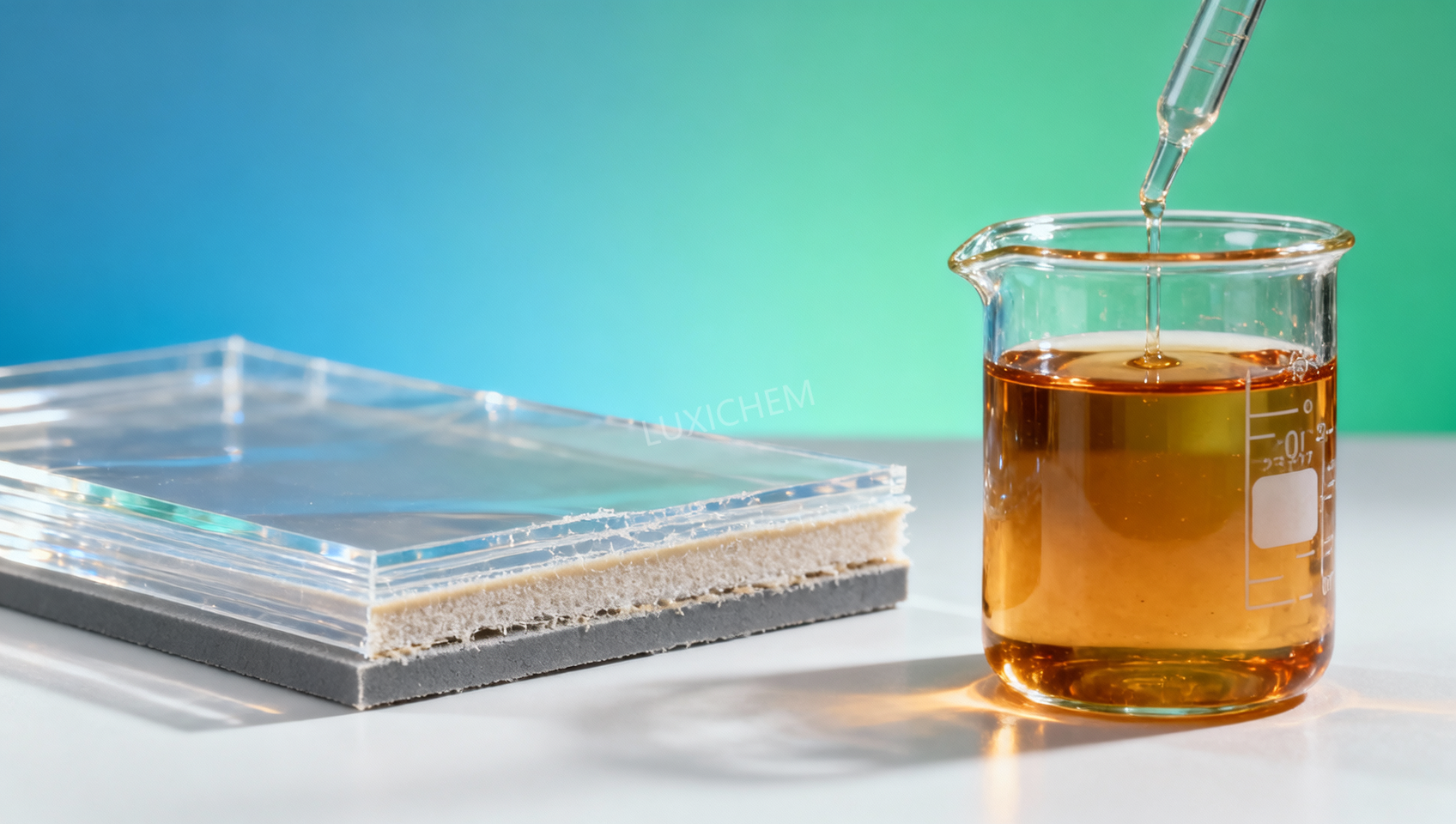
Poor peel strength in a polyurethane adhesive is rarely caused by a single defect in the polyester polyol. It usually reflects a mismatch between the polyol structure, isocyanate reaction balance, coating process, cure schedule, and substrate surface. The failure pattern matters: a clean separation at the substrate indicates an interfacial problem, while adhesive remaining on both surfaces points more strongly to inadequate cohesive strength, incomplete cure, or plasticization within the adhesive layer.
For polyester polyol for PU adhesives, the first task is to identify whether the weakness appeared suddenly in a previously stable formulation or has been present since formulation development. A sudden shift often directs attention to moisture pickup, storage conditions, raw-material variation, mix ratio, or surface contamination. A persistent low result is more likely related to polyol selection, insufficient compatibility, inappropriate crosslink density, or a peel test that does not represent the actual bonding process.
Hydroxyl value changes the cured network
The hydroxyl value of a polyester polyol indicates the concentration of reactive hydroxyl groups available to react with isocyanate. It cannot be evaluated in isolation, because its effect depends on functionality, molecular weight, isocyanate index, catalyst package, and the flexibility required from the final bond.
A polyol with a higher hydroxyl value generally contributes more reactive sites per unit mass. If the rest of the formulation remains unchanged, the resulting network can become tighter. This may raise green strength or heat resistance, but excessive crosslink density can reduce extensibility. In a peel test, a brittle adhesive layer can fracture before it dissipates the stress imposed at the peel front. The measured value is then low even though the adhesive appears hard and well cured.
A lower-than-intended hydroxyl value has the opposite risk. Fewer available hydroxyl groups can leave the network under-crosslinked at a fixed isocyanate addition level. The adhesive may remain soft, creep under load, or show low cohesive strength after conditioning. This effect is sometimes mistaken for poor wetting because the bond can open gradually with adhesive residue on one or both surfaces.
Changes in hydroxyl value also alter the practical NCO/OH balance. Adding more isocyanate without recalculating from the actual hydroxyl value does not reliably correct peel strength. Excess free isocyanate can react with moisture, generate carbon dioxide, create urea-rich regions, and increase brittleness. The useful control point is the verified equivalent ratio based on current material data, not the nominal ratio copied from an earlier batch record.
Moisture creates both chemical and physical defects
Water is particularly disruptive in moisture-sensitive PU systems. It consumes isocyanate, forms unstable carbamic acid intermediates, releases carbon dioxide, and ultimately produces urea structures. The visible result may be bubbles, haze, pinholes, or an irregular coating. More subtle moisture exposure can still reduce peel strength without obvious foaming by shifting the crosslink structure and lowering the fraction of isocyanate available for the intended polyol reaction.
Polyester polyols can gain moisture during storage after a drum is opened, through poorly sealed transfer lines, from unprotected day tanks, or through condensation caused by temperature cycling. A dry raw-material certificate at receipt does not prove that the polyol remained dry at the point of mixing. Sampling should therefore distinguish incoming material from the material drawn from the actual feed vessel.
Moisture can also enter through pigments, fillers, solvents, chain extenders, and the substrate itself. Paper, textiles, wood-derived laminates, and some primed films may hold enough water to affect cure. A bond line that foams only near a porous substrate is a different diagnostic signal from bubbles distributed throughout the coated adhesive. The first points toward substrate or pretreatment moisture; the second more strongly suggests a bulk material or mixing issue.
Drying is not automatically the right correction for every low-peel batch. Prolonged or overly severe heating can change viscosity, encourage side reactions, or introduce contamination through equipment. Before changing the process, measure water content with a suitable method, compare retained samples, inspect vessel closures and nitrogen blanketing where used, and review the interval between opening, mixing, and application.
Molecular weight distribution affects peel behavior differently from lap shear
Peel strength requires the adhesive to resist a concentrated moving stress at the peel front. It benefits from a balanced combination of cohesive strength, flexibility, and energy dissipation. Molecular weight distribution affects all three.
An unusually low molecular weight fraction can lower viscosity and improve apparent wetting, yet it may also reduce cohesive strength after cure or migrate toward the interface. A broad distribution can produce inconsistent flow and inconsistent cure response from batch to batch, especially when the formulation operates close to a viscosity or pot-life limit. Conversely, an overly high molecular weight polyol can make the adhesive too viscous to wet fine surface features before gelation. The resulting bond may look continuous but contain unfilled interfacial regions that become crack initiation sites.
Viscosity alone does not identify the cause. Two polyols can have a similar viscosity at one test temperature while differing in hydroxyl value, acid value, molecular weight distribution, or compatibility with solvent and isocyanate. A viscosity result should be interpreted alongside nonvolatile content, hydroxyl value, acid value, and the temperature at which the sample was measured. Comparing a warm production sample with a room-temperature retained sample can create a false raw-material deviation.
Acid value and compatibility can undermine a sound formulation
Residual acidity in a polyester polyol deserves attention when peel strength drops alongside reduced pot life, unexpected viscosity movement, or cure variability. Acid groups can affect catalyst response and may alter the reaction profile. Their influence becomes more pronounced when the adhesive formulation has limited tolerance for changes in reactivity. A small change in acid value does not automatically explain a failure, but it is useful evidence when it tracks with a change in gel time, appearance, or final flexibility.
Compatibility must be assessed in the complete adhesive mixture rather than in the polyol alone. A polyester polyol can appear clear with a solvent but become unstable after isocyanate, tackifier, pigment dispersion, or additive addition. Microphase separation may not be immediately visible. Signs include viscosity drift after mixing, haze on standing, uneven gloss, localized softness, poor film continuity, or peel values that vary across the coated web.
Unexpected additive carryover can be equally damaging. Trace oils, silicone-containing release agents, surfactants, plasticizers, or incompatible cleaning residues can interfere with wetting and adhesion. Segregated utensils, containers, and transfer equipment are important where trace analytical or research materials are handled. For example, a DMSO-soluble compound such as Isodeoxyelephantpin CAS#38927-54-7 should never share inadequately cleaned containers with adhesive production materials; the concern is uncontrolled residue, not any expected role for that compound in a PU formulation.
The cure schedule may be wrong even when the mix ratio is correct
PU adhesive cure begins with mixing but does not end when the bonded parts leave the laminator, press, or assembly fixture. Temperature, dwell time, film thickness, substrate heat capacity, pressure, and post-cure storage determine how far the reaction progresses before the peel test. A bond tested too early often fails cohesively because the adhesive has not developed adequate network strength. Raising the catalyst level can shorten this interval, but it may reduce open time, impair wetting, or generate a more brittle structure.
Insufficient drying of a solventborne adhesive is another common source of weak peel. Retained solvent can lower cohesive strength, alter cure kinetics, and remain trapped in thicker regions. However, a hot oven setting alone does not establish adequate drying. Airflow, coating weight, line speed, solvent blend, exhaust performance, and substrate temperature determine the actual drying history. If poor peel occurs only at higher coating weights or after a line-speed increase, solvent removal and heat transfer deserve priority over raw-material blame.
Thermal exposure can also be excessive. Some substrates deform, shrink, release additives, or develop surface changes at elevated temperature. Overheating may increase early cure while reducing interfacial adhesion or creating a brittle adhesive layer. A useful comparison is to cure bonded panels at controlled laboratory conditions that reproduce the thermal history of production, then examine whether the failure follows the adhesive batch or the production line.
Substrate preparation often determines where the bond fails
Even a properly formulated polyester-based PU adhesive cannot form a durable bond on a weak, contaminated, or poorly activated surface. Films may carry slip additives, processing lubricants, dust, condensation, fingerprints, or degraded primer. Metal surfaces can contain oil, oxide, conversion-coating residues, or cleaning-agent residue. Surface energy measurements are useful trend indicators, but a single acceptable reading does not prove that the entire surface is clean or chemically suitable for the adhesive.
Fresh surface activation may decay during storage. Corona-treated polymer film, for example, can lose effective treatment over time or transfer contaminants from winding and handling. When peel is strong immediately after treatment but falls after storage, investigate treatment aging, roll handling, and the interval before lamination. When failure is localized near roll edges, look for uneven treatment, edge contamination, uneven nip pressure, or web-temperature variation.
Pressure during bonding needs enough uniformity to establish intimate contact before viscosity rises. Excessive pressure is not a universal improvement: it can squeeze out too much adhesive, distort a porous substrate, or produce a very thin bond line that cannot accommodate movement. The appropriate coat weight and pressure depend on substrate roughness, flexibility, and adhesive rheology. A smooth film-to-film laminate behaves differently from a textured coating, fabric, or irregular metal surface.
Use the failure surface to narrow the investigation
The peel test itself must be controlled before it is used to judge formulation quality. Bond age, conditioning temperature and humidity, peel angle, test speed, specimen width, substrate orientation, and whether the sample contains an initiation notch all influence the reported result. A material change should not be concluded from results generated under different conditioning or specimen preparation. Retaining bonded reference panels alongside production samples is often more informative than retaining liquid raw materials alone because the panels preserve the combined effects of mixing, coating, drying, and cure.
Correct the mechanism rather than chasing a single number
When poor peel strength is confirmed, start by classifying the failure mode and locating when the process changed. Then compare the current batch with a known satisfactory batch using the same methods and temperatures for hydroxyl value, water content, viscosity, acid value, appearance, and relevant solids measurements. Review the actual mass additions and mixing sequence, including any late solvent adjustment or catalyst addition. Follow this with a controlled bonding trial that changes only one variable at a time.
A formulation that is under-cured should be addressed differently from one that is brittle. The first may require correction of moisture control, equivalent ratio, solvent removal, or cure dwell. The second may require lower effective crosslink density, a more flexible polyol balance, or a less severe cure profile. Where the failure is adhesive-to-substrate, changes to the polyol alone may provide little benefit until cleaning, activation, primer condition, and wetting are resolved.
Stable peel performance comes from treating the polyester polyol as part of a reaction-and-application system. Material properties establish the available processing window; storage, mixing, drying, bonding pressure, substrate condition, and cure determine whether production stays within it.
Related Picks
 Butylated Hydroxytoluene Price Drivers: Supply, Purity, and Purchasing Risk FactorsOct 21, 2026Butylated Hydroxytoluene price trends depend on supply stability, purity, logistics, and purchasing risk. Learn how to compare quotes wisely and reduce sourcing costs.
 Sodium Tripolyphosphate Price Trends: Raw Material and Energy ExposureOct 20, 2026Explore sodium tripolyphosphate price trends, from phosphate and soda ash costs to energy exposure. Learn how to compare quotes, manage sourcing risks, and make smarter purchasing decisions.
 Acetonitrile Shipment to Vietnam Successfully Dispatched; RCEP Benefits Boost Fine Chemical Trade with ASEANSep 16, 2026A shipment of industrial-grade acetonitrile from our company has recently been loaded and dispatched following the completion of standardized hazardous material packaging and container securing procedures.
 Nigerian Client’s Order of 4 Containers of Vinyl Acetate Successfully Loaded and Shipped to West AfricaSep 16, 2026We recently completed the loading of a vinyl acetate order for a Nigerian client; four containers of the product have been successfully packed and are ready for shipment to Nigeria.




Question Consultation
Send Us Your Inquiry Today

Luxi Chemical is a professional chemical product supplier with ample stock of all chemical categories and excellent quality, welcome your purchase inquiry.

