


Why Does Amino Silicone Oil Cause Yellowing in Textile Finishing?
Why Does Amino Silicone Oil Cause Yellowing in Textile Finishing?
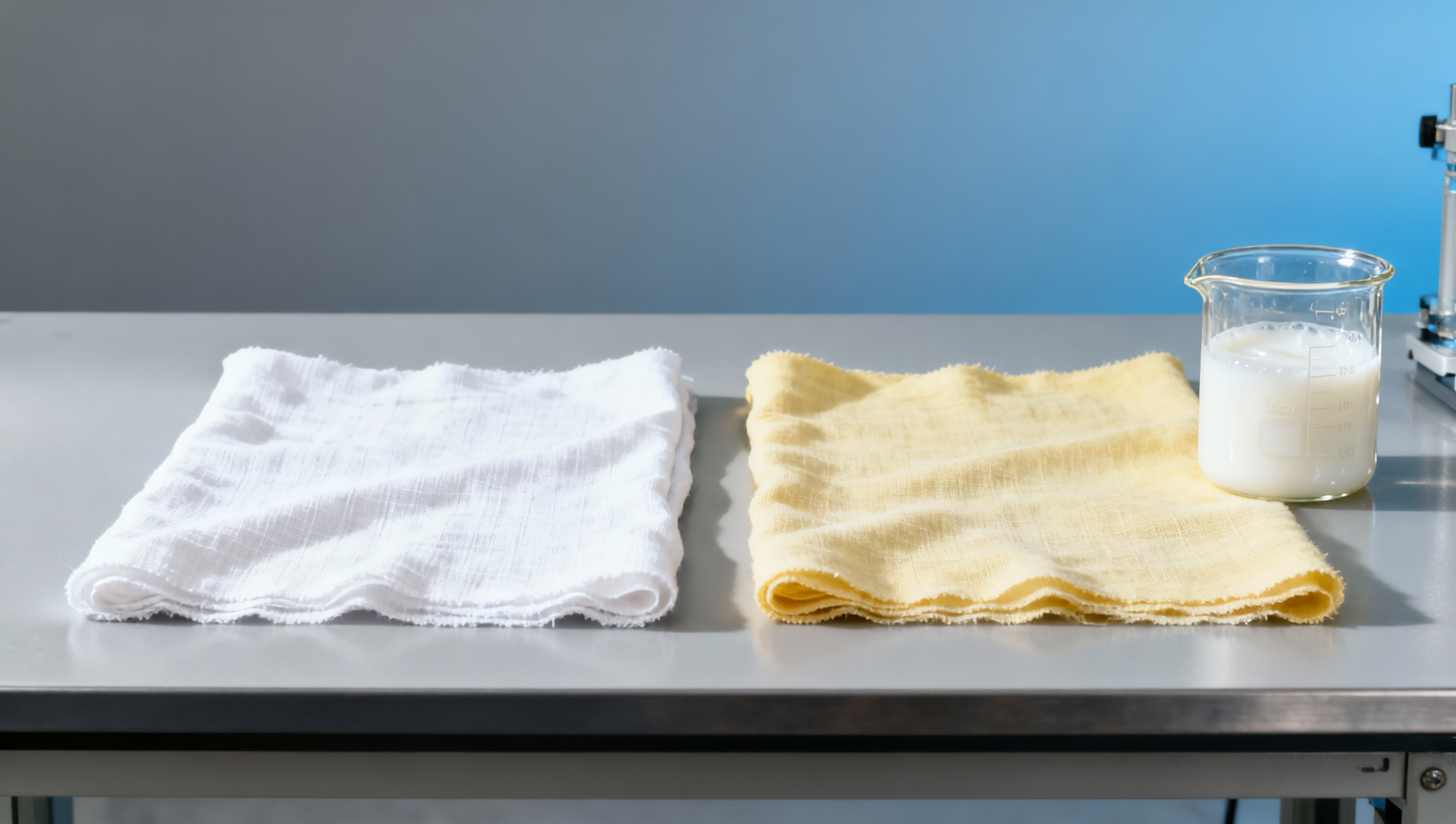
Yellowing after softening can turn an otherwise acceptable fabric into a costly rework problem, especially on white and pale-colored textiles. With amino silicone oil, a common cause is oxidation of amino-functional groups during heat treatment. However, the finished shade also depends on softener chemistry, actual fabric temperature, pretreatment residues, and bath compatibility.
The useful question is not simply whether the silicone yellows. It is whether the discoloration comes from the softener itself, an interaction in the finishing recipe, or damage already developing in the fabric. Those possibilities require different corrections. Replacing the softener before separating them can leave the original problem untouched.
The chemistry behind the soft handle—and the yellow cast
Amino silicone softeners combine a flexible silicone backbone with amino-functional side groups. These groups help the polymer interact with textile surfaces, while the silicone film reduces fiber-to-fiber friction. That combination explains the smooth, supple handle that makes these products useful in finishing.
The amino functionality is also a potential weak point. During exposure to heat and oxygen, amino-containing structures can undergo reactions that produce colored species. The extent depends on the chemical structure and processing environment; it is not simply a matter of the silicone backbone turning yellow.
Conventional grades with higher amino functionality can present a greater yellowing risk, but amino value alone cannot reliably rank every commercial product. Amino-group type, distribution, polymer architecture, emulsifiers, and other formulation ingredients also matter. Two products with similar declared amino values may behave differently on the same fabric.
This creates a practical trade-off: a grade that gives an excellent handle at low dosage may not be the best choice for an optically brightened white fabric exposed to demanding heat treatment. Select against the finished shade requirement, not softness alone.
Read the timing and pattern before changing the recipe
A uniform cream cast immediately after the stenter suggests a different investigation from yellow patches appearing after storage. Before adjusting anything, retain samples from before softening, after drying, and after the final thermal operation. Record which side and which section of the fabric each sample represents.
- Yellowing immediately after heating: investigate softener heat stability, excessive thermal exposure, and substrate damage.
- Streaks, spots, or edge-to-center differences: check pickup uniformity, deposits, emulsion stability, airflow, and temperature distribution.
- Loss of whiteness without obvious yellow staining: examine optical brightener compatibility and changes in fluorescence.
- Discoloration after packing or storage: include packaging-related phenolic yellowing and storage conditions in the investigation rather than assuming thermal oxidation.
These observations are clues, not diagnoses. For example, uneven yellowing can come from uneven silicone deposition, but it can also follow localized overheating. Compare the defect pattern with machine direction, fabric edges, and any known stoppages.
Heat exposure: check the fabric, not just the display
The stenter setpoint does not describe the complete thermal history. Line speed, chamber balance, fabric moisture, loading, and airflow influence how long the textile remains hot. A heavy construction and a lightweight fabric may respond differently under nominally identical settings.
Check actual operating conditions, including slow running and stoppages. A laboratory trial that uses only a brief, ideal heating cycle can miss the conditions experienced during production. Include later ironing, heat setting, or curing if those operations occur after softening.
Not every amino silicone softener requires a high-temperature cure. Sometimes the heat requirement belongs to a resin, binder, or another component in the same finish. Before lowering temperature, establish which ingredient needs it. Reducing heat without checking the full recipe may preserve whiteness while compromising another required property.
Where processing allows, compare a lower thermal load with the current cycle. If yellowing falls while drying, dimensional stability, and other specifications remain acceptable, the process has room for adjustment. If not, a more heat-stable softener may be necessary.
Residual alkali can make a suitable softener look unsuitable
Cotton entering the finishing range may still carry alkali from scouring or mercerizing. A finishing bath adjusted to the intended pH does not prove that the fabric itself is properly washed and neutralized. Carryover can change local conditions during padding and drying, affecting shade and formulation behavior.
For example, Sodium hydroxide CAS#1310-73-2, available in white flake or granular forms, has established uses in textile pretreatment. Its relevance here is upstream process control—not preventing silicone yellowing. After caustic processing, verify washing and neutralization through an appropriate fabric extraction test rather than relying only on the final rinse appearance.
Measure both the working bath pH and the fabric extract pH using consistent methods. Follow the softener supplier’s application range; there is no single pH target suitable for every amino silicone emulsion. Do not add concentrated acid or alkali directly to a working silicone bath. Local concentration extremes may destabilize the formulation, and caustic handling requires suitable protective equipment and controlled dilution.
On bleached goods, also check for residual oxidizing agents using a suitable method. Simply adding more neutralizer or antioxidant without confirming the residue can introduce another compatibility problem.
A stable-looking bath can still give the wrong shade
Amino silicone emulsions can interact with other finishing chemicals. Depending on their formulation and application pH, they may show cationic character and be incompatible with some anionic auxiliaries. The result may be visible flocculation, fine deposits, or uneven application that becomes obvious only after drying.
Optical brighteners deserve particular attention on whites. Reduced fluorescence can make the fabric appear duller or yellower even when thermal discoloration is limited. Judge the complete brightener–softener system, not just a silicone-treated sample without brightener.
Run a small compatibility trial using production water, realistic concentrations, the intended mixing order, and the expected holding time. Observe separation, sediment, and oiling, then apply the mixture to fabric. A clear beaker is useful evidence of physical compatibility, but it does not establish acceptable whiteness or heat stability.
Use a controlled comparison to isolate the cause
The most informative troubleshooting trial changes one variable at a time. Use fabric from the same prepared lot and keep wet pickup, drying conditions, and sample conditioning consistent. A practical starting set is:
- Untreated fabric, heated: shows whether the substrate or preparation residues yellow without the finishing recipe.
- Full finish without silicone, heated: helps identify contributions from other auxiliaries.
- Silicone-only finish, heated: indicates how the softener behaves outside the complete formulation.
- Full finish with silicone, heated: reproduces the production system and reveals possible interactions.
Retain corresponding unheated references. Without them, initial shade differences can be mistaken for heat-induced yellowing. Where possible, repeat the relevant samples under the current thermal cycle and a lower-load cycle.
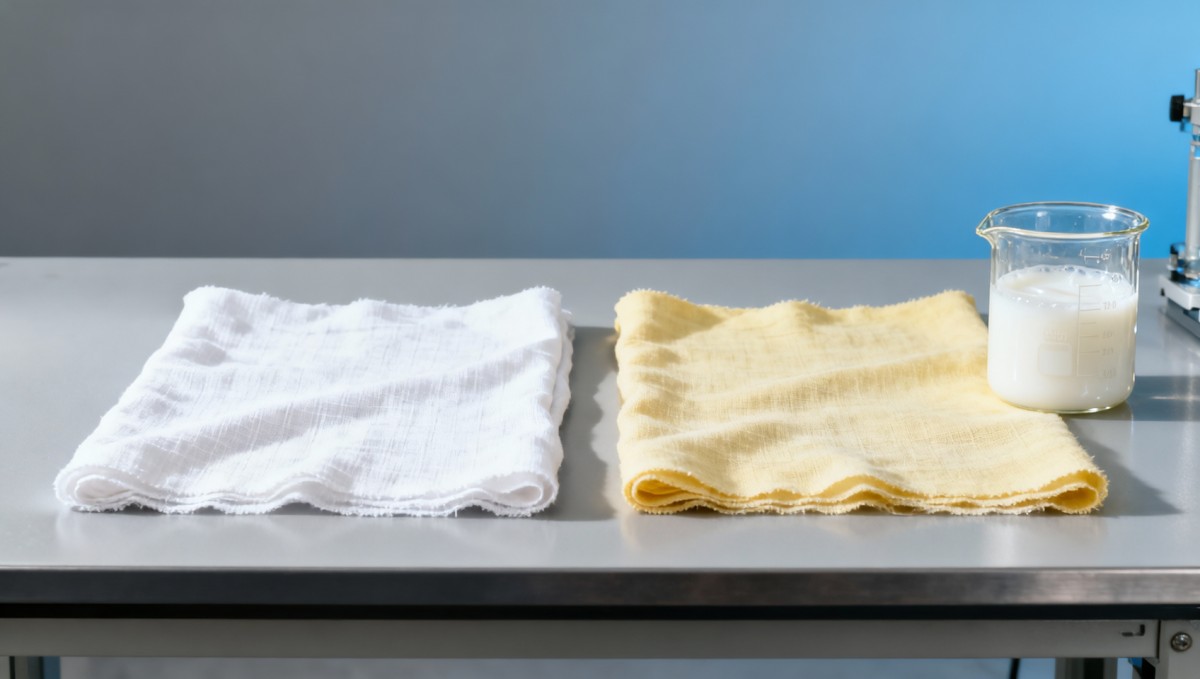
Assess the samples under consistent viewing conditions and record instrumental color where available. A positive change in CIELAB b* indicates movement toward yellow, but whiteness assessment on fluorescent fabrics also depends on the instrument’s UV setting. Keep that setting consistent. Compare handle, absorbency, and other required properties alongside color; the whitest sample is not automatically an acceptable finish.
If only the complete recipe yellows badly, investigate interactions before rejecting the silicone. If the silicone-only sample shows a clear heat-related change while the blank remains stable, softener selection and thermal exposure become the main priorities.
Choose a lower-yellowing finish without losing the required performance
For white and very pale goods, consider a low-yellowing modified silicone or another suitable softener chemistry. Depending on the application, options may include products with controlled amino functionality or polyether modification. “Modified” does not guarantee non-yellowing, and a supplier’s heat-stability claim is meaningful only when its test conditions resemble your process.
Compare products on active silicone content as well as supplied-product dosage. Otherwise, a more dilute emulsion may appear less yellowing simply because less silicone reaches the fabric. Confirm actual pickup, and use the lowest application level that reliably delivers the required handle. Excess deposition can increase discoloration risk without giving a worthwhile softness improvement.
Supplier documentation should cover application conditions, compatibility limitations, and batch specifications. For a diversified chemical supplier such as Luxi Chemical (Shandong) Co., Ltd., which supplies chemical raw materials and supports international trade, coordinating these details across pretreatment and finishing materials is more relevant than treating each purchase in isolation.
Do not turn a diagnosis problem into a rework problem
Once goods have yellowed, adding more brightener, applying a bluing agent, or attempting oxidative treatment may conceal or worsen the defect rather than remove its cause. Rework can affect shade, strength, handle, and absorbency. Test a representative cutting before committing the lot, especially on blends and elastane-containing fabrics.
The next useful step is a controlled comparison: heated blank, finish without silicone, silicone alone, and complete finish. Combine that evidence with fabric extract pH and the actual thermal history. It gives operators a defensible basis for deciding whether to correct preparation, adjust the line, simplify the bath, or change the amino silicone oil grade.
Related Picks
 Butylated Hydroxytoluene Price Drivers: Supply, Purity, and Purchasing Risk FactorsOct 21, 2026Butylated Hydroxytoluene price trends depend on supply stability, purity, logistics, and purchasing risk. Learn how to compare quotes wisely and reduce sourcing costs.
 Sodium Tripolyphosphate Price Trends: Raw Material and Energy ExposureOct 20, 2026Explore sodium tripolyphosphate price trends, from phosphate and soda ash costs to energy exposure. Learn how to compare quotes, manage sourcing risks, and make smarter purchasing decisions.
 Acetonitrile Shipment to Vietnam Successfully Dispatched; RCEP Benefits Boost Fine Chemical Trade with ASEANSep 16, 2026A shipment of industrial-grade acetonitrile from our company has recently been loaded and dispatched following the completion of standardized hazardous material packaging and container securing procedures.
 Nigerian Client’s Order of 4 Containers of Vinyl Acetate Successfully Loaded and Shipped to West AfricaSep 16, 2026We recently completed the loading of a vinyl acetate order for a Nigerian client; four containers of the product have been successfully packed and are ready for shipment to Nigeria.




Question Consultation
Send Us Your Inquiry Today

Luxi Chemical is a professional chemical product supplier with ample stock of all chemical categories and excellent quality, welcome your purchase inquiry.

