


Agricultural insecticides shelf life degradation under tropical warehouse conditions
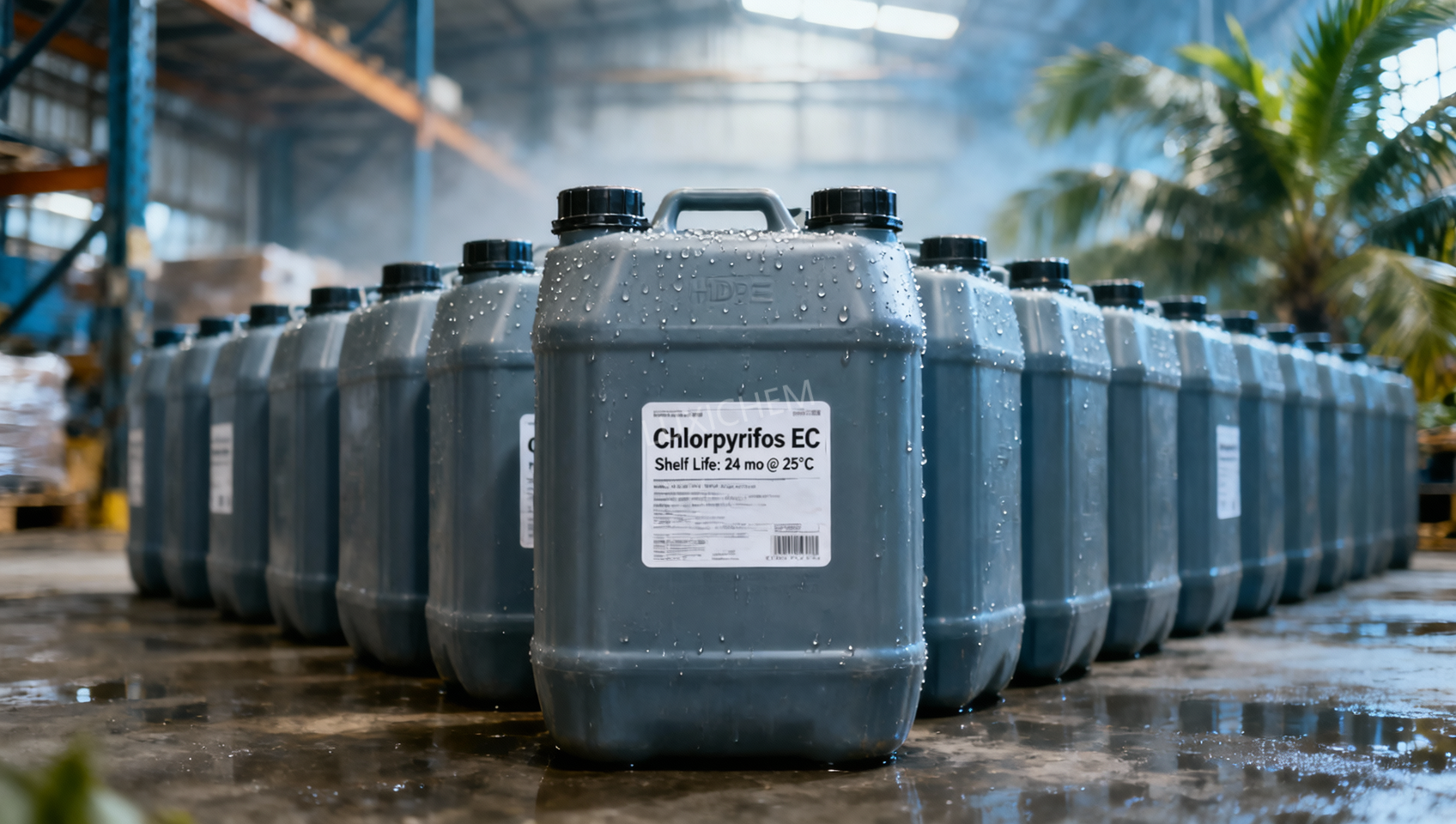
Agricultural insecticides are vital for crop protection in tropical regions—but their efficacy hinges on stability during storage. Under high-temperature, high-humidity tropical warehouse conditions, many formulations suffer accelerated shelf life degradation, risking reduced bioactivity, regulatory non-compliance, and field application failures. This degradation is not merely a function of time; it is governed by kinetic pathways highly sensitive to environmental stressors—particularly sustained ambient temperatures above 35 °C and relative humidity exceeding 75 %. Unlike temperate storage environments where Arrhenius-based shelf life models apply with reasonable fidelity, tropical warehouses introduce non-linear acceleration due to synergistic moisture uptake, thermal cycling-induced phase separation, and catalytic hydrolysis at formulation interfaces.
Thermal-Humidity Synergy Drives Hydrolytic and Oxidative Pathways
In tropical logistics hubs, diurnal temperature fluctuations between 28 °C and 42 °C—common even in air-conditioned but underspecified warehouses—induce repeated condensation on container walls and packaging interiors. This micro-condensate dissolves surface-active agents and solubilizes trace metals (e.g., Fe²⁺, Cu²⁺) from drum linings or pallet strapping, creating localized aqueous microenvironments where hydrolysis proceeds orders of magnitude faster than in bulk liquid phase. For organophosphate insecticides such as chlorpyrifos or malathion, the P–O–alkyl bond cleavage rate increases exponentially above 30 °C, especially when water activity (aw) exceeds 0.6. Similarly, pyrethroids like deltamethrin undergo ester hydrolysis under humid conditions, yielding inactive acid metabolites and alcohols that may further degrade active ingredients via secondary reactions.
Oxidation presents another dominant route—particularly for compounds containing electron-rich moieties (e.g., thioether linkages in neonicotinoids like imidacloprid). In the presence of ambient ozone, NOx, or photoactive impurities on HDPE drum surfaces, radical chain propagation initiates even in dark storage. Accelerated oxidation is rarely uniform: it preferentially attacks formulation headspace zones where oxygen concentration remains elevated despite sealed containers, leading to stratified degradation profiles within a single batch. This heterogeneity undermines representative sampling protocols unless vertical core sampling across drum height is mandated—not just top-layer withdrawal.
Formulation Architecture Determines Degradation Thresholds
Emulsifiable concentrates (ECs) and suspension concentrates (SCs) respond differently to tropical stress. ECs rely on solvent systems (e.g., xylene, aromatic hydrocarbons) to maintain solubility and homogeneity. At elevated temperatures, solvent volatility increases, causing gradual concentration shifts that push active ingredient (AI) out of solution—precipitating microcrystals that nucleate further aggregation and reduce redispersibility. SCs, while less volatile, face colloid destabilization: polymeric stabilizers (e.g., polyacrylates) lose steric hindrance efficiency above their glass transition temperature (Tg). For many commercial SCs, Tg falls between 32 °C and 38 °C—placing them directly within typical tropical warehouse operating ranges. Once destabilized, particle growth follows Ostwald ripening kinetics, increasing sedimentation rates and reducing suspension stability to <6 months—even if initial specifications claim 24-month shelf life.
Wettable powders (WPs) exhibit yet another failure mode: moisture absorption into porous agglomerates creates capillary bridges that initiate sintering. This irreversible densification reduces surface area and slows dissolution upon field reconstitution—directly compromising bioavailability. Crucially, this process begins below 40 °C if RH > 70 %, meaning standard “cool, dry place” storage instructions are insufficient without specifying *maximum permissible RH* and *continuous monitoring requirements*.
Stability Testing Must Reflect Real-World Warehouse Dynamics
Standard ICH Q1A(R2) long-term stability testing (30 °C/65 % RH) significantly underestimates tropical degradation. A more representative protocol uses 40 °C/75 % RH for 6 months—equivalent to ~18 months of real-time exposure in Southeast Asian ports. However, even this static condition misses critical dynamics: real warehouses experience 3–5 °C/day thermal cycling, which drives moisture migration through packaging layers and accelerates interfacial reactions. Therefore, cyclic testing (e.g., 40 °C/75 % RH ↔ 30 °C/50 % RH, 12h each) better predicts field performance. Key analytical endpoints must include not only AI assay loss but also identification of ≥0.1 % degradation products via LC-MS/MS—since several hydrolysis byproducts (e.g., 3,5,6-trichloro-2-pyridinol from chlorpyrifos) carry higher aquatic toxicity than the parent compound.
Material Compatibility and Packaging Integrity Are Non-Negotiable
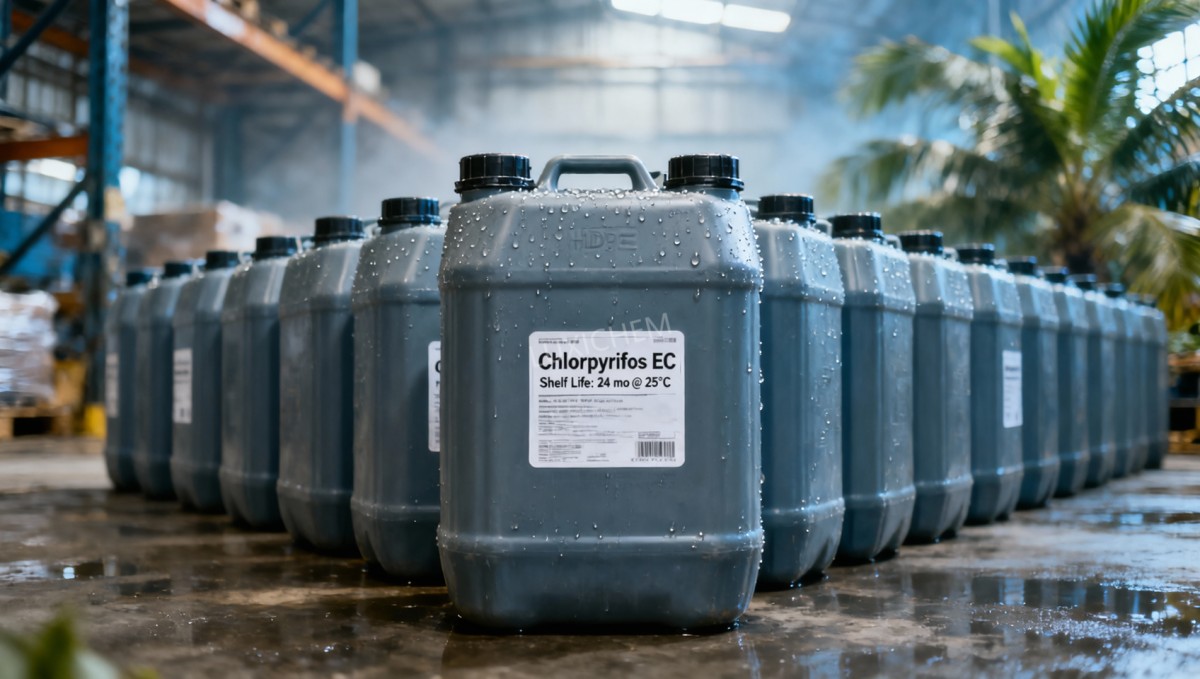
HDPE drums, widely used for bulk insecticide transport, become permeable to water vapor above 35 °C—especially if recycled resin content exceeds 15 %. Multi-layer barrier liners (e.g., EVOH-coated PE) reduce WVTR by >90 % but require strict adherence to sealing torque specifications during filling; under-torqued caps permit vapor ingress during stacking-induced compression. Aluminum-lined composite bags offer superior moisture barrier properties but introduce galvanic corrosion risks if residual chloride salts from cleaning agents contact the metal layer—generating HCl that catalyzes ester hydrolysis. Thus, packaging validation must include *filled-container accelerated aging*, not just empty-bag WVTR tests.
Pharmaceutical-Grade Stability Principles Inform Agricultural Practice
While agricultural insecticides operate under different regulatory frameworks than pharmaceuticals, the underlying physicochemical principles governing degradation are identical. Consider Procaine hydrochloride CAS#51-05-8: its aqueous solution remains stable only within pH 3.0–5.0, and it degrades rapidly above 25 °C unless refrigerated (2–8 °C). Though structurally unrelated to insecticides, its documented sensitivity to temperature, pH, and oxidative stress underscores a universal truth—molecular stability is contextual, not intrinsic. Just as procaine’s shelf life collapses outside narrow environmental bounds, so too do many agrochemical actives when exposed to uncontrolled tropical storage. The lesson is methodological: stability cannot be assumed from chemical class alone; it must be empirically mapped for each formulation under site-specific conditions—including the exact drum type, fill level, stacking configuration, and warehouse ventilation profile.
Operational Mitigations Beyond Temperature Control
Active cooling of entire warehouses is often economically prohibitive. More feasible interventions include: (1) installing desiccant-based dehumidification units with dew point control ≤15 °C; (2) using pallet-level temperature/humidity loggers with geofenced alerts; (3) implementing FIFO rotation tied to real-time sensor data—not just batch dates; and (4) requiring suppliers to provide not just COA but full degradation pathway reports under tropical cycling conditions. Crucially, stability is not solely a manufacturing concern—it is a supply chain parameter requiring shared responsibility across origin, transit, and destination nodes. Without synchronized monitoring standards and data transparency, shelf life claims remain theoretical rather than operational.
For formulations destined for tropical markets, shelf life is not a fixed number printed on a label. It is a dynamic outcome determined by the intersection of molecular architecture, packaging physics, environmental kinetics, and logistical execution. Treating it as anything less invites field failure, regulatory scrutiny, and erosion of product trust—outcomes no responsible steward of agricultural inputs can afford.
Related Picks
 Butylated Hydroxytoluene Price Drivers: Supply, Purity, and Purchasing Risk FactorsOct 21, 2026Butylated Hydroxytoluene price trends depend on supply stability, purity, logistics, and purchasing risk. Learn how to compare quotes wisely and reduce sourcing costs.
 Sodium Tripolyphosphate Price Trends: Raw Material and Energy ExposureOct 20, 2026Explore sodium tripolyphosphate price trends, from phosphate and soda ash costs to energy exposure. Learn how to compare quotes, manage sourcing risks, and make smarter purchasing decisions.
 Acetonitrile Shipment to Vietnam Successfully Dispatched; RCEP Benefits Boost Fine Chemical Trade with ASEANSep 16, 2026A shipment of industrial-grade acetonitrile from our company has recently been loaded and dispatched following the completion of standardized hazardous material packaging and container securing procedures.
 Nigerian Client’s Order of 4 Containers of Vinyl Acetate Successfully Loaded and Shipped to West AfricaSep 16, 2026We recently completed the loading of a vinyl acetate order for a Nigerian client; four containers of the product have been successfully packed and are ready for shipment to Nigeria.




Question Consultation
Send Us Your Inquiry Today

Luxi Chemical is a professional chemical product supplier with ample stock of all chemical categories and excellent quality, welcome your purchase inquiry.

