


How to verify if an insecticides manufacturer complies with ISO 22000 traceability requirements
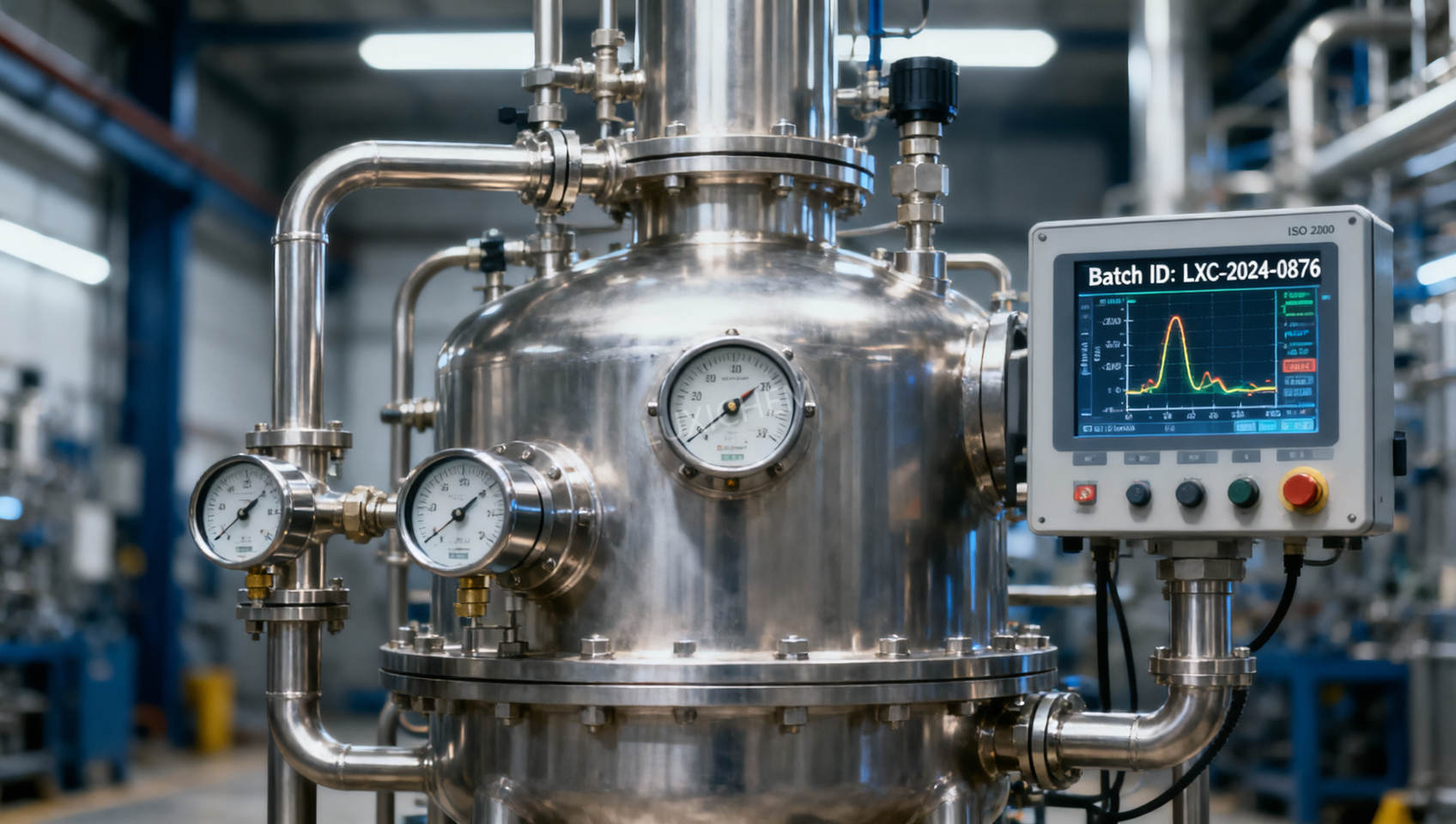
What Traceability Really Means for an Insecticides Manufacturer Under ISO 22000
ISO 22000 is often misread as a food safety standard that only applies to food processors or packagers. But its traceability clause—Clause 8.3—has direct, binding implications for upstream suppliers, including insecticides manufacturers whose products may contact crops destined for human consumption. If your procurement team sources crop protection agents used in food-grade agriculture, you’re not just verifying chemical efficacy—you’re validating whether the manufacturer’s traceability system can withstand regulatory scrutiny, recall pressure, and cross-border audit rigor.
That means “compliance” isn’t about having a certificate on the wall. It’s about whether batch-level data—from raw material lot numbers and synthesis logs to packaging dates and storage conditions—is captured, linked, retrievable, and auditable within 4 hours. And crucially, whether it’s structured so that a single contaminated batch of insecticide doesn’t trigger blanket recalls across multiple harvests or geographies.
Three Non-Negotiable Checks Beyond the Certificate
When assessing an insecticides manufacturer, start with these three operational checkpoints—not theoretical ones.
1. Raw material lineage must be two-way traceable. Many suppliers document incoming chemicals—but few maintain bidirectional mapping between their raw material lots and the final product batches they feed into. Ask for a live demonstration: given a finished batch number, can they instantly pull the exact supplier batch IDs, assay reports, and COAs for every active ingredient and solvent used? Not just names or generic grades—actual documented lot traces.
2. Batch records must include environmental and process parameters—not just timestamps. ISO 22000 requires evidence that critical control points were monitored. For insecticide synthesis, that includes reactor temperature profiles, pH drift during neutralization, residual solvent levels post-drying, and even ambient humidity during packaging (which affects hygroscopic stability). If the manufacturer treats “batch record” as a sign-off sheet rather than a technical log, their traceability is procedural—not functional.
3. Data retention and access must align with your supply chain reality. A supplier might store data for 10 years—but if it’s locked in a proprietary ERP module inaccessible to external auditors or requires internal IT approval for export, it fails the spirit of Clause 8.3. True compliance means providing standardized, read-only access to batch history—without gatekeeping or format conversion delays.
Why “Food-Grade Adjacent” Isn’t Good Enough
Some insecticides manufacturers position themselves as “suitable for food-chain use” based on purity specs or GMP-like lab practices. That’s insufficient. ISO 22000 demands a food safety management system (FSMS) where traceability is embedded—not bolted on. It requires hazard analysis (Clause 7.4), prerequisite programs covering allergen control (even if not applicable, the rationale must be documented), and verification of traceability effectiveness through mock recalls.
A real-world gap appears when suppliers separate “agricultural grade” from “food-contact grade” production lines—yet use shared utilities, maintenance logs, or QC labs. Without integrated documentation, traceability breaks at the handoff point. That’s why Luxi Chemical (Shandong) Co., Ltd. integrates full-cycle traceability across all product categories—including food additives, organic intermediates, and fertilizers—because consistency in documentation discipline matters more than segregated labeling.
This discipline extends to niche but high-stakes applications. For example, in research-grade antimicrobial development, precise batch integrity directly impacts reproducibility. Ceftriaxone sodium CAS#104376-79-6—used in antibacterial and neurological studies—requires strict control over moisture content, enolic OH stability, and optical rotation (αD²⁵ −165°). Its traceability isn’t about food safety per se, but about enabling researchers to link biological outcomes to exact physicochemical parameters. That same rigor underpins how we manage insecticide batches meant for pre-harvest application.
How to Test Recall Readiness—Without Triggering One
Ask for a recent, documented mock recall—not just the report, but the raw data trail. Specifically request:
- The initiating event (e.g., out-of-spec residual solvent)
- The time elapsed from detection to first internal notification
- The exact query used to isolate affected batches (SQL or ERP filter logic)
- Proof of downstream notification—including who received it, when, and in what format
- Whether any batch was flagged as “potentially affected” but later excluded—and the technical justification
If the answer is vague, delayed, or relies on manual spreadsheets, treat it as a red flag—even if their ISO 22000 certificate is current. Certification bodies audit systems, not responsiveness. Your supply chain needs both.
What Integration Looks Like—Not Just Compliance
At Luxi Chemical, traceability isn’t outsourced to QA alone. It’s built into procurement (raw material lot capture at receipt), production (real-time batch tagging via barcode scanning), and logistics (geotagged delivery notes synced to batch IDs). All data flows into a unified platform—accessible to clients upon agreement—with version-controlled audit trails.
That integration explains why customers across 60+ countries rely on us for one-stop procurement—not just for cost or speed, but because traceability gaps compound across handoffs. When an insecticide batch interfaces with a food additive or fertilizer in a blended formulation, fragmented documentation multiplies risk. We eliminate those seams by design.
None of this replaces your due diligence. But it does mean you’re evaluating a system—not just a supplier. And that changes where you look: less at glossy brochures, more at timestamped log exports, ERP screenshots, and the clarity of their “why” behind each documented step.
If your next assessment hinges on verifying ISO 22000 traceability for an insecticides manufacturer, start by asking for the last mock recall’s raw query—and watch how quickly, and completely, they respond.
Related Picks
 Butylated Hydroxytoluene Price Drivers: Supply, Purity, and Purchasing Risk FactorsOct 21, 2026Butylated Hydroxytoluene price trends depend on supply stability, purity, logistics, and purchasing risk. Learn how to compare quotes wisely and reduce sourcing costs.
 Sodium Tripolyphosphate Price Trends: Raw Material and Energy ExposureOct 20, 2026Explore sodium tripolyphosphate price trends, from phosphate and soda ash costs to energy exposure. Learn how to compare quotes, manage sourcing risks, and make smarter purchasing decisions.
 Acetonitrile Shipment to Vietnam Successfully Dispatched; RCEP Benefits Boost Fine Chemical Trade with ASEANSep 16, 2026A shipment of industrial-grade acetonitrile from our company has recently been loaded and dispatched following the completion of standardized hazardous material packaging and container securing procedures.
 Nigerian Client’s Order of 4 Containers of Vinyl Acetate Successfully Loaded and Shipped to West AfricaSep 16, 2026We recently completed the loading of a vinyl acetate order for a Nigerian client; four containers of the product have been successfully packed and are ready for shipment to Nigeria.




Question Consultation
Send Us Your Inquiry Today

Luxi Chemical is a professional chemical product supplier with ample stock of all chemical categories and excellent quality, welcome your purchase inquiry.

