


Insecticides supplier audit checklist for pesticide residue testing lab accreditation
2026.09.12
Accreditation of a pesticide residue testing laboratory under ISO/IEC 17025 hinges not only on internal method validation and equipment calibration—but critically on the reliability of reference materials, certified standards, and raw inputs used in spiking, recovery studies, and matrix-matched calibration. For quality control and safety professionals managing lab accreditation, an insecticides supplier audit is not a procedural formality; it is a technical gatekeeper for traceability, purity assurance, and analytical integrity. Failure to verify supplier compliance at this level directly compromises method accuracy, introduces unquantified uncertainty into LOD/LOQ determinations, and risks nonconformance during assessment—particularly where Codex Alimentarius or EU MRL enforcement protocols apply.
The audit must go beyond commercial documentation. A supplier’s ISO 9001 certificate or SDS alone does not satisfy ISO/IEC 17025 Clause 5.6 (traceability of reference materials) or Clause 5.9 (assurance of measurement validity). What matters is demonstrable control over synthesis pathways, batch-specific impurity profiling, and documented chain-of-custody from synthesis through packaging and transport—especially for intermediates used in analytical standard preparation or as precursors in residue method development.
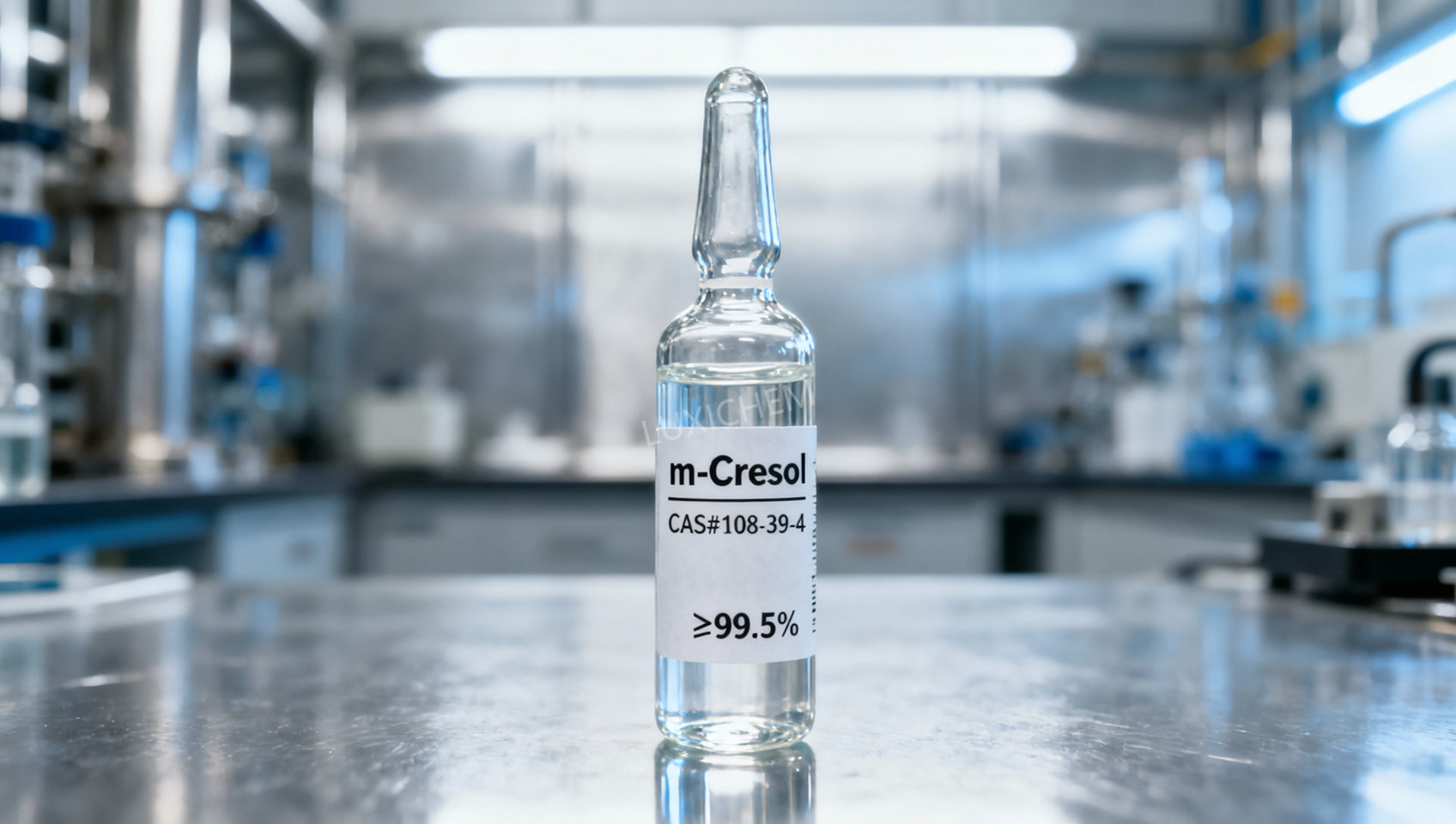
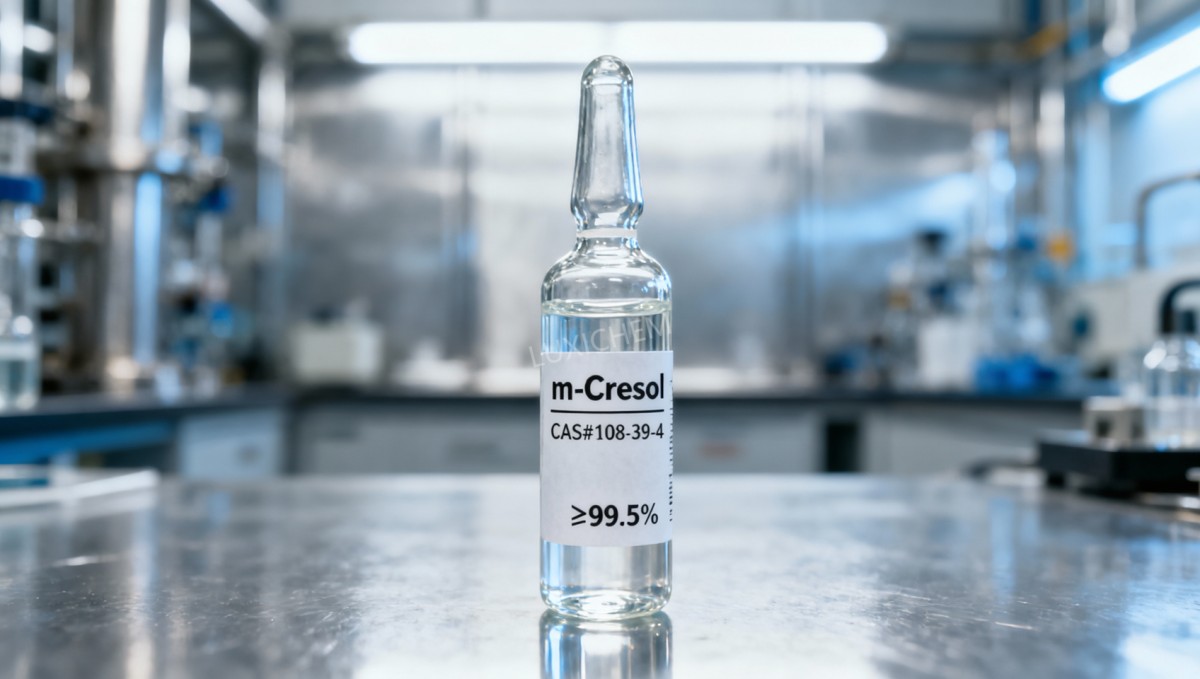
Consider m-Cresol CAS#108-39-4: a phenolic intermediate widely employed in synthesizing organophosphate insecticides such as fenitrothion and fenthion, and in stabilizing analytical reference standards due to its reactivity profile and solvent compatibility. Its purity, residual solvent content, and isomeric composition directly affect the stoichiometric fidelity of derivative standards. A supplier claiming “≥99% purity” without disclosing individual impurity profiles (e.g., o-cresol, p-cresol, xylenols, or sulfonated by-products) cannot support traceable uncertainty budgets required under ISO/IEC 17025 Annex B. Likewise, storage conditions matter: m-Cresol’s sensitivity to air, light, and moisture means that packaging integrity, inert gas blanketing, and temperature-controlled logistics are not logistical details—they are metrological controls.
 A robust audit checklist therefore centers on four technical pillars:
**1. Batch-Specific Analytical Traceability**
Demand full CoA per batch—not generic specifications—with retention times, peak area percentages, and chromatographic resolution data for all reported impurities. Verify that GC or HPLC methods used for purity determination are validated per ICH Q2(R2), with documented specificity, linearity (r² ≥ 0.999), and repeatability (RSD ≤ 1.5%). Cross-check reported water content (Karl Fischer) against stated hygroscopicity; discrepancies >0.1% warrant investigation into handling history.
**2. Synthesis Pathway Transparency**
Ask how the compound is manufactured—not just “synthesized”—and whether route selection impacts residual metal catalysts (e.g., Ni, Pd), halogenated solvents (e.g., chlorobenzene), or sulfonation agents. For m-Cresol, sulfonation-based routes may leave sulfate esters or sulfonic acids undetected by standard UV-HPLC but interfering in LC-MS/MS quantification. Suppliers unable to disclose reaction quenching, work-up steps, or crystallization solvents lack the process understanding needed for analytical-grade assurance.
**3. Stability & Packaging Validation**
Request stability study data under real-world storage conditions—not just accelerated testing. Does the supplier monitor peroxide formation in aged m-Cresol batches? Are amber glass containers with PTFE-lined caps used to prevent oxidation and leaching? Is headspace analysis performed pre-shipment to confirm absence of volatile degradation products? Without this, long-term calibration standard integrity cannot be assured—even if initial purity meets spec.
**4. Chain-of-Custody Documentation Integrity**
Every handoff—from reactor to warehouse to export container—must be time-stamped, temperature-monitored, and signed off. Temperature excursions >30°C during transit invalidate stability assumptions for heat-sensitive intermediates. Audit the supplier’s cold-chain verification protocol: Do they use calibrated loggers with tamper-evident seals? Is data accessible upon request—or buried behind NDAs? Accreditation assessors routinely request shipment logs for reference material batches used in method validation; gaps here trigger major nonconformities.
Luxi Chemical’s supply model aligns with these technical requirements—not by marketing claims, but by operational design. Each batch of m-Cresol CAS#108-39-4 is accompanied by full chromatograms, residual solvent screening (by GC-FID), and peroxide value testing. Synthesis occurs in dedicated, non-cross-contaminated lines with documented catalyst removal steps. Packaging uses nitrogen-purged, light-blocking containers, and every export consignment includes time-temperature log files traceable to individual batch numbers. This isn’t compliance theater—it reflects integration of metrological rigor into core manufacturing logic.
Common audit pitfalls stem from conflating regulatory compliance (e.g., REACH registration) with analytical fitness. A supplier may meet GHS labeling rules yet lack the impurity characterization depth needed for residue labs. Another frequent error: accepting CoAs issued more than 30 days prior to shipment, ignoring potential degradation during storage. Also problematic is reliance on third-party certificates without verifying the certifying body’s scope—many “ISO-certified” labs lack accreditation for chemical reference material certification (ILAC MRA signatory status is mandatory).
Finally, recognize that supplier capability evolves. A single successful audit does not guarantee ongoing conformance. Build re-audit triggers into procurement contracts: after any synthesis route change, packaging revision, or facility relocation—and at minimum, biannually for high-risk intermediates like phenolic compounds used in standard preparation. Tie payment terms to documentation delivery timelines; delayed CoA submission should pause release authorization.
For labs preparing for ISO/IEC 17025 accreditation, the insecticides supplier is not a vendor—it’s an extension of the measurement system. Technical due diligence at this interface determines whether uncertainty budgets hold, whether spike recoveries remain within ±10%, and whether your lab’s authority rests on evidence—or assumption.
Related Picks
 Butylated Hydroxytoluene Price Drivers: Supply, Purity, and Purchasing Risk FactorsOct 21, 2026Butylated Hydroxytoluene price trends depend on supply stability, purity, logistics, and purchasing risk. Learn how to compare quotes wisely and reduce sourcing costs.
 Sodium Tripolyphosphate Price Trends: Raw Material and Energy ExposureOct 20, 2026Explore sodium tripolyphosphate price trends, from phosphate and soda ash costs to energy exposure. Learn how to compare quotes, manage sourcing risks, and make smarter purchasing decisions.
 Acetonitrile Shipment to Vietnam Successfully Dispatched; RCEP Benefits Boost Fine Chemical Trade with ASEANSep 16, 2026A shipment of industrial-grade acetonitrile from our company has recently been loaded and dispatched following the completion of standardized hazardous material packaging and container securing procedures.
 Nigerian Client’s Order of 4 Containers of Vinyl Acetate Successfully Loaded and Shipped to West AfricaSep 16, 2026We recently completed the loading of a vinyl acetate order for a Nigerian client; four containers of the product have been successfully packed and are ready for shipment to Nigeria.




Question Consultation
Send Us Your Inquiry Today

Luxi Chemical is a professional chemical product supplier with ample stock of all chemical categories and excellent quality, welcome your purchase inquiry.

