


Can wet polyester polyol cause bubbles in PU adhesives?
Can wet polyester polyol cause bubbles in PU adhesives?
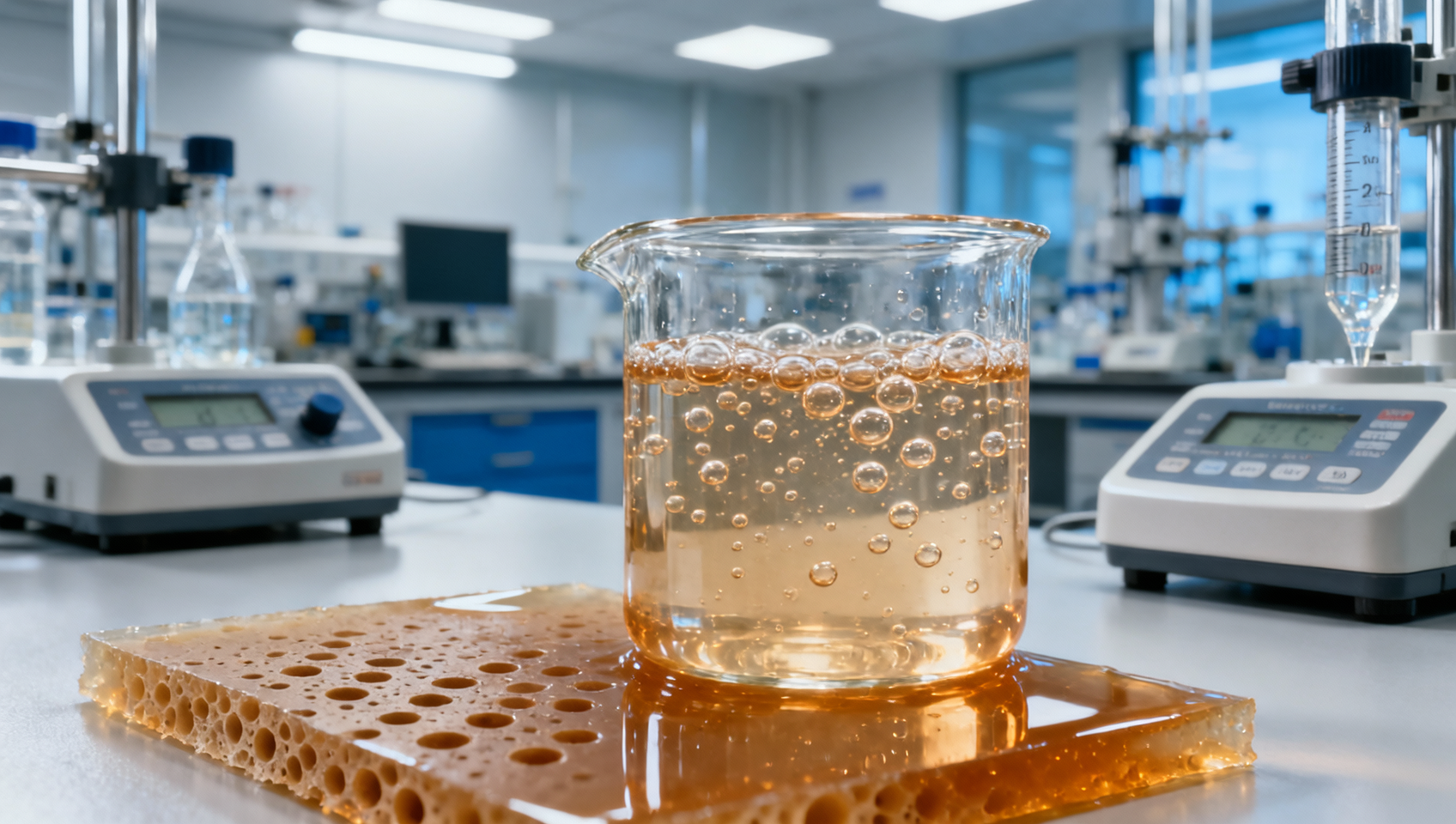
Yes—excess moisture in polyester polyol can cause bubbles in PU adhesives because water reacts with isocyanates to release carbon dioxide. For operators, this can mean foaming during mixing, voids in the cured bondline, and inconsistent bonding performance. When handling polyester polyol for PU adhesives, controlling moisture is essential, but bubbles may also come from trapped air or unsuitable processing conditions.
The useful question is not simply whether the polyol is “wet.” It is whether its measured water content, together with moisture from other ingredients and surfaces, exceeds what the adhesive formulation can tolerate. Before changing mixer speed, adding defoamer, or rejecting a drum, establish where the gas is coming from.
Why moisture can turn a clear adhesive into a porous bondline
In polyurethane chemistry, isocyanate groups normally react with hydroxyl groups in the polyol to build the polymer. Water competes for those isocyanate groups. The initial reaction produces an unstable carbamic acid, which breaks down into an amine and carbon dioxide. The amine can then react with additional isocyanate to form a urea linkage.
That creates two problems: gas generation and a change in the reaction balance. Even when bubbles escape, moisture can still affect cure behavior and the resulting polymer structure. A visually smooth adhesive is therefore not proof that moisture has caused no harm.
Whether the carbon dioxide escapes depends on viscosity, cure speed, temperature, and bondline geometry. A thin, exposed film may release gas more easily than a thick adhesive layer between impermeable substrates. As the adhesive gels, bubbles lose their ability to rise or collapse. Gas generated late in the cure can remain as small internal voids rather than obvious surface foam.
This is particularly relevant to two-component PU adhesives, where water in the polyol-side component meets isocyanate during mixing. Moisture-curing one-component adhesives intentionally use environmental moisture, but uncontrolled water can still cause unwanted foaming. Their moisture requirements should not be applied to a two-component system.
Read the bubble pattern before adjusting the process
Bubble timing is a useful clue, not a definitive test. Air entrainment and chemical gas generation can occur together, especially when a viscous adhesive is mixed aggressively.
- Bubbles visible in the polyol before hardener addition: investigate agitation, transfer pumps, suction leaks, and air drawn into a mixer vortex. The polyol may also contain moisture, but visible bubbles alone do not establish that.
- Foam that develops or increases after isocyanate addition: moisture-related carbon dioxide becomes a stronger possibility. Compare the same formulation using a verified dry control.
- A smooth mixture that develops voids during cure: check substrate moisture, trapped solvent, rising temperature, and gas that cannot escape before gelation.
- Bubbles appearing only in dispensed material: inspect feed pressure, seals, component supply, and the mixing nozzle before blaming the raw material.
Consider a line that produces acceptable bonds early in a shift but begins bubbling after repeated drum openings. Moisture exposure is worth investigating. If the defect instead starts immediately after a pump service or nozzle change, equipment-related air ingress deserves equal attention. These are diagnostic patterns, not evidence that a particular cause has been confirmed.
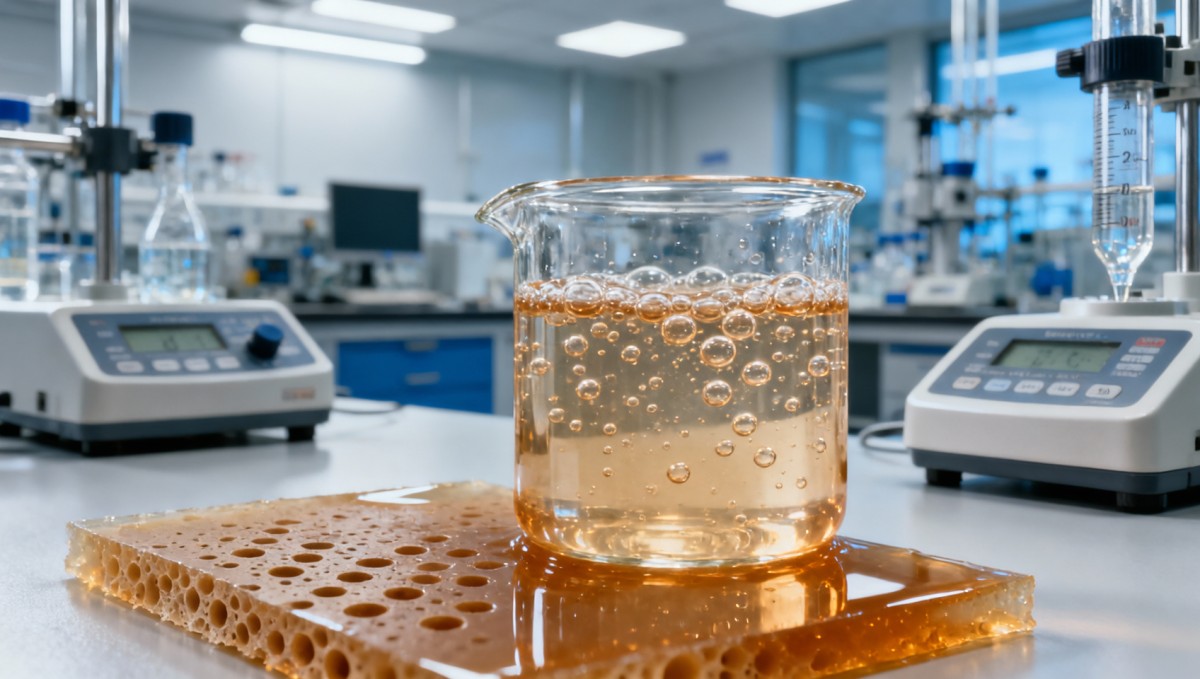
Inspect a cured cross-section as well as the exposed surface. A clean-looking adhesive fillet can conceal pores inside the joint. Record when bubbles first appear, whether they continue growing, and whether the defect occurs throughout the adhesive or mainly at one substrate interface.
Test the material actually reaching the mixer
Karl Fischer titration is a common method for measuring water in polyols. The laboratory should use a procedure suitable for the particular polyester polyol and any additives present. Sample dissolution, extraction, and possible chemical interferences need attention; an unreliable method can produce a reassuring number that does not represent the batch.
Sampling matters just as much. Use clean, dry sampling equipment and a tightly sealed, moisture-resistant container. Minimize exposure to room air and identify the sampling point. A retained sample taken when the drum arrived may not describe material that has spent several days in an open day tank.
A practical investigation compares the supplier’s batch result, a sample from the current container, and material near the point of use. If water content increases along that route, inspect transfer and storage practices. If it remains within the agreed limit, broaden the investigation rather than repeatedly testing the same drum.
There is no universal moisture limit for every polyester polyol for PU adhesives. The acceptable value depends on the formulation, isocyanate balance, application thickness, cure conditions, and required bond performance. Use the grade-specific specification and the adhesive formulator’s validated limit. “Low moisture” without a numerical specification, test method, and sampling context is not a useful release criterion.
Also distinguish raw-polyol moisture from moisture in the complete polyol-side blend. Fillers, pigments, catalysts, plasticizers, or solvents may introduce water after the polyol has passed inspection.
Where moisture enters during ordinary handling
An opened drum can exchange air with the room each time material is withdrawn. Humid air, a poorly sealed lid, wet transfer fittings, and residual cleaning water are all plausible entry points. Polyester polyols differ in their moisture uptake, so storage controls should follow the actual grade rather than assumptions about the whole product family.
Cold containers deserve particular care. Opening a cold drum in warm, humid surroundings can allow condensation on exposed surfaces. Where the supplier’s instructions permit, allow the sealed container to reach the appropriate handling temperature before opening it. Do not improvise heating methods simply to accelerate production.
For repeatedly used containers, a properly designed dry-gas blanket can reduce atmospheric exposure. Its value depends on gas dryness, connections, pressure control, and operating discipline. Ordinary compressed air should not be treated as dry unless its moisture level is verified. Nitrogen systems also require suitable ventilation and controls for oxygen-displacement hazards.
Supplier documentation needs the same material-specific approach. Luxi Chemical (Shandong) Co., Ltd. supplies chemical raw materials and organic intermediates through its international trading business. Its listed 2,5-Dimethoxybenzaldehyde CAS#93-02-7, for example, is an organic-synthesis intermediate with sealed, dry storage guidance—not a polyester polyol or an adhesive defoamer. Shared procurement channels do not make chemicals interchangeable; request the correct technical data sheet, safety data sheet, and batch documentation for each material.
Can you dry the polyol or simply degas the adhesive?
Drying and degassing solve different problems. Degassing removes entrained or dissolved gas under suitable conditions. Drying reduces water content. A short vacuum treatment that removes visible bubbles does not necessarily bring water down to the required specification.
Controlled heating under vacuum may be suitable for some polyester polyols, but the conditions must be approved for the grade and equipment. Viscosity, heat transfer, thermal stability, and volatile ingredients all influence the result. Excessive heating can damage the material; insufficient treatment may leave water behind. Confirm the final moisture result rather than judging success by appearance.
Whenever possible, investigate and correct the polyol-side material before isocyanate addition. Applying vacuum to a reacting adhesive is more difficult: the mixture can expand or foam, volatile components may be removed, and the working time continues to run. Only use a validated process with adequate vessel capacity and appropriate safeguards.
Do not add molecular sieves, moisture scavengers, or defoamers as an unapproved production fix. They can change viscosity, compatibility, cure behavior, or adhesion. A defoamer may help bubbles collapse, but it does not stop water from consuming isocyanate. Adding extra hardener to compensate is also a formulation change, not a reliable operator-level correction.
Use a controlled comparison to narrow the cause
Hold suspect material or affected production according to the site’s quality procedure. Keep the batch number, opening date, storage history, water result, mixing settings, and cure observations together. That record is more useful than a general report that the adhesive “foamed badly.”
Run small comparisons within approved handling procedures. Keep the hardener lot, component ratio, temperature, mixing method, application thickness, and substrate preparation unchanged. Compare the suspect polyol with a compatible, verified in-spec reference. If the reference also bubbles, the polyol is less likely to be the only source.
Next, compare a free film with a bonded assembly. Bubbling mainly in the assembly points toward substrate moisture, surface contamination, or restricted gas escape. Porous wood, concrete, and some fillers can carry moisture even when their surfaces feel dry. Solvent remaining after cleaning can create a separate outgassing problem.
For mechanical air entrainment, check impeller immersion, vortex formation, pump inlet conditions, and mixer selection. Lower speed is not automatically better: inadequate mixing can leave off-ratio regions. The aim is complete mixing without unnecessary air introduction.
Release corrected material only after it meets the relevant moisture specification and the adhesive passes the required cure and bond checks. If water is high, correct the moisture source. If water is acceptable but bubbles persist, investigate equipment, substrates, and cure conditions. The most reliable fix follows the evidence—not whichever adjustment makes the foam disappear fastest.
Related Picks
 Butylated Hydroxytoluene Price Drivers: Supply, Purity, and Purchasing Risk FactorsOct 21, 2026Butylated Hydroxytoluene price trends depend on supply stability, purity, logistics, and purchasing risk. Learn how to compare quotes wisely and reduce sourcing costs.
 Sodium Tripolyphosphate Price Trends: Raw Material and Energy ExposureOct 20, 2026Explore sodium tripolyphosphate price trends, from phosphate and soda ash costs to energy exposure. Learn how to compare quotes, manage sourcing risks, and make smarter purchasing decisions.
 Acetonitrile Shipment to Vietnam Successfully Dispatched; RCEP Benefits Boost Fine Chemical Trade with ASEANSep 16, 2026A shipment of industrial-grade acetonitrile from our company has recently been loaded and dispatched following the completion of standardized hazardous material packaging and container securing procedures.
 Nigerian Client’s Order of 4 Containers of Vinyl Acetate Successfully Loaded and Shipped to West AfricaSep 16, 2026We recently completed the loading of a vinyl acetate order for a Nigerian client; four containers of the product have been successfully packed and are ready for shipment to Nigeria.




Question Consultation
Send Us Your Inquiry Today

Luxi Chemical is a professional chemical product supplier with ample stock of all chemical categories and excellent quality, welcome your purchase inquiry.

