


Managing polyester polyol viscosity in polyurethane coating production
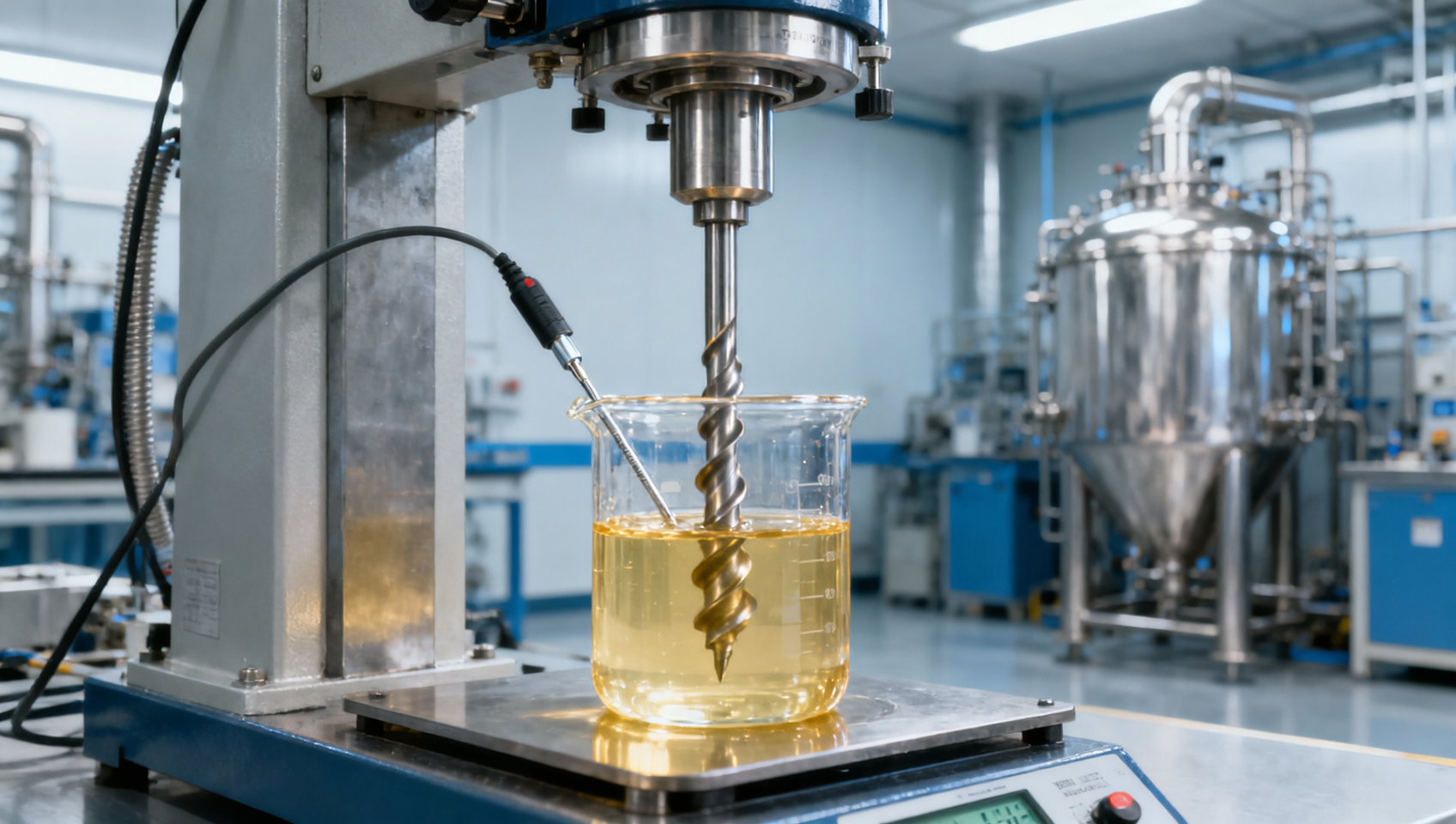
A polyurethane coating batch that becomes harder to pump or stops leveling evenly can interrupt production before the cause is clear. The first response should not be an extra solvent addition. When managing a polyester polyol for polyurethane coatings, first confirm the material temperature, repeat the viscosity measurement under the approved test conditions, and establish whether the change occurred in the raw polyol, the formulated base, or the coating after isocyanate addition.
These are different troubleshooting problems. Cold polyol may simply need controlled conditioning; an off-specification base may involve weighing, solvent loss, or dispersion; a mixed two-component coating may be approaching its usable processing limit. Separating these stages helps operators correct flow problems without unintentionally changing solids content, cure behavior, or film performance.
Locate the viscosity change before adjusting the batch
Start with the batch record and samples from the relevant processing stages. A final coating reading alone cannot identify whether the polyester polyol caused the variation. Compare the incoming material, the base before crosslinker addition, and the mixed coating wherever retained samples and the approved testing procedure allow.
A higher pumping pressure does not automatically indicate higher bulk viscosity. A loaded filter, restricted hose, or unsuitable pump setting can produce a similar operating symptom. Check the material itself before using equipment behavior as a reason to alter the recipe.
Make the viscosity reading comparable
Viscosity values are meaningful only when the measurement conditions match. For rotational testing, record the instrument, spindle or geometry, speed, sample temperature, conditioning time, and reading time. Follow the validated procedure for instrument range and sample preparation. A reading obtained outside the usable torque range should not be accepted simply because the instrument displays a number.
Coating bases containing pigments or rheology modifiers may be shear-dependent. Changing spindle speed or the resting period can therefore change the result even when the formulation is identical. A flow cup can be useful for application control when specified, but its flow time is not interchangeable with a rotational viscosity value without a validated relationship.
- Take a representative sample. Homogenize the material using the approved method. Avoid sampling only a cold surface layer, settled material, or an unrepresentative portion of a container.
- Condition the sample. Bring it to the specified test temperature and allow it to equilibrate. Measure the sample temperature rather than relying on the room or heating-jacket setting.
- Control the sample history. Use the specified mixing, resting, and bubble-removal procedure. Keep exposure and handling consistent between samples.
- Repeat questionable results. Use a fresh representative sample and inspect the instrument setup. Compare with a retained reference under the same conditions when available.
- Record the conditions with the value. A viscosity number without temperature and method details is a weak basis for a production decision.
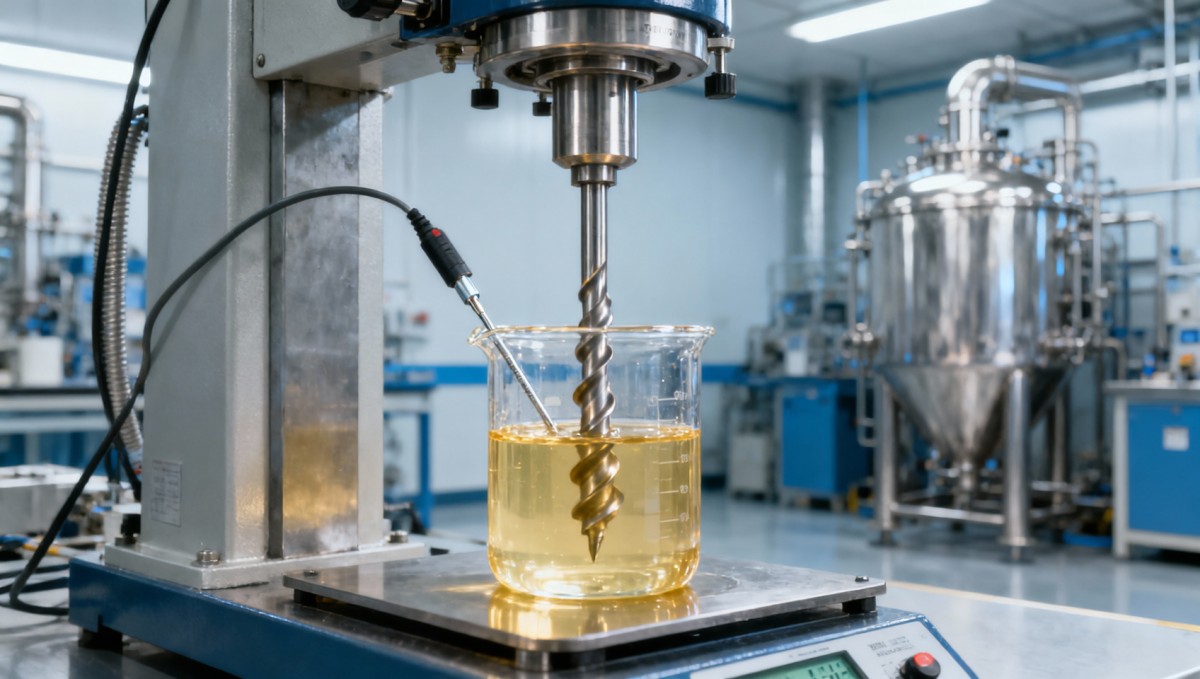
Keep samples covered where the method permits, particularly for solvent-containing bases. Evaporation during preparation can increase solids content and distort the reading. Air bubbles can also interfere with measurement and should be handled through the established procedure rather than an improvised treatment.
Temperature correction: condition the material, not just the container
Polyester polyol viscosity generally decreases as temperature rises, but the relationship depends on the grade. Use the supplier’s handling guidance and the plant’s validated operating range rather than applying one heating rule to every material. A drum that feels warm externally can still contain a cooler, more viscous core.
Approved drum warming, jacketed vessels, or controlled circulation can improve temperature uniformity. Avoid localized overheating and heating methods not approved for the material and packaging. Solvent-containing systems also require suitable ventilation, ignition control, and equipment selection according to their safety data and site procedures.
Before deciding that warming has solved the problem, return a representative sample to the reference test temperature and measure again. Otherwise, the apparent improvement may only reflect the hotter test condition. Record processing temperature separately from quality-control test temperature: the first supports handling, while the second supports comparison.
Some polyester polyol grades can develop crystallization or other physical changes during storage. Haze, graininess, or unusual thickening should be checked against grade-specific instructions. Heating may be an approved conditioning step for certain products, but unexplained appearance changes should not automatically be treated as reversible cold thickening.
Moisture and reaction time require a different response
Moisture is important because water reacts with isocyanate, potentially generating carbon dioxide and changing the intended reaction balance. The consequences can include bubbles, foam, film defects, and altered cure behavior. Viscosity alone is not a reliable moisture test. A normal-looking polyol sample can still require investigation if storage or transfer conditions suggest water exposure.
Check container closure, transfer connections, vessel dryness, cleaning residues, and any humid-air exposure. Use the approved moisture test, such as a suitable Karl Fischer method, when confirmation is needed. Where dry-gas blanketing is specified, verify the gas supply and system condition rather than assuming blanketing is effective because a line is connected.
After isocyanate addition, viscosity can rise as the coating reacts. Temperature, catalyst level, formulation, and elapsed time all influence the usable processing window. Start the pot-life record at the point defined by the process specification and identify mixed material clearly so that older coating is not returned unnoticed to a fresh batch.
Solvent does not reverse crosslinking. It may temporarily improve flow while the coating continues reacting, masking deterioration in application or cure performance. Material outside its validated use window should be isolated and handled according to the plant procedure, not repeatedly thinned until it can pass through the equipment.
Adjust only the variable that has been verified
Once a repeatable deviation is confirmed, review the charge sequence and actual quantities. Missing solvent, incorrect polyol grade, weighing errors, incomplete incorporation, or a different dispersion endpoint can all shift viscosity. Look for evidence in scale records, container weights, mixer logs, and retained samples before choosing a correction.
When an approved solvent adjustment is appropriate
For a solventborne formulation, an authorized solvent addition may be appropriate when the investigation confirms an allowable solvent-balance correction. Use only the specified solvent or blend, add incrementally according to the batch procedure, allow complete mixing, and retest at the reference temperature. Record the total addition against the permitted formulation limit.
Solvent identity matters as much as quantity. Solvency and evaporation behavior affect resin compatibility, leveling, sag resistance, drying, and film build. Compatibility with the isocyanate component must also be respected. Do not substitute an available solvent merely because it reduces viscosity quickly, and do not add solvent to a solvent-free system without formulation approval.
When changing the polyol requires formulation review
Replacing part of a polyester polyol with a lower-viscosity grade is not a routine operator correction. Grades can differ in hydroxyl value, functionality, molecular structure, acid value, solids content, and compatibility. These differences can affect the required isocyanate quantity and the resulting coating properties.
A grade change therefore requires a controlled formulation evaluation, including the intended hydroxyl-to-isocyanate balance and relevant film tests. Matching application viscosity does not demonstrate that two polyols are interchangeable. An unexplained incoming-material deviation should remain on hold while quality personnel and the supplier clarify its status.
Keep purification separate from viscosity adjustment
Occasionally, a viscosity investigation also reveals unexpected color, odor, or suspected contamination. That is a separate quality issue, not evidence that an adsorbent should be added to the coating batch. Identify the contamination source and determine whether the affected material can be recovered through an approved process.
For a separately designed upstream liquid-purification operation, Activated Carbon CAS#64365-11-3 is a powder adsorbent described for impurity removal, decolorization, and deodorization in chemical processing. It is practically insoluble in usual solvents. Those properties make adsorption and subsequent solids separation relevant to a validated purification process, not to direct viscosity reduction.
Any proposed use would need compatibility testing, confirmation of which components are adsorbed, and a suitable filtration step. Carbon particles or unintended removal of formulation components could affect coating quality. Do not introduce the powder into a production coating as a viscosity remedy; follow its current safety data and the site’s handling controls if a purification trial is authorized.
Release the batch against both flow and coating requirements
After an authorized correction, confirm more than a single viscosity reading. Recheck solids content or other specified composition indicators where relevant, verify uniformity, and perform the required application and cure checks. A batch may flow acceptably yet show altered sag, film thickness, drying, or surface appearance.
Point-of-use conditions also deserve a check. Material can leave the mixing vessel within specification and then change temperature in a transfer line. Solvent evaporation from an open application system or increasing residence time after crosslinker addition can create a later deviation. Sample locations and timing should therefore reflect the actual production stage being controlled.
Related Picks
 Butylated Hydroxytoluene Price Drivers: Supply, Purity, and Purchasing Risk FactorsOct 21, 2026Butylated Hydroxytoluene price trends depend on supply stability, purity, logistics, and purchasing risk. Learn how to compare quotes wisely and reduce sourcing costs.
 Sodium Tripolyphosphate Price Trends: Raw Material and Energy ExposureOct 20, 2026Explore sodium tripolyphosphate price trends, from phosphate and soda ash costs to energy exposure. Learn how to compare quotes, manage sourcing risks, and make smarter purchasing decisions.
 Acetonitrile Shipment to Vietnam Successfully Dispatched; RCEP Benefits Boost Fine Chemical Trade with ASEANSep 16, 2026A shipment of industrial-grade acetonitrile from our company has recently been loaded and dispatched following the completion of standardized hazardous material packaging and container securing procedures.
 Nigerian Client’s Order of 4 Containers of Vinyl Acetate Successfully Loaded and Shipped to West AfricaSep 16, 2026We recently completed the loading of a vinyl acetate order for a Nigerian client; four containers of the product have been successfully packed and are ready for shipment to Nigeria.




Question Consultation
Send Us Your Inquiry Today

Luxi Chemical is a professional chemical product supplier with ample stock of all chemical categories and excellent quality, welcome your purchase inquiry.

