


Citric Acid Bulk Supply Chain Risks: Lead Times, Storage Conditions, and Shelf-Life Management for Industrial Users
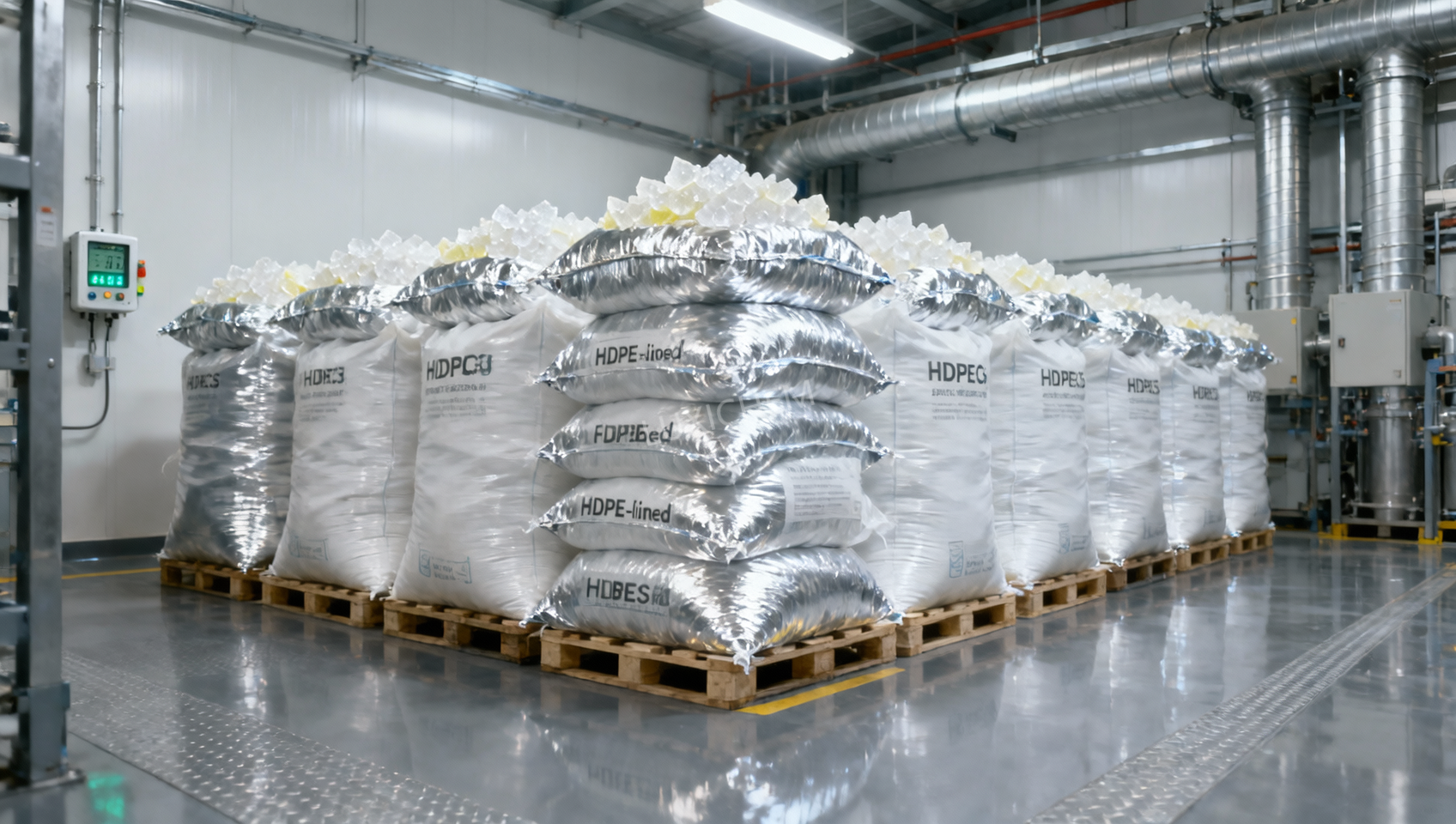
For project managers overseeing large-scale industrial operations, reliable citric acid bulk supply chain performance is critical—delays, improper storage, or expired inventory can derail production schedules and compromise product quality. This article examines key risk factors in citric acid bulk procurement: extended lead times due to global logistics volatility, strict humidity- and temperature-sensitive storage requirements, and proactive shelf-life management strategies.
Lead Time Volatility: Beyond the Quoted Timeline
Citric acid bulk orders rarely arrive on the date printed in a quotation. Actual delivery windows are shaped by layered dependencies: raw material availability at upstream fermentation facilities, regional regulatory clearance for export documentation, vessel space allocation on transoceanic routes, and inland transport bottlenecks at destination ports. A quoted 45-day lead time may stretch to 70+ days when monsoon-related port congestion in Southeast Asia coincides with tightened EU REACH dossier validation timelines. Unlike commodity chemicals traded on futures markets, citric acid lacks standardized forward pricing mechanisms; suppliers often lock in production slots only after full prepayment, meaning late payments—even by five business days—can shift an order into the next production cycle. Crucially, lead time variability increases nonlinearly beyond 20 MT per shipment: small-batch orders benefit from shared container space and flexible scheduling, while full-container-load (FCL) shipments require dedicated crystallization runs, drying cycles, and packaging line calibration—all of which extend minimum planning horizons.
Storage Conditions: Where Humidity Is the Silent Degrader
Bulk citric acid monohydrate is hygroscopic—not merely moisture-absorbing, but structurally reactive with ambient water vapor. At relative humidity (RH) above 65%, surface hydration initiates localized dissolution, followed by recrystallization upon drying that forms hard agglomerates and bridges between particles. These bridges impede flow through pneumatic conveying lines and cause bridging in silo discharge hoppers. More critically, prolonged exposure to RH >75% accelerates Maillard-type browning reactions when trace reducing sugars (often present as residual impurities from fermentation feedstock) interact with citric acid under mild thermal stress—even at ambient warehouse temperatures. This discoloration does not affect acidity but triggers rejection in food-grade applications where visual consistency is contractually mandated. Temperature alone is insufficient: storing at 25°C with RH control at 50% is safer than 18°C with uncontrolled RH at 80%. Ventilation must be directional—exhaust-only systems create negative pressure that draws humid ambient air into storage zones, worsening condensation on cooler drum surfaces during diurnal temperature swings.
Shelf-Life Management: Stability ≠ Static Shelf Life
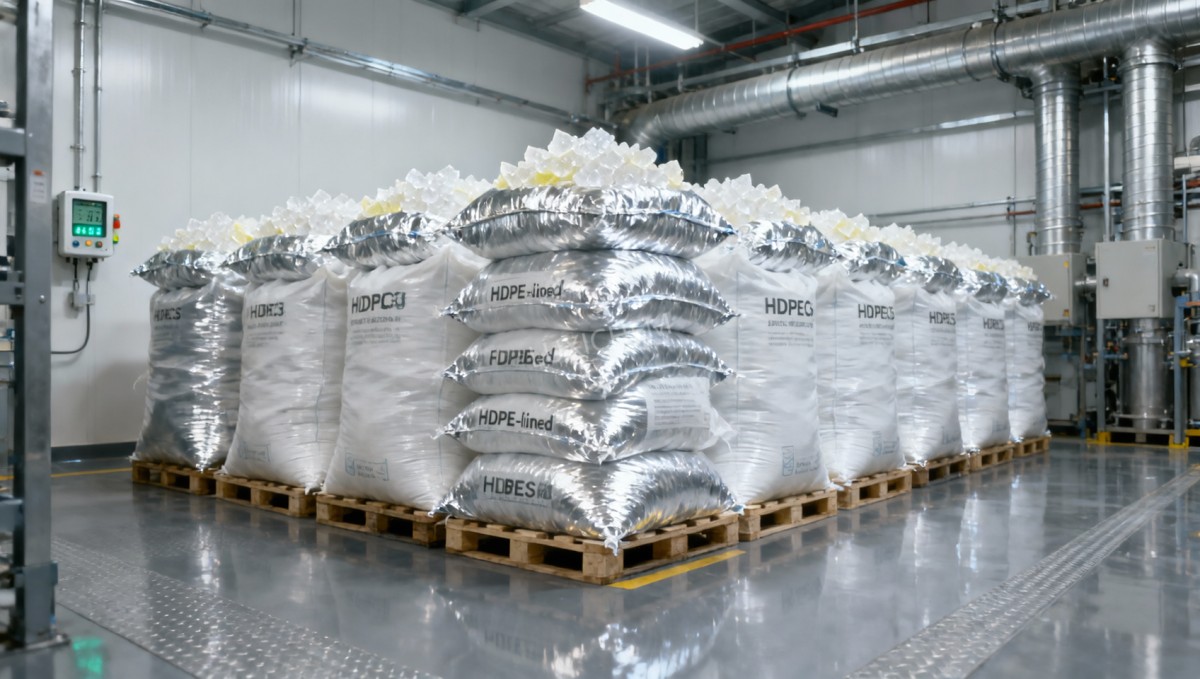
The stated 24-month shelf life assumes continuous compliance with storage specifications—not just initial conditions. Citric acid’s degradation pathway is autocatalytic: early-stage hydrolysis releases small amounts of aconitic and itaconic acids, which lower local pH and accelerate further decomposition. This means shelf life is not linear but exponential—90% of measurable degradation occurs in the final 20% of the labeled period. Batch-specific stability data matters more than generic claims. For example, citric acid derived from cassava-based fermentation exhibits higher residual starch content, increasing susceptibility to microbial regrowth if moisture ingress occurs—even within sealed HDPE-lined FIBCs. In contrast, corn-derived batches show greater resistance to enzymatic breakdown but higher sensitivity to metal-catalyzed oxidation when stored in carbon-steel intermediate bulk containers (IBCs) without passivation. Real-time monitoring requires more than “manufactured on” dates: traceable batch records must include post-drying moisture content (target ≤0.5% w/w), residual ash profile (indicative of neutralizing agent carryover), and particle size distribution (affecting surface-area-to-volume ratio and thus hydration kinetics).
Material Compatibility in Downstream Processing
When citric acid bulk is metered into high-shear mixers or fluidized-bed granulators, its physical form directly impacts process yield. Agglomerated material causes inconsistent feed rates, leading to over-acidification in one batch and under-dosing in the next—especially problematic in detergent formulations where pH buffering capacity must remain within ±0.3 units. The same physical instability appears in pharmaceutical excipient blending: citric acid fines (<100 µm) generate electrostatic charge during pneumatic transfer, causing adhesion to stainless-steel piping walls and reducing delivered mass accuracy. This isn’t resolved by simply specifying “free-flowing” grade; it demands supplier verification of anti-caking agent compatibility (e.g., silica vs. calcium stearate) and validation of flow function coefficients under actual plant operating pressures. Notably, some organic intermediates used in co-processing—such as Ethyl vinyl ether CAS#109-92-2, employed in pharmaceutical synthesis—require strict anhydrous handling; cross-contamination from citric acid storage zones must be engineered out via segregated HVAC zones and positive-pressure airlocks, not just procedural controls.
Procurement Levers That Reduce Total Cost of Ownership
Cost optimization begins before the PO is issued. First, negotiate tiered lead time pricing: accepting a 60-day window instead of 30 may reduce unit cost by 3–5%, but only if the extended timeline aligns with your production master schedule’s float. Second, specify packaging with dual-barrier integrity—HDPE-lined FIBCs with inner aluminum laminate—not just for moisture protection, but because puncture resistance reduces field damage claims by up to 40% during multi-tiered warehouse handling. Third, require real-time lot-level stability reports tied to accelerated aging studies (e.g., 40°C/75% RH for 3 months), not just room-temperature data. Finally, avoid blanket “food-grade” certifications: demand CoA alignment with your end-use regulatory framework—FDA 21 CFR 184.1030 for U.S. food manufacturing versus EC No 1333/2008 Annex II for EU markets—since analytical limits for heavy metals (e.g., arsenic ≤3 mg/kg vs. ≤1 mg/kg) differ significantly and impact release testing frequency.
Supply chain resilience for citric acid bulk hinges on precise parameter awareness—not broad assurances. Lead time risk is managed through production slot visibility, not calendar dates. Storage integrity depends on RH control precision, not ambient temperature alone. Shelf-life confidence comes from batch-specific degradation kinetics, not static expiration labels. Each decision point carries measurable cost implications: a 2% moisture deviation adds $12,000/year in rework for a 5,000 MT/year facility; a 10-day lead time extension avoids $8,500 in expedited freight but may trigger $22,000 in line downtime if misaligned with tank farm turnover. Clarity on these variables transforms procurement from a transactional checkpoint into a calibrated operational lever.
Related Picks
 Butylated Hydroxytoluene Price Drivers: Supply, Purity, and Purchasing Risk FactorsOct 21, 2026Butylated Hydroxytoluene price trends depend on supply stability, purity, logistics, and purchasing risk. Learn how to compare quotes wisely and reduce sourcing costs.
 Sodium Tripolyphosphate Price Trends: Raw Material and Energy ExposureOct 20, 2026Explore sodium tripolyphosphate price trends, from phosphate and soda ash costs to energy exposure. Learn how to compare quotes, manage sourcing risks, and make smarter purchasing decisions.
 Acetonitrile Shipment to Vietnam Successfully Dispatched; RCEP Benefits Boost Fine Chemical Trade with ASEANSep 16, 2026A shipment of industrial-grade acetonitrile from our company has recently been loaded and dispatched following the completion of standardized hazardous material packaging and container securing procedures.
 Nigerian Client’s Order of 4 Containers of Vinyl Acetate Successfully Loaded and Shipped to West AfricaSep 16, 2026We recently completed the loading of a vinyl acetate order for a Nigerian client; four containers of the product have been successfully packed and are ready for shipment to Nigeria.




Question Consultation
Send Us Your Inquiry Today

Luxi Chemical is a professional chemical product supplier with ample stock of all chemical categories and excellent quality, welcome your purchase inquiry.

