


Cost Comparison: Ferrovanadium vs. Vanadium Nitride in HSLA Steel — Total Cost per Ton of Achieved Strength Gain
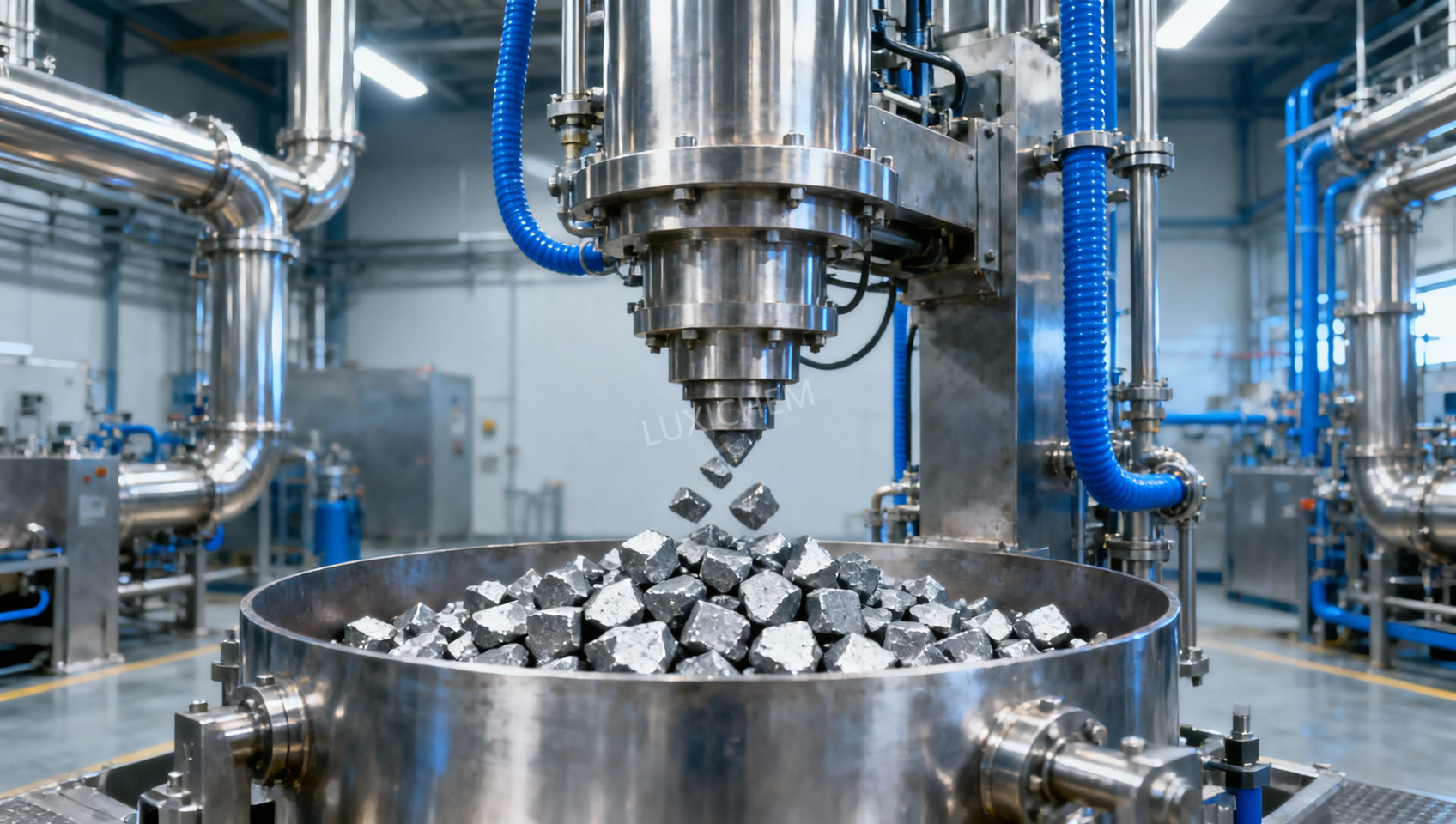
Cost Comparison: Ferrovanadium vs. Vanadium Nitride in HSLA Steel — Total Cost per Ton of Achieved Strength Gain
For procurement professionals sourcing alloying agents for HSLA steel, choosing between Ferrovanadium and vanadium nitride involves more than just unit price—it’s about total cost per ton of achieved strength gain. At Luxi Chemical (Shandong) Co., Ltd., we help global buyers optimize value by analyzing real-world performance, yield efficiency, and processing costs. This comparison cuts through marketing claims to deliver data-driven insights—ensuring your Ferrovanadium procurement decisions align with both metallurgical requirements and bottom-line goals.
Let’s start with what matters most on the shop floor: how much usable strength you actually get—and at what true cost—when you add vanadium to your HSLA melt.
Why “per ton of strength gain” is the only metric that reflects procurement reality
Unit price per kilogram tells half the story. A cheaper compound may require higher dosing, introduce nitrogen-related risks, or reduce recovery in ladle refining—driving up scrap rates, energy use, or finishing costs. In practice, procurement teams at Tier-1 steelmakers routinely track two metrics side-by-side: (1) vanadium content delivered per ton of steel, and (2) resulting yield strength increase (MPa) confirmed in tensile testing of final coils or billets.
Vanadium nitride (VN) delivers high theoretical V-content—up to 79 wt%—but its reactivity with oxygen and sensitivity to slag basicity means actual recovery can drop below 65% in standard BOF or EAF practices. Ferrovanadium, typically supplied as FeV80 (75–85% V), offers more predictable dissolution kinetics and recovery rates above 88% under controlled deoxidation conditions. That difference isn’t academic: it shifts the breakeven point dramatically when you factor in yield loss, remelting, and mill downtime.
Processing behavior: where theory meets furnace reality
Vanadium nitride dissolves rapidly—but unpredictably. Its exothermic reaction with dissolved oxygen can trigger localized overheating, increasing refractory wear and altering inclusion morphology. In continuous casting, this sometimes correlates with increased nozzle clogging, especially when combined with aluminum-killed melts. One European flat-rolled producer reported a 12% rise in tundish stoppages after switching from FeV to VN without adjusting slag composition or argon stirring intensity.
Ferrovanadium, by contrast, behaves like a conventional ferroalloy: slower dissolution, but highly controllable. It integrates cleanly into standard addition protocols—whether added during tapping, in the ladle, or via wire feeding. Its iron matrix improves wettability with molten steel, reducing surface oxidation losses. And because it contains no nitrogen, there’s no risk of micro-porosity or embrittlement in downstream hot rolling—critical for structural grades requiring Charpy impact compliance at –40°C.
The hidden cost of nitrogen management
Vanadium nitride introduces ~21% nitrogen by weight. While some N is beneficial for precipitation hardening, excess nitrogen raises several operational concerns: tighter control over Al/N ratio to avoid AlN stringers; additional degassing time in vacuum furnaces; and stricter limits on residual N in API 5L X70+ or ASTM A572 Grade 50 applications. One North American pipe mill found that switching to VN required adding 0.015% extra aluminum per heat—raising raw material cost by $1.20/ton of steel, plus $0.40/ton in extended vacuum hold time.
None of those adjustments apply to Ferrovanadium. Its clean chemistry simplifies process windows—especially valuable for mills running mixed-grade campaigns or tight turnaround schedules.
Logistics, consistency, and supply chain resilience
Vanadium nitride is hygroscopic. Even brief exposure to ambient humidity can cause surface hydrolysis, forming vanadium oxides that impair dissolution and create inconsistent batch-to-batch response. Most suppliers recommend sealed packaging, inert gas blanketing during unloading, and immediate use after opening—adding handling complexity and inventory risk.
Ferrovanadium is far more forgiving. Standard FeV80 in lidded drums or multi-wall bags maintains stability across typical warehouse conditions. Luxi Chemical supplies Ferrovanadium with certified assay reports, traceable lot numbers, and consistent particle size distribution—reducing variability in feeding accuracy and melt homogeneity. Our logistics network supports direct container loading from Qingdao port, with documentation aligned to EU REACH Annex XIV and US TSCA requirements.
That reliability extends beyond metallurgy. As part of our broader portfolio—including organic intermediates like Benzophenone CAS#119-61-9, used widely in UV-curable coatings and pharmaceutical synthesis—we’ve built redundancy across production, quality control, and export compliance. For procurement teams managing multiple chemical inputs, one vendor with cross-category expertise often reduces administrative overhead more than any single line-item discount.
When does vanadium nitride make sense?
Not all scenarios favor Ferrovanadium. In specialty bar steels where nitrogen is intentionally leveraged—for example, in microalloyed free-machining grades—the controlled introduction of VN can be technically superior. Likewise, in powder metallurgy or additive manufacturing feedstock production, where precise stoichiometry and fine particle dispersion matter more than bulk recovery, VN’s high vanadium density becomes an advantage.
But for mainstream HSLA plate, coil, and section production—where throughput, yield, and consistency drive margins—Ferrovanadium remains the pragmatic choice. The math rarely lies: when you allocate cost across recovered vanadium, strength gain, yield loss, and secondary processing, FeV delivers lower total cost per MPa of guaranteed yield strength.
Next steps for procurement teams
Start by reviewing your last three heats where vanadium was added: what was the actual recovery rate? What was the measured strength delta versus specification? Did any batch require reprocessing or downgrading?
Then compare supplier data—not just nominal pricing, but certified assay, particle size distribution, moisture content, and documented recovery history in similar furnace types. Luxi Chemical provides full technical dossiers for each Ferrovanadium lot, including melt analysis, sieve distribution curves, and third-party verification against ISO 5451:2017.
If your application sits at the edge—say, dual-certified structural + pressure vessel grades—consider requesting a small trial batch with matched metallurgical support. We work directly with mill labs to co-validate performance before scaling.
Because in procurement, the most expensive decision isn’t the one you pay for upfront—it’s the one you don’t fully understand before the first ton is poured.
Related Picks
 Butylated Hydroxytoluene Price Drivers: Supply, Purity, and Purchasing Risk FactorsOct 21, 2026Butylated Hydroxytoluene price trends depend on supply stability, purity, logistics, and purchasing risk. Learn how to compare quotes wisely and reduce sourcing costs.
 Sodium Tripolyphosphate Price Trends: Raw Material and Energy ExposureOct 20, 2026Explore sodium tripolyphosphate price trends, from phosphate and soda ash costs to energy exposure. Learn how to compare quotes, manage sourcing risks, and make smarter purchasing decisions.
 Acetonitrile Shipment to Vietnam Successfully Dispatched; RCEP Benefits Boost Fine Chemical Trade with ASEANSep 16, 2026A shipment of industrial-grade acetonitrile from our company has recently been loaded and dispatched following the completion of standardized hazardous material packaging and container securing procedures.
 Nigerian Client’s Order of 4 Containers of Vinyl Acetate Successfully Loaded and Shipped to West AfricaSep 16, 2026We recently completed the loading of a vinyl acetate order for a Nigerian client; four containers of the product have been successfully packed and are ready for shipment to Nigeria.




Question Consultation
Send Us Your Inquiry Today

Luxi Chemical is a professional chemical product supplier with ample stock of all chemical categories and excellent quality, welcome your purchase inquiry.

