


Why BHT Fails in High-Temperature Polymer Processing — Oxidation Onset Temperature and Synergistic Stabilizer Systems
Why BHT Fails in High-Temperature Polymer Processing
Butylated hydroxytoluene (BHT) is still specified in many legacy polymer formulations—not because it’s optimal for modern processing, but because it’s familiar, inexpensive, and historically adequate for low-temperature extrusion or injection molding. Yet when processing engineering thermoplastics like PPA, PEEK, or high-MFI polypropylene at melt temperatures above 160°C—or during extended residence times in twin-screw extruders—BHT often delivers inconsistent stabilization, premature discoloration, and unexpected mechanical degradation. The root cause isn’t impurity or dosage error. It’s thermal kinetics: BHT’s oxidation onset temperature sits firmly between 140°C and 150°C under real processing conditions. Once exceeded, its radical-scavenging capacity drops sharply—not gradually, but precipitously.
This isn’t a theoretical threshold. In practice, BHT begins decomposing exothermically around 145°C in air, releasing volatile phenolic fragments and forming quinone methides that can act as pro-oxidants rather than antioxidants. Differential scanning calorimetry (DSC) under oxidative induction conditions consistently shows BHT’s OIT (oxidative induction time) collapsing by >70% when test temperature rises from 150°C to 180°C. More critically, its half-life under shear and oxygen exposure at 170°C is often less than 3 minutes—far shorter than typical residence times in high-output compounding lines. That means BHT may be fully consumed before the polymer even exits the die—leaving downstream stages unprotected.
Oxidation Onset Temperature Is Not Just a DSC Number
Many technical evaluators misinterpret oxidation onset temperature (OOT) as a static material property—like melting point. But in polymer processing, OOT is highly context-dependent: it shifts with oxygen partial pressure, shear rate, polymer matrix polarity, and the presence of metal contaminants (e.g., catalyst residues in polyolefins). For example, in a nitrogen-purged extruder barrel, BHT’s effective OOT may rise to ~155°C—but introduce trace iron from screw wear or recycled feedstock, and onset drops back to 135°C due to catalyzed decomposition. This explains why lab-scale DSC screening often overestimates BHT’s field performance: real-world conditions accelerate its failure mode.
Worse, BHT offers no self-regeneration mechanism. Unlike hindered phenols with ortho-alkyl substitution (e.g., Irganox 1010), BHT lacks the steric and electronic configuration needed to stabilize its phenoxyl radical long enough to terminate secondary radicals. Its phenoxyl radical instead undergoes rapid β-scission or reacts with peroxyl radicals to form non-radical products—depleting itself without chain-breaking efficiency beyond the first few seconds of thermal stress. That’s why BHT works well in short-cycle, low-heat applications (e.g., HDPE blow-molding at 155°C), but fails catastrophically in continuous compounding of flame-retardant PC/ABS blends processed at 230°C.
Synergistic Stabilizer Systems Aren’t Optional—They’re Necessary
Replacing BHT outright isn’t always feasible—especially where regulatory compliance (e.g., FDA 21 CFR 178.2010 for food-contact polymers) or legacy formulation validation constrain change. The more robust path is re-engineering the stabilizer system around BHT’s limitations—not despite them. Effective synergy requires functional separation: one component scavenges alkyl/peroxyl radicals, another decomposes hydroperoxides *before* they generate new radicals, and a third suppresses surface oxidation and UV-initiated degradation downstream.
A proven three-tier architecture uses:
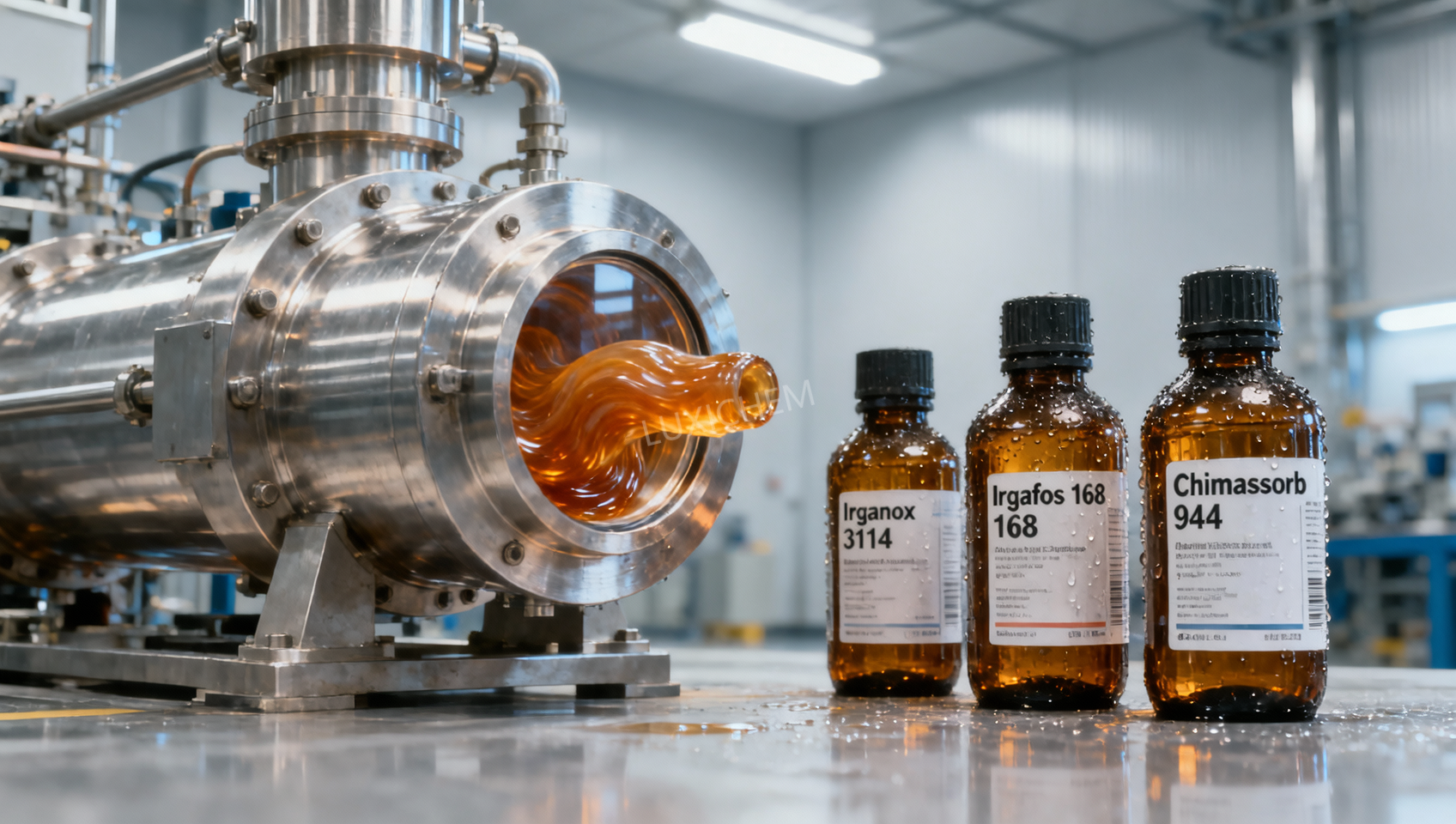
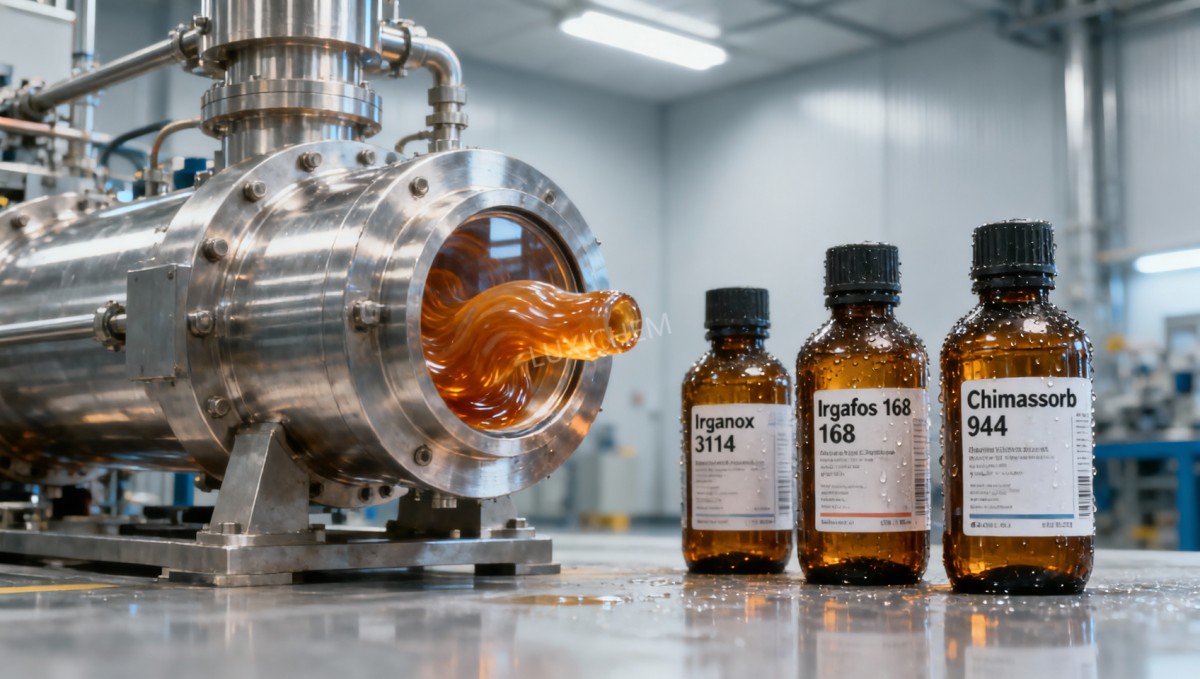
- Hindered phenol (e.g., Irganox 3114): Higher OOT (~220°C), slower depletion, regenerable phenoxyl radical;
- Phosphite (e.g., Irgafos 168): Hydroperoxide decomposer—critical for preventing autocatalytic oxidation during melt homogenization;
- Hindered amine light stabilizer (HALS, e.g., Chimassorb 944): Nitroxyl radical reservoir that regenerates via redox cycling, providing long-term protection post-processing.
BHT can remain in such systems—but only as a minor co-antioxidant (<0.05 wt%), not the primary stabilizer. Its role shifts from frontline defense to “thermal buffer”: delaying initial oxidation just long enough for the higher-OOT phenol to engage. Removing phosphite, however, triggers rapid yellowing—even with ample phenol—because accumulated hydroperoxides overwhelm the system during cooling and pelletizing.
When Does BHT Still Make Sense?
BHT retains value in specific niches—not as a general-purpose antioxidant, but where its limitations align with process constraints. These include:
- Low-melt-index polyethylene films processed below 140°C (e.g., cast film lines with short residence time);
- Masterbatches intended for final dilution into large-volume commodity resins, where total antioxidant loading is sub-0.02 wt% and heat history is minimal;
- Non-oxidative environments: nitrogen-flushed extrusion of polyacetal or polybutylene terephthalate, where thermal degradation dominates over oxidative pathways.
In all other cases—especially for engineering resins, recycled-content compounds, or applications requiring long-term color stability—relying on BHT alone introduces unquantified risk. Field failures rarely manifest as catastrophic melt fracture; more often, they appear as subtle batch-to-batch variation in tensile strength, increased extractables in medical tubing, or accelerated UV embrittlement in outdoor profiles. These are late-stage symptoms of early-stage antioxidant exhaustion.
Material Selection Implications Beyond Antioxidants
The decision to move away from BHT often reveals deeper formulation dependencies. For instance, switching to a higher-OOT phenol may require adjusting calcium stearate levels in PP compounds—since some phosphites react with alkaline fillers, reducing hydroperoxide decomposition efficiency. Similarly, introducing HALS into PVC-based compounds demands careful evaluation of metal soap compatibility to avoid discoloration.
Even surfactant selection becomes relevant in multi-phase systems. In polymer blends containing polar modifiers (e.g., EVOH or ionomers), interfacial stability affects antioxidant migration. A product like Sodium Lauryl Ether Sulfate(SLES) CAS#68585-34-2—used as an emulsifier in masterbatch dispersion aids—can influence how uniformly antioxidants distribute across phases. Its mild foaming profile and stable interface activity help maintain consistent additive dispersion during aqueous pelletization, indirectly supporting stabilization efficacy in final compounds.
Ultimately, BHT’s failure at high temperature isn’t a flaw—it’s a boundary condition. Recognizing that boundary allows technical evaluators to stop asking “Is BHT sufficient?” and start asking “What does the full thermal and oxidative profile of *this* process demand—and which components collectively meet it?” That shift—from single-additive assessment to system-level stabilization design—is what separates reactive troubleshooting from predictive formulation engineering.
Related Picks
 Butylated Hydroxytoluene Price Drivers: Supply, Purity, and Purchasing Risk FactorsOct 21, 2026Butylated Hydroxytoluene price trends depend on supply stability, purity, logistics, and purchasing risk. Learn how to compare quotes wisely and reduce sourcing costs.
 Sodium Tripolyphosphate Price Trends: Raw Material and Energy ExposureOct 20, 2026Explore sodium tripolyphosphate price trends, from phosphate and soda ash costs to energy exposure. Learn how to compare quotes, manage sourcing risks, and make smarter purchasing decisions.
 Acetonitrile Shipment to Vietnam Successfully Dispatched; RCEP Benefits Boost Fine Chemical Trade with ASEANSep 16, 2026A shipment of industrial-grade acetonitrile from our company has recently been loaded and dispatched following the completion of standardized hazardous material packaging and container securing procedures.
 Nigerian Client’s Order of 4 Containers of Vinyl Acetate Successfully Loaded and Shipped to West AfricaSep 16, 2026We recently completed the loading of a vinyl acetate order for a Nigerian client; four containers of the product have been successfully packed and are ready for shipment to Nigeria.




Question Consultation
Send Us Your Inquiry Today

Luxi Chemical is a professional chemical product supplier with ample stock of all chemical categories and excellent quality, welcome your purchase inquiry.

