


Taurine Powder Sourcing from China vs. Europe: Supply Chain Reliability, Batch-to-Batch Consistency, and Certificate of Analysis Requirements
2026.09.11
When procurement professionals evaluate taurine powder suppliers, they’re not just comparing price tags—they’re weighing operational risk. A single inconsistent batch can delay product launch, trigger regulatory rejections, or compromise formulation integrity across food supplements, functional beverages, or pharmaceutical intermediates. That’s why sourcing decisions increasingly hinge on three interlocking pillars: supply chain reliability, batch-to-batch consistency, and rigorously validated Certificates of Analysis (CoA). And while China and Europe both produce compliant taurine, the *how*, *where*, and *who* behind each kilogram make a tangible difference—not just on paper, but in your lab, your production line, and your compliance audit trail.
China remains the world’s largest producer of synthetic taurine—accounting for over 80% of global supply—thanks to mature infrastructure, vertically integrated manufacturing, and deep expertise in amino acid synthesis. But scale alone doesn’t guarantee stability. Many buyers have experienced variability in crystallinity, moisture content, or residual solvent profiles when sourcing from fragmented OEM facilities without end-to-end process control. In contrast, European producers often emphasize GMP-aligned environments and tighter environmental controls—but face longer lead times, higher landed costs, and limited flexibility in custom packaging or rapid order fulfillment. Neither region is inherently “better.” What matters is how closely your supplier aligns with *your* operational rhythm: Do they absorb volatility—or pass it downstream?
At Luxi Chemical (Shandong) Co., Ltd., we bridge that gap—not by choosing sides, but by building dual-compliant capability. Our taurine powder is manufactured in ISO 9001- and ISO 22000-certified facilities in Shandong Province, with dedicated production lines validated for both EU Food Additive (E-number E923) and Chinese GB 1886.215–2016 specifications. Every batch undergoes full QC release testing—including HPLC purity (>99.0%), heavy metals (Pb < 5 ppm, As < 1 ppm), chloride (<0.1%), sulfate (<0.1%), loss on drying (<0.5%), and microbiological limits (total plate count <100 CFU/g, yeast/mold <10 CFU/g)—before CoA generation. Crucially, our CoAs aren’t templates. They’re dynamic documents tied to unique batch numbers, signed by authorized quality personnel, and include raw material traceability back to synthesis reactor logs and crystallization parameters. No generic statements. No “typical values.” Just what *this* batch delivered—verified, documented, and ready for your technical dossier.
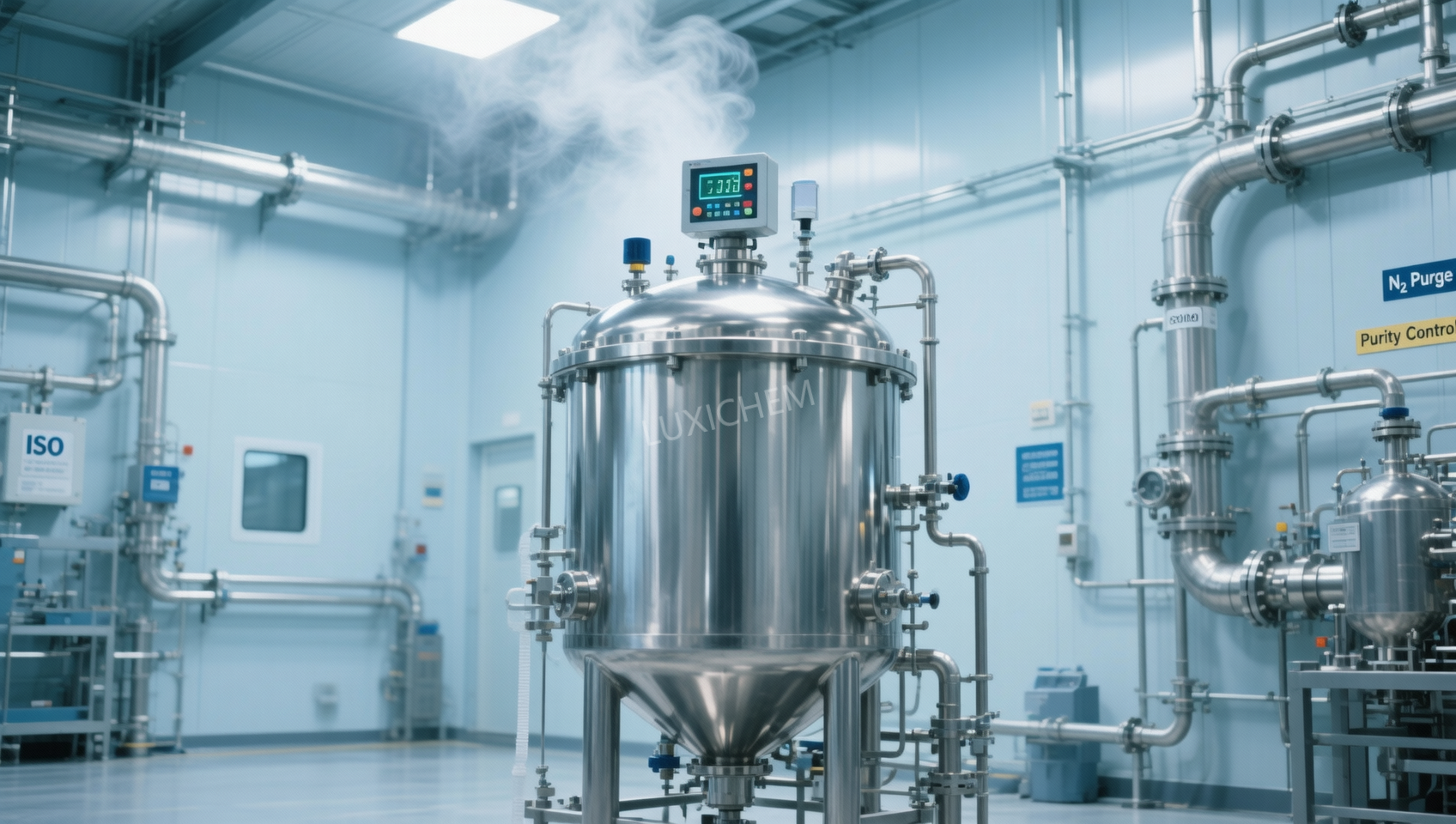
Batch-to-batch consistency isn’t achieved through sampling—it’s engineered into the process. We use closed-loop crystallization control, real-time pH and temperature monitoring during neutralization, and nitrogen-purged drying to minimize oxidation and color shift. The result? Taurine powder with consistent particle size distribution (D90 ≤ 120 µm), stable whiteness index (≥95), and minimal hygroscopic drift—even under tropical warehouse conditions. For formulators developing chewable tablets or effervescent powders, that predictability translates directly into uniform dissolution rates and dosage accuracy. For nutraceutical brands scaling across ASEAN and EU markets, it means fewer reformulation cycles and faster registration timelines.
Supply chain reliability, meanwhile, goes beyond on-time delivery. It’s about resilience—how a supplier navigates port congestion, raw material shortages, or sudden regulatory updates without compromising quality or communication. Luxi operates its own logistics coordination team, maintains strategic buffer stock for high-demand SKUs, and holds direct contracts with tier-1 suppliers of key precursors like ethylene oxide and sodium sulfite—reducing third-party dependency. When a major European distributor faced a six-week delay due to a customs hold on documentation last year, our team expedited revised CoAs, provided bilingual labeling support, and rerouted via Ningbo instead of Shanghai—all within 72 hours. Not as an exception—but as standard protocol.
Of course, taurine isn’t the only molecule shaping formulation performance. In complex systems—like water-based polyurethane coatings or multifunctional personal care emulsions—compatibility with co-actives matters deeply. For instance, 1,3-Butanediol CAS#107-88-0 is frequently used alongside taurine-derived actives in soothing serums or electrolyte-enhanced sprays. Its low volatility, high solvency for polar and non-polar compounds, and humectant function complement taurine’s osmoregulatory role—without introducing instability. Understanding how these chemistries interact helps procurement teams avoid siloed sourcing and instead build integrated material strategies.
What does this mean for you? It means less time reconciling CoA discrepancies between shipments. Less uncertainty when scaling from pilot batches to commercial runs. Less firefighting when auditors ask for proof of thermal stability data or residual catalyst screening. More confidence in shelf-life projections. More agility when launching region-specific variants—say, halal-certified taurine for GCC markets or organic-compliant grades for EU BIO applications.
We don’t position ourselves as the cheapest—or the most expensive. We position ourselves as the *least risky*. Because in procurement, cost isn’t just unit price. It’s the hidden expense of retesting, the margin lost to rejected inventory, the reputational cost of a recall linked to impurity drift. Luxi serves over 60 countries—not by offering lowest-cost entry points, but by delivering taurine powder where reliability is baked in, not promised after the fact.
 That’s also why we invest in granular documentation—not just CoAs, but full analytical method summaries (including HPLC column type, mobile phase composition, and detection wavelength), stability study data (real-time and accelerated), and certificates confirming absence of BSE/TSE agents, GMOs, and allergens. These aren’t add-ons. They’re part of the baseline—because your QA team shouldn’t need to negotiate access to foundational data.
If your current taurine supplier asks you to “trust the spec sheet,” consider whether that trust is backed by evidence—or convenience. At Luxi, every batch ships with verifiable proof—not just of compliance, but of continuity. Whether you’re formulating a new sports recovery drink in São Paulo, validating a pediatric oral solution in Warsaw, or scaling a clean-label energy bar in Tokyo, consistency isn’t aspirational. It’s measurable. It’s repeatable. And it starts long before the bag is sealed.
Because in the end, procurement isn’t about finding *a* supplier. It’s about finding the one whose standards quietly match your own—so you can focus less on firefighting, and more on building what matters next.
Related Picks
 Butylated Hydroxytoluene Price Drivers: Supply, Purity, and Purchasing Risk FactorsOct 21, 2026Butylated Hydroxytoluene price trends depend on supply stability, purity, logistics, and purchasing risk. Learn how to compare quotes wisely and reduce sourcing costs.
 Sodium Tripolyphosphate Price Trends: Raw Material and Energy ExposureOct 20, 2026Explore sodium tripolyphosphate price trends, from phosphate and soda ash costs to energy exposure. Learn how to compare quotes, manage sourcing risks, and make smarter purchasing decisions.
 Acetonitrile Shipment to Vietnam Successfully Dispatched; RCEP Benefits Boost Fine Chemical Trade with ASEANSep 16, 2026A shipment of industrial-grade acetonitrile from our company has recently been loaded and dispatched following the completion of standardized hazardous material packaging and container securing procedures.
 Nigerian Client’s Order of 4 Containers of Vinyl Acetate Successfully Loaded and Shipped to West AfricaSep 16, 2026We recently completed the loading of a vinyl acetate order for a Nigerian client; four containers of the product have been successfully packed and are ready for shipment to Nigeria.




Question Consultation
Send Us Your Inquiry Today

Luxi Chemical is a professional chemical product supplier with ample stock of all chemical categories and excellent quality, welcome your purchase inquiry.

