


Dispersing Fumed Silica in Epoxy: Balancing Shear, Heat, and Air
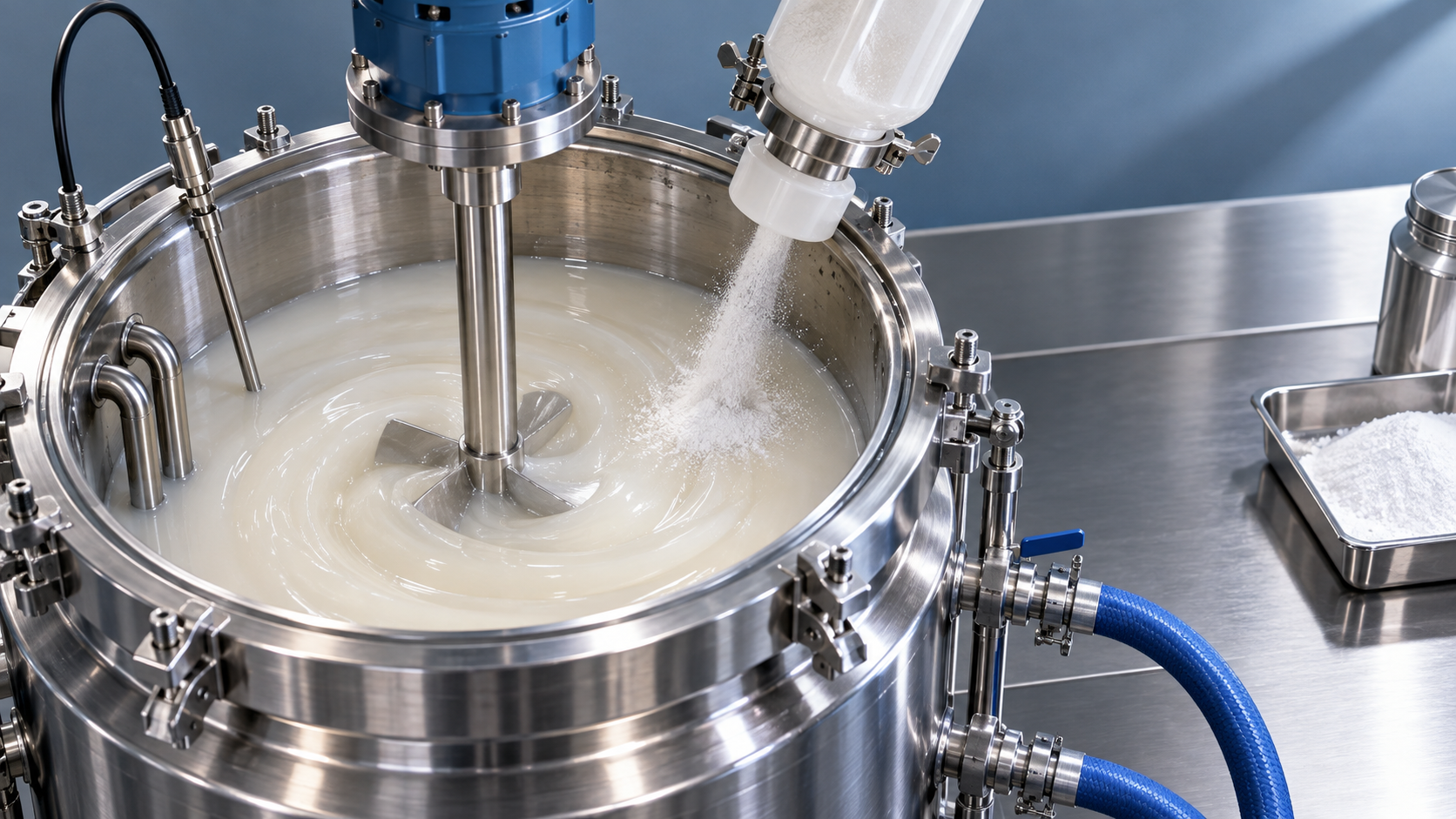
A batch of epoxy can look uniformly thick yet still contain silica agglomerates, while a smooth-looking mixture may carry enough trapped air to leave pinholes after cure. Increasing mixer speed is not a reliable cure for either problem: it can improve dispersion, but it can also draw in air and raise the resin temperature.
The practical approach is to wet Fumed Silica under controlled circulation, apply enough shear to break down loose agglomerates, then remove air before final application. Where the formulation permits, complete the main dispersion in the resin component before adding hardener. Control temperature throughout, and judge the finished dispersion at a defined temperature and rest time rather than by appearance in the mixing vessel alone.
Identify the problem before changing mixer speed
Three defects often get treated as one: incomplete wetting, insufficient dispersion, and air entrainment. Each needs a different adjustment. Dry powder islands indicate poor contact between resin and powder. Persistent pale specks or streaks in a thin drawdown may indicate agglomerates. Foam, a cloudy appearance, or pinholes in a cured sample point toward entrained air, although other formulation issues can produce similar symptoms.
Fumed silica contains fused aggregates that form larger, loosely associated agglomerates. Mixing aims to wet the powder and reduce those loose agglomerates; it does not aim to grind the material down to individual primary particles. Chasing that impossible endpoint wastes mixing time and adds heat.
The thickening effect also depends on interactions between silica surfaces and the surrounding formulation. Two batches can therefore have similar visual smoothness but different sag resistance because their silica grade, moisture exposure, temperature, or resin chemistry differs. Confirm those variables before assuming the mixer is underpowered.
Set up the resin, powder, and vessel together
Start with the specified silica grade, not merely a material carrying the same general name. Hydrophilic and surface-treated grades can behave differently in epoxy, and surface area affects resin demand and rheology. A grade change should trigger a formulation check rather than an automatic reuse of the previous mixing settings.
Use dry, clean equipment and keep powder containers closed between additions. Moisture exposure can alter handling and formulation behavior. Avoid sweeping spilled powder back into the batch, and use suitable local extraction and exposure controls according to the safety data sheet and workplace assessment. Pouring from height creates dust without improving wetting.
Keep unrelated chemicals out of the weighing and mixing area. For example, Ferric chloride CAS#7705-08-0 is a hygroscopic material used in applications including water treatment and catalysis; it is not a substitute for a silica rheology additive. Where such materials share a facility, use appropriate segregation and dedicated or verified-clean utensils to prevent cross-contamination.
Vessel geometry matters as much as nominal mixer power. An oversized vessel with a shallow charge can expose the blade and pull air into the resin. A narrow vessel or poorly positioned mixing head can leave material circulating locally while the wall region remains stagnant. Choose a working fill and blade position that maintain bulk turnover with the active mixing zone submerged.
- Low-viscosity starting resin: usually wets powder more readily, but can develop a deep, air-drawing vortex.
- High-viscosity starting resin: may require a mixer that combines bulk movement with localized shear.
- Small trial batch: needs equipment sized for its actual charge, not simply the production mixer operated more slowly.
A mixing sequence that separates wetting from dispersion
1. Establish circulation before adding powder
Charge the resin-side ingredients specified by the formulation and begin controlled mixing. Confirm that material moves through the vessel rather than just around the shaft. Record the starting temperature. If preconditioning is needed to improve flow, use only a temperature range already approved for the resin system.
Preheating is not automatically beneficial. It lowers viscosity and may improve wetting, but it also reduces the available temperature margin during shear. Once hardener is present, warmer material generally has less usable processing time.
2. Add silica at the rate the resin can accept it
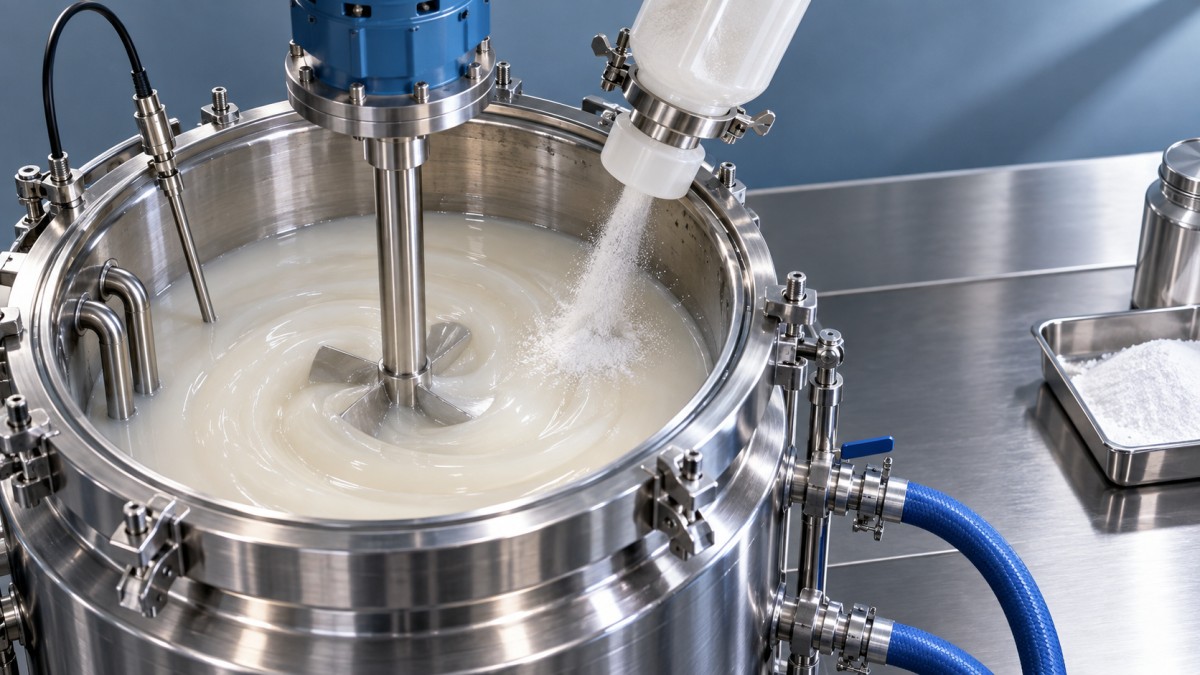
Introduce powder in small increments into moving resin, close to the surface and away from any exposed shaft or deep vortex. Let each increment become visibly wetted before adding more. A persistent floating powder raft is a signal to pause feeding and improve circulation, not to bury it beneath another addition.
Do not dump the full charge into a stationary vessel and expect high speed to recover the process. Dry pockets can become enclosed in thickened resin, making later breakup difficult. Where suitable powder-induction equipment is available, it can improve controlled incorporation, but its suitability still depends on resin viscosity and the intended silica loading.
Any wall scraping or manual intervention must follow the equipment’s safe stop and isolation procedure. Tools should never enter an operating mixer.
3. Apply controlled shear after incorporation
Once the powder is wetted, increase shear in stages while maintaining bulk circulation. A high-speed disperser may work well for a flowable premix; thicker compounds may need planetary mixing or another arrangement that moves the entire batch through the dispersion zone. A fast-moving blade surrounded by stationary paste is not effective processing.
Track elapsed time, resin temperature, mixer load, and sample appearance. Use the shortest validated mixing period that meets the dispersion and rheology requirements. When an extra mixing interval produces no meaningful improvement in a comparable drawdown, continuing indefinitely usually adds more heat than value.
On scale-up, do not copy revolutions per minute alone. Blade diameter changes tip speed, while vessel size, clearance, fill level, and circulation change how often material encounters the high-shear zone. Treat the smaller batch as a reference for the result to reproduce, not as a complete equipment recipe.
Temperature is a process limit, not just a recorded value
Mechanical mixing transfers energy into the resin. As temperature rises, viscosity often falls, so the batch may temporarily appear easier to mix and less thixotropic. Adding more silica to compensate for that warm appearance can produce an excessively stiff compound after cooling.
Define a temperature limit using the resin supplier’s guidance, formulation stability, equipment capability, and—if hardener is present—the validated processing window. There is no universal safe mixing temperature for every epoxy. Monitor the material itself with an appropriate sensor; vessel-wall temperature may lag behind the hottest region.
Use jacket cooling where available, reduce unnecessary shear time, and consider staged mixing with controlled cooling between intervals. Uncontrolled solvent addition is not a sound cooling method: it changes the formulation and may create emissions, flammability, or cure problems.
An unexpected temperature rise requires assessment, not simply a higher mixer speed. For a reactive resin-hardener mixture, follow the site’s abnormal-reaction procedure. A large mixed mass can retain heat and accelerate curing, so do not improvise by sealing, transferring, or diluting a reacting batch without an established response plan.
Remove air without undoing the dispersion
Air enters with the powder and through the liquid surface. Reduce both sources first: keep the mixing zone submerged, avoid a deep vortex, and prevent unnecessary splashing. Vacuum can remove entrained air, but it cannot correct poorly wetted powder or replace adequate dispersion.
Where the process allows, deaerate the silica-resin premix before hardener addition. This avoids spending reactive working time on a long initial air-removal step. Hardener incorporation can introduce fresh air, however, so the final mixing and deaeration sequence still needs validation.
Use a vacuum-rated vessel with sufficient headspace. Apply vacuum gradually because expanding bubbles can cause a large foam rise, especially in a thickened mixture. Adjust the vacuum ramp and agitation to control expansion; do not assume that immediately applying the deepest available vacuum gives the fastest result.
Gentle movement can help expose fresh material to the surface, while aggressive agitation may keep redistributing bubbles. Highly thixotropic compounds can retain fine air even after large bubbles disappear. Validate vacuum level, duration, temperature, and mixing action together, and account for any volatile ingredients that may be removed under reduced pressure.
Read the batch symptoms systematically
Change one controllable variable at a time during troubleshooting. Increasing speed, extending time, changing temperature, and adding more silica in the same trial makes it difficult to identify the actual cause. Keep any corrective additions within the approved formulation and document them.
Release the batch on comparable measurements
A reliable endpoint combines dispersion, rheology, and air assessment. Inspect a thin drawdown for visible agglomerates, measure viscosity using a defined method, and test sag under conditions relevant to the application. For appearance-sensitive or void-sensitive work, a representative cured specimen can reveal defects that remain hidden in the mixing vessel.
Silica-thickened epoxy is commonly shear-thinning and may recover structure after mixing stops. Record sample temperature, conditioning time, instrument geometry, and measurement speed. Comparing a freshly sheared warm sample with a cooled, rested sample can make a stable process appear inconsistent.
The batch record should connect the result to the process: material grades and lots, charge weights, addition order, equipment geometry, working fill, speed stages, peak temperature, and vacuum conditions. When dispersion passes but air or sag fails, those records help identify which stage needs adjustment without needlessly repeating the entire mixing cycle.
Related Picks
 Butylated Hydroxytoluene Price Drivers: Supply, Purity, and Purchasing Risk FactorsOct 21, 2026Butylated Hydroxytoluene price trends depend on supply stability, purity, logistics, and purchasing risk. Learn how to compare quotes wisely and reduce sourcing costs.
 Sodium Tripolyphosphate Price Trends: Raw Material and Energy ExposureOct 20, 2026Explore sodium tripolyphosphate price trends, from phosphate and soda ash costs to energy exposure. Learn how to compare quotes, manage sourcing risks, and make smarter purchasing decisions.
 Acetonitrile Shipment to Vietnam Successfully Dispatched; RCEP Benefits Boost Fine Chemical Trade with ASEANSep 16, 2026A shipment of industrial-grade acetonitrile from our company has recently been loaded and dispatched following the completion of standardized hazardous material packaging and container securing procedures.
 Nigerian Client’s Order of 4 Containers of Vinyl Acetate Successfully Loaded and Shipped to West AfricaSep 16, 2026We recently completed the loading of a vinyl acetate order for a Nigerian client; four containers of the product have been successfully packed and are ready for shipment to Nigeria.




Question Consultation
Send Us Your Inquiry Today

Luxi Chemical is a professional chemical product supplier with ample stock of all chemical categories and excellent quality, welcome your purchase inquiry.

