


Do agricultural insecticides require additional labeling for export to the EU under Regulation (EC) No 1107/2009
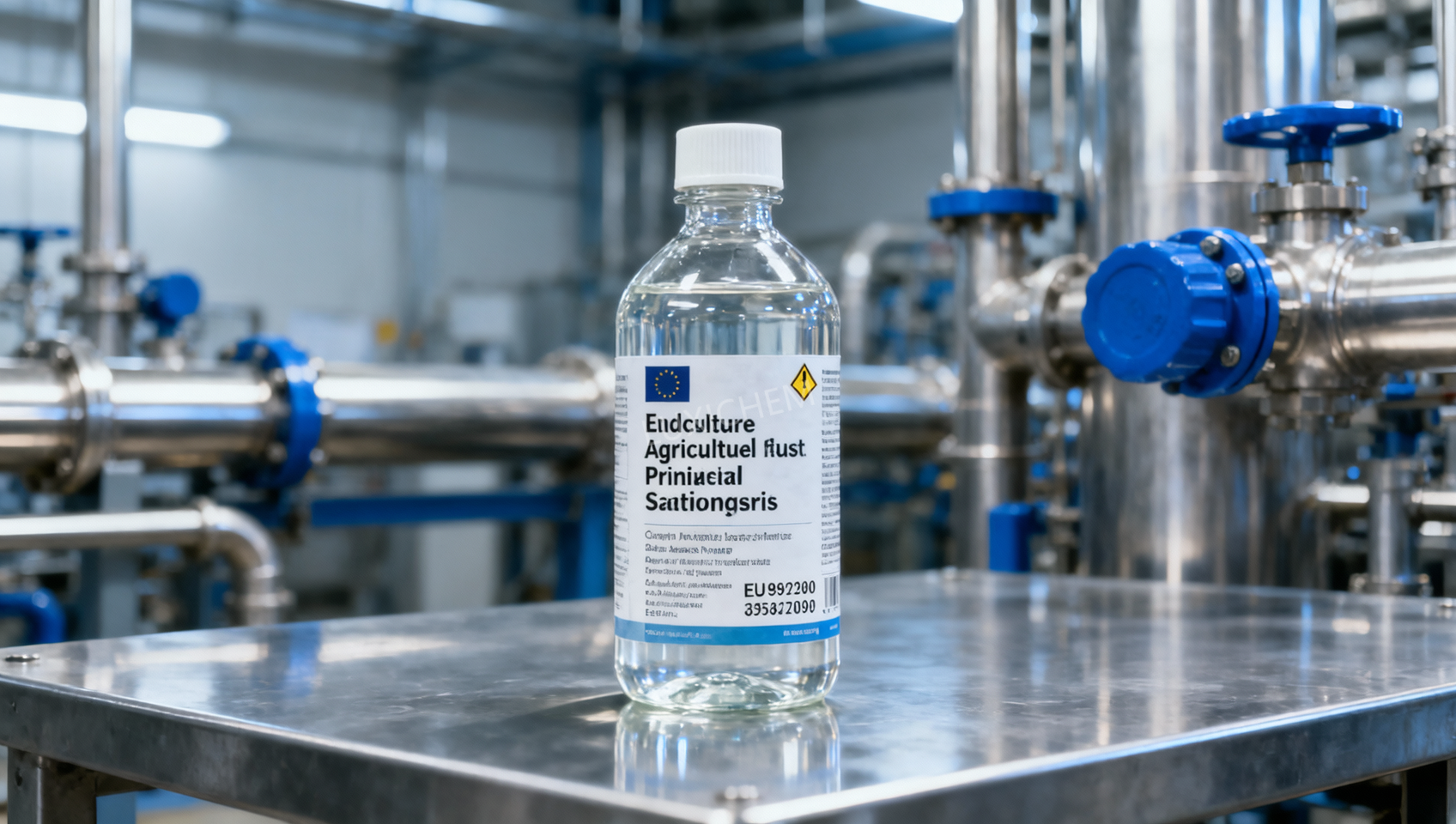
Yes — and the labeling requirements go far beyond standard GHS
For business evaluators assessing EU market access for agricultural insecticides, the short answer is clear: Yes, additional labeling is mandatory — not as an optional enhancement, but as a legal condition of entry under Regulation (EC) No 1107/2009. This isn’t about adding a second language to an existing label or including extra hazard pictograms. It’s about embedding legally binding, substance-specific regulatory information that reflects the product’s authorization status, approved uses, and compliance with EU-wide risk assessments.
Many exporters mistakenly assume that if their agricultural insecticides meet CLP/GHS labeling standards — with correct hazard statements, precautionary phrases, and supplier details — they’re ready for EU customs. That assumption carries real risk. A compliant CLP label is necessary, but it is not sufficient. Regulation (EC) No 1107/2009 operates in parallel with CLP, imposing distinct, non-transferable labeling obligations rooted in the product’s regulatory authorization dossier — not its physical or toxicological properties alone.
What “additional” actually means — three non-negotiable layers
The “additional” labeling required under Regulation (EC) No 1107/2009 falls into three interdependent categories — each tied directly to the active substance’s approval status and the specific authorization granted to the formulated product:
- Authorization status reference: The label must clearly state whether the active substance is approved at EU level (e.g., “Approved under Regulation (EC) No 1107/2009”), along with the approval expiry date. If the substance is only approved in certain Member States (under national derogation), the label must name those countries — and explicitly restrict use to them. Generic phrasing like “approved for use in the EU” is invalid.
- Authorized use conditions: This includes precise, legally enforceable instructions — not marketing claims. For example: “For use only on winter wheat, applied pre-emergence at 0.5–0.8 L/ha”; “Not authorized for use in greenhouses”; “Maximum 2 applications per season”. These are extracted verbatim from the Annexes to the Commission Implementing Regulation granting authorization — not adapted by the formulator.
- Bilingual safety and handling statements: While CLP requires hazard communication in the official language(s) of the destination Member State, Regulation 1107/2009 requires that key safety and environmental precautions — especially those tied to mitigation measures (e.g., buffer zone distances, PPE requirements, restrictions on application equipment) — appear in both the destination language and English. This ensures consistency across supply chains and facilitates cross-border distribution within the EU.
Crucially, none of this information can be added as a separate leaflet or supplementary document. It must be printed directly on the immediate container — legible, indelible, and positioned where users will see it during handling and application.
Why “formulation matters more than chemistry” — a common misjudgment
A frequent oversight among commercial teams is treating agricultural insecticides as monolithic products defined solely by their active ingredient. But under Regulation 1107/2009, authorization is granted to specific formulations — meaning the exact composition, co-formulants, concentration, and physical form (e.g., EC, SC, WG). A change in solvent system, emulsifier, or even pH adjustment can invalidate the authorization — and therefore require re-labeling, even if the active substance remains unchanged.
This has practical implications for supply chain management. For instance, when selecting solvents or plasticizers used in formulation development, technical teams must verify that each co-component is listed in the EU’s positive list of co-formulants (Commission Regulation (EU) No 546/2011), or confirm it qualifies for exemption (e.g., as a food-grade excipient). Some widely used industrial plasticizers — while fully compliant in food packaging or pharmaceutical applications — are excluded from agrochemical use due to ecotoxicity concerns or lack of data submission under the regulation.
In this context, substances like Dibutyl sebacate CAS#109-43-3, with its high purity (≥99%), thermal stability (boiling point 344°C), and documented use in sensitive applications such as pharmaceutical films and medical devices, may serve as a technically viable option during formulation development — provided its full toxicological and environmental profile has been evaluated against the criteria in Annex II of Regulation 1107/2009. Its established safety references (FEMA 2373, JECFA 625) support initial data-read-across assessments, but formal inclusion still requires dossier-level evaluation.
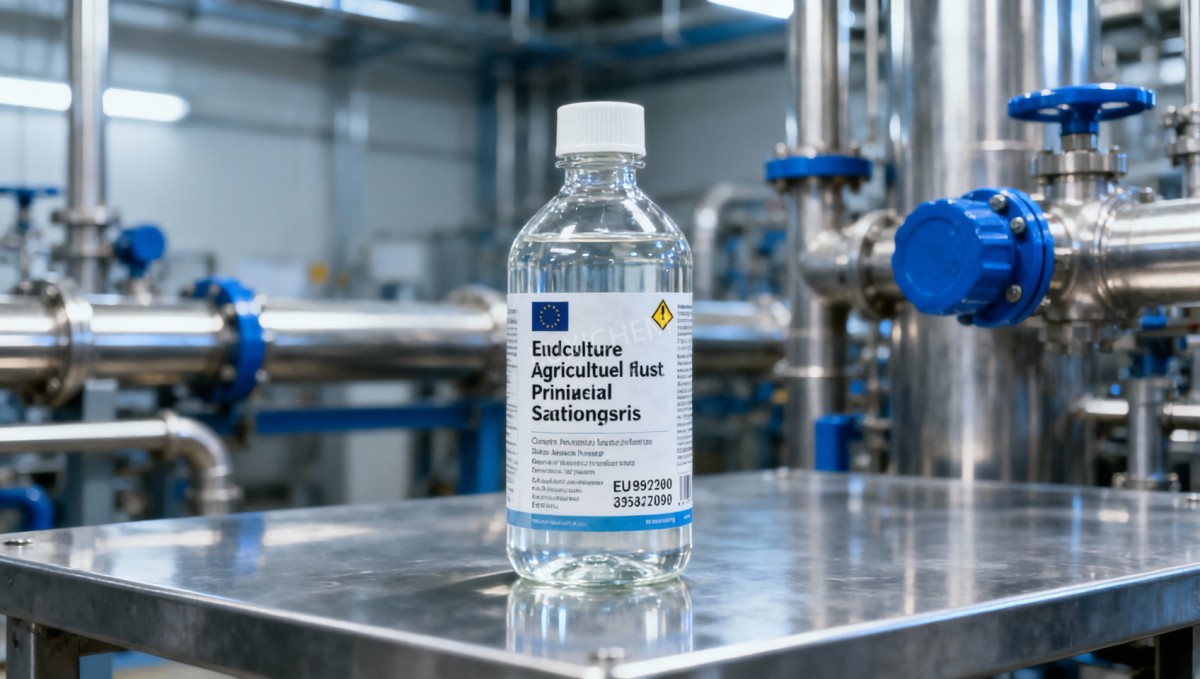
Where business evaluators get tripped up — three real-world friction points
Based on actual export reviews, these are the most frequent gaps we see in pre-submission labeling audits:
- Mismatched authorization scope: A product authorized only for professional use in France appears on a label marketed for amateur gardeners in Germany. Even if the formulation is identical, the authorization conditions differ — and the label must reflect the strictest applicable restriction.
- Outdated or generic risk mitigation language: Phrases like “Use appropriate PPE” or “Avoid runoff” are insufficient. Labels must specify exact requirements: “Wear chemical-resistant gloves (EN 374-3), coveralls (EN 13034), and FFP3 respirator”; “Maintain a 10 m vegetative buffer strip adjacent to surface water”.
- Missing traceability elements: Regulation 1107/2009 requires batch numbers and, increasingly, QR codes linking to the EU Pesticides Database (EUROPA) for verification. Many labels omit this — or link to internal systems instead of the public database.
These aren’t minor formatting issues. They trigger customs holds, rejection at border control posts, and potential penalties under national enforcement laws. In practice, the time lost resolving labeling discrepancies often exceeds the cost of early-stage regulatory review.
How Luxi Chemical supports realistic compliance — not just documentation
Luxi Chemical (Shandong) Co., Ltd. works with business evaluators not as a document processor, but as a regulatory interface. We maintain live tracking of active substance approvals across all 27 Member States — not just the EU-wide status, but also national authorizations and pending renewal dossiers. When evaluating a new agricultural insecticides portfolio for EU entry, we provide:
- Pre-verified label templates aligned with the latest Commission Implementing Regulations;
- Regulatory intelligence briefs highlighting upcoming changes — e.g., imminent sunset dates, emerging restrictions on co-formulants, or shifts in national enforcement priorities;
- End-to-end export facilitation, including coordination with EU-based representatives (as required under Article 95 of Regulation 1107/2009) and validation of batch traceability links before shipment.
This approach treats labeling not as a final checkpoint, but as a continuous alignment process — starting from formulation design and extending through commercial launch and post-market surveillance.
Next step: Don’t validate the label — validate the authorization foundation
Before investing in label redesign or translation, ask one foundational question: Is the specific formulation — down to its co-formulant list and concentration — already authorized for the intended use and geography? If the answer is uncertain, no amount of labeling refinement will resolve the underlying compliance gap. The most efficient path is to start with the EU Pesticides Database, cross-check the active substance’s approval status and Annexed conditions, then verify whether your exact formulation matches an authorized reference. Only then does labeling become a technical execution — not a regulatory gamble.
Related Picks
 Butylated Hydroxytoluene Price Drivers: Supply, Purity, and Purchasing Risk FactorsOct 21, 2026Butylated Hydroxytoluene price trends depend on supply stability, purity, logistics, and purchasing risk. Learn how to compare quotes wisely and reduce sourcing costs.
 Sodium Tripolyphosphate Price Trends: Raw Material and Energy ExposureOct 20, 2026Explore sodium tripolyphosphate price trends, from phosphate and soda ash costs to energy exposure. Learn how to compare quotes, manage sourcing risks, and make smarter purchasing decisions.
 Acetonitrile Shipment to Vietnam Successfully Dispatched; RCEP Benefits Boost Fine Chemical Trade with ASEANSep 16, 2026A shipment of industrial-grade acetonitrile from our company has recently been loaded and dispatched following the completion of standardized hazardous material packaging and container securing procedures.
 Nigerian Client’s Order of 4 Containers of Vinyl Acetate Successfully Loaded and Shipped to West AfricaSep 16, 2026We recently completed the loading of a vinyl acetate order for a Nigerian client; four containers of the product have been successfully packed and are ready for shipment to Nigeria.




Question Consultation
Send Us Your Inquiry Today

Luxi Chemical is a professional chemical product supplier with ample stock of all chemical categories and excellent quality, welcome your purchase inquiry.

