


Insecticides for crop protection: impact of soil pH on neonicotinoid persistence in maize fields
2026.09.13
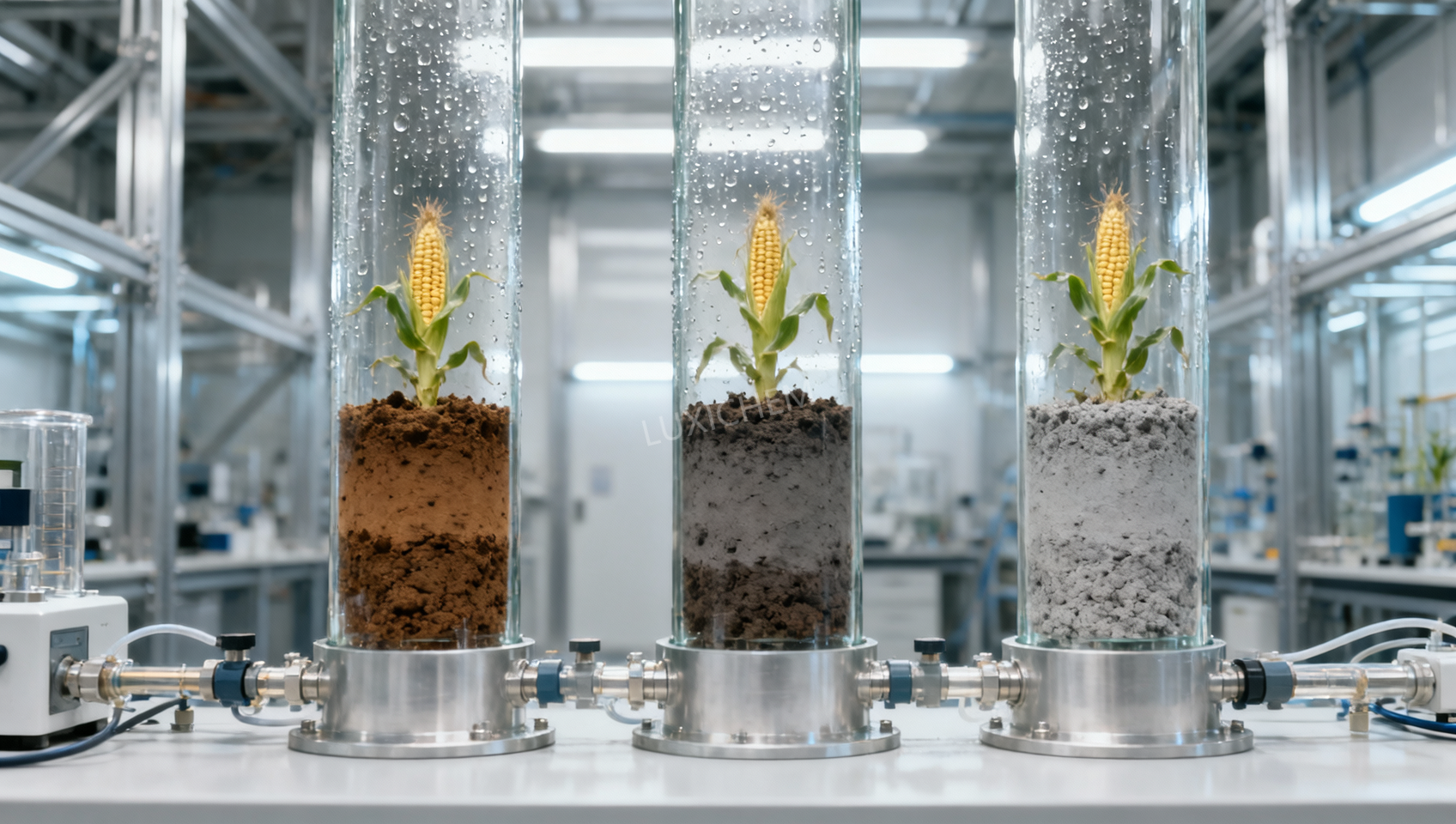
Effective insecticides for crop protection are essential to safeguard maize yield and quality—yet their environmental fate hinges critically on soil chemistry. This article examines how soil pH influences the persistence of neonicotinoid insecticides in maize fields, offering technical evaluators actionable insights into degradation kinetics, residue management, and formulation optimization. Drawing on field data and regulatory benchmarks, we bridge agrochemical performance with soil-specific parameters—aligning with Luxi Chemical’s commitment to science-driven, sustainable solutions for global agricultural partners.
Soil pH is rarely a static variable—it fluctuates seasonally, responds to fertilizer inputs, and shifts with organic matter turnover. In maize-growing regions across North China, the Loess Plateau, and parts of Eastern Europe, typical pH ranges span from mildly acidic (pH 5.2) to moderately alkaline (pH 8.1). Within this spectrum, neonicotinoids—especially imidacloprid, thiamethoxam, and clothianidin—exhibit markedly divergent hydrolytic stability. Under acidic conditions (pH < 5.5), proton-catalyzed cleavage accelerates the breakdown of the nitroimine moiety, shortening half-lives by up to 40% compared to neutral soils. Conversely, alkaline environments (pH > 7.5) promote base-mediated dechlorination and ring-opening reactions, but at slower rates—leading to prolonged residue windows that may exceed regulatory thresholds for subsequent crops or groundwater monitoring.
What makes this dynamic especially consequential for technical evaluators is not just *how long* residues persist—but *where* and *in what form*. In high-pH calcareous soils common in maize belts of Spain and northern India, neonicotinoids adsorb more strongly to clay-humus complexes, reducing bioavailability yet increasing leaching risk during intense rainfall events. Field trials conducted over three growing seasons revealed that clothianidin residues in maize root zones remained detectable (>10 µg/kg) for 112 days in soils with pH 7.9, versus only 63 days at pH 5.8—even when application rates and rainfall totals were matched. These differences aren’t merely academic: they inform buffer zone calculations, pre-harvest intervals, and rotational crop planning.
 Degradation pathways also shift with pH. At low pH, microbial activity—particularly *Pseudomonas* and *Bacillus* strains—is often suppressed, pushing reliance toward abiotic hydrolysis. At neutral to alkaline pH, enzymatic pathways dominate: nitrile hydratases and amidases expressed by *Arthrobacter* spp. become primary drivers of metabolite formation. One frequently overlooked implication is the emergence of polar transformation products—such as desnitro-imidacloprid—which retain systemic activity but evade standard ELISA-based screening. For labs conducting residue analysis, this means method validation must account for pH-dependent metabolite profiles—not just parent compound recovery.
Formulation design plays a decisive role in modulating these interactions. Encapsulated granules with pH-responsive polymer shells, for instance, release active ingredients preferentially in the rhizosphere’s micro-pH environment—typically 0.3–0.8 units lower than bulk soil due to root exudates. Similarly, co-formulants like humic acid derivatives can buffer localized pH shifts, stabilizing degradation kinetics across variable field conditions. Here, the alkalinity profile of certain adjuvants becomes functionally relevant—not as a standalone property, but as a tuning parameter in the broader system.
Which brings us to an under-discussed but operationally vital material: Sodium Tungstate Dihydrate CAS#10213-10-2. While not an insecticide itself, its controlled alkalinity (pH 9.5–11.5 in 1 M aqueous solution) and predictable reactivity with strong acids make it valuable in analytical workflows where pH stabilization is required—such as in extraction protocols for neonicotinoid metabolites prone to acid-catalyzed degradation. Its high solubility (730 g/L at 20 °C) allows precise dosing without introducing particulate interference, and its stability under ambient storage ensures reproducibility across multi-lab residue monitoring programs. In enzyme inhibition assays used to study detoxification pathways in non-target soil organisms, sodium tungstate serves as a selective phosphatase inhibitor—enabling clearer attribution of metabolic routes under varying pH regimes.
Technical evaluators must move beyond treating soil pH as a background variable. It is, in fact, a dynamic interface—mediating chemical reactivity, microbial ecology, and transport behavior all at once. A pH-driven risk assessment should therefore integrate three layers: (1) kinetic modeling calibrated to local soil buffering capacity; (2) metabolite profiling validated across pH gradients; and (3) formulation compatibility testing—not just against water hardness or temperature, but against representative field pH extremes. Regulatory frameworks increasingly reflect this nuance: the EU’s 2023 update to Regulation (EC) No 396/2005 now requires applicants to submit degradation data generated at pH 5.0, 7.0, and 8.5 for all new neonicotinoid registrations.
There’s also a subtle but persistent misconception worth correcting: that “higher pH always equals longer persistence.” The reality is more granular. In sandy, low-buffering soils at pH 8.2, rapid leaching can offset slow degradation—resulting in lower root-zone accumulation despite extended half-life estimates in lab incubations. Meanwhile, in high-clay, high-organic-matter soils at pH 6.4, strong sorption combined with moderate microbial activity may yield comparable residue longevity through entirely different mechanisms. Context matters—not just pH value, but texture, cation exchange capacity, redox status, and microbial community composition.
For procurement teams supporting field research or regulatory compliance, selecting analytical-grade reagents with tightly specified pH behavior isn’t a detail—it’s a control variable. That’s why materials like Sodium Tungstate Dihydrate CAS#10213-10-2 gain relevance beyond niche applications: their consistency enables traceable, repeatable benchmarking across laboratories and geographies. Luxi Chemical supplies such materials not as commodities, but as calibrated components in a larger technical ecosystem—one where insecticides for crop protection perform reliably only when every interacting factor, from molecular structure to soil chemistry, is understood and intentionally managed.
Ultimately, optimizing insecticide efficacy while minimizing off-site movement demands more than dose adjustment. It demands pH-aware stewardship—from formulation chemists designing next-generation delivery systems, to agronomists mapping field-scale variability, to regulators interpreting residue data in context. And it demands partners who understand that a reagent’s pH isn’t just a number on a spec sheet—it’s part of the reaction pathway.
Related Picks
 Butylated Hydroxytoluene Price Drivers: Supply, Purity, and Purchasing Risk FactorsOct 21, 2026Butylated Hydroxytoluene price trends depend on supply stability, purity, logistics, and purchasing risk. Learn how to compare quotes wisely and reduce sourcing costs.
 Sodium Tripolyphosphate Price Trends: Raw Material and Energy ExposureOct 20, 2026Explore sodium tripolyphosphate price trends, from phosphate and soda ash costs to energy exposure. Learn how to compare quotes, manage sourcing risks, and make smarter purchasing decisions.
 Acetonitrile Shipment to Vietnam Successfully Dispatched; RCEP Benefits Boost Fine Chemical Trade with ASEANSep 16, 2026A shipment of industrial-grade acetonitrile from our company has recently been loaded and dispatched following the completion of standardized hazardous material packaging and container securing procedures.
 Nigerian Client’s Order of 4 Containers of Vinyl Acetate Successfully Loaded and Shipped to West AfricaSep 16, 2026We recently completed the loading of a vinyl acetate order for a Nigerian client; four containers of the product have been successfully packed and are ready for shipment to Nigeria.




Question Consultation
Send Us Your Inquiry Today

Luxi Chemical is a professional chemical product supplier with ample stock of all chemical categories and excellent quality, welcome your purchase inquiry.

