


Which broad spectrum insecticides maintain efficacy against resistant aphid biotypes in brassicas
2026.09.13
Aphid resistance in brassicas is no longer an emerging concern—it is a confirmed operational constraint. Field reports from the UK, Germany, the Netherlands, and China consistently document reduced field efficacy of pyrethroids, organophosphates, and neonicotinoids against *Brevicoryne brassicae* and *Myzus persicae*, particularly where repeated seasonal applications have selected for biotypes carrying both metabolic (P450-mediated detoxification) and target-site (kdr, R81T) resistance mutations. For technical evaluators designing or updating integrated pest management (IPM) protocols, the critical question is not whether resistance exists—but which broad spectrum insecticides retain demonstrable, reproducible activity under these conditions, and under what deployment constraints.
Broad spectrum insecticides remain operationally necessary in brassica systems—not because of preference, but due to crop architecture, planting density, and the co-occurrence of aphids with secondary pests like diamondback moth (*Plutella xylostella*) and cabbage whitefly (*Aleyrodes proletella*). However, “broad spectrum” is not synonymous with “resistance-proof.” Many compounds classified as broad spectrum fail precisely where they are most needed: against resistant aphid populations exhibiting dual resistance mechanisms. Efficacy must be validated not only in lab bioassays—where exposure is controlled and duration fixed—but in semi-field and field trials replicating real-world application timing, spray coverage, and environmental modulation (e.g., UV degradation, leaf wettability, rainfastness).
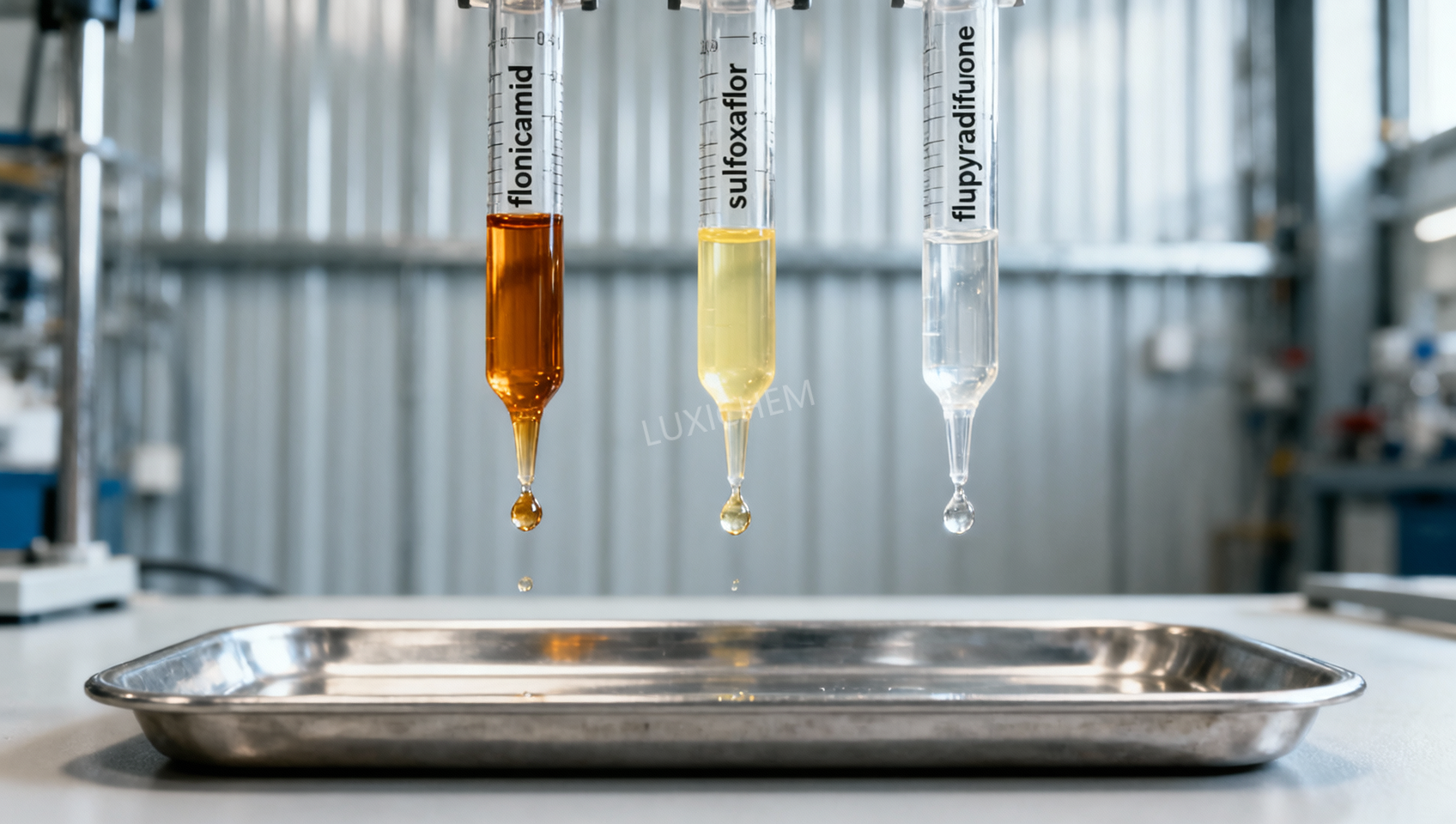
Three chemistries currently demonstrate consistent, multi-region field validation against resistant brassica aphids: flonicamid, sulfoxaflor, and flupyradifurone. Flonicamid (IRAC Group 9B) acts via disruption of feeding behavior rather than direct neurotoxicity, reducing selection pressure on conventional target sites. Its efficacy holds across kdr-positive *M. persicae* and esterase-overexpressing *B. brassicae*, provided application occurs before population build-up and under adequate humidity (>60% RH), as desiccation limits residual activity on waxy brassica leaves. Sulfoxaflor (IRAC Group 4C) binds selectively to nicotinic acetylcholine receptors with higher affinity than neonicotinoids, retaining activity against many AChE-resistant and kdr-positive biotypes. However, recent monitoring in southern Europe has detected low-frequency resistance alleles (e.g., Y151S substitution) that reduce binding affinity—meaning efficacy cannot be assumed without local resistance profiling. Flupyradifurone (IRAC Group 4D) shows the broadest cross-resistance profile to date: it remains effective against aphids carrying combinations of R81T (target-site), enhanced P450 metabolism (CYP6CY3 upregulation), and carboxylesterase overexpression. Its systemic mobility in brassicas—particularly translocation into young, folded inner leaves—is superior to older systemic agents, addressing a key limitation in broccoli and cauliflower canopies.
None of these actives function in isolation. Their utility depends on formulation stability, adjuvant compatibility, and rotational discipline. Flupyradifurone degrades rapidly under alkaline spray tank conditions (pH >7.5); formulations must include pH buffers, and tank-mix partners must be verified for chemical compatibility—not just biological synergy. Sulfoxaflor’s photostability is moderate; under high-UV regimes common in Mediterranean brassica production, residual activity drops by ~40% after 48 hours unless co-applied with UV protectants. Flonicamid’s low volatility minimizes drift risk but also limits vapor-phase uptake—making thorough foliar coverage non-negotiable, especially on curly kale or collard varieties with dense, overlapping leaf surfaces.
Regulatory alignment adds another layer of technical evaluation. Sulfoxaflor faces use restrictions in the EU (authorized only for protected crops since 2023) and is under re-evaluation in several APAC markets due to pollinator risk assessments. Flupyradifurone is approved in the EU, USA, Canada, Australia, and major ASEAN countries—but its MRLs in brassica florets (e.g., broccoli heads) vary significantly: 0.05 mg/kg in the EU vs. 0.3 mg/kg in Japan. This directly impacts export logistics and residue compliance planning. Flonicamid maintains the widest global registration profile for outdoor brassicas, with harmonized MRLs across Codex, EU, and US jurisdictions—making it the default choice for exporters requiring single-label compliance.
 Where resistance monitoring data is sparse—or where regional resistance profiles indicate polygenic, multi-mechanism resistance—complementary modes of action gain strategic weight. Alpha-Dihydroartemisinin CAS#81496-81-3 is not an insecticide. Its primary pharmacological role lies in antimalarial therapy, where its endoperoxide bridge mediates oxidative damage to *Plasmodium* parasites. While artemisinin derivatives have demonstrated in vitro insecticidal effects against some sap-sucking pests—including reactive oxygen species (ROS)-mediated disruption of aphid midgut cells—their field-level efficacy against resistant brassica aphids remains unvalidated. No peer-reviewed field trial data supports its use as a standalone or synergistic agent in brassica IPM. Its physicochemical properties—low solubility in water and common agricultural solvents, thermal sensitivity above 45°C, and instability under UV exposure—further limit practical formulation potential in open-field horticulture. Technical evaluators should treat such compounds as research-stage candidates, not deployable solutions, until robust entomological and residue data emerge.
Two decision-critical factors often overlooked in technical evaluations are application timing relative to aphid life stage and crop phenology. Resistant *B. brassicae* nymphs exhibit up to 3× higher tolerance to flupyradifurone than adults due to cuticular thickness differences and differential expression of detoxification enzymes. Spraying at the first sign of adult colonizers—before nymphal cohorts establish—improves control rates by 25–35% across all three validated chemistries. Equally important is brassica growth stage: systemic uptake of flupyradifurone declines sharply post-head formation in broccoli; applications timed during rosette or early curd development achieve 2–3× higher internal concentrations in edible tissues than late-season sprays.
Finally, resistance management is not a chemistry selection problem—it is a deployment logic problem. Rotating among IRAC Groups 4C, 4D, and 9B provides mechanistic diversity, but only if each application achieves full mortality. Sublethal dosing—due to nozzle wear, incorrect dilution, or poor water quality—selects for resistance faster than sequential use of the same group. Technical evaluators must audit not just product labels, but actual field execution capacity: spray calibration records, water hardness testing logs, and operator training documentation carry equal weight to active ingredient choice.
The operational takeaway is narrow but decisive: flupyradifurone offers the strongest current evidence base against poly-resistant aphids in open-field brassicas, provided application protocols are tightly controlled and residue requirements align with target markets. Flonicamid remains the most globally compliant fallback where flupyradifurone registrations are pending or restricted. Sulfoxaflor retains utility in protected cropping or regions without confirmed target-site resistance—but requires local resistance monitoring before inclusion in long-term rotation plans. Chemistry alone does not resolve resistance. It enables resolution—only when matched to precise biological timing, physical delivery constraints, and regulatory boundaries.
Related Picks
 Butylated Hydroxytoluene Price Drivers: Supply, Purity, and Purchasing Risk FactorsOct 21, 2026Butylated Hydroxytoluene price trends depend on supply stability, purity, logistics, and purchasing risk. Learn how to compare quotes wisely and reduce sourcing costs.
 Sodium Tripolyphosphate Price Trends: Raw Material and Energy ExposureOct 20, 2026Explore sodium tripolyphosphate price trends, from phosphate and soda ash costs to energy exposure. Learn how to compare quotes, manage sourcing risks, and make smarter purchasing decisions.
 Acetonitrile Shipment to Vietnam Successfully Dispatched; RCEP Benefits Boost Fine Chemical Trade with ASEANSep 16, 2026A shipment of industrial-grade acetonitrile from our company has recently been loaded and dispatched following the completion of standardized hazardous material packaging and container securing procedures.
 Nigerian Client’s Order of 4 Containers of Vinyl Acetate Successfully Loaded and Shipped to West AfricaSep 16, 2026We recently completed the loading of a vinyl acetate order for a Nigerian client; four containers of the product have been successfully packed and are ready for shipment to Nigeria.




Question Consultation
Send Us Your Inquiry Today

Luxi Chemical is a professional chemical product supplier with ample stock of all chemical categories and excellent quality, welcome your purchase inquiry.

