


Ginkgo Biloba Extract Specifications That Matter for Product Quality Control
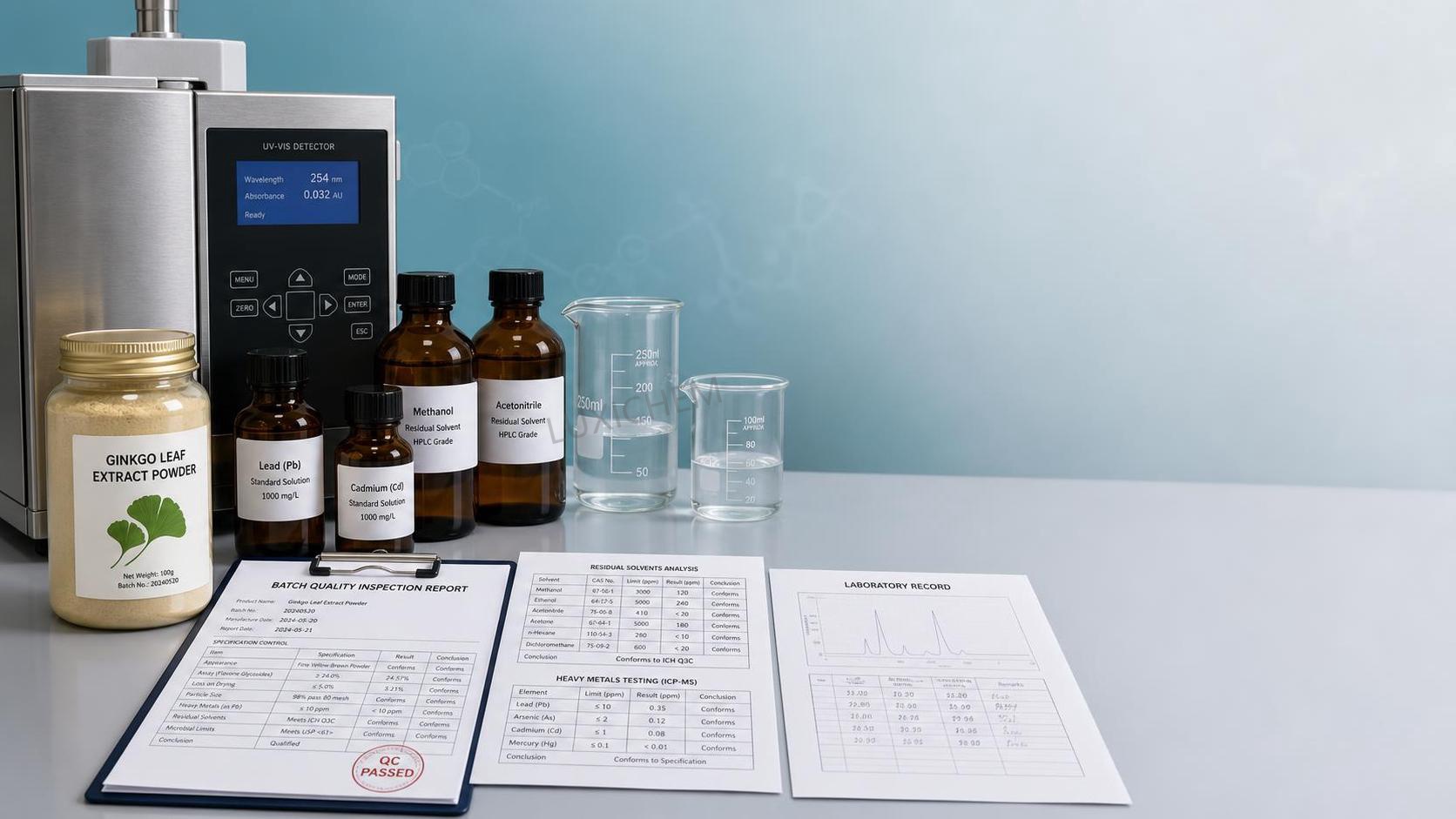
Which Ginkgo Biloba Extract specifications actually affect quality control?
For QC and safety teams, the useful question is not whether a batch is labeled as Ginkgo Biloba Extract, but whether its specification sheet tells you enough to judge consistency, purity, and handling risk. In practice, the most important checks usually sit in a small group of fields: marker compounds, extract ratio or standardization basis, loss on drying, ash, residual solvents, microbial limits, heavy metals, pesticide residues where relevant, and the identity test method used by the supplier.
That mix matters because Ginkgo Biloba Extract is not a single molecule. It is a plant-derived material, so variation can come from raw botanical source, extraction process, concentration step, solvent system, and storage conditions. A certificate that only shows appearance and assay is not enough for a serious release decision.
When a supplier says the extract is “standardized,” what should you look for?
“Standardized” should point to defined marker compounds and an analytical method, not just a marketing phrase. For Ginkgo Biloba Extract, buyers usually expect the specification to identify which active groups are being controlled and how those values are measured. If the document names marker content but gives no method reference, no acceptance range, or no unit basis, the standardization claim is weak from a QC standpoint.
The first review should answer three simple questions:
- Which compounds or compound groups are specified?
- Is the result expressed on an as-is basis or dry basis?
- Which test method is used for release and dispute resolution?
If any of those are missing, batch-to-batch comparison becomes much harder, especially when material is sourced from multiple regions or traders.
Why is the ratio of active compounds more useful than a single headline assay?
A single number can hide imbalance. An extract may meet one marker target while drifting in other components that influence downstream formulation behavior, color, odor, stability, or regulatory acceptance. For plant extracts, proportion matters almost as much as total content.
That is why experienced QC teams compare the full specification set rather than approving by one headline figure. A supplier who can explain both the target composition and the process controls behind it is usually easier to qualify than one who only offers a broad assay range.
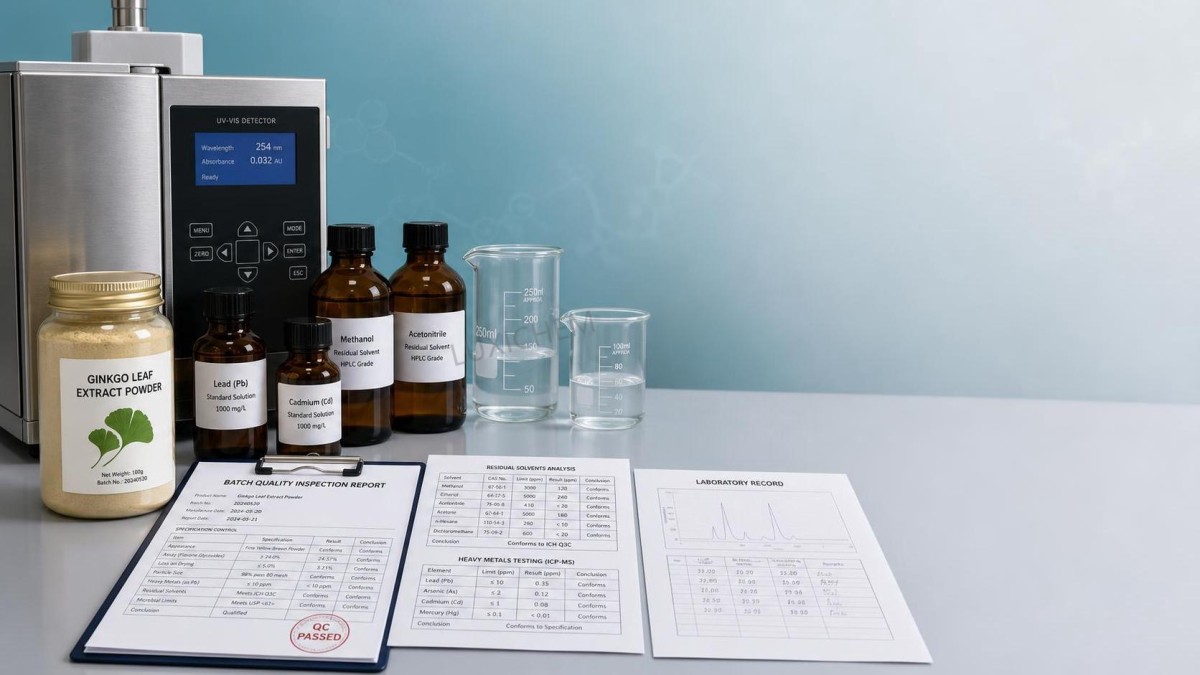
How much attention should be paid to moisture and loss on drying?
More than many buyers give it. Moisture affects not only concentration, but also caking behavior, microbial risk, flowability, and shelf stability. If two batches show the same marker result but different moisture levels, the actual active content per kilogram of received material may not be equivalent.
Loss on drying is especially useful when incoming material will be re-packed, blended, or stored in non-climate-controlled areas. A high or unstable result can point to poor drying control, moisture pickup during transport, or packaging weakness. It should be reviewed together with packaging type, inner liner integrity, and storage instructions, not as an isolated number.
What does ash content tell you in a Ginkgo Biloba Extract specification?
Ash is a basic but still useful indicator. It does not identify a contaminant on its own, yet it can reveal whether the material contains unusually high inorganic residue. For botanicals, that may come from raw material cleanliness, processing aids, concentration steps, or accidental contamination during handling.
A result that sits near the specification limit every time is not automatically a failure, but it deserves trend review. If ash gradually rises across recent lots while marker compounds remain on spec, the process may be drifting even before a formal nonconformance appears.
Residual solvents: what should safety managers verify beyond the pass/fail statement?
The pass/fail line is only the start. You need to know which solvents are used or may be introduced during extraction, purification, or recovery. A clean-looking COA that does not align with the stated manufacturing route is a red flag. If the process uses organic solvents, the test panel should reflect that reality.
For incoming review, check these points:
This same document discipline is often used when buyers source other compliant industrial materials through one supplier, whether they are reviewing a botanical extract or a separate item such as Potassium Phosphate Dibasic CAS#7758-11-4 for a different product line.
Are heavy metals and pesticide residues always part of the release decision?
They should be considered based on end use, target market, and your internal risk ranking. Because Ginkgo Biloba Extract comes from plant material, contaminant review is rarely optional in a robust qualification process. What changes is the testing frequency, panel scope, and the document set required for each application.
If the material is intended for a market or product category with stricter contaminant expectations, your team should verify that the supplier provides batch data or a defensible testing schedule tied to source control. A vague declaration of compliance is weaker than a clear residue panel, test frequency statement, and raw material traceability record.
What documents should be reviewed together, not one by one?
This is where many approvals go wrong. The specification sheet, COA, SDS, product description, and packaging label need to agree with each other. If they do not, small inconsistencies can turn into release errors or complaint risk later.
- Match the product name and grade across all documents.
- Check that the identified botanical source and extract form are consistent.
- Compare specification limits with actual COA results and units.
- Verify storage conditions, shelf life, and packaging details.
- Review SDS sections for handling controls that fit the physical form delivered.
If one file says powder, another says granule, and the COA reports tests used for a different form, stop the release review there. Administrative mismatch is often the first visible sign of weak supplier control.
How do you judge whether batch-to-batch consistency is real or only looks acceptable on paper?
Trend the data. One compliant batch proves very little. Three to five consecutive lots with aligned marker content, moisture, ash, physical appearance, and contaminant profile tell you much more about process stability. The goal is not only passing the current lot, but understanding variation before it becomes a complaint, yield loss, or storage issue.
Teams that manage this well usually keep a simple internal comparison table for every received lot. They note not just the numerical result, but also packaging condition, color shift, odor change, and any deviation in flow or clumping. Those observations are easy to dismiss, but they are often the earliest warning signs of a change in extraction or drying behavior.
What are the most common specification mistakes buyers make with Ginkgo Biloba Extract?
Three mistakes show up repeatedly.
- Approving on a generic COA template instead of a batch-specific document.
- Comparing assay values without checking moisture basis and method alignment.
- Ignoring contaminant and solvent logic because the active marker result looks strong.
Another avoidable error is separating procurement from quality review too completely. When the purchasing side accepts broad commercial wording and QC expects tightly defined release criteria, the mismatch shows up late, usually after cargo arrival.
If the specification looks acceptable, is that enough for supplier qualification?
No. A strong specification is necessary, but it is still only one layer. You also need confidence that the supplier can reproduce that specification, document it properly, and support trade requirements across markets. For companies buying multiple chemical materials from one channel, that broader reliability matters because document handling, lot traceability, and consistency standards should carry across the portfolio, whether the item is Ginkgo Biloba Extract or Potassium Phosphate Dibasic CAS#7758-11-4.
A practical rule is this: approve only when the specification, test method logic, batch COA, contaminant control, and packaging information all support the same story. If one part does not fit, treat that gap as a quality signal, not just a paperwork delay.
Related Picks
 Butylated Hydroxytoluene Price Drivers: Supply, Purity, and Purchasing Risk FactorsOct 21, 2026Butylated Hydroxytoluene price trends depend on supply stability, purity, logistics, and purchasing risk. Learn how to compare quotes wisely and reduce sourcing costs.
 Sodium Tripolyphosphate Price Trends: Raw Material and Energy ExposureOct 20, 2026Explore sodium tripolyphosphate price trends, from phosphate and soda ash costs to energy exposure. Learn how to compare quotes, manage sourcing risks, and make smarter purchasing decisions.
 Acetonitrile Shipment to Vietnam Successfully Dispatched; RCEP Benefits Boost Fine Chemical Trade with ASEANSep 16, 2026A shipment of industrial-grade acetonitrile from our company has recently been loaded and dispatched following the completion of standardized hazardous material packaging and container securing procedures.
 Nigerian Client’s Order of 4 Containers of Vinyl Acetate Successfully Loaded and Shipped to West AfricaSep 16, 2026We recently completed the loading of a vinyl acetate order for a Nigerian client; four containers of the product have been successfully packed and are ready for shipment to Nigeria.




Question Consultation
Send Us Your Inquiry Today

Luxi Chemical is a professional chemical product supplier with ample stock of all chemical categories and excellent quality, welcome your purchase inquiry.

