


When Botanical Antioxidants Outperform Synthetic Options in Oil-Based Products
Why “Natural” Is Not the Real Decision Point
In oil-based products, oxidation is rarely a branding problem first. It is a formulation problem that later becomes a shelf-life problem, a sensory problem, and sometimes a compliance problem. That is why the discussion around Botanical Antioxidants should not start with whether they sound cleaner than synthetic options. It should start with what kind of oil system is being protected, how oxidation begins in that system, and what failure looks like in the finished product.
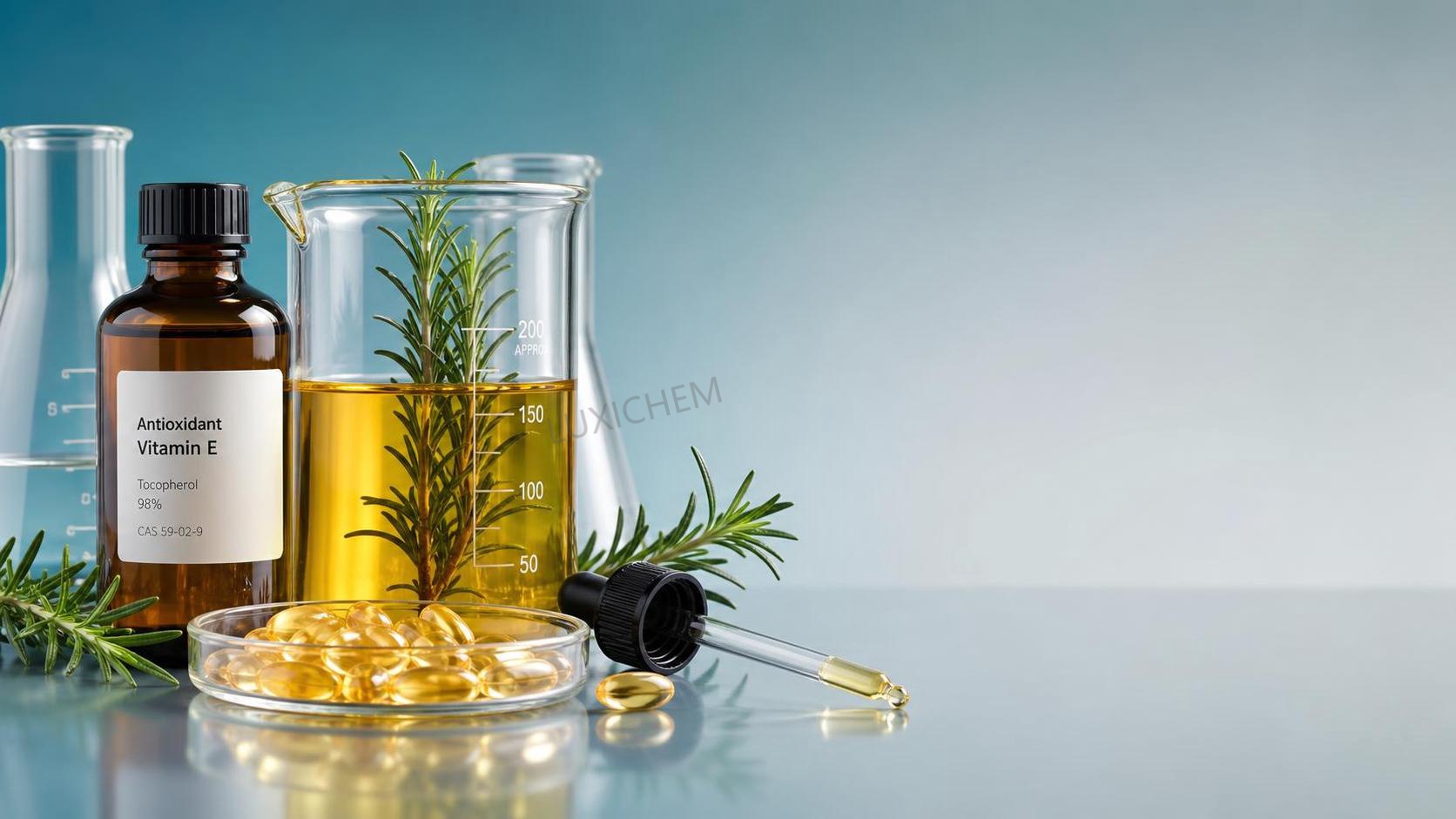
Botanical Antioxidants are plant-derived compounds or extracts used to slow oxidative degradation in fats, oils, and formulations that contain lipid phases. In practice, buyers usually encounter them as rosemary extract, mixed tocopherols, green tea derivatives, spice extracts, or other phenolic-rich materials. Their job is not mysterious: they interrupt free-radical chain reactions, delay rancidity, and help preserve odor, color, nutritional value, and functional stability. What makes the category worth evaluating is that, in some oil systems, they do more than simply replace synthetic antioxidants. They fit the product better.
That distinction matters. A buyer comparing options for edible oils, emulsified foods, cosmetic balms, fragrance carriers, or specialty oleochemical blends is not choosing between “old chemistry” and “new chemistry.” The real choice is between stabilization strategies with different behavior under heat, light, oxygen exposure, processing conditions, dosage constraints, sensory limits, and labeling expectations.
Where Botanical Options Tend to Win
Botanical antioxidants tend to outperform synthetic options when the oil-based product is sensitive to more than oxidation alone. A refined frying oil, for example, may prioritize thermal stability and cost efficiency. A premium nutritional oil, natural cosmetic serum, or label-sensitive food application often has a broader decision frame. In those products, oxidation control must coexist with ingredient positioning, odor management, regulatory acceptability in the destination market, and consumer scrutiny of additive names.
One common case is formulations rich in polyunsaturated fatty acids. These oils oxidize faster and often develop off-notes before they show obvious visual change. A well-selected plant-derived antioxidant system can be effective here because many botanical extracts contain multiple active compounds rather than a single stabilizing molecule. That broader activity can help in complex matrices, especially where oxidation is triggered by trace metals, residual processing stress, or repeated oxygen exposure after opening.
Another case is products sold into markets where “synthetic antioxidant-free” has commercial weight. This is especially relevant in food processing and parts of the daily chemical sector. In those situations, the antioxidant is not only a technical additive; it becomes part of the product story and procurement criteria. For a formulator, that changes the acceptable tradeoff range. A botanical system that costs more per kilogram may still be the better decision if it reduces reformulation pressure later or avoids market resistance tied to ingredient declarations.
There is also a practical formulation advantage in certain blended systems. Botanical antioxidants are often used alongside chelators, packaging barriers, nitrogen flushing, or controlled processing temperatures. When the rest of the oxidation-control strategy is already designed around product sensitivity, plant-derived antioxidants can integrate more naturally than a direct one-for-one swap from a synthetic benchmark. In sourcing work across food additives, organic intermediates, and application-oriented chemical products, this is often the difference between a stable specification and a product that performs well only in lab conditions.
Why Synthetic Antioxidants Still Hold Ground
It would be a mistake to frame this as a universal victory for plant-derived ingredients. Synthetic antioxidants remain widely used because they can offer strong performance consistency, narrower compositional variation, and predictable economics. In high-volume industrial applications, those factors are hard to dismiss. A buyer who only looks at “natural versus synthetic” can end up selecting the wrong stabilizer for the wrong reason.
Botanical materials are not automatically stronger. Their effectiveness depends on extraction method, active content, carrier system, oil type, processing temperature, and whether the oxidative stress is driven mainly by heat, light, oxygen, or metal contamination. Some extracts perform well in moderate-temperature storage conditions but lose their edge in aggressive thermal processing. Others protect flavor-sensitive oils effectively yet bring their own sensory footprint if overdosed. This is why the phrase “outperform” should always be tied to a defined application, not treated as a blanket claim.
The Questions That Actually Decide the Choice
A useful evaluation usually comes down to five questions.
First, what is the oil chemistry? Highly unsaturated oils, marine oils, seed oils, and botanical actives suspended in lipid carriers do not oxidize at the same rate, and they do not fail in the same way. If the product loses aroma before it changes color, sensory control may matter more than headline oxidation numbers.
Second, what kind of processing does the product see? Cold-filled oils, emulsions, hot-filled sauces, anhydrous balms, and oleochemical intermediates create very different conditions for an antioxidant package. Heat history often decides whether a botanical extract remains efficient or becomes less competitive.
Third, what are the labeling and market-entry constraints? Different countries and end-use sectors treat additive acceptability differently, especially in food and personal care. For companies serving multiple export markets, procurement decisions are often shaped by the strictest destination requirement rather than the easiest one. That is one reason global suppliers with broad product coverage and trade experience are useful in this category: the antioxidant decision is rarely isolated from the rest of the formulation and compliance pathway.
Fourth, what is the acceptable sensory window? Some botanical antioxidants are effective but have a characteristic herbal, spicy, or bitter profile. In robust matrices, that may not matter. In delicate edible oils, lightly fragranced cosmetics, or neutral carrier systems, it can become the limiting factor.
Fifth, is the goal replacement or optimization? If a formulator is trying to remove a synthetic antioxidant without changing anything else, disappointment is common. Botanical systems usually perform best when the entire oxidation-control approach is reconsidered, including packaging, headspace, metal control, and storage conditions.
A Frequent Misunderstanding: “Natural” Does Not Mean Simple
One of the most persistent misunderstandings is that Botanical Antioxidants are a straightforward premium alternative. In reality, they can be more formulation-sensitive than synthetic materials. Their composition may vary by botanical source and processing route. Standardization becomes critical. Buyers should ask not only for the product name, but for assay approach, carrier composition, solubility behavior, storage recommendation, and compatibility with the target oil phase.
This is also where broader chemical sourcing experience matters. A supplier handling food additives, organic intermediates, fertilizers, and related chemical products across multiple markets is used to the practical side of specification control: batch consistency, documentation, logistics, and matching a material to the end-use environment rather than only to a catalog description. Luxi Chemical (Shandong) Co., Ltd. works in that wider sourcing context, which is relevant because antioxidant selection often sits inside a larger purchasing decision about stability, regulatory fit, and supply continuity.
What Buyers Should Ask Suppliers to Clarify
For decision-making, a short supplier discussion is often more useful than a long generic brochure. The important points are concrete:
- What is the antioxidant source and how is it standardized?
- Is it intended for food, daily chemical, or technical oil systems?
- How does it behave in the specific oil phase and processing temperature range?
- Does it introduce color, odor, or flavor impact at effective use levels?
- What documentation supports regulatory and quality review in the target market?
Those questions often reveal whether a botanical antioxidant is being offered as a real formulation tool or simply as a trend-driven substitute. In adjacent specialty chemical workflows, buyers sometimes review catalysts, intermediates, and stabilizers together because processing conditions shape the final selection. That is where a product such as K-CATALYST CAS#1318-93-0 may appear in the broader conversation, not as an antioxidant itself, but as part of the larger chemistry ecosystem in which performance, compatibility, and process control are evaluated together.
When Botanical Antioxidants Are the Better Decision
They are often the better decision when the finished product is label-sensitive, oxidation-prone, and sold into channels where ingredient perception has commercial consequences. They also make sense when the product value is high enough that preserving aroma, appearance, and functional quality offsets a higher additive cost. In some formulations, they become especially attractive when combined with careful packaging and process controls, because the formulation does not need the antioxidant to do all the work alone.
They are less convincing when the application is heavily cost-driven, exposed to severe thermal stress, or unable to tolerate any natural extract variability or sensory contribution. In those cases, synthetic options may still be the more disciplined choice.
The strongest purchasing decisions usually come from treating Botanical Antioxidants as a technical selection problem with commercial consequences, not as a lifestyle ingredient category. Once that perspective is clear, the evaluation becomes sharper: define the oil system, define the failure mode, define the market constraint, and compare stabilizers against those facts. That is when plant-derived antioxidants stop being a trend term and become a usable formulation strategy.
Related Picks
 Butylated Hydroxytoluene Price Drivers: Supply, Purity, and Purchasing Risk FactorsOct 21, 2026Butylated Hydroxytoluene price trends depend on supply stability, purity, logistics, and purchasing risk. Learn how to compare quotes wisely and reduce sourcing costs.
 Sodium Tripolyphosphate Price Trends: Raw Material and Energy ExposureOct 20, 2026Explore sodium tripolyphosphate price trends, from phosphate and soda ash costs to energy exposure. Learn how to compare quotes, manage sourcing risks, and make smarter purchasing decisions.
 Acetonitrile Shipment to Vietnam Successfully Dispatched; RCEP Benefits Boost Fine Chemical Trade with ASEANSep 16, 2026A shipment of industrial-grade acetonitrile from our company has recently been loaded and dispatched following the completion of standardized hazardous material packaging and container securing procedures.
 Nigerian Client’s Order of 4 Containers of Vinyl Acetate Successfully Loaded and Shipped to West AfricaSep 16, 2026We recently completed the loading of a vinyl acetate order for a Nigerian client; four containers of the product have been successfully packed and are ready for shipment to Nigeria.




Question Consultation
Send Us Your Inquiry Today

Luxi Chemical is a professional chemical product supplier with ample stock of all chemical categories and excellent quality, welcome your purchase inquiry.

