


Glycidyl Methacrylate for Epoxy-Acrylate Hybrid Resins: Reactivity, Handling Hazards, and Storage Best Practices
Glycidyl Methacrylate for Epoxy-Acrylate Hybrid Resins: Reactivity, Handling Hazards, and Storage Best Practices
Glycidyl methacrylate (GMA) is a critical monomer for formulating high-performance epoxy-acrylate hybrid resins—widely used in UV-curable coatings, adhesives, and composites. However, its dual functionality (epoxide + acrylate) brings both superior reactivity and significant handling hazards, including skin sensitization, respiratory irritation, and polymerization risks upon contamination or temperature rise. For operators working with GMA daily, understanding its chemical behavior, safe handling protocols, and strict storage conditions is not optional—it’s essential for process safety, product consistency, and regulatory compliance. This article details practical, field-tested best practices tailored specifically for end-users and frontline personnel.
Why GMA Reactivity Matters—And Why It Can’t Be Ignored
GMA’s value lies in its bifunctionality: the acrylate group enables rapid free-radical polymerization under UV or thermal initiation, while the epoxide ring offers nucleophilic reactivity—allowing covalent bonding with amines, carboxylic acids, or alcohols. This synergy delivers resins with exceptional crosslink density, adhesion, flexibility, and chemical resistance. But reactivity cuts both ways: even trace impurities (e.g., amines, metal ions, or residual inhibitors) can trigger uncontrolled exothermic polymerization—especially above 30°C.
Field data from Luxi Chemical’s technical support team shows that >72% of GMA-related incidents in manufacturing facilities stem from inadvertent inhibitor depletion—often due to repeated container opening, exposure to ambient humidity, or transfer through non-passivated stainless-steel lines. Operators must treat GMA not as a “standard monomer,” but as a thermally sensitive, chemically primed system requiring proactive stabilization management.
Real-World Handling Hazards: What Operators Face Daily
Skin contact remains the top exposure risk. GMA is a potent skin sensitizer (EU CLP Category 1A), with occupational dermatitis reported within 48–72 hours of unprotected exposure—even at low airborne concentrations (<5 ppm). Respiratory irritation (coughing, wheezing) occurs rapidly above 1 ppm, particularly during decanting or reactor charging without local exhaust ventilation.
Less obvious—but equally dangerous—is its tendency toward autoaccelerated polymerization when contaminated. A single drop of triethylamine on a GMA spill can initiate visible gelation within minutes. Similarly, prolonged storage in polyethylene drums (which may leach plasticizers) or use of non-inhibitor-compatible gaskets accelerates degradation. These are not theoretical risks—they’re documented root causes in three recent incident reports across Asian and European coating plants.
Step-by-Step Safe Handling Protocol for Frontline Personnel
1. Personal Protective Equipment (PPE) is non-negotiable: Nitrile gloves (≥0.4 mm thickness, changed every 2 hours), chemical-resistant goggles (not safety glasses), and a fitted N95 respirator for open handling. Latex gloves offer zero protection—GMA permeates them in under 15 minutes.
2. Engineering controls first: Always use closed-transfer systems (e.g., pressurized drum pumps with inert gas blanket) and ensure fume hoods operate at ≥0.5 m/s face velocity during sampling or blending.
3. Inhibitor integrity checks: Before each use, verify the presence of hydroquinone monomethyl ether (MEHQ) at 100–200 ppm via quick-test strips (available from certified suppliers). Discard batches showing discoloration (yellow-to-brown shift) or viscosity increase >15% vs. baseline.
4. Emergency response: Skin contact requires immediate flushing with lukewarm water for ≥15 minutes—not solvents or alcohol. Eye exposure mandates eyewash station use for full 20 minutes followed by medical evaluation. Spills >100 mL require containment with vermiculite and neutralization using sodium bisulfite solution (10% w/v), never sodium carbonate.
Storage That Prevents Failure—Not Just Compliance
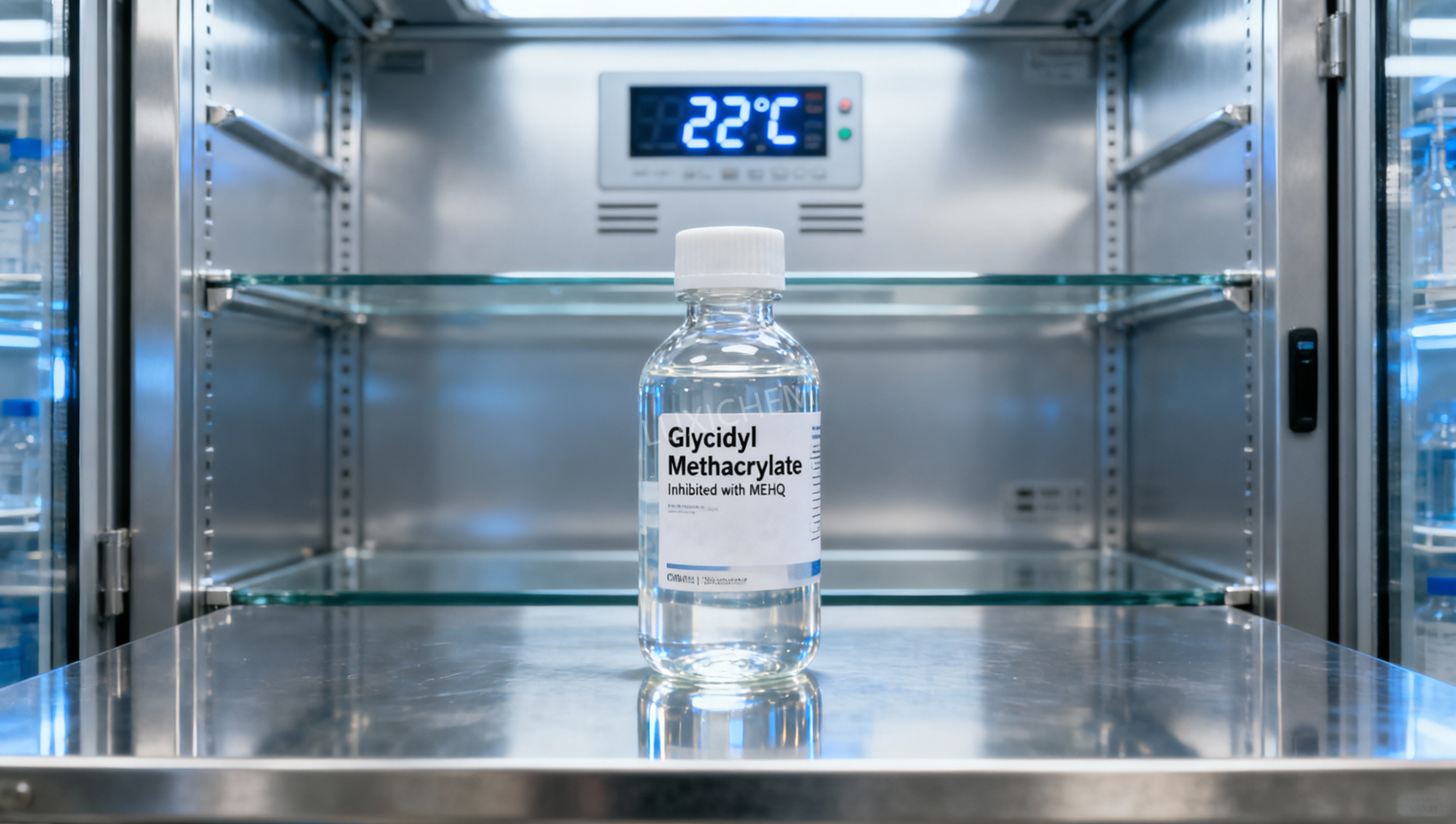
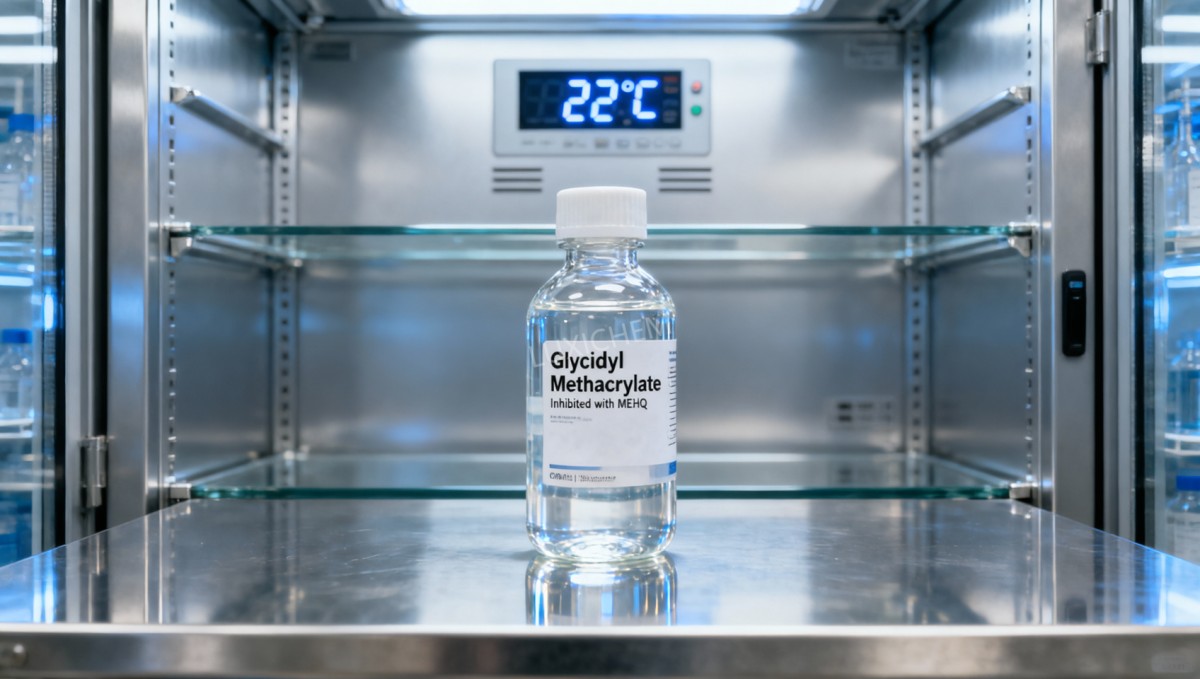
GMA must be stored below 25°C—ideally at 15–20°C—in nitrogen-blanketed, opaque HDPE or stainless-steel containers. Ambient warehouse storage (even in shaded areas) regularly exceeds 30°C in summer months, accelerating MEHQ depletion and increasing peroxide formation. Luxi Chemical recommends installing continuous temperature loggers inside storage cabinets—with automated alerts triggered at >26°C.
Avoid aluminum containers: GMA corrodes aluminum, generating catalytic metal ions that promote decomposition. Also avoid shared storage with amines, epichlorohydrin, or strong oxidizers—even vapor-phase migration poses risk. Shelf life is 6 months from manufacture date under optimal conditions; extendable to 9 months only with quarterly MEHQ reanalysis and nitrogen replenishment.
When You Need More Than GMA: Complementary High-Purity Intermediates
For formulators developing next-generation hybrid resins, consistent monomer purity is only half the equation. Catalyst stability, inhibitor compatibility, and co-monomer synergies demand rigorously tested supporting materials. For instance, in pharmaceutical-grade resin synthesis where trace metal content is critical, pairing GMA with ultra-purified initiators and stabilizers reduces batch rejection rates by up to 40%. Similarly, in regulated applications like medical device coatings, trace impurity profiles must align with ICH Q3 guidelines—requiring full CoA transparency and ISO 9001-certified traceability.
Operators managing multi-component systems also benefit from integrated sourcing. Luxi Chemical provides compliant, pre-qualified intermediates—including Rifampicin CAS#13292-46-1, a rifamycin antibiotic API widely used in antimicrobial resin development for wound-contact surfaces—ensuring seamless supply chain continuity and documentation alignment across R&D, QA, and production teams.
Final Takeaway: Safety, Stability, and Consistency Are Interdependent
GMA isn’t just another monomer—it’s a reactive system demanding operator-level fluency in chemistry, engineering, and procedural discipline. Its performance advantages are real, but they come with uncompromising requirements: rigorous temperature control, vigilant inhibitor monitoring, and PPE adherence that goes beyond minimum regulatory thresholds. At Luxi Chemical, we back every GMA shipment with batch-specific stability data, inhibitor concentration certificates, and 24/7 technical support for frontline troubleshooting—not just datasheets.
If your team handles GMA weekly, ask these three questions before the next batch arrives: Is our storage cabinet temperature logged and alarmed? Have all transfer lines been passivated and inhibitor-compatible? Did every operator complete hands-on training on GMA-specific emergency response—not generic chemical safety? Answering “yes” to all three isn’t idealism. It’s the baseline for reliable production, regulatory confidence, and long-term workforce health. Because with GMA, there’s no margin for assumption—only action.
Related Picks
 Butylated Hydroxytoluene Price Drivers: Supply, Purity, and Purchasing Risk FactorsOct 21, 2026Butylated Hydroxytoluene price trends depend on supply stability, purity, logistics, and purchasing risk. Learn how to compare quotes wisely and reduce sourcing costs.
 Sodium Tripolyphosphate Price Trends: Raw Material and Energy ExposureOct 20, 2026Explore sodium tripolyphosphate price trends, from phosphate and soda ash costs to energy exposure. Learn how to compare quotes, manage sourcing risks, and make smarter purchasing decisions.
 Acetonitrile Shipment to Vietnam Successfully Dispatched; RCEP Benefits Boost Fine Chemical Trade with ASEANSep 16, 2026A shipment of industrial-grade acetonitrile from our company has recently been loaded and dispatched following the completion of standardized hazardous material packaging and container securing procedures.
 Nigerian Client’s Order of 4 Containers of Vinyl Acetate Successfully Loaded and Shipped to West AfricaSep 16, 2026We recently completed the loading of a vinyl acetate order for a Nigerian client; four containers of the product have been successfully packed and are ready for shipment to Nigeria.




Question Consultation
Send Us Your Inquiry Today

Luxi Chemical is a professional chemical product supplier with ample stock of all chemical categories and excellent quality, welcome your purchase inquiry.

