


Taurine Powder in Energy Drinks: Dosage Safety Thresholds, Solubility Challenges, and Formulation Compatibility Tips
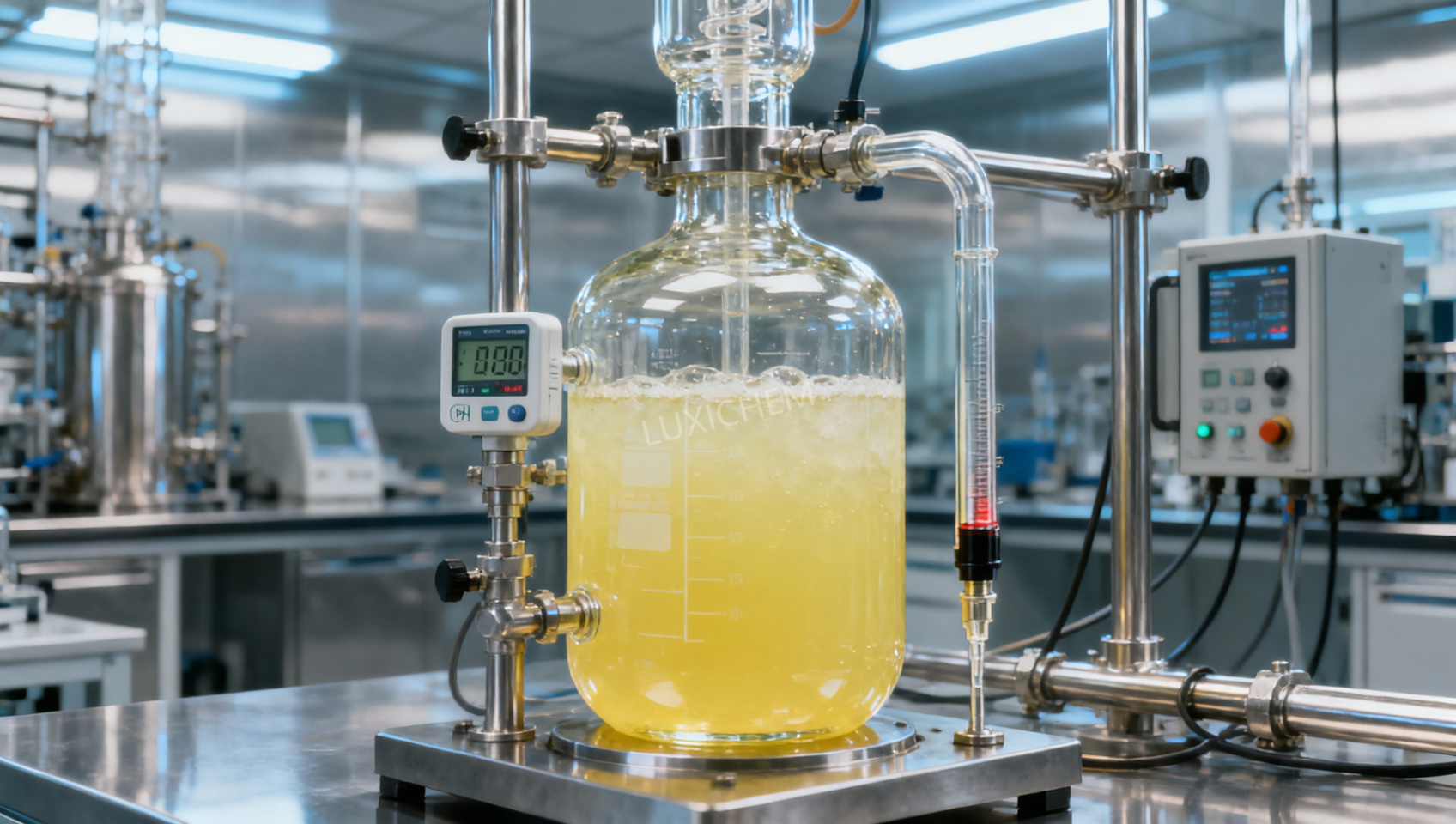
Taurine Powder in Energy Drinks: Dosage Safety Thresholds, Solubility Challenges, and Formulation Compatibility Tips
Taurine Powder isn’t just another additive on the spec sheet—it’s a functional pivot point. In energy drink R&D, it sits at the intersection of regulatory compliance, physical chemistry, and sensory performance. But unlike caffeine or citric acid, taurine doesn’t dissolve readily, doesn’t buffer well across acidic ranges, and carries real dosing constraints that aren’t always obvious from label claims alone. If you’re evaluating formulations for scale-up—or troubleshooting cloudiness, precipitation, or inconsistent bioavailability—you’re likely wrestling with three things: how much is *actually* safe per serving (not just “allowed”), how to get it fully dissolved without destabilizing other actives, and whether your pH-adjusted matrix will quietly degrade it over shelf life.
Let’s cut past the generalities. EFSA’s 2012 scientific opinion sets a no-observed-adverse-effect level (NOAEL) of 1,000 mg/kg body weight per day for taurine—but that’s not a formulation target. For energy drinks, the practical ceiling is lower. Most commercial products cap at 750–1,000 mg per 250 mL serving. Why? Because co-ingestion with caffeine and sugar shifts metabolic handling. At doses above ~1,200 mg/serving, some clinical studies report transient diastolic blood pressure elevation in sensitive subpopulations—especially when combined with high-dose caffeine (>200 mg). FDA doesn’t set an upper limit, but GRAS notifications submitted by manufacturers rarely exceed 1,000 mg/serving, and batch release testing often includes taurine stability under accelerated conditions (40°C/75% RH for 3 months) to confirm no crystallization or degradation.
Solubility Isn’t Just About Grams per Liter
Taurine Powder has decent water solubility (~5 g/100 mL at 25°C), but that number misleads in practice. In real energy drink matrices—pH 2.5–3.8, loaded with organic acids, preservatives, and sometimes herbal extracts—the effective solubility drops sharply. We’ve seen batches precipitate within 48 hours post-mixing when citric acid concentration exceeds 1.2% w/v and total solids exceed 18%. That’s not a “failure”—it’s physics. Taurine’s zwitterionic nature means its net charge collapses near its isoelectric point (~pH 5.1), reducing electrostatic repulsion and increasing aggregation risk. Below pH 4.0, protonation dominates; above pH 6.0, deprotonation kicks in. The sweet spot for kinetic stability? pH 3.2–3.7—and even then, temperature history matters. A hot-fill process followed by rapid cooling can trap supersaturation, only for crystals to nucleate days later during storage.
Micronization helps—but only up to a point. Reducing particle size to D90 < 15 µm improves initial dispersion, yet doesn’t prevent Ostwald ripening over time. Co-solvents are more reliable: glycerin (5–8% v/v) or propylene glycol (3–5%) significantly delay phase separation. But here’s what gets overlooked: mannitol. D-Mannitol CAS#69-65-8 isn’t just a bulking agent—it acts as a crystallization inhibitor. Its high aqueous solubility (1 M at 20°C), neutral pH (5.0–6.5), and hydrogen-bonding capacity disrupt taurine lattice formation. In pilot trials, adding 0.8% mannitol reduced visible sedimentation by >70% after 6 weeks at 30°C—without masking flavor or increasing viscosity.
Compatibility Isn’t Binary—It’s Conditional
“Compatible” means different things at different stages. Taurine is chemically stable with caffeine and sodium benzoate—but only if pH stays below 4.0 *and* residual peroxide levels from hydrogen-peroxide-based sterilization are kept below 0.5 ppm. We’ve had clients trace haze formation back to trace peroxide carryover reacting with taurine’s sulfonic group, forming low-solubility sulfoxides. Likewise, potassium sorbate compatibility depends on metal ion content: Fe²⁺ or Cu²⁺ > 0.1 ppm catalyzes oxidative decarboxylation. That’s why full-spec taurine—like our food-grade grade with strict heavy metal controls (<1 ppm Pb, <0.5 ppm As)—matters more than just assay purity.
Preservative synergy also trips people up. Benzoic acid + taurine at pH 3.0 shows no interaction—but add ascorbic acid (common in “vitamin-enhanced” variants), and you invite nitrosamine formation if nitrate impurities are present above 5 ppm. That’s not theoretical: one client’s reformulation triggered a full stability retest after 2 weeks because their citrus extract introduced unexpected nitrate load. Bottom line? Compatibility testing must reflect *your* full ingredient slate—not just taurine + caffeine + acid.
What Consistency Really Means in Practice
Batch-to-batch consistency isn’t just about assay (98.5–101.5%). It’s about particle morphology, residual moisture (<0.5%), and chloride content (<100 ppm). High chloride promotes hydrolysis in acidic media; variable particle shape affects dissolution kinetics. Luxi Chemical’s taurine undergoes laser diffraction analysis and Karl Fischer titration on every lot—not just for COA, but to flag subtle shifts that impact mixing behavior downstream. If your pilot batch dissolves cleanly but production-scale batches show delayed clarity, check moisture first. Even 0.7% vs. 0.3% can change slurry rheology enough to affect homogenization efficiency.
And don’t assume “food-grade” equals “energy-drink-ready.” Some suppliers meet JECFA specs but lack documentation for migration testing against PET bottle linings—critical if your product uses carbonated fill. Others pass microbiological specs but haven’t validated endotoxin levels (<0.5 EU/mg), which matters for high-dose applications targeting athletic recovery claims.
If you’re scaling a new formula, run a 72-hour stress test: hold at pH 3.4, 40°C, with 0.1% H₂O₂ spiked in. Monitor turbidity (NTU) and taurine assay weekly. If loss exceeds 5% or NTU jumps >15, revisit your acid blend or consider switching to buffered citrate systems. And always verify final pH *after* all ingredients—including taurine—are fully dissolved. Adding taurine last can shift pH downward by 0.15–0.2 units in low-buffer systems—a small number that changes everything.
There’s no universal fix—but there *is* a pattern: successful taurine integration starts with respecting its physical limits, not just its regulatory headroom.
Related Picks
 Butylated Hydroxytoluene Price Drivers: Supply, Purity, and Purchasing Risk FactorsOct 21, 2026Butylated Hydroxytoluene price trends depend on supply stability, purity, logistics, and purchasing risk. Learn how to compare quotes wisely and reduce sourcing costs.
 Sodium Tripolyphosphate Price Trends: Raw Material and Energy ExposureOct 20, 2026Explore sodium tripolyphosphate price trends, from phosphate and soda ash costs to energy exposure. Learn how to compare quotes, manage sourcing risks, and make smarter purchasing decisions.
 Acetonitrile Shipment to Vietnam Successfully Dispatched; RCEP Benefits Boost Fine Chemical Trade with ASEANSep 16, 2026A shipment of industrial-grade acetonitrile from our company has recently been loaded and dispatched following the completion of standardized hazardous material packaging and container securing procedures.
 Nigerian Client’s Order of 4 Containers of Vinyl Acetate Successfully Loaded and Shipped to West AfricaSep 16, 2026We recently completed the loading of a vinyl acetate order for a Nigerian client; four containers of the product have been successfully packed and are ready for shipment to Nigeria.




Question Consultation
Send Us Your Inquiry Today

Luxi Chemical is a professional chemical product supplier with ample stock of all chemical categories and excellent quality, welcome your purchase inquiry.

