


Homogeneous vs. Heterogeneous Chemical Catalysts for Batch Production
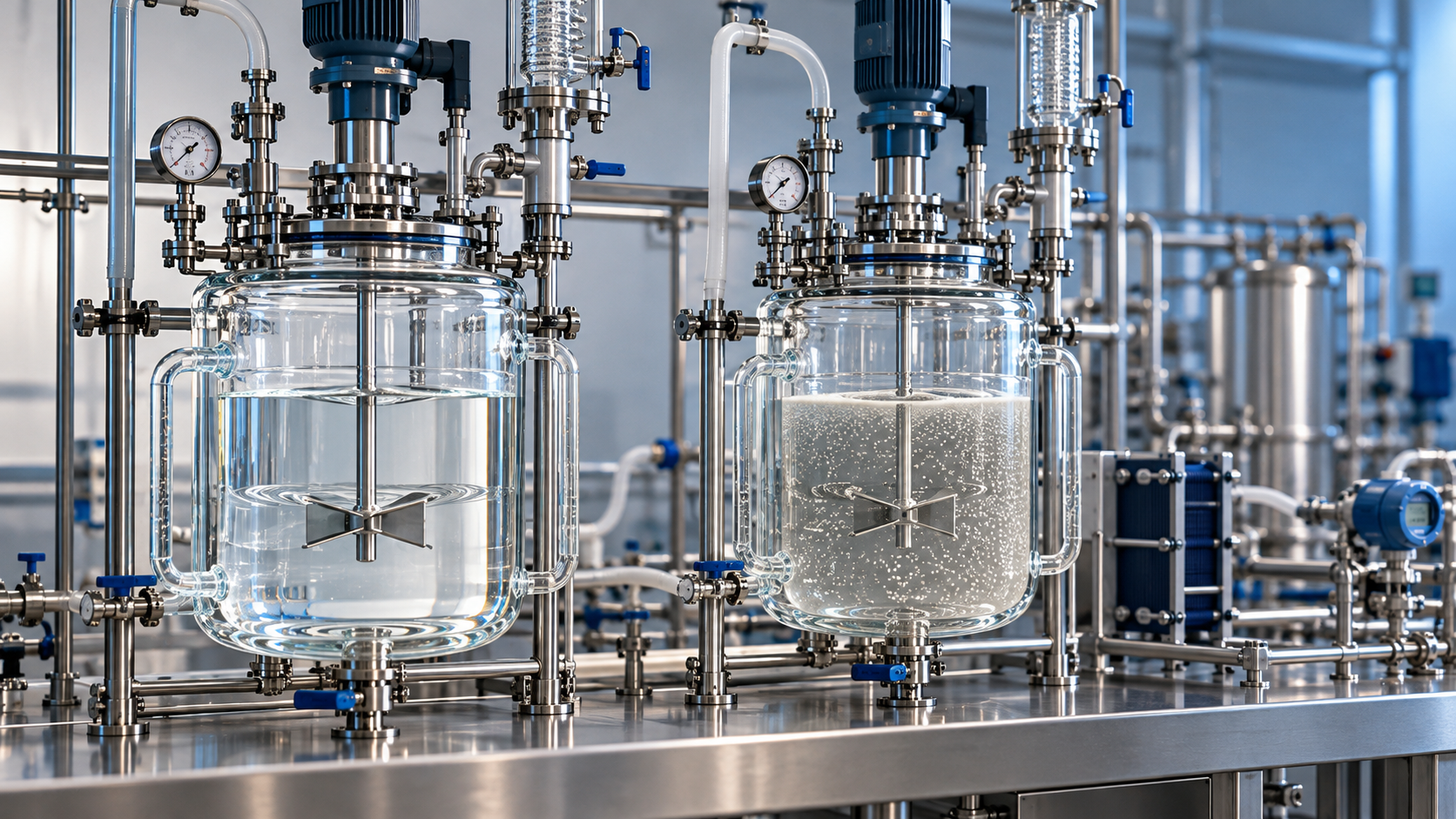
Choose homogeneous chemical catalysts when molecular selectivity or activity under compatible conditions delivers a clear advantage, and dissolved catalyst residues can be removed reliably. Choose heterogeneous catalysts when a solid surface provides the required chemistry and practical separation, reuse, or product purity benefits survive testing under production conditions. For batch production, the deciding measure is the amount of acceptable product released per complete batch cycle, including charging, reaction, separation, cleaning, and any catalyst regeneration.
A fast laboratory reaction is insufficient evidence for either choice. Homogeneous systems can create difficult extraction or purification duties; heterogeneous systems can lose their apparent advantage through slow filtration, pore diffusion, or declining activity. A useful comparison therefore holds product specifications constant and follows each candidate from feed preparation through final isolation.
Start with the chemistry that cannot be compromised
Homogeneous catalysts operate in the same phase as the reacting species. In liquid batch synthesis, dissolved metal complexes, acids, and bases are familiar examples. Heterogeneous catalysts occupy a separate phase, commonly a solid suspended in a liquid reaction mixture. Classification follows the active system under reaction conditions: a material charged as a solid can dissolve or release active species during processing.
The first selection gate is the required product distribution. If a competing pathway generates an impurity that crystallization or distillation cannot remove economically, catalyst selectivity becomes a practical constraint. Ligand design and coordination chemistry give many homogeneous systems precise control over reaction pathways. Solid catalysts offer control through surface composition, acid or base strength, pore structure, and support properties, although access to those sites introduces additional variables.
Compare selectivity at the intended conversion, rather than at a convenient early sampling point. Consecutive reactions can consume the desired product as the batch approaches completion. A catalyst that looks selective at partial conversion may require a tightly controlled endpoint and immediate deactivation to prevent an impurity increase during discharge.
Separate catalytic activity from transport effects
A slower heterogeneous reaction does not automatically indicate inferior surface chemistry. Reactants must cross the liquid film surrounding each particle, diffuse through accessible pores, and reach active sites. In hydrogenation, gas must also move into the liquid. Any of these steps can limit the observed rate before the intrinsic catalytic reaction becomes controlling.
Agitation studies help distinguish these effects. Run otherwise comparable experiments at different mixing intensities while keeping temperature and sampling consistent. A rate increase with agitation indicates that transport contributes to the measured performance. Once further agitation stops changing the rate, external transfer is less likely to dominate, although internal pore diffusion can remain significant.
Particle-size studies provide another diagnostic, with a qualification: smaller particles increase external area and shorten diffusion paths, but they also change suspension behavior and filtration resistance. If reducing particle size improves reaction rate while making separation impractical, the result identifies a process trade-off rather than a finished catalyst choice. Comparisons should use material with equivalent composition and preparation history wherever possible.
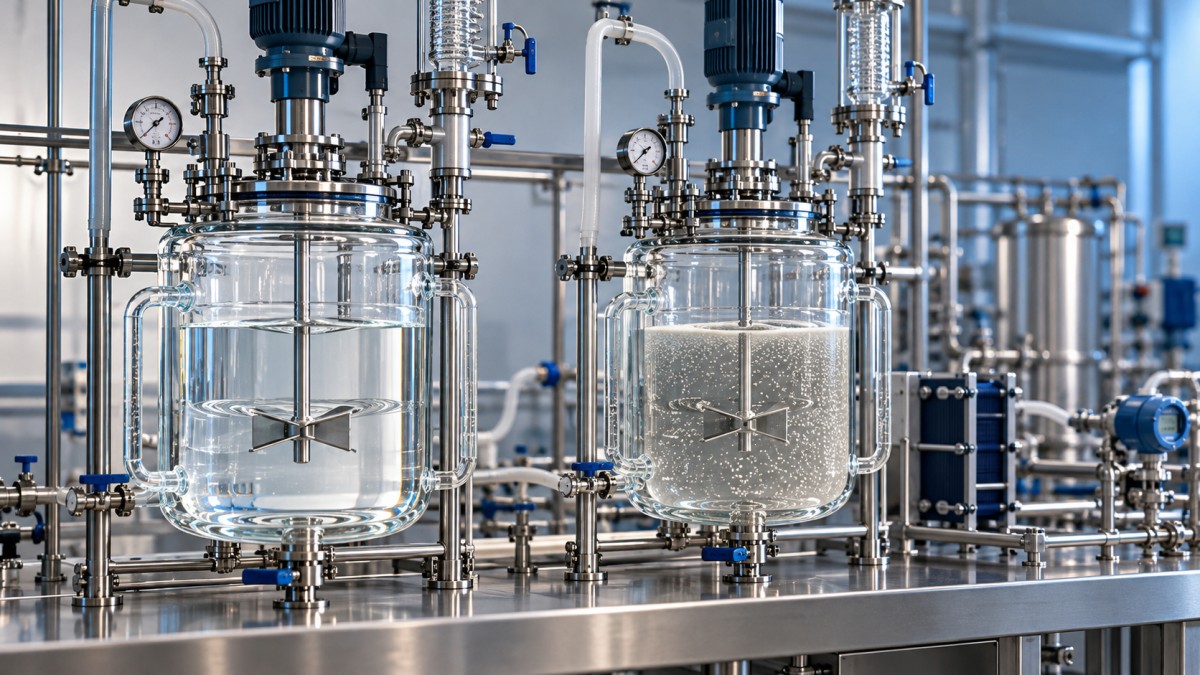
Homogeneous catalysis also requires transport analysis when gases, immiscible liquids, or concentrated feed additions are present. A dissolved catalyst does not eliminate hydrogen transfer limitations or local concentration gradients. Scale-up should preserve the mixing and transfer performance required by the chemistry; copying laboratory revolutions per minute does not establish that equivalence.
A liquid Lewis acid illustrates the downstream trade-off
Boron trifluoride diethyl etherate CAS#109-63-7 is a relevant example when evaluating Lewis acid chemistry in organic synthesis, including selected aldol additions, alkylations, and polymerizations. Where it forms a homogeneous reaction mixture, liquid charging supports controlled addition, but the active Lewis acid species and effective acidity depend on the solvent, substrate, water content, and other coordinating components.
For this type of system, a strong reaction result must be assessed alongside moisture sensitivity and workup behavior. Contact with water can produce a substantial exotherm and corrosive hydrolysis products. Quench design therefore needs calorimetric evidence, controlled addition, suitable containment, and compatible equipment. Product isolation must also establish whether boron- and fluoride-containing residues remain in the product or pass into waste streams.
A solid acid alternative requires its own reaction trials. Matching a nominal acid strength does not establish equivalent performance: pore access, surface hydration, and substrate adsorption can change conversion and selectivity. The meaningful comparison covers the desired reaction, endpoint control, quench or deactivation, and final product quality.
Test recovery against the actual product specification
The phrase “easy catalyst separation” often describes only the removal of visible material. A heterogeneous catalyst can shed fines or release soluble components. Filtration can produce a clear solution while dissolved catalyst-derived species remain. Residue testing should therefore distinguish particulate carryover from dissolved contamination using methods appropriate to the catalyst and product matrix.
For homogeneous systems, assess recovery on representative crude reaction mixtures. Extraction behavior changes with solvent composition, salts, pH, and product concentration. A separation demonstrated in a clean model solution can fail when by-products stabilize emulsions or when the product binds the catalyst. Scavengers add their own demands for contact time, filtration, product recovery, and waste handling.
Where a supported catalyst might leach, paired experiments help investigate the active phase. Removing solids at reaction temperature and monitoring the filtrate can reveal continuing activity. However, a stopped reaction after filtration does not prove that catalysis occurred exclusively on the surface: dissolved species can deactivate, redeposit, or change during separation. Combine reaction observations with solution analysis and characterization of the recovered solid.
Measure isolated yield after the purification needed to meet specification. High conversion accompanied by adsorption losses, repeated washes, or difficult residue removal can produce less saleable material than a slower, cleaner route. Include product retained in the filter cake and wash liquors in the material balance.
Repeated batches expose weaknesses that a fresh-catalyst trial misses
Recovery becomes reuse only when the recovered material performs adequately in a subsequent batch. For solid catalysts, declining performance can arise from poisoning, fouling, pore blockage, changes in the active phase, or particle damage. These mechanisms require different responses. Washing removes some deposits; it does not necessarily reverse chemical poisoning or restore a changed surface.
Reuse trials should reproduce the intended separation, wash, storage, and charging sequence. A catalyst transferred immediately under controlled laboratory conditions may behave differently after a production hold. Retained solvent and moisture alter the next batch composition, while residual product or intermediates can continue reacting during storage.
Track the full conversion profile, impurity pattern, isolated yield, filtration behavior, and catalyst inventory across cycles. Increasing reaction time alone can hide activity loss while preserving endpoint conversion. Similarly, reporting performance per recovered catalyst mass becomes misleading when the recovered material contains deposits or retained liquid. Fresh catalyst additions should be recorded explicitly so that replacement does not conceal deterioration.
Batch safety and equipment constraints can settle the choice
For an exothermic batch reaction, compare heat generation with available heat removal throughout addition, reaction, and endpoint holds. A highly active catalyst can cause reactant accumulation followed by rapid heat release if activation is delayed. Conversely, a slurry that settles during an agitation interruption can behave differently when mixing restarts. Reaction calorimetry and credible interruption scenarios are needed to define acceptable addition rates and operating limits.
Some supported metal catalysts require controls against ignition during filtration or drying. Keeping such material wet may be part of the handling procedure, with the wetting medium included in the process balance. For moisture-sensitive homogeneous acids, transfer arrangements, vent treatment, quench capacity, and corrosion compatibility can determine whether existing equipment is suitable.
Downstream hardware deserves the same scrutiny as the reactor. Filter area, cake compressibility, solids containment, and cleaning access determine whether a recoverable catalyst actually shortens turnaround. A process with excellent reaction kinetics can still occupy the vessel longer because discharge and washing become the slowest operations.
Build the comparison around representative batches
A defensible evaluation starts with common acceptance criteria: product assay, impurity limits, catalyst-derived residues, isolated yield, batch duration, and acceptable variability. Catalyst loading should state its basis clearly. Comparing total solid mass against the amount of a dissolved metal complex obscures differences in active content, while turnover calculations remain uncertain when the number of accessible surface sites is unknown.
Three experiments often change the selection more than an expanded screen under ideal conditions:
- A realistic feed challenge. Use expected variations in water, known impurities, or feed composition to establish where activity or selectivity begins to deteriorate. Avoid arbitrary contaminants unrelated to the process.
- An endpoint hold reveals whether product quality continues changing while the batch awaits discharge, filtration, or quench.
- A complete isolation and reuse sequence. Include normal washes and hold times, then assess both the released product and the next reaction. This captures losses and carryover that separate reaction and recovery experiments miss.
Calculate operating cost per released batch or per unit of acceptable isolated product. Include catalyst consumption, recovery materials, solvent use, waste treatment, analysis, and equipment occupancy where they differ between routes. Reuse credits should come from demonstrated cycles, with replacement and regeneration accounted for explicitly.
If selectivity requires a homogeneous catalyst and purification consistently meets specification, its recovery burden may be justified. If a solid catalyst maintains product quality across realistic feeds and repeated cycles while simplifying isolation, the heterogeneous route has a stronger basis. When candidates remain close, a representative pilot batch should resolve the specific uncertainty—such as heat removal, suspension, filtration, or residue clearance—that laboratory results cannot settle.
Related Picks
 Butylated Hydroxytoluene Price Drivers: Supply, Purity, and Purchasing Risk FactorsOct 21, 2026Butylated Hydroxytoluene price trends depend on supply stability, purity, logistics, and purchasing risk. Learn how to compare quotes wisely and reduce sourcing costs.
 Sodium Tripolyphosphate Price Trends: Raw Material and Energy ExposureOct 20, 2026Explore sodium tripolyphosphate price trends, from phosphate and soda ash costs to energy exposure. Learn how to compare quotes, manage sourcing risks, and make smarter purchasing decisions.
 Acetonitrile Shipment to Vietnam Successfully Dispatched; RCEP Benefits Boost Fine Chemical Trade with ASEANSep 16, 2026A shipment of industrial-grade acetonitrile from our company has recently been loaded and dispatched following the completion of standardized hazardous material packaging and container securing procedures.
 Nigerian Client’s Order of 4 Containers of Vinyl Acetate Successfully Loaded and Shipped to West AfricaSep 16, 2026We recently completed the loading of a vinyl acetate order for a Nigerian client; four containers of the product have been successfully packed and are ready for shipment to Nigeria.




Question Consultation
Send Us Your Inquiry Today

Luxi Chemical is a professional chemical product supplier with ample stock of all chemical categories and excellent quality, welcome your purchase inquiry.

