


Why Chemical Catalysts Lose Activity: Poisoning, Coking, and Sintering
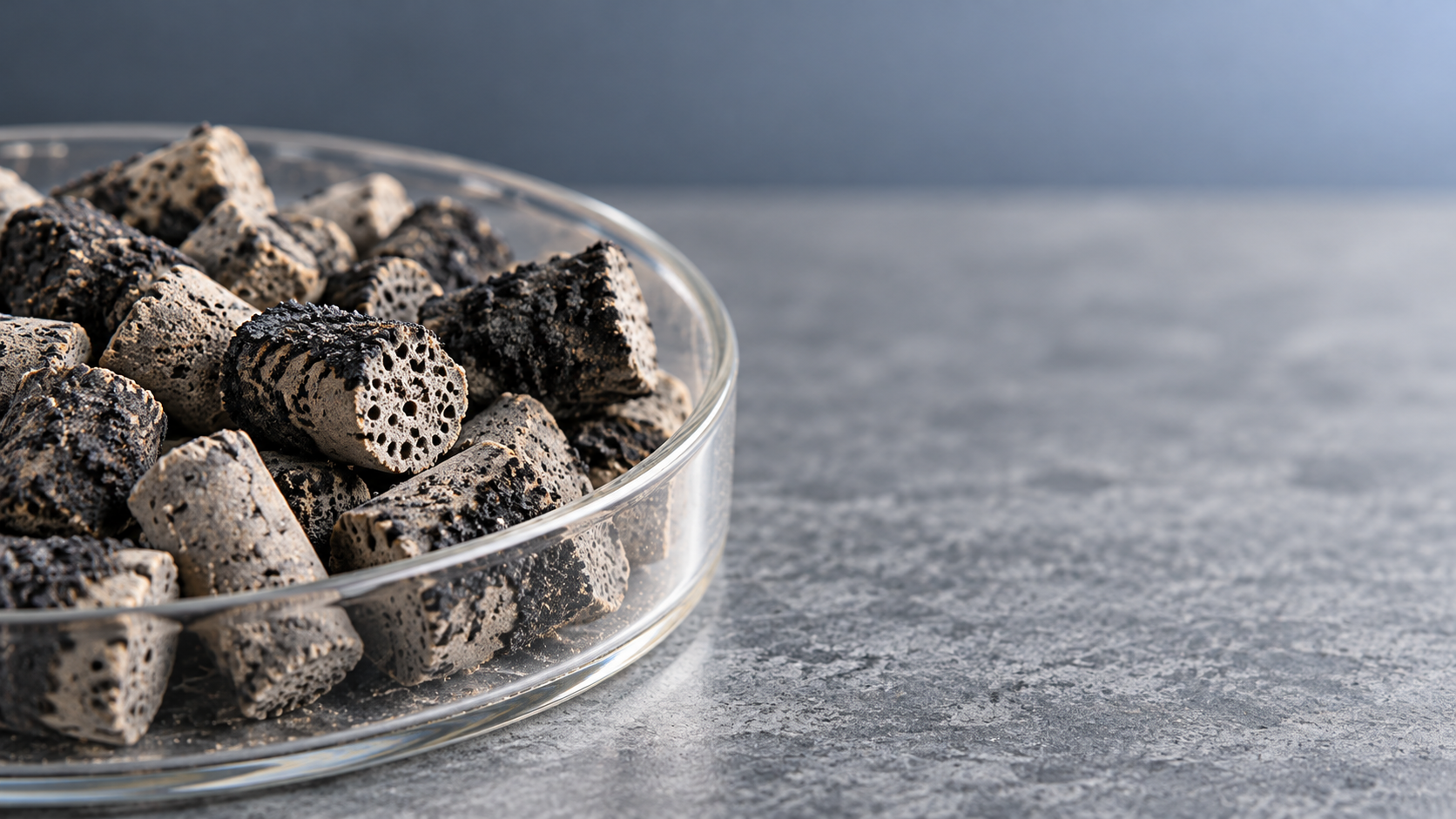
Catalyst activity loss becomes expensive when operators compensate for it without understanding the cause. Raising temperature may restore conversion temporarily, but it can also accelerate carbon deposition or structural damage. The first decision is therefore whether the catalyst’s active sites are contaminated, covered by deposits, or physically altered.
Poisoning, coking, and sintering can produce similar declines in performance, yet they require different responses. Some adsorbed poisons can be removed under suitable conditions; others cause persistent damage. Coke may be removable through a controlled regeneration procedure. Sintering is generally difficult to reverse through routine plant regeneration. For technical evaluators, the useful diagnosis connects operating history with catalyst analysis and a realistic recovery test.
Establish whether the catalyst has actually lost activity
A drop in reactor conversion does not, by itself, establish catalyst deactivation. Feed composition, reactant partial pressure, residence time, temperature distribution, and analytical performance can all change the apparent result. In liquid-phase systems, wetting and gas–liquid mass transfer may also matter. Comparing conversion across different operating conditions can make a healthy catalyst appear degraded.
Start by reconstructing performance at comparable conditions. Account for feed rate, composition, pressure, recycle, and catalyst inventory. Examine selectivity alongside conversion: an altered product distribution may reveal changes in particular active sites before overall conversion falls substantially. Where the process operates near equilibrium, conversion alone can conceal changes in catalytic rate.
Pressure drop and temperature profiles provide useful context. Rising pressure drop supports an investigation into deposits, fines, or bed obstruction, but coke can accumulate inside pores without a large pressure-drop change. A moving reaction zone may indicate progressive deactivation along the bed. Neither observation identifies the mechanism without supporting evidence.
Before selecting laboratory tests, assemble a short event history: feed-source changes, impurity excursions, startup and shutdown sequences, steam or hydrogen interruptions, temperature excursions, and previous regenerations. The timing of activity loss often narrows the investigation more effectively than an extensive, untargeted analytical package.
Poisoning: a small impurity load can have a large effect
Poisoning occurs when a species interacts with catalytic sites and reduces their ability to perform the desired reaction. It can block adsorption, alter the electronic properties of a metal, or neutralize acid or base sites. The consequence depends on the catalyst chemistry, the reaction, and the contaminant’s chemical form.
Sulfur-containing compounds can strongly inhibit certain metal catalysts, while basic nitrogen compounds can suppress acid-catalyzed reactions. Alkali contamination may neutralize acidic sites. These examples are useful screening directions, not universal compatibility rules: sulfur is part of the intended active phase in some catalysts, and materials harmful to one formulation may be tolerated by another.
The relevant exposure is cumulative. A low contaminant concentration sustained over a long campaign may consume substantial catalytic capacity. An intermittent breakthrough can be missed by occasional feed sampling. Review impurity concentration together with throughput, exposure duration, and the condition of upstream purification equipment.
What evidence supports poisoning?
An abrupt decline following a feed change or purification upset makes poisoning plausible. In a fixed bed, a contaminant that is captured strongly may produce a concentration gradient near the inlet. Comparing inlet, middle, and outlet samples can therefore be more informative than analyzing a single blended sample.
Useful analyses include elemental measurements for suspected contaminants, surface-sensitive methods where appropriate, and chemisorption or probe-reaction measurements to assess accessible sites. Interpret these results together. A contaminant detected in the bulk catalyst may not occupy active sites, while a damaging surface concentration may contribute little to the total sample mass.
Reduced chemisorption uptake also needs careful interpretation. It can reflect site blockage, particle growth, changes in oxidation state, or incomplete sample pretreatment. A poisoning diagnosis becomes stronger when the suspected contaminant, its spatial distribution, operating history, and loss of accessible sites agree.
Recovery depends on how the poison is bound. Some inhibition decreases after the contaminant is removed and suitable operating conditions are restored. Strongly bound species or compounds that transform the active phase can require specialized treatment or replacement. Increasing temperature without establishing the chemistry may intensify secondary reactions and shorten the remaining catalyst life.
Prevention should translate into contaminant-specific feed controls. Define the species to measure, a meaningful detection limit, sampling frequency, and the action taken after an excursion. Where guard beds are used, establish a breakthrough-monitoring and changeout strategy; their presence alone does not establish protection.
Coking: distinguish removable deposits from the conditions that created them
Coking involves the accumulation of carbonaceous material on catalyst surfaces or within pores. Deposits can cover active sites, restrict diffusion, and eventually obstruct flow. Their composition varies with the feed, reaction pathway, catalyst, and operating history, so the term “coke” does not describe a single material with a single regeneration behavior.
Conditions that favor deposit formation are reaction-dependent. They may include high concentrations of coke precursors, inadequate hydrogen availability in relevant processes, excessive residence time, or local temperature excursions. Acid-catalyzed condensation and polymerization can generate heavier species that remain on the catalyst and develop into more persistent deposits.
A gradual decline in activity is consistent with coking, but the pattern is not definitive. A sudden feed upset can produce rapid deposition. Conversely, poisoning may develop slowly. Process trends identify where to investigate; they cannot substitute for deposit characterization.
Measure the deposit and its effect
Carbon analysis and thermogravimetric analysis can help quantify deposits, while temperature-programmed oxidation can characterize their removal under defined conditions. Surface-area and pore-volume measurements help determine whether accessibility has changed. Compare results with a suitable fresh or previously regenerated reference using consistent sample preparation.
The amount of carbon alone is an incomplete measure of damage. A relatively small deposit at pore mouths or critical sites may cause substantial activity loss. A larger deposit elsewhere can have a smaller effect. Deposit location, pore structure, and reaction sensitivity all influence the performance penalty.
Laboratory oxidation behavior also requires restraint in interpretation. A deposit that burns off readily in a small analytical sample may behave differently across a commercial catalyst bed, where oxygen distribution and heat removal are less uniform.
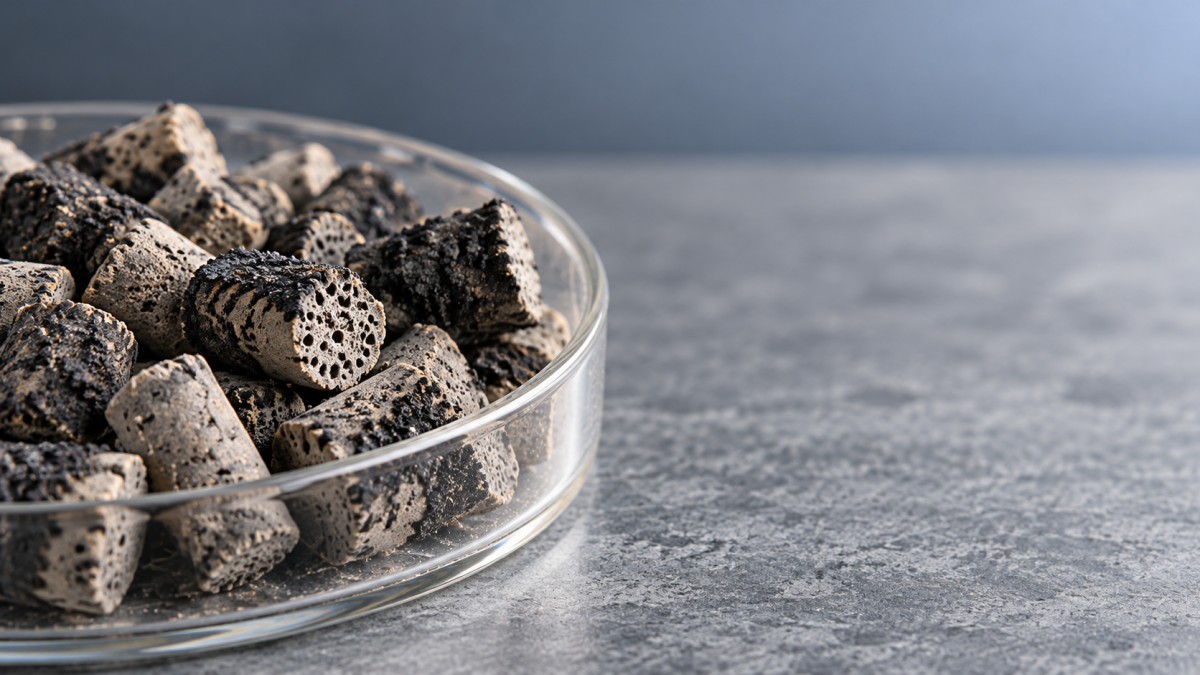
Regeneration can remove coke and still damage the catalyst
Controlled oxidation is a regeneration route for suitable catalysts, but burning carbon releases heat. Poorly controlled oxygen introduction or uneven deposits can create hot spots, promote sintering, and damage the support. A successful regeneration must remove the deposit while preserving the structure needed for catalytic performance.
Use a procedure validated for the catalyst and reactor system. Relevant controls include catalyst temperature, oxygen concentration, gas flow, moisture, and off-gas composition. Some catalysts require a subsequent reduction, sulfiding, or other activation step before returning to service. Removing carbon does not automatically restore the required active phase.
After regeneration, compare activity and selectivity at equivalent conditions. If carbon removal restores pore accessibility but performance remains poor, investigate coexisting poisoning or structural damage. Repeatedly regenerating a catalyst with declining recovery may consume operating time without delivering a useful extension of service life.
Prevention requires correcting the deposition driver. Depending on the process, that may involve feed pretreatment, better distribution, revised operating severity, or control of reactant ratios. A regeneration schedule manages accumulated deposits; it does not correct the conditions that keep producing them.
Sintering: structural damage limits recovery
Sintering reduces accessible catalytic surface through structural rearrangement. Supported metal particles can grow through particle migration and coalescence or through transport of material between particles. Supports can also lose surface area or undergo phase changes that reduce dispersion and pore accessibility.
High temperature is a major driver, but the surrounding atmosphere matters. Steam, reactive gases, support chemistry, and the stability of the active phase influence how readily structural changes occur. A catalyst’s temperature tolerance must therefore be assessed under relevant process and regeneration conditions.
Average reactor temperature can hide the exposure responsible for damage. Local hot spots, startup excursions, or an uncontrolled regeneration burn may affect only part of a bed. Review the highest credible local temperature and the duration of exposure, alongside the normal operating record.
Evidence for sintering can include larger metal particles observed by microscopy, lower metal dispersion measured by chemisorption, and changes in surface area or crystalline phases. Each technique has limits. Diffraction may miss very small particles, microscopy examines a limited sample, and chemisorption depends on surface condition and pretreatment.
The strongest diagnosis combines structural evidence with operating history and performance after deposits or adsorbed species have been addressed. If accessible metal area remains low after an appropriate cleaning and activation treatment, irreversible particle growth becomes a more credible explanation.
Routine regeneration generally cannot return a sintered catalyst to its original dispersion. Specialized redispersion treatments exist for some formulations, but their applicability requires catalyst-specific validation. Replacement, reprocessing, or a revised catalyst formulation may be more practical. Future prevention centers on temperature control, distribution, regeneration discipline, and stability under the actual process atmosphere.
Turn the diagnosis into a regeneration or replacement decision
These mechanisms often overlap. Poisoning may lead operators to increase temperature, accelerating coking or sintering. Coke combustion may restore access to sites while causing permanent particle growth. A catalyst can therefore contain removable deposits and still have insufficient remaining activity to justify another campaign.
A focused evaluation should answer three questions:
- What changed first? Link the decline to feed exposure, operating severity, thermal events, or a previous regeneration.
- What physical or chemical evidence explains the loss? Select analyses that distinguish contamination, deposits, and structural change.
- What useful performance returns after an appropriate treatment? Measure activity, selectivity, and stability under representative conditions.
Preserve samples from different bed positions and document their handling. Air exposure, washing, drying, or uncontrolled heating can change deposits and catalyst oxidation states before analysis. Some spent catalysts can be pyrophoric or contain hazardous retained material, so sampling and transport must follow the applicable handling procedure.
A recovery trial is especially valuable when the replacement decision is expensive. Evaluate the treated material against a suitable reference, with clear pretreatment and comparable reaction conditions. Initial activity alone is insufficient: rapid renewed decline can reveal residual contamination, an unstable regenerated state, or an unresolved feed problem.
The economic comparison should include regeneration downtime, expected remaining campaign length, selectivity losses, pressure-drop constraints, and the consequence of an early shutdown. A partially recovered catalyst may be acceptable for one operating objective and unsuitable for another. The acceptance criteria should be agreed before the trial results arrive.
For chemical catalysts, the most useful outcome is a diagnosis that changes an operating decision. Confirmed poisoning should lead to a defined impurity-control action. Confirmed coking should lead to a validated removal procedure and correction of the deposition conditions. Confirmed sintering should redirect attention toward replacement and thermal protection. Returning the reactor to service without closing that connection leaves the next activity decline largely unexplained.
Related Picks
 Butylated Hydroxytoluene Price Drivers: Supply, Purity, and Purchasing Risk FactorsOct 21, 2026Butylated Hydroxytoluene price trends depend on supply stability, purity, logistics, and purchasing risk. Learn how to compare quotes wisely and reduce sourcing costs.
 Sodium Tripolyphosphate Price Trends: Raw Material and Energy ExposureOct 20, 2026Explore sodium tripolyphosphate price trends, from phosphate and soda ash costs to energy exposure. Learn how to compare quotes, manage sourcing risks, and make smarter purchasing decisions.
 Acetonitrile Shipment to Vietnam Successfully Dispatched; RCEP Benefits Boost Fine Chemical Trade with ASEANSep 16, 2026A shipment of industrial-grade acetonitrile from our company has recently been loaded and dispatched following the completion of standardized hazardous material packaging and container securing procedures.
 Nigerian Client’s Order of 4 Containers of Vinyl Acetate Successfully Loaded and Shipped to West AfricaSep 16, 2026We recently completed the loading of a vinyl acetate order for a Nigerian client; four containers of the product have been successfully packed and are ready for shipment to Nigeria.




Question Consultation
Send Us Your Inquiry Today

Luxi Chemical is a professional chemical product supplier with ample stock of all chemical categories and excellent quality, welcome your purchase inquiry.

