


How hydroxyl value guides polyester polyol selection
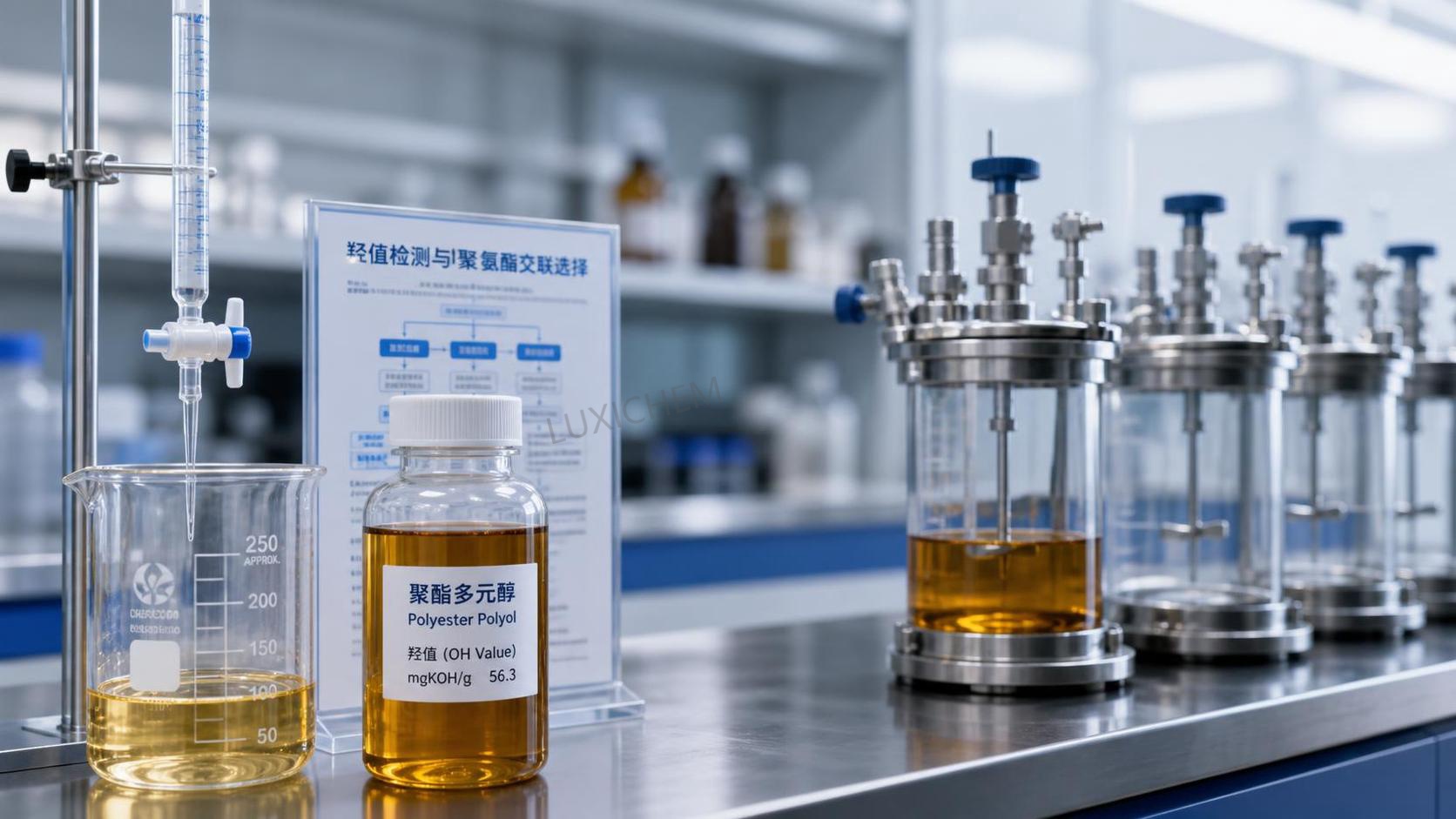
For technical evaluators, hydroxyl value is a critical parameter when selecting a Polyester Polyol for polyurethane formulations.
It directly affects crosslink density, reactivity, molecular weight, and the balance of hardness, flexibility, adhesion, and chemical resistance.
Understanding this relationship helps teams compare grades efficiently, reduce formulation risk, and choose materials that support stable processing and consistent end-use performance.
What Technical Evaluators Need to Determine First
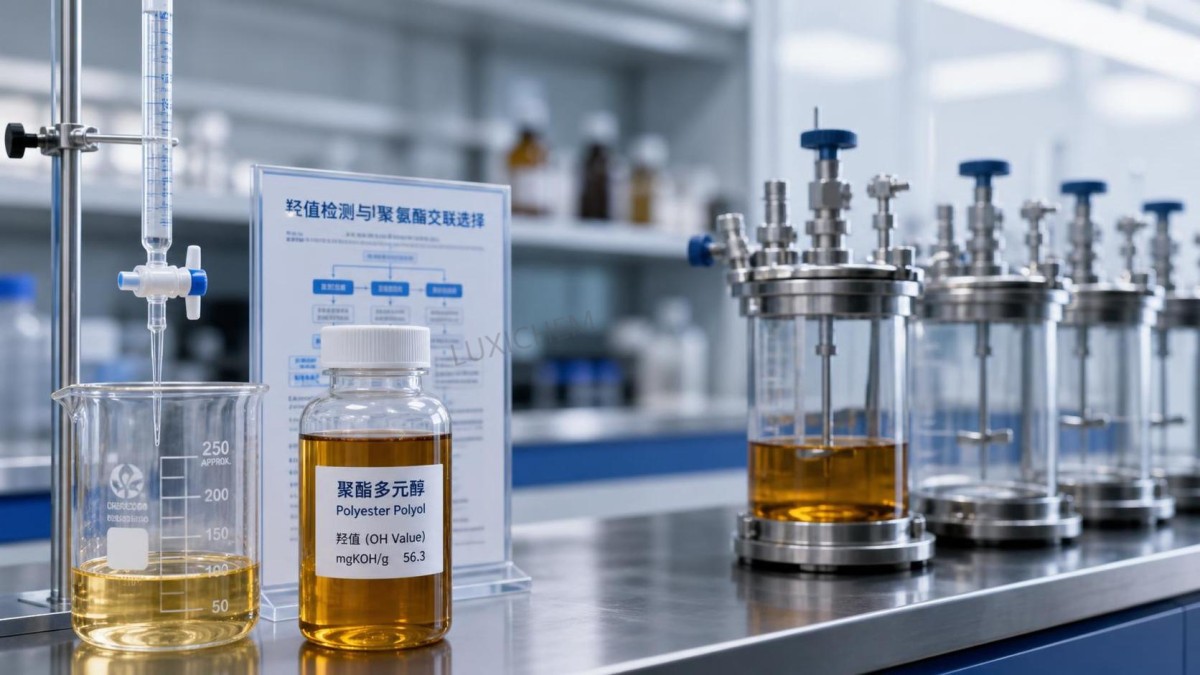
The central question is not whether a higher or lower hydroxyl value is inherently better. The correct value depends on formulation chemistry, processing conditions, and performance targets.
Hydroxyl value, commonly abbreviated as OH value, expresses the amount of potassium hydroxide equivalent to hydroxyl groups in one gram of polyol.
It is typically reported in milligrams of KOH per gram. A higher number generally indicates more hydroxyl functionality per unit mass.
For a Polyester Polyol, this measurement provides a practical indication of how much reactive hydroxyl content is available for reaction with isocyanates.
Technical teams use OH value to estimate equivalent weight, establish isocyanate demand, and predict the network structure formed during polyurethane curing.
A polyol cannot be evaluated from OH value alone. Viscosity, acid value, moisture, functionality, molecular structure, and compatibility also affect final behavior.
However, OH value remains one of the fastest ways to identify whether a candidate grade belongs in a rigid, semi-rigid, elastomeric, coating, adhesive, or foam system.
For evaluators, the most useful starting point is the target polyurethane architecture rather than a supplier specification sheet viewed in isolation.
How Hydroxyl Value Relates to Equivalent Weight
Equivalent weight is the mass of polyol containing one equivalent of reactive hydroxyl groups. It is calculated from the hydroxyl value.
The standard relationship is approximately 56,100 divided by the hydroxyl value. This gives the polyol hydroxyl equivalent weight in grams per equivalent.
For example, a polyester polyol with an OH value of 280 mg KOH/g has an equivalent weight near 200 g/equivalent.
A grade with an OH value of 56 mg KOH/g has an equivalent weight close to 1,002 g/equivalent, assuming the reported value is accurate.
Higher OH value therefore means lower equivalent weight. Less material is needed to provide the same number of hydroxyl equivalents in the formulation.
This calculation directly supports isocyanate index design. It allows formulators to determine the amount of MDI, TDI, HDI, or other isocyanate required.
Errors in equivalent-weight calculations can produce off-ratio systems, incomplete cure, brittle films, poor adhesion, surface tack, or unstable foam properties.
Technical evaluation should confirm whether a supplier reports OH value as a typical result, a guaranteed range, or a batch-specific certificate value.
For controlled production, a narrow OH-value range often matters more than an attractive nominal value because it reduces adjustment requirements between lots.
Why Higher Hydroxyl Value Often Produces Harder Polyurethane
When other variables remain comparable, a higher hydroxyl value introduces more reactive sites into a given mass of polyester polyol.
With the appropriate isocyanate ratio, this can increase crosslink density or create a more tightly connected polymer network after curing.
Higher crosslink density commonly increases hardness, compressive strength, heat resistance, solvent resistance, and dimensional stability in polyurethane products.
These characteristics are particularly valuable in rigid foam, industrial coatings, structural adhesives, cast resin systems, and selected synthetic leather applications.
Yet higher OH value can also reduce elongation, impact tolerance, low-temperature flexibility, and stress-relaxation capacity. The final material may become overly brittle.
In fast-reacting systems, higher OH content can contribute to shorter cream times, reduced pot life, faster viscosity build, and tighter processing windows.
Those changes are not automatically negative. They must be matched with catalyst selection, temperature control, mixing capability, and the desired cure schedule.
Evaluators should compare hardness and strength data alongside flexibility, tensile elongation, peel strength, and thermal cycling results before choosing a high-OH grade.
A high hydroxyl value is usually justified when network integrity is a primary requirement and when the process can consistently manage higher reactivity.
When a Lower Hydroxyl Value Is the Better Choice
Lower-OH polyester polyols generally have higher molecular weight and fewer reactive hydroxyl groups per unit mass than high-OH alternatives.
They tend to produce polyurethane networks with longer flexible segments, especially when paired with suitable diisocyanates and chain extenders.
This can improve flexibility, elongation, resilience, impact resistance, and low-temperature performance in adhesives, sealants, coatings, and elastomeric materials.
Lower hydroxyl value may also provide longer working time, which is useful for large coating areas, manual assembly, thick castings, and complex substrates.
In polyurethane adhesive systems, a lower-OH Polyester Polyol can help preserve peel strength and movement tolerance where bonded materials expand differently.
For flexible coatings, the selection may reduce cracking caused by repeated bending, thermal expansion, vibration, or substrate deformation during service.
The tradeoff is usually lower inherent hardness and potentially lower resistance to aggressive chemicals, depending on the polyester backbone and curing conditions.
Technical teams should avoid assuming that lower OH value automatically means weak performance. Properly formulated systems can still achieve demanding mechanical specifications.
The relevant decision is whether the application requires durable flexibility or a tightly crosslinked structure that prioritizes hardness and shape retention.
Separate Hydroxyl Value from Functionality and Backbone Chemistry
Hydroxyl value indicates reactive hydroxyl concentration, but it does not independently define the average hydroxyl functionality of a polyester polyol.
Functionality describes the average number of hydroxyl groups per molecular chain. It strongly influences branching, gel behavior, and final crosslink structure.
Two polyols can have similar OH values while differing in functionality, molecular-weight distribution, aromatic content, and molecular architecture.
Those differences can lead to noticeably different viscosity, cure profiles, compatibility, hydrolysis resistance, adhesion, and mechanical performance in the same polyurethane formulation.
Backbone composition is equally important. Adipate-based polyester polyols often favor flexibility, while aromatic polyester polyols can support rigidity and thermal performance.
Phthalic-anhydride-based materials, recycled-content grades, and specialty acid combinations may offer different balances of processing behavior and end-use durability.
For this reason, technical evaluators should request formulation-relevant information rather than selecting solely from an OH-value range on a product list.
Useful information includes raw-material chemistry, average functionality, viscosity at a stated temperature, acid value, water content, and recommended application sectors.
Where possible, compare candidate materials under identical isocyanate index, catalyst package, filler level, and curing conditions to isolate their actual effect.
How to Build a Practical Screening Matrix
A structured screening matrix converts a broad supplier comparison into an engineering decision. Start with the application’s required mechanical and processing outcomes.
List target hardness, tensile strength, elongation, density, glass-transition behavior, adhesion, heat resistance, chemical resistance, and acceptable curing time.
Next, define the available isocyanate chemistry, target index, catalyst limits, equipment temperature, maximum viscosity, and any applicable regulatory requirements.
Then compare each Polyester Polyol candidate by OH value, equivalent weight, functionality, viscosity, acid value, moisture content, and lot-to-lot consistency.
Calculate the theoretical isocyanate requirement for each grade before laboratory mixing. This prevents misleading comparisons caused by unequal stoichiometry.
Run small-scale trials using constant index values, then record gel time, tack-free time, exotherm, density, visual appearance, and mechanical performance.
For coatings and adhesives, include wetting, sag, leveling, open time, film build, substrate adhesion, and post-aging peel or lap-shear testing.
For foam applications, monitor cream time, rise profile, cell structure, compressive strength, dimensional stability, and thermal conductivity where relevant.
Assign weighted scores based on the actual application. A grade with slightly higher cost may offer lower adjustment time and reduced rejection risk.
Control Acid Value and Moisture Alongside OH Value
Hydroxyl value is most informative when interpreted together with acid value and moisture. Both can significantly affect polyurethane reaction control and product quality.
Residual acidity can influence catalyst efficiency, storage stability, corrosion risk, color development, and side reactions in sensitive polyurethane systems.
High acid value may also affect compatibility with certain additives or pigments. It can complicate reproducibility when process conditions are tightly controlled.
Moisture reacts with isocyanates to generate carbon dioxide, which may be desirable in selected foam systems but problematic in coatings and adhesives.
Uncontrolled moisture can create bubbles, pinholes, increased viscosity, reduced pot life, uneven density, and poor surface appearance in cured products.
Ask suppliers for tested moisture specifications, packaging details, storage recommendations, and certificate-of-analysis procedures rather than relying on generic product descriptions.
Incoming quality checks should include OH value verification when practical, especially for high-volume formulations, performance-critical grades, or multi-supplier sourcing programs.
Changes in OH value, acid value, or moisture should trigger a formulation review because they can alter isocyanate demand and processing behavior.
A disciplined incoming-control plan protects production from gradual raw-material variation that may otherwise appear as unexplained downstream quality instability.
Evaluate Solvents and Formulation Additives Carefully
Many coating and adhesive systems use solvents to adjust viscosity, application behavior, drying rate, and resin compatibility during polyurethane processing.
Solvent selection should support the specific polyol, isocyanate, resin, pigment, and equipment conditions without introducing unacceptable safety or regulatory exposure.
For example, Xylene CAS#1330-20-7 is widely used as an industrial solvent in coatings, inks, resin production, and adhesive-related processing.
Its resin-dissolving capability and moderate evaporation profile can be useful in appropriate systems, but it is not a substitute for controlling polyol reactivity.
Technical teams must account for its flammability, ventilation requirements, occupational exposure controls, and compatibility with the complete formulation and application process.
When evaluating a solvent-borne polyurethane, test the polyol at intended solids content rather than comparing neat-polyol viscosity alone.
The same OH-value grade may behave differently after dilution because solvent choice affects flow, flash-off, phase behavior, film formation, and coating appearance.
Any adjustment to solvent blend should be revalidated for pot life, cure, adhesion, trapped-solvent defects, and final chemical resistance.
Common Selection Errors That Create Avoidable Risk
A frequent mistake is selecting a polyol solely because its nominal OH value matches an existing material. Similar numbers do not guarantee equivalent performance.
Another error is using the same polyol-to-isocyanate weight ratio after changing polyol grade. Equivalent-weight differences require recalculation.
Technical teams also sometimes chase higher OH value to increase hardness without assessing brittleness, adhesion loss, shrinkage, or thermal-cycle durability.
Ignoring viscosity can create production problems even when OH value is correct. Pumpability, metering accuracy, mixing quality, and temperature requirements may change.
Failure to examine acid value and moisture creates additional risk, particularly in moisture-sensitive coatings, cast elastomers, and two-component adhesive systems.
Some evaluations rely on short-term laboratory hardness only. That approach can miss hydrolysis resistance, creep, impact failure, chemical attack, and aging-related adhesion loss.
Supplier qualification should include batch consistency, documentation quality, packaging integrity, lead time, technical support, and clear handling information alongside laboratory results.
A lower-cost grade that demands frequent reformulation, prolonged mixing, or high rejection rates can become more expensive than a stable, well-controlled alternative.
Match OH Value to the Application Instead of a Generic Category
Rigid polyurethane foam generally favors polyester polyols that support high reactivity, dimensional stability, compressive strength, and thermal performance within the intended formulation.
Coatings require a more balanced choice. OH value must align with desired film hardness, cure speed, flexibility, leveling, solvent resistance, and substrate adhesion.
Adhesives often need controlled flexibility and durable bonding. Excessive crosslink density can reduce peel performance when bonded substrates move during service.
For elastomers, the target may be abrasion resistance and strength combined with elongation. The correct OH range depends on chain extender and isocyanate selection.
Synthetic leather applications may require a softer hand, controlled porosity, abrasion resistance, color stability, and reliable adhesion to textile or backing layers.
Industrial resin systems may prioritize high heat resistance or chemical durability, where higher-reactivity polyester polyols can become appropriate after full validation.
There is no universal OH-value recommendation because the same number can perform differently across polyester structures, cure chemistries, and processing environments.
Use application-specific trial data to confirm the selection. Datasheet ranges should guide initial screening, not replace formulation and performance verification.
Conclusion: Use Hydroxyl Value as a Decision Tool, Not a Standalone Specification
Hydroxyl value is one of the most useful parameters for selecting a Polyester Polyol because it links directly to equivalent weight and polyurethane stoichiometry.
Higher OH values often support harder, more crosslinked materials, while lower values can favor flexibility, elongation, and broader processing latitude.
Nevertheless, the correct technical decision requires evaluating OH value together with functionality, backbone chemistry, viscosity, acid value, moisture, and batch consistency.
For technical evaluators, the most reliable approach is to calculate isocyanate demand, conduct controlled trials, and measure application-specific performance after aging.
This process turns hydroxyl value from a datasheet number into a practical selection tool that reduces formulation uncertainty and supports consistent polyurethane production.
Related Picks
 Butylated Hydroxytoluene Price Drivers: Supply, Purity, and Purchasing Risk FactorsOct 21, 2026Butylated Hydroxytoluene price trends depend on supply stability, purity, logistics, and purchasing risk. Learn how to compare quotes wisely and reduce sourcing costs.
 Sodium Tripolyphosphate Price Trends: Raw Material and Energy ExposureOct 20, 2026Explore sodium tripolyphosphate price trends, from phosphate and soda ash costs to energy exposure. Learn how to compare quotes, manage sourcing risks, and make smarter purchasing decisions.
 Acetonitrile Shipment to Vietnam Successfully Dispatched; RCEP Benefits Boost Fine Chemical Trade with ASEANSep 16, 2026A shipment of industrial-grade acetonitrile from our company has recently been loaded and dispatched following the completion of standardized hazardous material packaging and container securing procedures.
 Nigerian Client’s Order of 4 Containers of Vinyl Acetate Successfully Loaded and Shipped to West AfricaSep 16, 2026We recently completed the loading of a vinyl acetate order for a Nigerian client; four containers of the product have been successfully packed and are ready for shipment to Nigeria.




Question Consultation
Send Us Your Inquiry Today

Luxi Chemical is a professional chemical product supplier with ample stock of all chemical categories and excellent quality, welcome your purchase inquiry.

