


Can polyglutamic acid improve moisture retention in formulations?
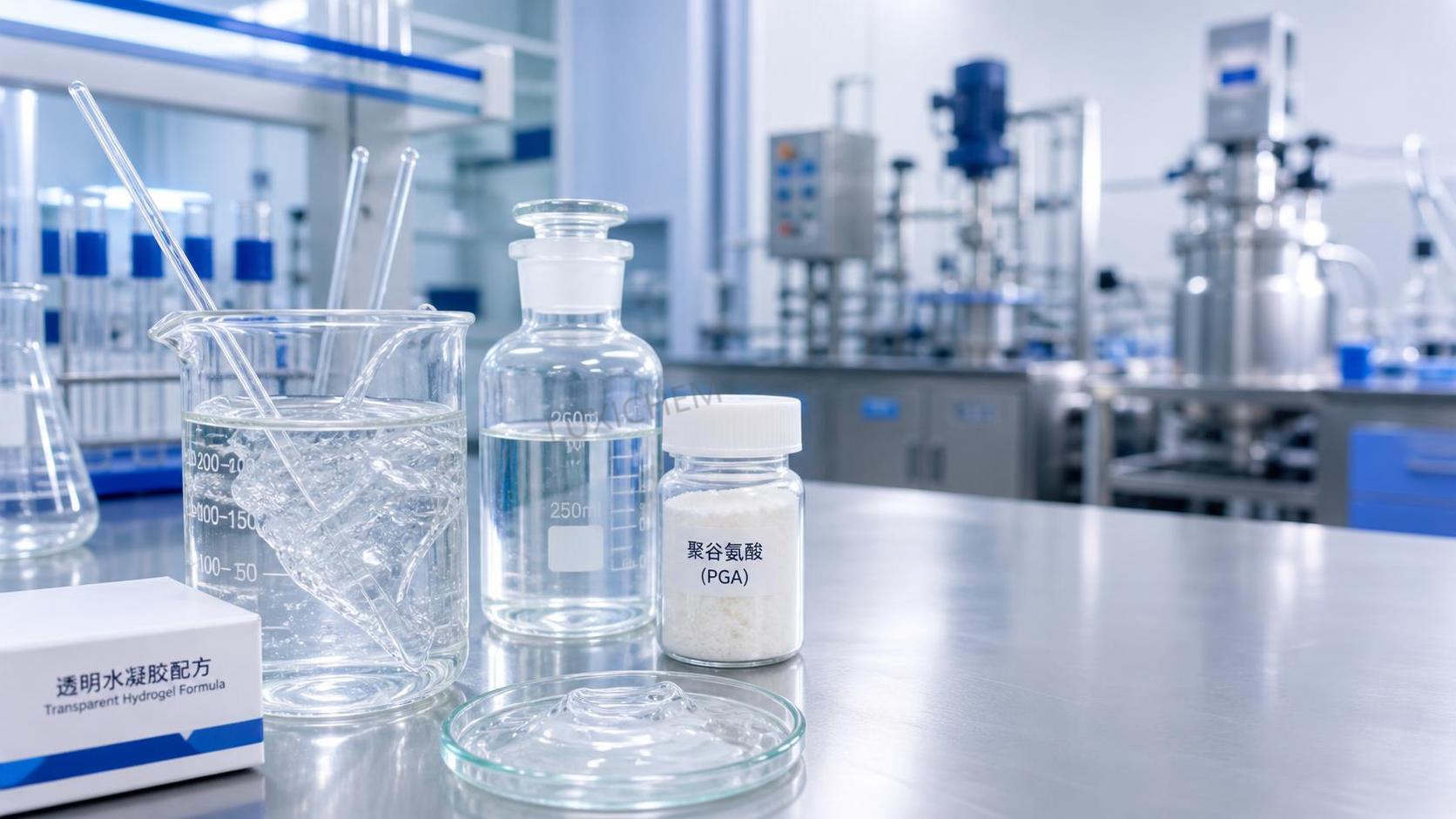
Polyglutamic Acid is increasingly evaluated as a high-performance humectant for cosmetic, personal care, and other water-based formulations. Its strong water-binding capacity can help improve moisture retention, enhance skin feel, and support formulation stability when properly selected and applied. For technical evaluators, understanding its molecular characteristics, compatibility, dosage considerations, and quality consistency is essential to determining whether Polyglutamic Acid can deliver measurable benefits in a specific formulation system.
The short answer is yes: Polyglutamic Acid can improve moisture retention in formulations, particularly where a hydrated surface feel, reduced moisture loss, or improved aqueous-phase conditioning is desired. However, the practical outcome depends less on the ingredient name alone than on molecular weight, active content, formulation pH, processing sequence, preservative compatibility, and the sensory target of the finished product.
For development teams, the question is usually not whether this polymer holds water in principle. The real question is whether it performs reliably in a particular serum, lotion, toner, mask, hair-care product, or water-based industrial system without introducing viscosity drift, tackiness, haze, microbial risk, or supply inconsistency.
Why Polyglutamic Acid Retains Water So Effectively
Polyglutamic Acid, often abbreviated as PGA, is a water-soluble polypeptide built from glutamic acid units. Its molecular structure contains numerous carboxyl and amide-related functional groups that interact strongly with water. Rather than acting as a simple solvent-phase moisturizer, it can create a hydrated polymer network that helps bind water within the formula and at the application surface.
In personal care, this behavior is especially relevant because water retention is not only about initial hydration. A formulation must also maintain an acceptable moisture profile over time while delivering a texture consumers are willing to use repeatedly. A product may feel rich immediately after application but become tight or dry shortly afterward. Conversely, it may retain water well but leave an overly sticky film. Polyglutamic Acid is often considered when formulators need to balance these two realities.
Its film-forming behavior can contribute to a more continuous moisture layer on skin or hair. In an aqueous serum or gel, it may also support a cushiony, lubricious feel. The exact sensory effect varies considerably between low- and high-molecular-weight grades, as well as between free-acid and salt forms.
Moisture Retention Is a Formulation Result, Not an Ingredient Claim
Technical assessment should begin with the intended mechanism in the finished system. Polyglutamic Acid may support moisture retention through several overlapping routes:
- Binding and holding water in the continuous aqueous phase.
- Creating a hydrated film after application.
- Improving the perceived slip and comfort of low-oil or oil-free systems.
- Working alongside other humectants to moderate dry-down and reduce a tight skin feel.
- Helping a formula maintain a more hydrated appearance in products such as leave-on masks, essences, and scalp treatments.
These effects should not be interpreted as a universal replacement for every conventional humectant. Glycerin remains a practical, cost-effective benchmark. Sodium hyaluronate offers a well-recognized hydration story and distinctive rheological properties. Betaine, propanediol, sorbitol, and saccharide-based materials may each have roles depending on budget, label expectations, solvent system, and sensory brief.
Polyglutamic Acid is most useful when its behavior complements the rest of the humectant package. A well-designed combination can provide immediate moisturization, sustained water retention, and a more refined after-feel than a single-humectant approach. A poorly balanced combination can produce surface tack, rolling during application, or an uncomfortably tight film after dry-down.
Where It Usually Fits Best
Polyglutamic Acid is commonly assessed for water-rich, leave-on products where contact time and sensory performance matter. Facial serums, toners, gel creams, sheet-mask essences, eye-area products, scalp serums, and light emulsions are typical candidates. It may also be relevant in hair-care formulas where conditioning, moisture management, and film-forming performance are desired without relying solely on heavier oils or silicones.
It can be particularly attractive in formulations positioned around lightweight hydration. The formula may have limited oil content, a transparent or translucent visual target, and a need to avoid the “wet but sticky” sensation associated with high loading of certain low-cost humectants. In such systems, PGA can contribute more than moisture content: it may influence how hydration is perceived during rub-out and after absorption.
Rinse-off products are not automatically excluded, but the return on use may be lower because the material has limited contact time. The decision should be based on whether the polymer contributes measurable deposition, conditioning, foam modification, or consumer-perceivable feel in the final application.
Molecular Weight Changes the Evaluation
“Polyglutamic Acid” does not describe a single, identical performance profile. Molecular weight is a central variable. Higher-molecular-weight material may offer more pronounced film formation and viscosity contribution, but it can also increase tackiness, processing sensitivity, or clarity concerns in some systems. Lower-molecular-weight material may disperse more readily and feel lighter, although its surface-film contribution may be less pronounced.
For this reason, technical teams should request more than a generic product name and assay value. Relevant supplier documentation may include molecular-weight range or distribution, active solids, pH of the supplied solution, sodium content where applicable, microbial limits, appearance, viscosity specification, recommended storage, and batch-to-batch control practices.
In a transparent essence, small differences in polymer grade can become visible as haze, strings, or a change in flow behavior. In a creamy emulsion, the same differences may show up primarily as drag, pilling, or a change in dry-down. The application format defines what “good performance” looks like.
Practical Use Levels: Start Small and Build With Evidence
There is no single dosage that suits every Polyglutamic Acid formulation. Development often begins at a modest level and moves upward only when the benefits remain perceptible after stability testing. Excessive addition can make a formula feel overly adhesive, increase cost without a proportional performance gain, or complicate compatibility with other rheology modifiers.
A useful screening approach is to prepare a control formula and several prototypes containing increasing levels of PGA. Compare them under identical conditions for initial feel, spreadability, dry-down, tack after five to ten minutes, film integrity, clarity, viscosity, and moisture-related performance. The technical team should also evaluate the formula after accelerated stability exposure rather than relying only on fresh-batch sensory impressions.
When Polyglutamic Acid is used alongside glycerin or glycols, the target is often synergy rather than maximum total humectant concentration. A formula that performs well in laboratory instrumental testing but leaves an unpleasant residue is unlikely to succeed commercially. The best result is usually a hydration profile that feels quiet: comfortable, smooth, and not obviously “coated.”
Processing and Compatibility Questions to Ask Early
Most formulation problems are easier to prevent than to correct. Polyglutamic Acid should generally be introduced with attention to dispersion, hydration time, mixing shear, and temperature. Depending on the supplied form, it may be preferable to add it during cool-down or into a pre-diluted water phase rather than expose it to unnecessarily harsh thermal conditions or aggressive shear for extended periods.
pH deserves careful attention. Because PGA contains ionizable groups, its solubility, viscosity contribution, and interaction with surrounding ingredients can shift across the pH range. The final pH should be confirmed after all materials are incorporated, not only after the first adjustment. Acidic actives, alkaline neutralizers, electrolytes, botanical extracts, and certain cationic materials can all alter the system.
Electrolyte tolerance is another practical issue. Salt-containing systems, mineral-rich waters, and formulations with ionic actives may reduce clarity or change polymer behavior. Compatibility work should include the actual commercial raw materials, since an ingredient’s carrier, salt form, or residual ions may matter as much as its headline INCI name.
Preservation should never be assumed. Polyglutamic Acid is a biodegradable, water-associated material used in moisture-rich systems, so preservative efficacy testing remains essential. A formula that appears physically stable may still require adjustment to the preservative system, pH, packaging, or manufacturing hygiene controls.
How to Test Whether the Improvement Is Real
For technical evaluators, “improved hydration” should be translated into a test plan. Depending on project scope, this may include corneometry or other skin hydration measurements, transepidermal water loss assessment, controlled sensory panels, moisture evaporation studies, and comparative substrate testing. The selected method should reflect the intended claim and product category.
Do not rely on a single endpoint. A prototype can show increased water content soon after application while failing to maintain comfort over several hours. Another may demonstrate acceptable instrumental data but create pilling under sunscreen or makeup. A sound evaluation combines instrumental performance, sensory observation, stability data, packaging compatibility, and use-condition testing.
For hair or scalp applications, relevant indicators may include wet combing, dry feel, residue, build-up after repeated use, and compatibility with styling polymers or surfactants. In non-cosmetic water-based formulations, assess the material according to the actual function required: water management, film formation, rheology, substrate interaction, or stability support.
Common Mistakes in Polyglutamic Acid Selection
One common mistake is treating all PGA grades as interchangeable. A supplier’s specification may meet a broad identity requirement while still differing in solids content, molecular profile, odor, color, microbial quality, or solution behavior. Another mistake is using a technically effective concentration without considering the total humectant burden. Tackiness often comes from the whole system, not one material alone.
It is also risky to assess only the raw-material sample. The material may look clear and elegant in deionized water but behave differently in a finished formula containing fragrance, extracts, emulsifiers, salts, UV filters, or active ingredients. Full-formula screening is indispensable.
Finally, technical teams should separate cosmetic performance assessment from regulatory and application-specific compliance. Ingredient status, labeling requirements, purity expectations, and permitted use conditions vary by market and end use. A material appropriate for one personal-care concept may not automatically meet the requirements of another category.
Sourcing Considerations Beyond the Lab Bench
A promising prototype needs a dependable supply path. Evaluators should ask whether the supplier can provide consistent specifications, traceable documentation, practical packaging options, responsive technical communication, and export support for the intended destination markets. This is especially important when a polymer is being used at a low level but has a noticeable effect on texture or product positioning; a small supply variation can create a large sensory difference.
Luxi Chemical (Shandong) Co., Ltd. supports global customers with chemical raw materials, chemical products, and import/export coordination across a broad portfolio serving food, agriculture, daily chemical, and related industries. For procurement teams managing several formulation projects, a supplier relationship may also involve sourcing adjacent materials and documentation support rather than purchasing a single ingredient in isolation. Its product range includes specialized chemical materials such as β-Estradiol CAS#50-28-2; this pharmaceutical-oriented product is distinct from Polyglutamic Acid and should be evaluated only for its applicable regulated use.
A Balanced Decision for Formulators
Polyglutamic Acid can improve moisture retention in formulations when the grade, dosage, and surrounding system are properly matched. It is not a shortcut to a hydration claim, nor does it eliminate the need for controlled testing. Its strongest value often appears in thoughtfully built humectant systems where formulators want more than water content: they want a comfortable film, an elegant application profile, and stable performance throughout product shelf life.
For a technical evaluator, the sensible next step is a comparative prototype study using the actual target base formula. Screen at realistic concentrations, test against the current humectant package, monitor physical and microbial stability, and include sensory evaluation under real use conditions. That process will show whether Polyglutamic Acid is merely compatible with the formula—or genuinely improves it.
Related Picks
 Butylated Hydroxytoluene Price Drivers: Supply, Purity, and Purchasing Risk FactorsOct 21, 2026Butylated Hydroxytoluene price trends depend on supply stability, purity, logistics, and purchasing risk. Learn how to compare quotes wisely and reduce sourcing costs.
 Sodium Tripolyphosphate Price Trends: Raw Material and Energy ExposureOct 20, 2026Explore sodium tripolyphosphate price trends, from phosphate and soda ash costs to energy exposure. Learn how to compare quotes, manage sourcing risks, and make smarter purchasing decisions.
 Acetonitrile Shipment to Vietnam Successfully Dispatched; RCEP Benefits Boost Fine Chemical Trade with ASEANSep 16, 2026A shipment of industrial-grade acetonitrile from our company has recently been loaded and dispatched following the completion of standardized hazardous material packaging and container securing procedures.
 Nigerian Client’s Order of 4 Containers of Vinyl Acetate Successfully Loaded and Shipped to West AfricaSep 16, 2026We recently completed the loading of a vinyl acetate order for a Nigerian client; four containers of the product have been successfully packed and are ready for shipment to Nigeria.




Question Consultation
Send Us Your Inquiry Today

Luxi Chemical is a professional chemical product supplier with ample stock of all chemical categories and excellent quality, welcome your purchase inquiry.

