


What causes dextrin viscosity to vary between batches?
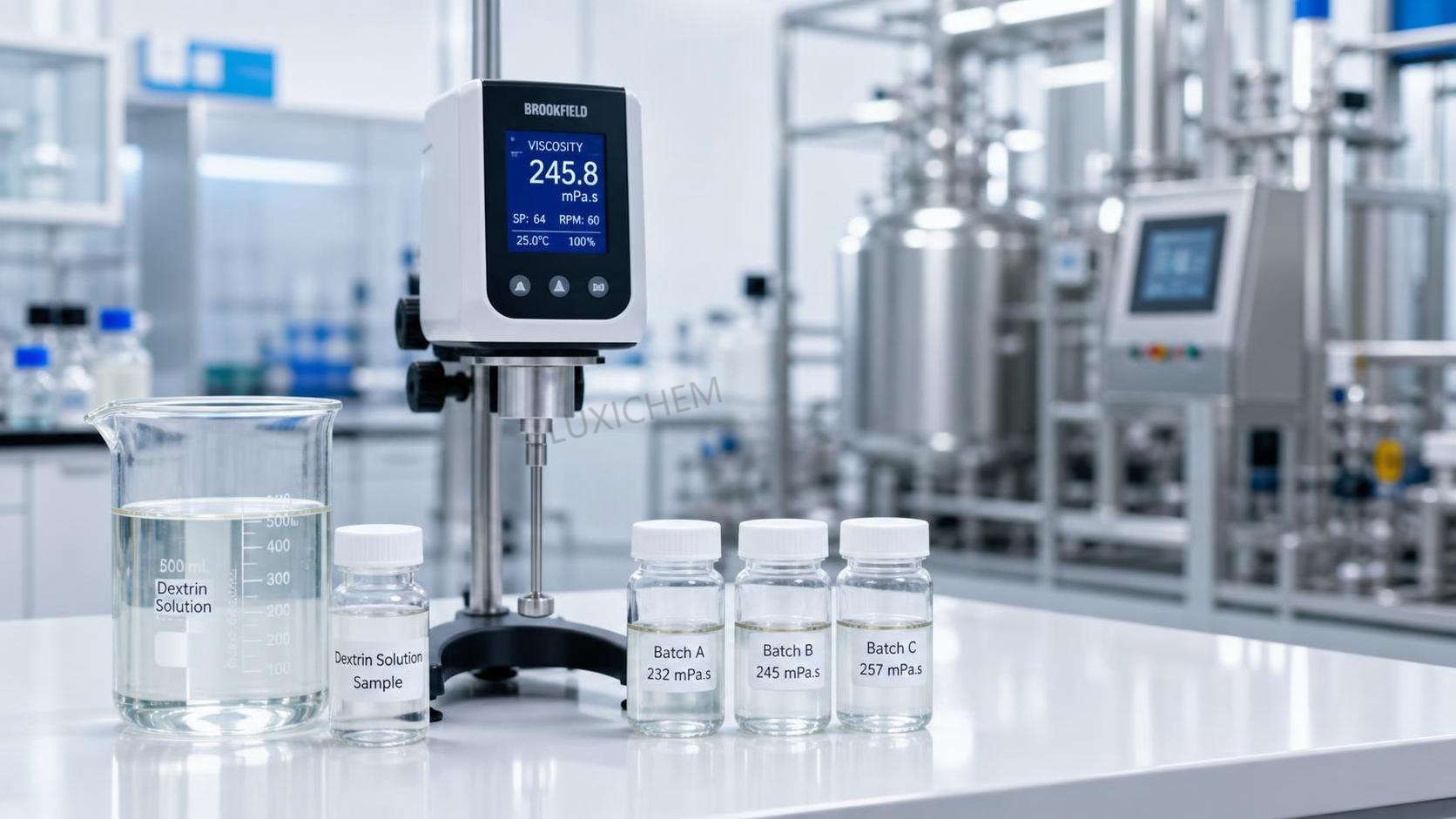
What Causes Dextrin Viscosity to Vary Between Batches?
Batch-to-batch variation in Dextrin viscosity can affect processing consistency, product performance, and quality control decisions. For quality and safety managers, understanding the factors behind these changes—from raw material properties and hydrolysis conditions to moisture content and storage—is essential for reducing production risks. This article examines the main causes of Dextrin viscosity variation and practical approaches to maintaining stable specifications.
Viscosity is often treated as a single acceptance value on a certificate of analysis. In real production, however, it is the visible result of several connected variables: molecular structure, solids concentration, sample preparation, temperature, water quality, and handling history. A result that appears out of range may indicate a manufacturing difference, but it may also come from an inconsistent test method. The first task is therefore to distinguish a true material change from a measurement change.
Why viscosity matters in Dextrin applications
Dextrin is a starch-derived carbohydrate material used in applications such as adhesives, paper processing, coatings, food systems, textile finishing, and certain industrial formulations. Its flow behavior influences pumping, mixing, spraying, drying, coating weight, film formation, and the stability of other ingredients suspended or dispersed in the system.
A higher-than-expected viscosity can slow dissolving, overload mixing equipment, create poor leveling in coatings, or cause inconsistent application. A lower result may reduce binding strength, alter body or texture, increase penetration into a substrate, or create problems with solids control. In food-related applications, a change in viscosity may also affect line settings and process validation. The acceptable range is therefore not universal; it depends on the formulation, the concentration at use, and the equipment involved.
It is also worth remembering that a powder can pass a basic appearance inspection and still behave differently when dissolved. Particle size, moisture pickup, and the distribution of chain lengths may not be obvious from visual examination alone.
The main technical reasons batches behave differently
Starch source and natural raw-material variation
Dextrin starts with starch, and starch is not a chemically identical raw material from one supply lot to another. Corn, tapioca, potato, wheat, and other botanical sources have different proportions of amylose and amylopectin, different granule structures, and different levels of naturally occurring minor components. Even within one source type, growing conditions, harvest timing, storage, and starch refining can shift the starting material.
These differences influence how the starch breaks down during conversion and how the resulting molecules associate with water. For this reason, two Dextrin batches with similar color and moisture may still show different solution viscosity. A supplier that changes the starch source, or blends raw-material lots differently, should assess whether the existing viscosity specification remains suitable for the end use.
Degree of hydrolysis and molecular-weight distribution
The most direct driver of viscosity is molecular size. During acid, enzyme, or heat-based conversion, starch chains are cleaved into shorter fractions. More extensive hydrolysis generally lowers molecular weight and reduces viscosity at the same solids level. Less conversion leaves longer chains and tends to produce a thicker solution.
Yet average molecular weight alone does not explain everything. Two materials can have a similar average value but different distributions of long and short chains. A relatively small high-molecular-weight fraction can contribute noticeably to solution body. Branching, re-association of molecules after processing, and the presence of partially converted material may also change the result. This is why a simple statement such as “same DE” or “same grade name” should not replace a defined viscosity test.
Process control during hydrolysis matters: reaction temperature, acid or enzyme dosage, pH, residence time, mixing efficiency, and the way the reaction is stopped can all move the product toward a different chain-length profile. Small deviations are especially relevant when a grade is designed for a narrow viscosity range.
Moisture content and effective solids concentration
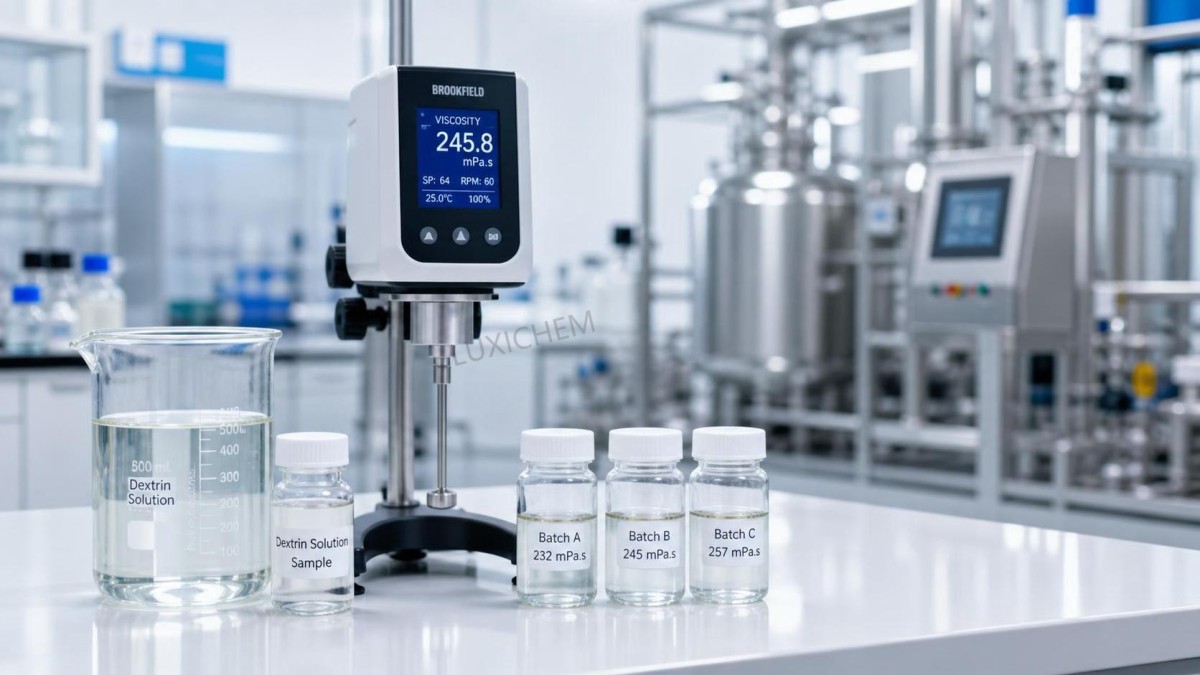
Moisture is one of the most common reasons for apparently conflicting results. Viscosity rises with solution solids, sometimes sharply depending on the grade and concentration. If one Dextrin batch contains more moisture than another, weighing the same mass of powder does not create the same dry-solids concentration. The wetter batch contributes less dry material and may appear to have lower intrinsic viscosity when tested on an as-is basis.
For meaningful comparison, laboratories should decide whether the test is performed at a fixed as-is concentration or corrected to dry basis. Both approaches can be valid, but they answer different questions. An as-is method reflects what production receives and doses. A dry-basis method is better for comparing the polymeric behavior of the material itself. Confusion arises when purchasing, production, and laboratory teams assume they are discussing the same basis when they are not.
Drying, milling, and powder condition
Drying conditions can affect more than moisture. Excessive thermal exposure may further alter carbohydrate chains or encourage discoloration. Inadequate or non-uniform drying can leave different moisture levels within the same lot. Milling and screening affect particle size, which in turn affects wetting and dissolution speed. A coarse or agglomerated sample may not fully hydrate during a short laboratory preparation, giving a misleadingly low or unstable reading.
Lumps are not automatically evidence of poor chemistry. They can result from moisture exposure or compression during transport. Still, they should trigger a check of packaging integrity, storage humidity, and whether the sample was adequately dispersed before measurement.
Test-method differences can look like product variation
Before rejecting a lot, review the laboratory procedure in detail. Viscosity is highly dependent on conditions. Results cannot be compared reliably unless the same method controls concentration, water quality, temperature, hydration time, agitation, instrument type, spindle or capillary selection, and shear conditions.
Temperature is particularly important. A solution measured immediately after heating can read differently from the same solution measured after reaching equilibrium at the specified temperature. Some Dextrin systems also show time-dependent behavior as hydration continues. If one technician mixes for ten minutes and another allows the solution to stand for an hour, their numbers may not describe the same state of the material.
Water chemistry deserves attention as well. Minerals, pH adjustment chemicals, salts, sugars, acids, preservatives, and other formulation components can change hydration and flow behavior. A viscosity result obtained in deionized water may be useful for incoming inspection, while the viscosity in plant process water may better predict production performance. Neither result is wrong; they should simply not be substituted for one another.
Storage and transport can change what reaches the line
Dextrin is hygroscopic to varying degrees, so warehouse conditions matter. High humidity, damaged liners, repeatedly opened bags, and long exposure during partial-bag use can raise moisture content and encourage caking. Heat does not usually create an immediate viscosity change in unopened dry material under normal handling, but extended unfavorable storage can increase the risk of physical deterioration or package-related contamination.
Incoming control should not end with sampling at the warehouse door. Traceability should connect the delivered batch to storage location, date opened, repack activity, and actual production use. This is especially important where multiple bags are combined into a premix or where residual material is returned to stock. A problem assigned to the supplier may instead be caused by mixing fresh and aged inventory.
The same discipline applies when Dextrin is part of a broader formulation supply chain. Packaging, coatings, release systems, and related processing materials may each have their own storage limits and compatibility requirements. For example, a wax used in packaging or paper-related processing should be evaluated separately from a water-soluble carbohydrate binder; it is not a substitute for viscosity control. Where a project requires both material categories, product documentation for Paraffin Wax CAS#8002-74-2 indicates a melting range of 58–62°C and storage below +30°C, parameters that should be managed independently from Dextrin handling conditions.
A practical control approach
The most effective response is usually not to tighten one viscosity limit without changing anything else. Start by documenting the actual use condition. Define the concentration, temperature, water source, mixing sequence, and time at which viscosity becomes operationally meaningful. Then align incoming inspection with that condition, while retaining a separate dry-basis or standardized laboratory method for comparing supplier consistency.
A useful quality agreement may specify more than a nominal viscosity range. Depending on the application, it can include moisture limits, test concentration, test temperature, sample preparation instructions, acceptable measurement method, lot traceability, packaging expectations, and notification requirements for significant process or raw-material changes. Not every customer needs every item, but vague specifications tend to create avoidable disputes.
For safety and quality review, it is sensible to trend results rather than looking only for pass or fail. A series of values that remains within specification but drifts steadily may reveal a change before it causes a line interruption. Retained samples are valuable here, provided they are protected from moisture and tested using the same method as current samples.
Choosing the right next question
When Dextrin viscosity changes between batches, the key question is not simply, “Which batch is correct?” It is, “Has the material changed, has the test changed, or has the use environment changed?” Checking moisture and solution solids is often the fastest first step. If the difference remains after dry-basis correction and tightly controlled sample preparation, the investigation should move toward conversion conditions, molecular-weight profile, and raw-material consistency.
Luxi Chemical (Shandong) Co., Ltd. works across chemical raw materials, food additives, organic intermediates, fertilizers, and international trade supply. For buyers managing materials across multiple product categories, the practical value is often in aligning product specifications, handling requirements, and shipment documentation before a material reaches production. With customers served across more than 60 countries and regions, requirements should still be confirmed against the intended application, local compliance expectations, and the customer’s own validated test method.
A stable Dextrin program depends on a controlled process from supplier conversion through warehouse handling and laboratory testing. The more clearly those links are defined, the less likely a viscosity number will become an unexpected production problem.
Related Picks
 Butylated Hydroxytoluene Price Drivers: Supply, Purity, and Purchasing Risk FactorsOct 21, 2026Butylated Hydroxytoluene price trends depend on supply stability, purity, logistics, and purchasing risk. Learn how to compare quotes wisely and reduce sourcing costs.
 Sodium Tripolyphosphate Price Trends: Raw Material and Energy ExposureOct 20, 2026Explore sodium tripolyphosphate price trends, from phosphate and soda ash costs to energy exposure. Learn how to compare quotes, manage sourcing risks, and make smarter purchasing decisions.
 Acetonitrile Shipment to Vietnam Successfully Dispatched; RCEP Benefits Boost Fine Chemical Trade with ASEANSep 16, 2026A shipment of industrial-grade acetonitrile from our company has recently been loaded and dispatched following the completion of standardized hazardous material packaging and container securing procedures.
 Nigerian Client’s Order of 4 Containers of Vinyl Acetate Successfully Loaded and Shipped to West AfricaSep 16, 2026We recently completed the loading of a vinyl acetate order for a Nigerian client; four containers of the product have been successfully packed and are ready for shipment to Nigeria.




Question Consultation
Send Us Your Inquiry Today

Luxi Chemical is a professional chemical product supplier with ample stock of all chemical categories and excellent quality, welcome your purchase inquiry.

