


Plant Glycerin in Food and Cosmetics: What Buyers Should Check First
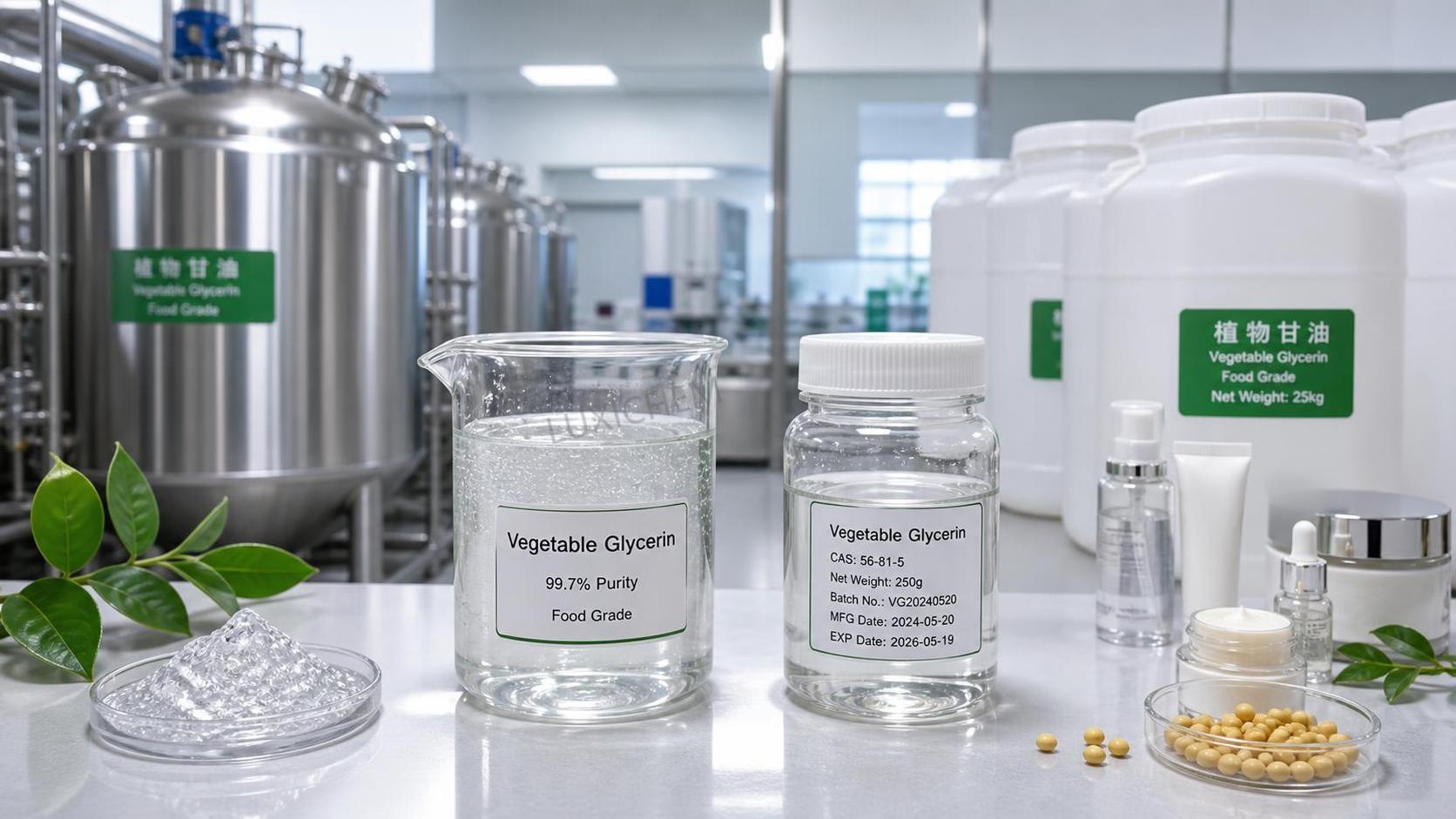
Plant Glycerin in Food and Cosmetics: What Buyers Should Check First
Plant glycerin is one of those materials that appears straightforward until it reaches a production line. It is commonly purchased as a clear, viscous liquid and used to retain moisture, add mild sweetness, improve mouthfeel, support texture, or reduce the dry feel of a cosmetic formula. Yet two offers described simply as “vegetable glycerin” can perform very differently in a beverage base, confectionery recipe, facial serum, toothpaste, or liquid soap.
For procurement teams, the practical question is not merely where to buy plant glycerin at the lowest price. It is whether the material will arrive with the right grade, reliable documentation, acceptable sensory properties, stable supply, and packaging that protects it through transport and storage. A low unit price can become expensive if a batch creates odor issues, slows quality release, fails a customer audit, or forces a reformulation.
The first check should therefore be application fit. “Plant-based” describes the origin of the feedstock, not automatically the suitability of the finished material for every regulated use. Food processors and personal-care manufacturers should define the intended use before requesting quotations, then compare offers against that specification rather than against a generic product name.
Start With the Grade, Not the Label
Plant glycerin is generally derived from vegetable oils or other renewable feedstock streams. In commercial purchasing, however, source language needs to be supported by traceability information. If a buyer requires non-animal origin, a specific vegetable source, or documentation relevant to a particular market, that requirement should be written into the purchasing specification. It should not be left as an assumption based on the word “plant.”
The most important distinction is usually between food-grade material, cosmetic or personal-care-grade material, pharmaceutical-grade material where applicable, and technical grades. A higher nominal purity alone does not settle the question. Food and cosmetic applications may require different supporting records, impurity controls, test methods, and declarations. For example, a material acceptable in an industrial formulation may be wholly inappropriate for products intended for ingestion or skin contact.
A useful purchase specification should state the target application, required grade, minimum glycerol content, expected appearance, odor expectation, water limit, packaging format, and the documents needed with each shipment. If the glycerin will be used in a sensitive product such as clear beverages, oral-care formulations, infant-related products, fragrance-light skincare, or colorless gels, sensory and visual requirements deserve more attention than they might in a darker, strongly fragranced formula.
Buyers also need to distinguish “meets our internal specification” from “can be supported for our destination market.” Regulatory responsibilities vary by product type and country. A supplier may provide a certificate of analysis, safety documentation, allergen or origin statements, and other requested declarations, but the buyer still needs to confirm that the final use complies with the rules governing the finished food or cosmetic product in its sales market.
Purity Is Essential, but It Is Not the Whole Quality Picture
Glycerol assay is usually the headline number on a certificate of analysis, and it matters. Higher glycerol content generally means less water and fewer non-glycerol components. But an assay result does not tell the entire story of how plant glycerin will behave in a real formulation.
Color, odor, water content, and clarity are often the practical release points. In cosmetic manufacturing, a faint off-note can become more noticeable after blending with mild fragrances or botanical extracts. In food processing, a material that is technically within assay limits but carries an unexpected sensory note may affect a delicately flavored syrup, icing, beverage, or nutritional product. Appearance should be assessed under conditions that make sense for the product: a clear glycerin sample can still produce haze once it meets other ingredients.
Water content also has commercial consequences. Because glycerin is hygroscopic, it readily attracts moisture. A buyer paying for a glycerin concentration that is lower than expected is effectively paying freight and handling costs on additional water. More importantly, changing water balance can affect viscosity, dosing calculations, preservative systems, and the solids balance of the finished product. The impact may be modest in one formula and significant in another.
Ask the supplier how the reported values are tested and whether the same methods are used consistently across lots. When two quotations look similar, differences in test method, sampling practice, and specification limits can explain why one material performs more predictably. Requesting a recent lot-specific COA is more useful than accepting a generic specification sheet alone.
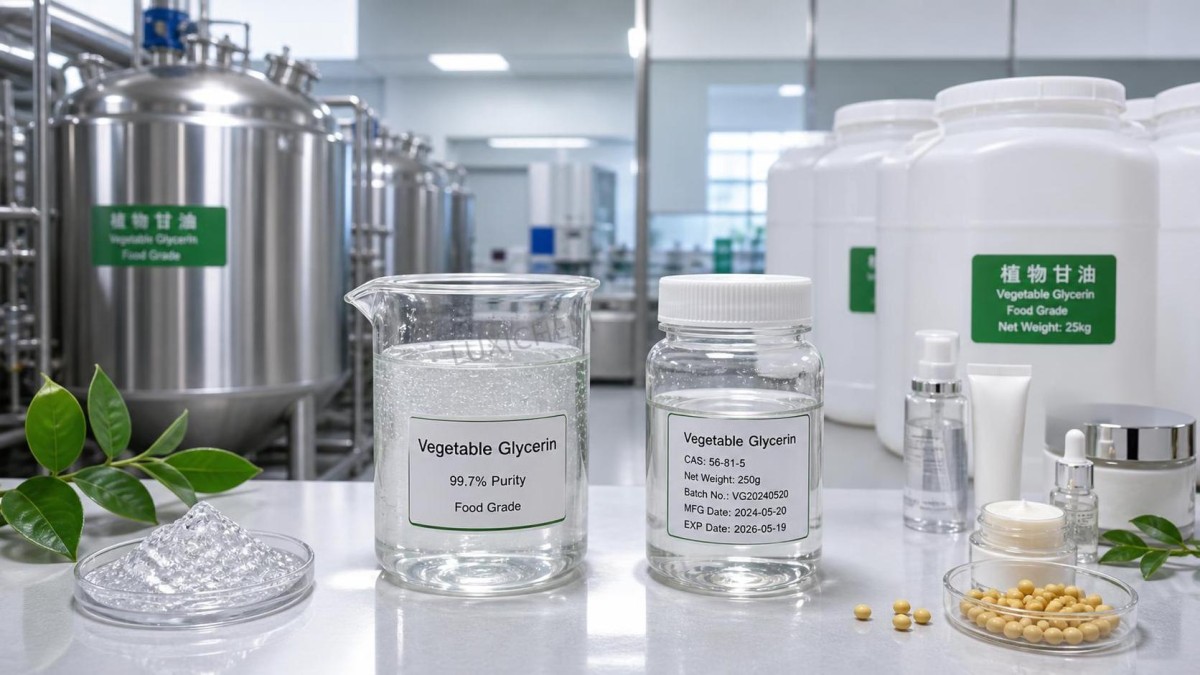
The Checks That Prevent Costly Surprises
Before approving a new source, it helps to treat the evaluation as a combined quality, logistics, and documentation review. The following points are more useful than a long generic supplier questionnaire because they address the issues that tend to show up after an order is placed:
- Identity and origin: Confirm the product identity, CAS reference where relevant, vegetable origin statement, and any feedstock restrictions required by your brand or customer.
- Lot documentation: Review a current COA, not just a representative template. Check that lot number, manufacturing date, retest or expiry information, and analytical results are clear.
- Sensory suitability: Define acceptable color and odor in practical language. “Clear” is not enough when the finished formula is transparent or lightly fragranced.
- Contaminant and impurity controls: Ask which quality parameters are routinely controlled for the intended grade and which additional tests can be supported when required by the application.
- Packaging integrity: Verify drum, IBC, or bulk-tanker compatibility; closure design; liner details if used; net-weight controls; and protection against contamination during transport.
- Traceability: Ensure a shipment can be linked to a batch and supporting records. This becomes critical when a finished-goods customer asks for an investigation months later.
A sample evaluation should mirror the intended production use as closely as possible. Checking viscosity in a laboratory beaker is sensible, but it does not replace a small blending trial, a stability observation, or a sensory review where those tests are relevant. In a cream or lotion, glycerin can influence skin feel and processing behavior. In a food system, it can affect sweetness balance, water activity strategy, texture, and filling behavior. Procurement should involve formulation and quality teams early rather than treating approval as a paperwork exercise.
Packaging and Storage Are Part of Product Quality
Plant glycerin is stable under appropriate conditions, but it is not indifferent to its surroundings. Its hygroscopic nature means poorly managed storage can change the material after receipt. Opened containers should be kept closed when not in use, transfer equipment should be clean and dry, and warehouse practices should avoid unnecessary exposure to humid air or incompatible materials.
Packaging decisions should reflect annual volume and consumption speed. Smaller drums may suit controlled use, product development, or sites with limited handling equipment. IBCs can reduce packaging cost per kilogram and simplify larger batch operations, but only if the material can be consumed before prolonged storage or repeated opening becomes a concern. Bulk delivery can be efficient for high-volume sites, though it requires compatible tanks, validated unloading procedures, cleaning controls, and a clear plan for retained samples and batch segregation.
International buyers should also clarify whether quoted weight is net product weight, how pallets are secured, whether packaging is suitable for the expected shipping route, and who bears responsibility for damaged or leaking containers under the agreed trade terms. These details can look administrative until a container arrives after a long transit with compromised seals.
Do Not Compare Price per Kilogram in Isolation
The real landed cost of plant glycerin includes more than the invoice price. Buyers should account for assay consistency, usable yield, freight, packaging disposal, customs handling, internal testing, inventory carrying cost, and the risk of a production hold. A lower-cost offer may be worthwhile when specifications are genuinely equivalent and the supplier has dependable batch control. It is less attractive when the material needs extra testing, arrives in inconvenient packs, or forces higher safety stock because deliveries are uncertain.
Supply consistency is particularly important because glycerin is often treated as a routine raw material. That can lead teams to approve a source quickly, then discover later that lot-to-lot color, odor, or viscosity variation creates avoidable adjustment work. A sensible approach is to begin with an approved trial lot, compare incoming results against the existing source, and establish a clear change-control process if feedstock, manufacturing location, test method, or packaging changes.
For companies buying several chemical categories, consolidating procurement can reduce transaction time, but only if category controls remain separate. A supplier with a broad portfolio may handle food additives, organic intermediates, fertilizers, and other chemical materials under one commercial relationship. That can simplify order coordination and export documentation. It should never blur the distinction between food-contact or cosmetic raw materials and hazardous industrial chemicals.
This separation matters in practice. For instance, Methylenediphenyl Diisocyanate CAS#101-68-8 is an industrial isocyanate used in polyurethane and polymer-related applications. It is moisture-sensitive and subject to substantially different handling and hazard controls from glycerin. A supplier serving multiple chemical sectors should be able to maintain distinct storage, documentation, transport, and quality processes for such materials rather than treating “chemical sourcing” as one undifferentiated activity.
Questions Worth Asking Before Issuing a Purchase Order
A productive supplier conversation is usually specific. Ask whether the quoted material is routinely supplied for food processing, cosmetic manufacture, or both; what documents are available per lot; whether samples and commercial material come from the same supply route; what the normal lead time is; and how deviations are handled. If there is a complaint, buyers need a defined contact point, retained-sample practice, and a realistic investigation process—not a vague promise of support.
It is also worth asking what cannot be guaranteed. A reliable supplier will be clear about the limits of a standard grade and will identify when a tighter specification, additional analysis, or separate declaration is necessary. That kind of transparency is more valuable than a broad statement that the material is suitable for “all applications.”
For global procurement, companies such as Luxi Chemical (Shandong) Co., Ltd. can be useful partners when they combine product coordination with export experience across chemical raw materials and related categories. The practical value lies in clear specifications, consistent communication, and document readiness—not in bundling unrelated products at any cost. Buyers should still qualify each material by intended use and maintain their own approved-supplier and incoming-inspection controls.
A Better Purchase Decision Begins With a Better Specification
The best way to source plant glycerin is to define what “acceptable” means before quotations arrive. Specify the grade and application, request current lot evidence, assess odor and color in the real formulation context, confirm traceability, and calculate cost on a landed and usable basis. Then test a representative lot before making a high-volume commitment.
Glycerin is often a modest line item in a formula, but it can influence processing, sensory quality, product appearance, and release timing. That is why the first purchasing check should not be price. It should be whether the supplier can repeatedly deliver the same material, with the same documentation and the same practical performance your finished product depends on.
Related Picks
 Butylated Hydroxytoluene Price Drivers: Supply, Purity, and Purchasing Risk FactorsOct 21, 2026Butylated Hydroxytoluene price trends depend on supply stability, purity, logistics, and purchasing risk. Learn how to compare quotes wisely and reduce sourcing costs.
 Sodium Tripolyphosphate Price Trends: Raw Material and Energy ExposureOct 20, 2026Explore sodium tripolyphosphate price trends, from phosphate and soda ash costs to energy exposure. Learn how to compare quotes, manage sourcing risks, and make smarter purchasing decisions.
 Acetonitrile Shipment to Vietnam Successfully Dispatched; RCEP Benefits Boost Fine Chemical Trade with ASEANSep 16, 2026A shipment of industrial-grade acetonitrile from our company has recently been loaded and dispatched following the completion of standardized hazardous material packaging and container securing procedures.
 Nigerian Client’s Order of 4 Containers of Vinyl Acetate Successfully Loaded and Shipped to West AfricaSep 16, 2026We recently completed the loading of a vinyl acetate order for a Nigerian client; four containers of the product have been successfully packed and are ready for shipment to Nigeria.




Question Consultation
Send Us Your Inquiry Today

Luxi Chemical is a professional chemical product supplier with ample stock of all chemical categories and excellent quality, welcome your purchase inquiry.

