


How Crude Glycerin Quality Changes After Biodiesel Production
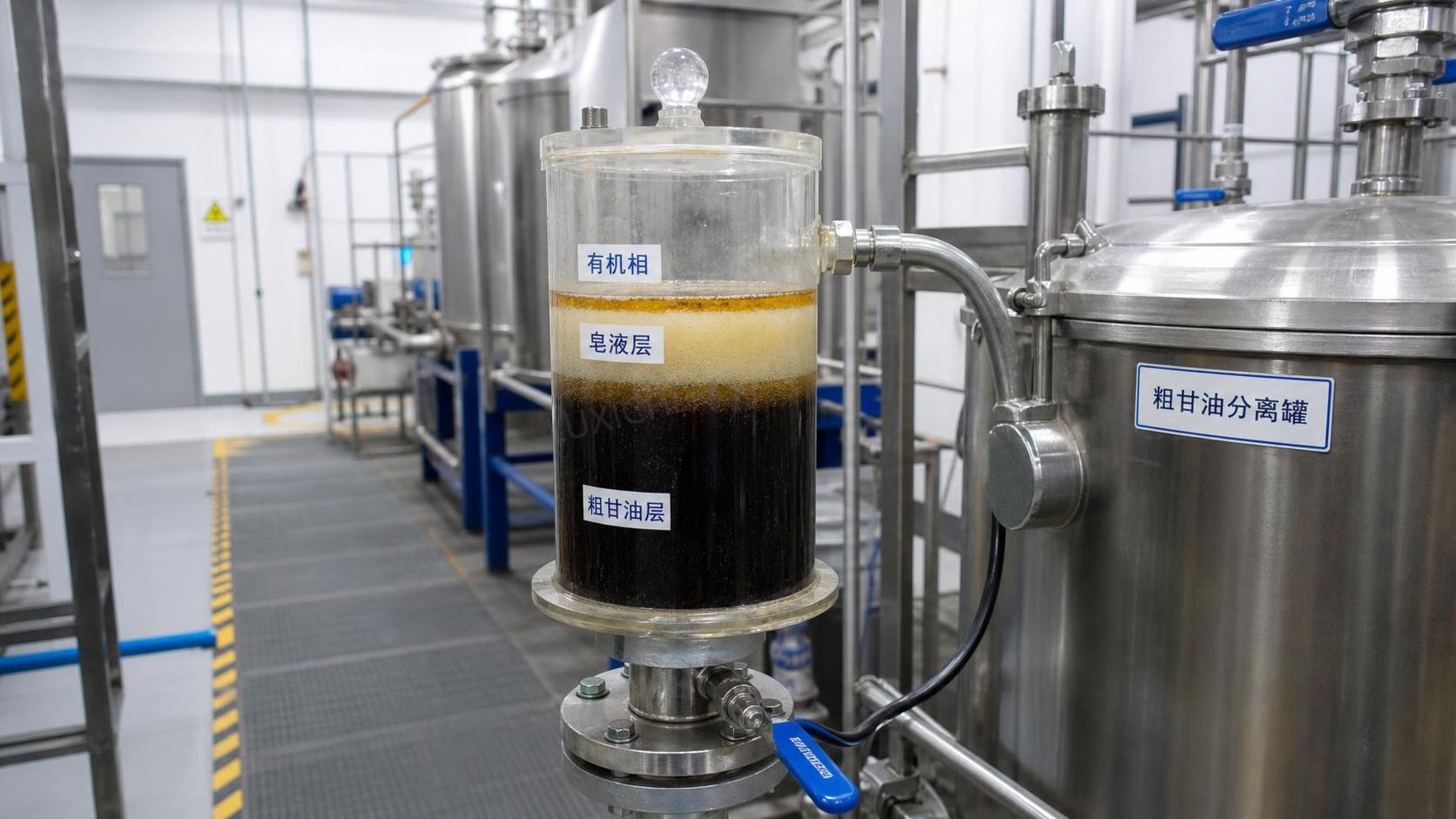
After a biodiesel batch is separated, the lower phase may be called crude glycerin, but that label does not describe a single, predictable material. One production run can yield a dark, alkaline, soap-rich liquid with substantial residual methanol; another may produce a denser glycerol phase containing fewer soaps but more dissolved salts. For technical evaluation, the important question is not simply whether crude glycerin was recovered. It is whether its composition is consistent enough for the intended downstream route.
The core judgment is straightforward: crude glycerin quality changes according to the feedstock, catalyst system, reaction conversion, phase separation, methanol recovery, and any washing or neutralization steps performed after transesterification. A high apparent glycerol value alone is not sufficient. Methanol, water, ash, soaps, free fatty matter, catalyst residues, and color-forming organics can determine whether the material is suitable for direct industrial use, requires pretreatment, or should be sent only to a more tolerant recovery process.
Why the glycerin phase changes from one biodiesel process to another
Biodiesel production converts triglycerides into fatty acid methyl esters and glycerol through transesterification. The crude glycerin phase carries not only the generated glycerol but also materials that preferentially partition into the polar, lower phase. The composition therefore reflects what entered the process and how completely the reaction and separation were controlled.
In a routine plant evaluation, variation may first become visible as a change in color, viscosity, odor, settling behavior, or pH. These observations are useful warnings, but they cannot replace analysis. A darker stream may contain oxidized organic material, residual feedstock components, or thermal degradation products. A thinner liquid may indicate elevated methanol or water. A sample that separates into layers after standing may contain entrained biodiesel, free fatty acids, or soap phases that were not fully resolved during decanting.
Feedstock sets the impurity baseline
Virgin refined oils generally introduce fewer non-glyceride impurities than used cooking oil, acid oils, animal fats, or high-free-fatty-acid feedstocks. When the starting oil contains more free fatty acids, moisture, phospholipids, pigments, metals, or degraded frying compounds, the glycerin phase usually becomes more complex. These impurities can consume catalyst, promote soap formation, increase emulsion stability, and make downstream purification less predictable.
Animal-derived feedstocks may also introduce a different fatty profile and more difficult cold-flow behavior during handling. Used oils often bring in food residues, polymers formed during frying, and variable moisture. None of these factors automatically makes the glycerin unusable, but they change the pretreatment burden. A technical evaluator should treat the feedstock history as a primary quality variable rather than as background information.
Catalyst selection changes the salt and soap profile
Alkali-catalyzed biodiesel processes commonly use sodium or potassium-based catalysts. When water or free fatty acids are present, part of the catalyst can participate in saponification rather than ester conversion. The resulting soaps can remain in the crude glycerin phase, hold ester and water in emulsions, and interfere with simple gravity separation.
Sodium-derived systems tend to produce sodium-containing residues; potassium-derived systems produce potassium-containing residues. This difference matters where ash content, salt recovery, wastewater treatment, combustion behavior, or biological processing is relevant. Acid-catalyzed or enzymatic routes can produce a different impurity balance, often with less alkali soap but potentially different residual acids, water levels, reaction intermediates, or processing costs.
The catalyst concentration also matters. Excess catalyst may improve apparent reaction speed in some cases, yet it can increase residual inorganic loading and complicate neutralization. Insufficient catalyst can leave unreacted glycerides and partial glycerides that contaminate both biodiesel and glycerin phases. Quality assessment should therefore connect the analytical result to the actual catalyst addition rate and feedstock acidity rather than interpreting ash or soap values in isolation.
The components that most often determine downstream value
Crude glycerin is usually assessed as a compositional package rather than through one pass/fail number. The following components should be considered together because improving one parameter can change another. For example, methanol stripping raises safety and may increase glycerol concentration, but it does not remove salts or soaps. Acidulation can reduce soap content, but it may create a free-fatty-acid layer and increase the need for phase management.
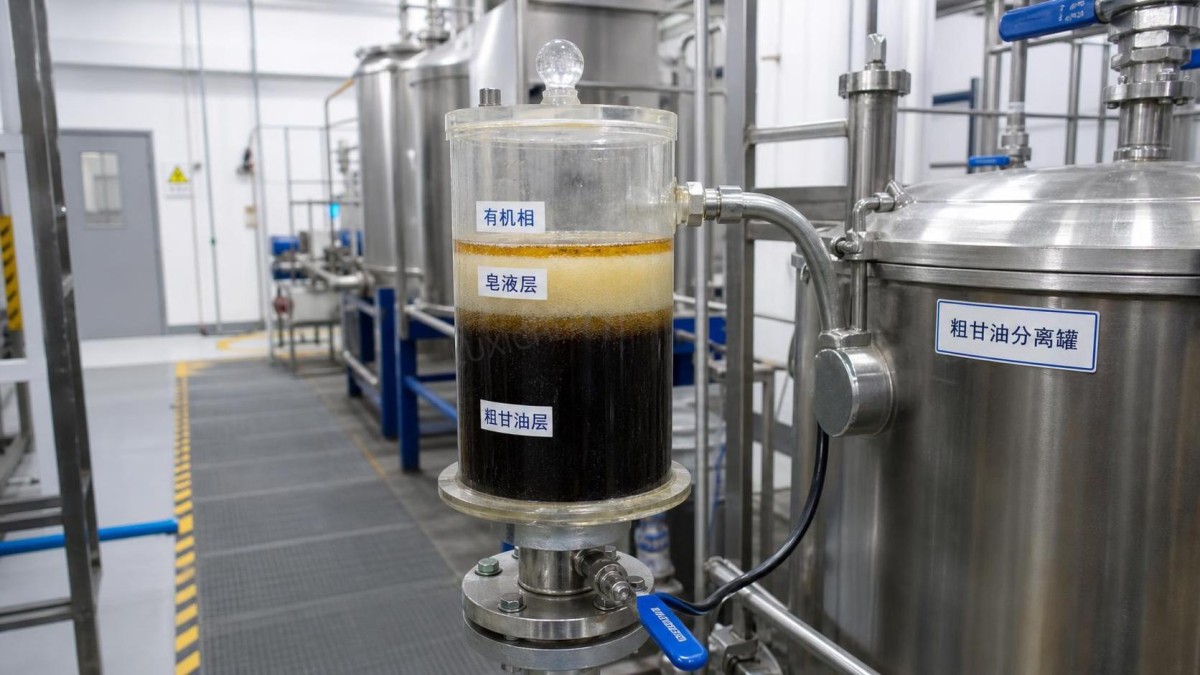
Glycerol content is useful, but it can be misleading
A concentrated sample is not necessarily a clean sample. Removing methanol and water can raise the measured glycerol percentage simply by reducing dilution, while salts, soaps, and non-glycerol organic contaminants remain. Conversely, a lower glycerol concentration may be acceptable for a process that can handle aqueous streams, provided methanol and salt levels are controlled.
For this reason, evaluators should avoid comparing crude glycerin solely by “glycerol percentage.” A better approach is to review glycerol content alongside moisture, methanol, ash, soap, pH, and acid value. The intended application determines which impurity becomes limiting. A material sent to a high-temperature energy route may tolerate a different profile from material intended for chemical recovery or fermentation-based conversion.
Methanol is often the first process and safety constraint
Residual methanol commonly remains elevated in the glycerin phase because methanol is used in excess to drive transesterification. Its presence lowers flash point, affects vapor exposure risk, and can inhibit certain downstream biological processes. It also distorts density and viscosity observations, making a fresh crude sample appear less concentrated than it will be after alcohol recovery.
Assessing methanol should not stop at a laboratory result. The evaluator should ask whether the sample was taken before or after vacuum stripping, whether the container was tightly closed, and whether sampling occurred at a stable process point. Methanol can be lost during open handling, causing a sample to appear cleaner than the bulk material actually was at production. Representative sampling and clear timing records are essential.
Salts, soaps, and pH reveal how separation was managed
High alkalinity frequently points to residual catalyst and soap. This can be manageable when the downstream operation includes controlled acidulation and phase splitting. However, uncontrolled neutralization may create localized over-acidification, persistent emulsions, or variable free fatty acid carryover. The result can be a crude glycerin stream that looks uniform when warm but separates unpredictably during storage.
Ash measurement provides a practical indication of inorganic residue after controlled ignition. It does not identify every salt species, but it helps distinguish a relatively low-mineral stream from one likely to impose higher refining or disposal costs. Where salt identity matters, additional analysis may be needed to determine sodium, potassium, chloride, sulfate, phosphates, or metals introduced through the feedstock and processing chemicals.
A practical way to investigate a quality shift
When a crude glycerin stream suddenly changes in appearance or laboratory results, begin with the production sequence rather than assuming the glycerin itself has become defective. The most useful investigation compares the changed lot with a recent stable lot and traces the difference backward through feedstock preparation, reaction conditions, separation, and recovery operations.
- Confirm the sample basis. Record whether the sample was taken before methanol recovery, after decanting, after washing, or after neutralization. Samples from different points cannot be compared directly.
- Review feedstock condition. Check moisture, free fatty acids, visible solids, and whether the incoming oil source changed. A shift in raw material quality can explain several downstream changes at once.
- Compare catalyst and alcohol addition records. Differences in catalyst concentration, methanol ratio, or mixing intensity can alter conversion and soap formation.
- Inspect separation performance. Look for prolonged settling, emulsion layers, unusual interface thickness, or ester carryover. Poor phase resolution often causes variable organic contamination.
- Check recovery conditions. Methanol stripping temperature, vacuum stability, residence time, and condensate handling influence both residual alcohol and the risk of thermal darkening.
- Test the relevant impurity set. At minimum, evaluate glycerol, methanol, water, ash, pH or alkalinity, and soap or free fatty acid content according to the intended route.
Not every deviation requires the same correction. High methanol may call for improved recovery control. High soap may point to feedstock acidity, moisture ingress, or excess alkali. High water can originate from washing or wet feedstock and may require drying or a revised separation sequence. Elevated ash is more likely to require a change in catalyst management, neutralization, or downstream demineralization.
Match the quality profile to the intended use
The right quality target depends on what will happen next. Material used as a low-grade industrial feedstock may need a stable, documented composition more than a highly refined glycerol content. A chemical conversion route may be especially sensitive to water, salts, catalyst residues, or reactive organic contaminants. A biological route may be limited by methanol, salinity, and inhibitory compounds. Thermal recovery routes require careful review of ash, corrosive salts, and emissions-related handling.
Segregation is often more valuable than trying to force every batch into one specification. Keeping streams from different feedstocks or process conditions separate can preserve a more consistent fraction for a defined outlet. It also prevents a high-salt or high-soap lot from diluting the value of cleaner material. Storage tanks should be evaluated for settling, phase separation, temperature effects, and compatibility with residual alkaline or acidic components.
Where a site also handles reactive aromatic intermediates, cross-contamination control becomes particularly important. Products such as Aniline CAS#62-53-3 are chemical synthetic intermediates with good solubility compatibility in various organic systems, but they are not related to biodiesel-derived glycerin quality and should be segregated from crude glycerin handling areas. Separate transfer equipment, clear line identification, and appropriate cleaning verification help prevent unintended contamination of either stream.
When further purification is justified
Pretreatment is justified when the impurity profile conflicts with the next process step, not merely because the crude material looks dark or has a lower glycerol content than another batch. Common interventions include methanol recovery, acidulation to split soaps into free fatty acids, settling or centrifugation to improve phase separation, water removal, filtration, and demineralization. Each intervention should be evaluated for what it removes and what new stream it creates.
Acidulation, for example, can reduce soap-related instability by converting soaps into free fatty acids and inorganic salts. Yet it also requires controlled acid dosing, temperature management, and adequate time for layer separation. The recovered fatty phase may have value in some systems, while the salt-containing aqueous glycerin phase may still need additional treatment. Applying acidulation without a clear downstream plan can simply move impurities from one phase to another.
For technical evaluation, the most reliable approach is to define acceptance criteria from the actual downstream requirement, sample at a known process point, and trend the full impurity profile over time. Crude glycerin is not a uniform co-product. Its quality is a direct record of how the biodiesel process was operated, how variable the feedstock was, and how effectively the separation and recovery steps were controlled.
Related Picks
 Butylated Hydroxytoluene Price Drivers: Supply, Purity, and Purchasing Risk FactorsOct 21, 2026Butylated Hydroxytoluene price trends depend on supply stability, purity, logistics, and purchasing risk. Learn how to compare quotes wisely and reduce sourcing costs.
 Sodium Tripolyphosphate Price Trends: Raw Material and Energy ExposureOct 20, 2026Explore sodium tripolyphosphate price trends, from phosphate and soda ash costs to energy exposure. Learn how to compare quotes, manage sourcing risks, and make smarter purchasing decisions.
 Acetonitrile Shipment to Vietnam Successfully Dispatched; RCEP Benefits Boost Fine Chemical Trade with ASEANSep 16, 2026A shipment of industrial-grade acetonitrile from our company has recently been loaded and dispatched following the completion of standardized hazardous material packaging and container securing procedures.
 Nigerian Client’s Order of 4 Containers of Vinyl Acetate Successfully Loaded and Shipped to West AfricaSep 16, 2026We recently completed the loading of a vinyl acetate order for a Nigerian client; four containers of the product have been successfully packed and are ready for shipment to Nigeria.




Question Consultation
Send Us Your Inquiry Today

Luxi Chemical is a professional chemical product supplier with ample stock of all chemical categories and excellent quality, welcome your purchase inquiry.

