


Choosing Glycerin Grades for Humectants, Solvents, and Industrial Blends
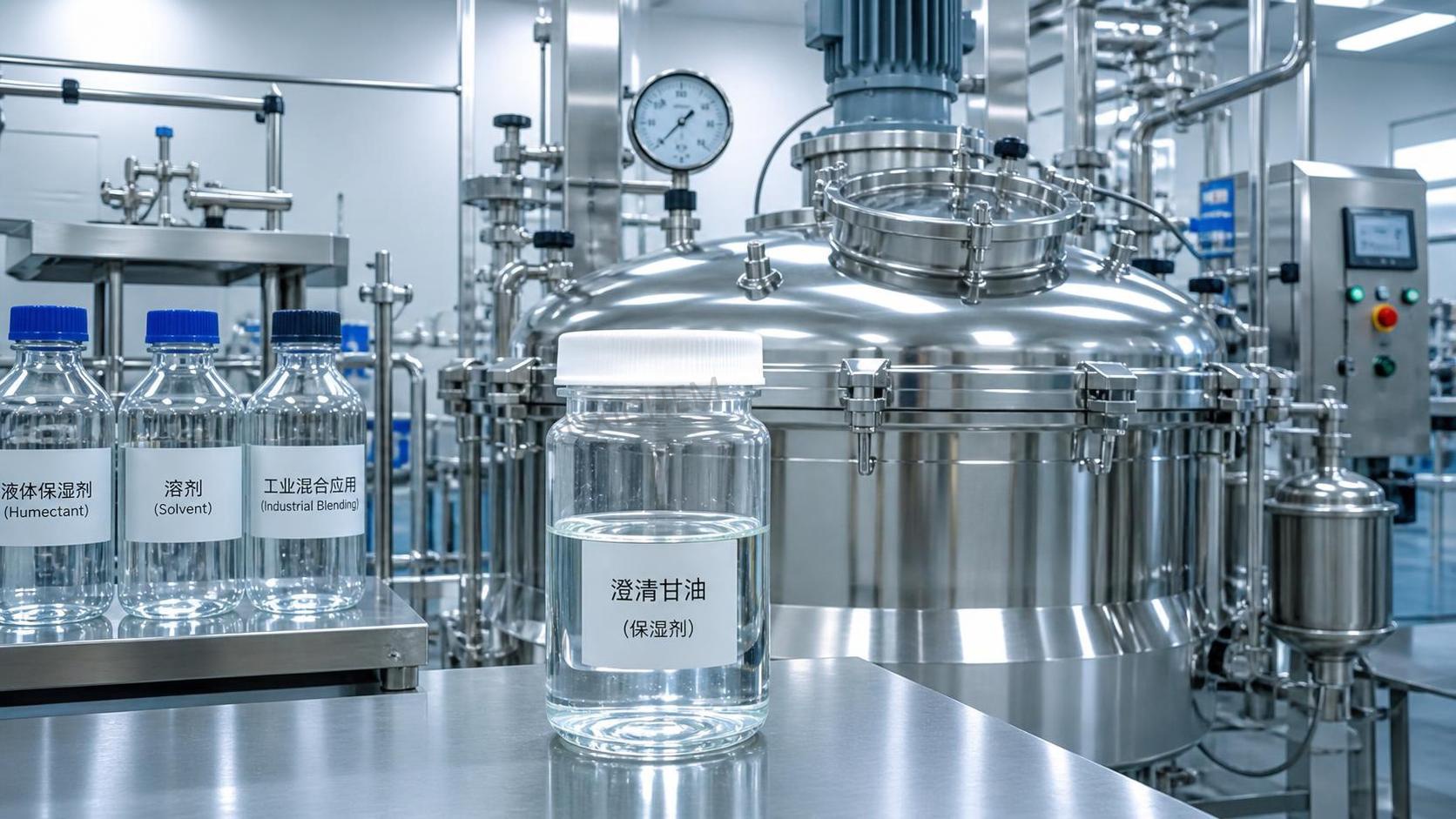
Choosing Glycerin Grades for Humectants, Solvents, and Industrial Blends
Selecting the right glycerin grade is less about finding the highest stated purity and more about matching material quality to the actual demands of a formulation, process, and destination market. Glycerin, also called glycerol, is valued for its hygroscopicity, low volatility, solvent behavior, and compatibility with many water-based systems. Those properties make it useful in food processing, personal care, pharmaceuticals, coatings, textiles, antifreeze blends, agricultural formulations, and chemical manufacturing.
Yet “glycerin” is not one uniform procurement category. Two materials with similar glycerol assay results can perform differently when their water content, color, odor, ionic residues, trace organic impurities, packaging condition, or documentation differs. A grade that is sensible for a technical blending operation may create avoidable risk in a beverage premix or leave an unacceptable odor note in a fragrance-sensitive cosmetic base.
The practical starting point is not the supplier’s grade name. It is a clear definition of what glycerin must do in the finished system, what it must not introduce, and which requirements must remain stable from one shipment to the next.
Begin with function, not with a generic purity claim
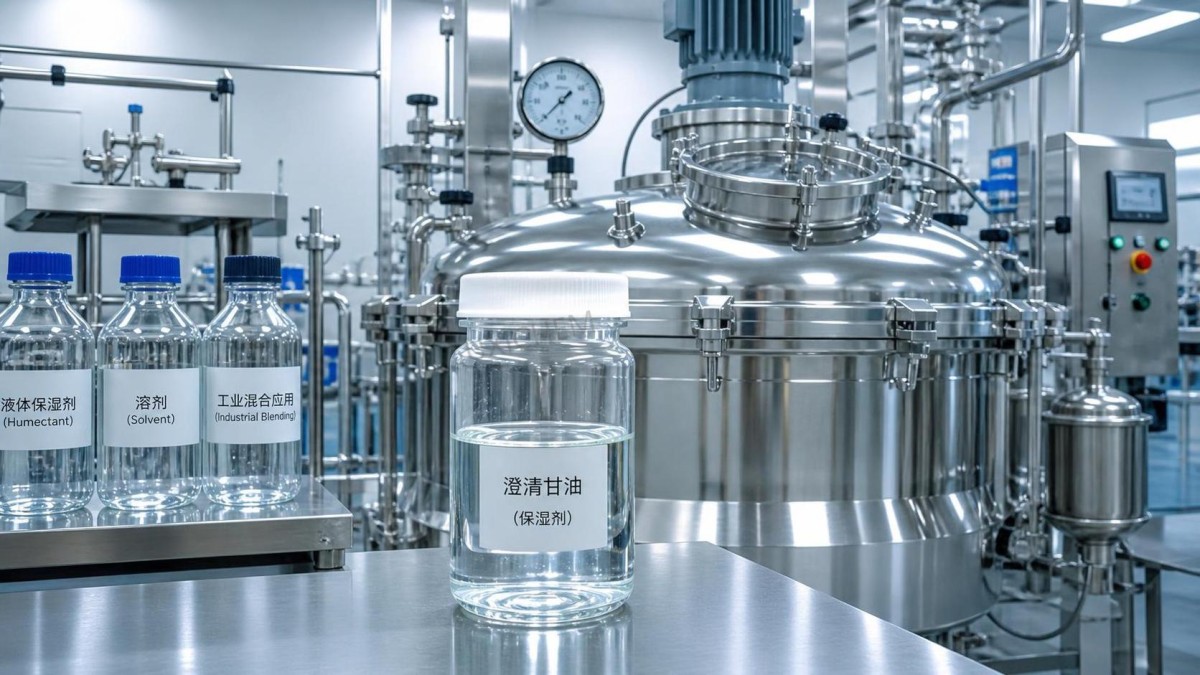
As a humectant, glycerin slows moisture loss by binding water. This is useful in toothpaste, creams, soaps, bakery systems, confectionery, and many other products where texture or water retention matters. In these applications, clarity, odor, color, microbial suitability where relevant, and sensory neutrality may matter as much as glycerol content. A low-odor material can be particularly important when the product has little fragrance or flavor to mask background notes.
As a solvent or co-solvent, glycerin can support the dissolution, wetting, or uniform distribution of selected ingredients in water-compatible systems. It also changes viscosity, water activity, and evaporation behavior. That can be helpful, but it means a replacement based solely on assay can shift mixing time, pumpability, fill weight, or the appearance of the final formulation. When glycerin is used to carry an active ingredient, solubility testing in the complete formulation remains more informative than testing the ingredient in glycerin alone.
In industrial blends, the priority may be different: freeze-thaw behavior, thermal stability, conductivity, residue formation, or compatibility with metals, seals, and downstream catalysts can outweigh sensory properties. A technical grade can be entirely appropriate if the relevant process limits are defined and the material does not enter a regulated consumer-facing product.
What grade labels actually tell you—and what they do not
Commercial descriptions such as crude, technical, refined, food grade, USP grade, EP grade, or pharmaceutical grade are useful shorthand, but they are not interchangeable specifications. The same label can be applied differently across regions or supplier portfolios. A grade name should therefore trigger a document review, not end it.
For food, pharmaceutical, and personal care use, the required standard should be named in the purchase specification rather than inferred from a sales description. Depending on the market and application, buyers may need to review the relevant food chemical requirements, pharmacopeial monograph, safety documentation, allergen statement, origin statement, or other project-specific records. A certificate of analysis is important, but it should be read against the agreed specification and not treated as a complete regulatory assessment.
The specification points that most often affect production
Glycerol assay is central, but it does not answer every operational question. Water content deserves equal attention because it influences viscosity, dosage by mass or volume, freezing behavior, and the concentration of the active glycerol fraction. A formulation calibrated around one concentration may need adjustment when the incoming material changes, even if both lots are broadly described as refined glycerin.
Color and appearance are often dismissed as cosmetic criteria. They are not. A pale, clear glycerin is easier to use in transparent gels, syrups, and color-sensitive formulations, while gradual color development during storage may signal a compatibility or stability question worth investigating. Odor is equally practical: it can become conspicuous in unscented personal care products, mild-flavored food systems, and solvent blends designed for enclosed environments.
Other commonly reviewed parameters include ash or residue on ignition, specific gravity or relative density, refractive index, acidity or alkalinity, and limits for inorganic ions or process-related impurities. The exact list should follow the application. For example, an electrically sensitive industrial system may require closer control of conductive residues, while a food formulation may focus more heavily on applicable food-contact suitability, sensory performance, and compositional compliance.
Where glycerin is sourced from oleochemical or biodiesel-related supply chains, origin and refining history may also matter. Vegetable-derived material is often requested for formulation, market-access, or customer-policy reasons, but “vegetable origin” alone does not establish a finished product’s quality level. Traceability documents and the contaminant controls relevant to the intended use should be reviewed separately.
Formulation compatibility: where simple assumptions fail
A frequent mistake is to treat glycerin as a universal solvent because it is highly miscible with water and broadly useful in polar systems. It does not behave that way with every ingredient. Highly lipophilic compounds may require oils, emulsifiers, encapsulation systems, or a different carrier strategy. Adding more glycerin can increase viscosity without improving dispersion, and may even complicate processing or sensory balance.
This is relevant when a formulation combines hydrophilic processing aids with oil-soluble colors or antioxidants. For example, tomato-derived Lycopene CAS#502-65-8 is a red to very dark red powder used in food colorant and supplement applications. Its high lipophilicity means glycerin should not be assumed to be its primary dissolving medium. In a beverage, dairy analogue, confectionery, spread, or dressing project, the complete delivery system needs evaluation: the color source, oil phase where applicable, emulsifier selection, homogenization conditions, oxygen exposure, and storage temperature all influence the result.
The same principle applies beyond food. In coatings, inks, cleaning systems, and agricultural concentrates, glycerin can improve wetting or retard drying while also changing phase behavior. Bench trials should examine clarity, viscosity drift, separation, odor, pH movement, and low-temperature recovery. If the material will be heated, check whether the proposed temperature profile is suitable for every component, not just for glycerin.
Choose an approval process that reflects the risk of the application
A sound qualification process is usually staged. Start with an agreed technical specification that defines mandatory limits rather than relying on a broad product label. Request a representative certificate of analysis, safety data sheet, packaging description, shelf-life or retest information where available, and declarations relevant to the receiving market. Then evaluate a sample in the real formulation or process conditions, including expected storage and transport exposure.
For high-consequence applications, it is sensible to define lot-release expectations before the first commercial delivery. This may include identity checks, visual inspection, density or refractive-index confirmation, and verification of selected impurities through an appropriate laboratory method. The right controls depend on internal quality systems and product risk; routine testing should not be copied from a pharmaceutical protocol into an industrial blend without a reason.
Packaging is part of the qualification, especially because glycerin is hygroscopic. Containers must protect the material from moisture uptake and contamination during transport and storage. Bulk handling also needs attention: clean transfer lines, compatible seals, tank condition, sampling practice, and temperature management can affect the delivered quality. A good incoming lot can still create a poor batch if water, residues, or cross-contamination enter after receipt.
Cost comparison should include the cost of variability
The lowest quoted price can be misleading when different materials carry different glycerol concentrations, documentation levels, packaging formats, or release controls. A more useful comparison converts pricing into usable glycerol content, then considers process losses, required reformulation work, incoming inspection burden, and the cost of holding additional safety stock. For a product with a stable recipe and demanding appearance requirements, lot consistency may be more valuable than a small nominal saving.
Supply continuity also matters. Glycerin availability and economics can be influenced by broader oleochemical and biodiesel markets, transport conditions, and regional demand. That does not mean every buyer needs multiple approved sources, but it does justify discussing lead time, origin flexibility, packaging alternatives, and batch-to-batch specification control before a supply disruption occurs.
For companies purchasing several chemical inputs, coordinating glycerin with related food additives, organic intermediates, or processing materials can simplify documentation and logistics. Luxi Chemical (Shandong) Co., Ltd. supplies chemical raw materials and products for customers across more than 60 countries and regions, with a portfolio spanning food additives, organic intermediates, and fertilizers. In practice, the useful value of a broad supply partner is not simply catalog range; it is the ability to align product documents, packaging expectations, shipment planning, and technical questions across a multi-material purchase.
A practical final check before release
Before approving a glycerin grade, confirm five points: the material meets the applicable market and end-use requirement; its water content and impurity profile are compatible with the formulation; its physical properties work with actual pumping and blending conditions; its documentation and traceability match internal controls; and its packaging and delivery plan protect quality through receipt. If one of these remains uncertain, a lower purchase price rarely compensates for a delayed batch, reformulation, or rejected finished product.
The right grade is therefore application-specific. Define the critical parameters first, test under realistic conditions, and make supplier documentation part of the technical decision rather than an administrative afterthought.
Related Picks
 Butylated Hydroxytoluene Price Drivers: Supply, Purity, and Purchasing Risk FactorsOct 21, 2026Butylated Hydroxytoluene price trends depend on supply stability, purity, logistics, and purchasing risk. Learn how to compare quotes wisely and reduce sourcing costs.
 Sodium Tripolyphosphate Price Trends: Raw Material and Energy ExposureOct 20, 2026Explore sodium tripolyphosphate price trends, from phosphate and soda ash costs to energy exposure. Learn how to compare quotes, manage sourcing risks, and make smarter purchasing decisions.
 Acetonitrile Shipment to Vietnam Successfully Dispatched; RCEP Benefits Boost Fine Chemical Trade with ASEANSep 16, 2026A shipment of industrial-grade acetonitrile from our company has recently been loaded and dispatched following the completion of standardized hazardous material packaging and container securing procedures.
 Nigerian Client’s Order of 4 Containers of Vinyl Acetate Successfully Loaded and Shipped to West AfricaSep 16, 2026We recently completed the loading of a vinyl acetate order for a Nigerian client; four containers of the product have been successfully packed and are ready for shipment to Nigeria.




Question Consultation
Send Us Your Inquiry Today

Luxi Chemical is a professional chemical product supplier with ample stock of all chemical categories and excellent quality, welcome your purchase inquiry.

