


How moisture content in PE granules affects extrusion stability
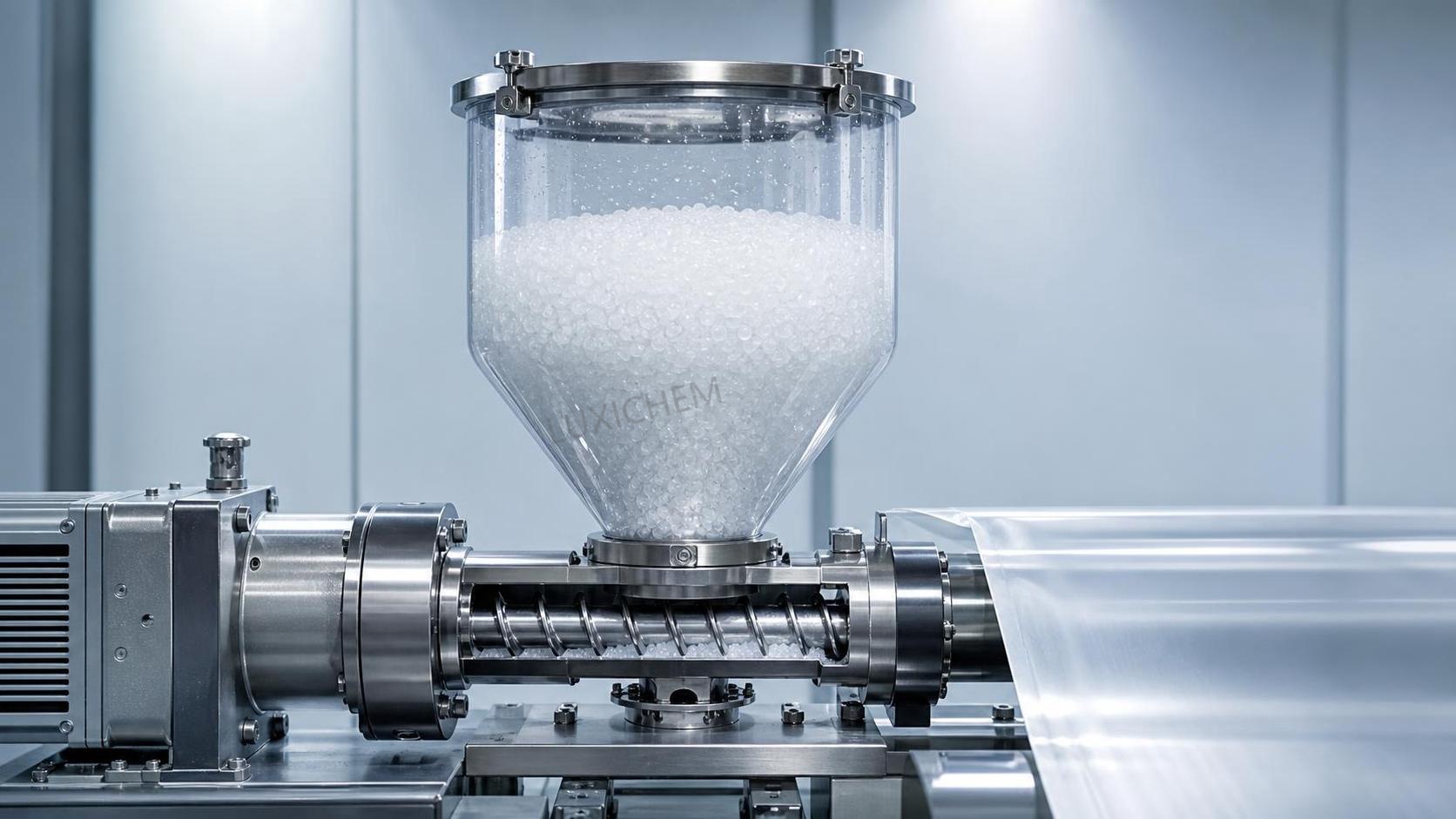
A line can appear stable for most of a shift and then suddenly begin producing material with a rough surface, faint streaks, small bubbles, or an uneven die appearance. At first, it is tempting to blame the temperature profile, screw speed, screen pack, or a recent resin lot. In many cases, however, the problem started earlier: polyethylene pellets were exposed to moisture during storage, transfer, blending, or feeding.
Polyethylene is often described as a low-moisture, non-hygroscopic material, and that description can lead to an expensive assumption: that drying and moisture control are never important. PE itself does not absorb water in the same way as materials such as nylon or PET, but water can still remain on pellet surfaces, collect in packaging, enter through conveying air, or be carried in with regrind, fillers, color masterbatch, and contaminated handling equipment. Once that water reaches a hot extrusion system, it can disturb otherwise predictable processing conditions.
When a small moisture issue turns into an unstable extrusion run
Consider a common production-floor situation. Pellets have been moved from a cooler storage area into a warmer processing area. A bag was opened earlier in the day and partially resealed. A hopper lid was left open during a material change. None of these events necessarily looks serious on its own. Yet if cool granules meet humid air, condensation may form on the pellet surface or inside transfer equipment. The water may not be obvious, especially when it is present as a thin film rather than visible droplets.
As the material enters the barrel, surface water is heated quickly. Steam formation can create intermittent pressure disturbances and may appear as bubbles, pinholes, silver streaks, roughness, or sporadic output variation. In film, sheet, pipe, coating, and profile extrusion, the visible defect may differ, but the underlying complaint is similar: the line no longer behaves consistently.
The trouble is not limited to surface quality. Moisture-related instability can complicate start-up, make adjustment decisions less reliable, increase purge requirements, and lead to unnecessary changes in barrel settings. If the actual cause is wet feedstock or wet conveying conditions, raising temperatures or changing screw speed may only hide the symptom temporarily. It can also create a second issue by pushing the melt closer to degradation conditions.
PE does not need to “absorb” water for water to matter
The useful distinction is between absorbed moisture and free moisture. PE granules generally resist moisture uptake, but free water is still process water from the extrusion line’s point of view. It can sit on pellet surfaces, be trapped among pellets, or enter as condensation in bins, flexible hoses, vacuum loaders, hoppers, and regrind containers.
This is especially relevant where material moves repeatedly between indoor and outdoor areas, where storage temperatures change sharply, or where bags are opened and closed across several shifts. Fine particles add another complication. Dust, fines, and regrind can hold moisture more readily than clean, larger pellets. If a blend includes filled compounds or additives, the moisture behavior of the total feed system may not match the behavior of virgin PE alone.
For this reason, “PE normally does not require drying” should not be used as “the material can be fed in any condition.” The better working rule is that clean, dry, properly stored PE may not require routine drying, while PE exposed to uncertain storage or handling conditions should be evaluated before it is treated as process-ready.
Read the symptoms carefully before changing the machine
Moisture is only one possible source of extrusion defects. A disciplined review prevents a team from drying material unnecessarily when the real cause is contamination, poor mixing, unstable feeding, a damaged screw, or an unsuitable temperature profile. The timing and pattern of the defect are often more useful than its appearance alone.
If bubbles or surface marks begin shortly after a newly opened package, after a rainy delivery period, after a hopper refill, or after switching to regrind, moisture deserves early attention. If the problem rises and falls with material level in the hopper, inspect the feed path rather than focusing only on the die. If the defect continues unchanged after verified dry material is introduced, the cause may lie elsewhere.
Pressure behavior can also provide clues. Moisture may contribute to unstable melt pressure, but pressure variation is not proof of water. Bridging, inconsistent bulk density, feed screw wear, or fluctuations in downstream puller speed can create similar readings. The goal is not to make a quick diagnosis from one signal. It is to isolate variables in a sequence that avoids changing several conditions at once.
Start with the material condition
Look at the packaging before looking at process settings. Check whether liners are intact, whether bags show punctures, whether pellets are clumped, and whether there is visible condensation inside the package or transfer container. Material stored directly on a cold floor, near an exterior door, or in an area with temperature swings deserves extra scrutiny.
Then inspect the feed route. A dry bag does not guarantee dry pellets at the extruder throat. Vacuum conveying systems can draw humid air with the material. Filters, receivers, hoses, and hopper interiors may retain moisture after cleaning or maintenance. Compressed air used around material handling should also be considered if it can contact resin or enter conveying equipment.
A practical comparison can be more informative than an assumption. Run a controlled quantity of material from a package known to be intact and properly stored, using a clean and closed transfer path. Keep the formulation and major machine settings unchanged. If the extrusion behavior becomes noticeably more stable, the material handling chain has become a stronger suspect. If it does not, continue the investigation without claiming moisture was the answer.
Conditions that commonly introduce water
Condensation is one of the most overlooked sources. It occurs when pellets or packaging are colder than the surrounding humid air. Bringing material into the processing room and opening it immediately may expose it to condensation even if it left the supplier in good condition. Allowing sealed material to equalize to the local environment before opening can reduce that risk.
Partly used bags are another weak point. Folding a liner over or loosely covering a container may protect against large debris but may not prevent humid air exchange. A better approach is to reseal the inner liner as tightly as practical, identify the opened material, and avoid keeping partially used stock for long periods in uncontrolled areas.
Regrind needs separate attention because its history is rarely as simple as virgin pellets. It may have been exposed during trimming, collection, grinding, or temporary storage. In addition, the larger surface area created by fines can retain more contamination and surface moisture. A regrind stream that performs well in dry conditions can become a source of instability after poor storage, washdown exposure, or an extended open-container hold.
During housekeeping, material identity matters as much as cleanliness. Keep PE transfer tools, containers, and labels distinct from materials used elsewhere in the plant. If chemical raw materials are stored or handled in the same general warehouse, clear segregation helps prevent mix-ups and residue transfer. For example, a catalog reference such as Olivetol CAS#500-66-3 should remain tied to its own designated packaging, handling instructions, and inventory identification rather than being confused with polymer feedstock or additives.
A controlled response when moisture is suspected
First, avoid reacting by making broad temperature increases across the barrel. Higher heat can make vapor-related symptoms more dramatic and can alter melt behavior enough to obscure the original problem. Record the current temperature profile, die condition, screen-pack status, screw speed, throughput, feeder settings, and observed defect pattern before adjusting anything. A short, accurate record is more useful than a long list of undocumented changes.
Next, remove the obvious source of exposure. Close hopper lids, inspect receiver covers and gaskets, empty any water-contaminated sections of the transfer path, and confirm that recently cleaned equipment is fully dry. If vacuum conveying is used, examine the air path and filter condition. Wet or poorly maintained filters can affect conveying consistency as well as introduce humidity concerns.
For material that is visibly wet, has experienced condensation, or has uncertain storage history, follow the resin supplier’s handling guidance. If drying is selected, use conditions appropriate to the specific PE grade and any other components in the blend. Excessive drying temperature or time is not automatically safer. The purpose is to remove free moisture without creating another material-handling problem or exposing the resin to unsuitable thermal conditions.
After corrective action, restart with a stable baseline rather than immediately returning to the highest previous output. Observe melt pressure, amperage, output consistency, and product appearance over enough time to distinguish a genuine improvement from a short-lived change. When the line settles, increase rate carefully while watching whether the same defect returns. This approach helps reveal whether moisture was the central issue or merely one contributor.
Do not overlook the components mixed with the PE
Many extrusion recipes include color masterbatch, mineral-filled compounds, recycled content, processing aids, or other modifiers. The blend is only as dry and consistent as its most sensitive component. A virgin PE base may be in good condition while a masterbatch container has been left open, a filler-containing component has absorbed moisture, or regrind has accumulated fines and humidity.
When a problem appears after a formulation change, examine every material stream separately. Confirm that the feeder is delivering the intended ratio and that each component has been stored under suitable conditions. A material issue can look like a feeding issue, and a feeding issue can look like a moisture issue. Separating those possibilities is often faster than repeatedly tuning the extruder.
It is also worth checking whether the problem is localized to one application. Thin film and smooth-surface coating may reveal a minor moisture problem earlier than thicker extrudate because surface appearance is closely scrutinized. In other applications, the first sign may be intermittent die drool, an unusual odor, unstable gauge, or reduced confidence in the consistency of the finished part. The visible symptom changes, but the inspection logic remains the same.
Build moisture control into routine handling
Reliable extrusion begins before the hopper. Keep unopened PE granules in dry, protected storage and avoid abrupt temperature transitions where possible. Do not open cold material immediately after it enters a warm, humid work area. Keep containers off damp floors, protect them from rain or washdown splash, and close transfer equipment whenever it is not actively being filled.
Simple habits are often more effective than adding complexity. Use a clear identification method for opened bags and regrind containers. Clean and dry hoppers after maintenance before returning them to service. Review flexible hoses and receiver seals when unexplained process variation occurs. If a moisture meter is used, make sure its method and sampling practice are suitable for the material being evaluated; an unreliable sample can create false confidence.
The most useful outcome is not proving that every defect comes from water. It is making moisture one of the first process conditions checked when PE extrusion becomes inconsistent. By separating free moisture from resin behavior, examining the full material path, and testing changes in a controlled order, many recurring disruptions can be resolved without unnecessary machine adjustments or avoidable material waste.
Related Picks
 Butylated Hydroxytoluene Price Drivers: Supply, Purity, and Purchasing Risk FactorsOct 21, 2026Butylated Hydroxytoluene price trends depend on supply stability, purity, logistics, and purchasing risk. Learn how to compare quotes wisely and reduce sourcing costs.
 Sodium Tripolyphosphate Price Trends: Raw Material and Energy ExposureOct 20, 2026Explore sodium tripolyphosphate price trends, from phosphate and soda ash costs to energy exposure. Learn how to compare quotes, manage sourcing risks, and make smarter purchasing decisions.
 Acetonitrile Shipment to Vietnam Successfully Dispatched; RCEP Benefits Boost Fine Chemical Trade with ASEANSep 16, 2026A shipment of industrial-grade acetonitrile from our company has recently been loaded and dispatched following the completion of standardized hazardous material packaging and container securing procedures.
 Nigerian Client’s Order of 4 Containers of Vinyl Acetate Successfully Loaded and Shipped to West AfricaSep 16, 2026We recently completed the loading of a vinyl acetate order for a Nigerian client; four containers of the product have been successfully packed and are ready for shipment to Nigeria.




Question Consultation
Send Us Your Inquiry Today

Luxi Chemical is a professional chemical product supplier with ample stock of all chemical categories and excellent quality, welcome your purchase inquiry.

