


What makes citric acid anhydrous manufacturers reliable long term?
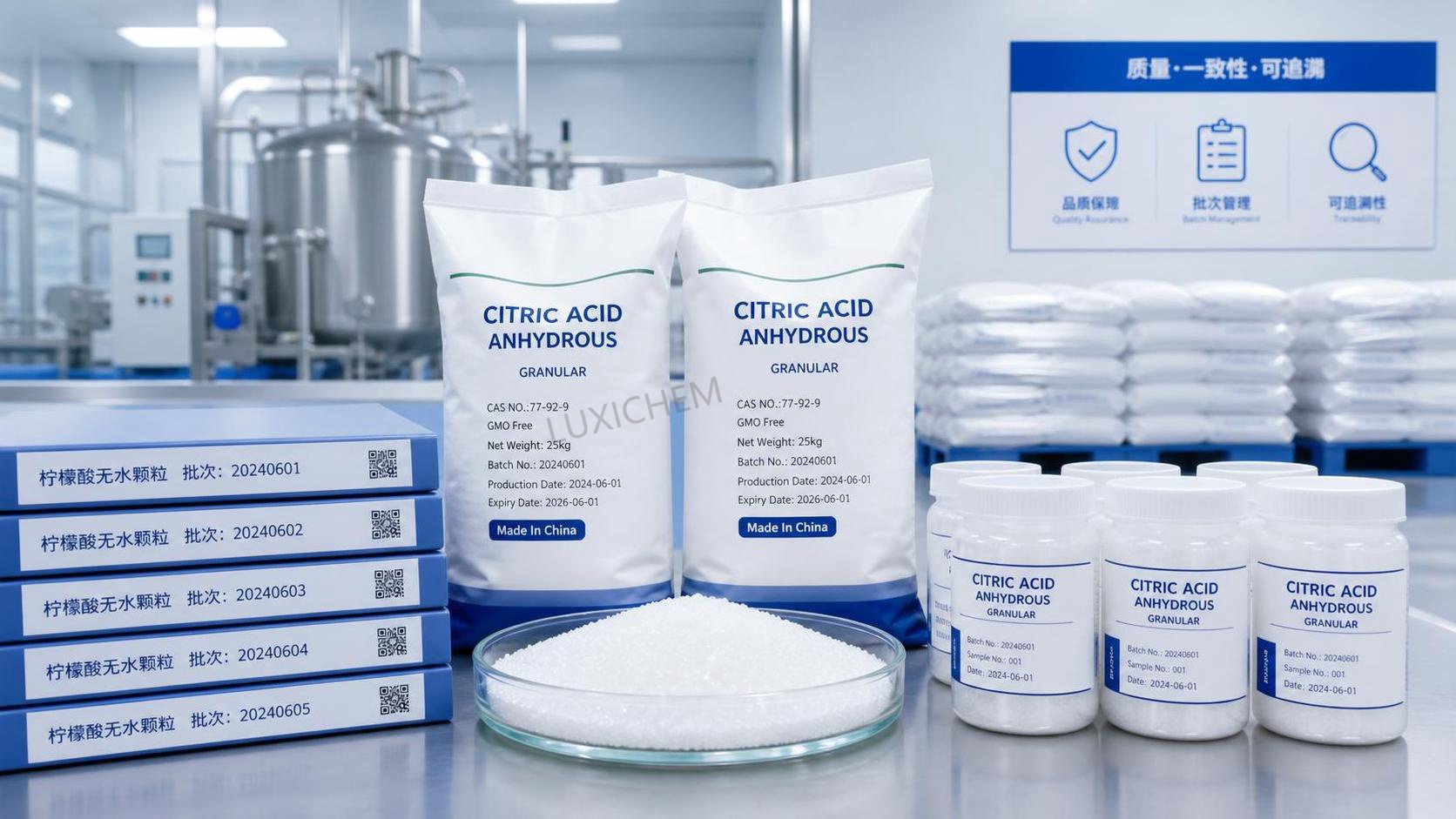
A production planner may first notice the problem during a routine release meeting: the citric acid anhydrous shipment has arrived, purchasing has confirmed the quantity, and the price was acceptable—but quality staff are still waiting for a complete batch document set. Meanwhile, the line schedule is tightening. In food processing, daily chemical blending, or industrial formulation, an unresolved document gap can delay incoming inspection, force a material hold, or require an unplanned substitute.
This is why choosing among citric acid anhydrous manufacturers is rarely a simple price comparison. A low quotation may look attractive at the ordering stage, yet long-term reliability becomes visible only when a supplier must reproduce the same quality, answer a technical question quickly, manage a packaging issue, or maintain communication when shipping conditions change. The practical question is not whether a manufacturer can deliver one acceptable lot. It is whether its operating habits reduce uncertainty over repeated orders.
Start with the risks behind an apparently ordinary raw material
Citric acid anhydrous is widely used because it can serve several functions depending on the formulation: acidification, pH adjustment, chelation, flavor balancing, cleaning support, and processing assistance. That broad applicability can create a misleading assumption that all material is interchangeable. In practice, suitability depends on the intended use, internal specifications, purity expectations, particle size needs, packaging conditions, and documentation requirements.
A purchasing decision becomes more complicated when the product is used across different sites or applications. One department may prioritize a stable granulation profile for handling; another may focus on traceability, allergen-related statements where relevant, or the format of the certificate of analysis. Logistics teams may care most about pallet configuration, package integrity, and lead-time visibility. When these expectations are not aligned before supplier selection, the buyer can end up evaluating offers that are not genuinely comparable.
The first useful adjustment is to define “reliable” in operational terms. Reliability should mean that the supplied material, documentation, packaging, communication, and order execution remain aligned with agreed requirements over time. It should not be treated as a vague reputation claim or inferred solely from the age of a company.
Separate manufacturing capability from trading convenience
Some suppliers operate production facilities; others organize supply through trading networks; some perform both roles depending on the product. Neither model is automatically unsuitable, but the distinction matters because it affects traceability, technical response time, supply planning, and accountability when a deviation occurs.
When reviewing citric acid anhydrous manufacturers, ask early who controls the production process, who issues the batch documentation, and who is responsible for investigating nonconformities. A supplier that provides clear answers can usually explain the relationship between the sales entity, production source, warehouse, and export operation without ambiguity. If the explanation changes between quotation, sample approval, and order confirmation, that inconsistency deserves attention.
A manufacturer-oriented relationship may provide better visibility into process control and batch continuity. A trading route may still be appropriate when it offers consolidated purchasing, local support, or access to multiple compliant sources. The important point is to avoid assuming that a product sheet alone proves direct manufacturing control. Request documents and communication paths that show how responsibility is managed after the order is placed.
Questions that reveal ownership of the process
- Who prepares and authorizes the certificate of analysis for each shipment?
- Can the supplier explain the lot-number format and trace it through packaging and shipping papers?
- Who receives and investigates a quality complaint?
- Is there a defined procedure for notifying buyers about changes to specifications, production location, packaging, or test methods?
- Can technical questions be answered by a person familiar with the product rather than only by sales staff?
These are not formalities. They help distinguish a supplier that understands the material’s control path from one that can only relay information after several layers of communication.
Read product documents as working tools, not sales attachments
A technical data sheet, specification, certificate of analysis template, safety data sheet, and packaging description should form a coherent picture. They do not need to be identical documents, but they should not contradict one another. For example, a specification should indicate the characteristics that matter for the declared grade, while the certificate of analysis should show actual batch results in a readable format. A safety data sheet should be current for the material and market route being considered.
Many procurement problems begin when documents are collected but not reviewed against the buyer’s own release criteria. An internal team should compare requested parameters with the supplier’s stated test items, units, methods where available, and acceptance limits. It is equally important to identify what is not included. If a critical parameter is absent from the routine certificate, ask whether it can be tested, how often it is verified, and whether the result can be supplied for a specific batch.
Do not treat a sample report as proof that every future lot will be the same. A sample can help with formulation work and preliminary approval, but long-term confidence comes from agreeing which properties must remain controlled and how changes will be communicated. If the material is sensitive to caking, dissolution behavior, odor, color, or handling characteristics in a particular application, these points should be discussed before the first commercial order rather than after a production issue.
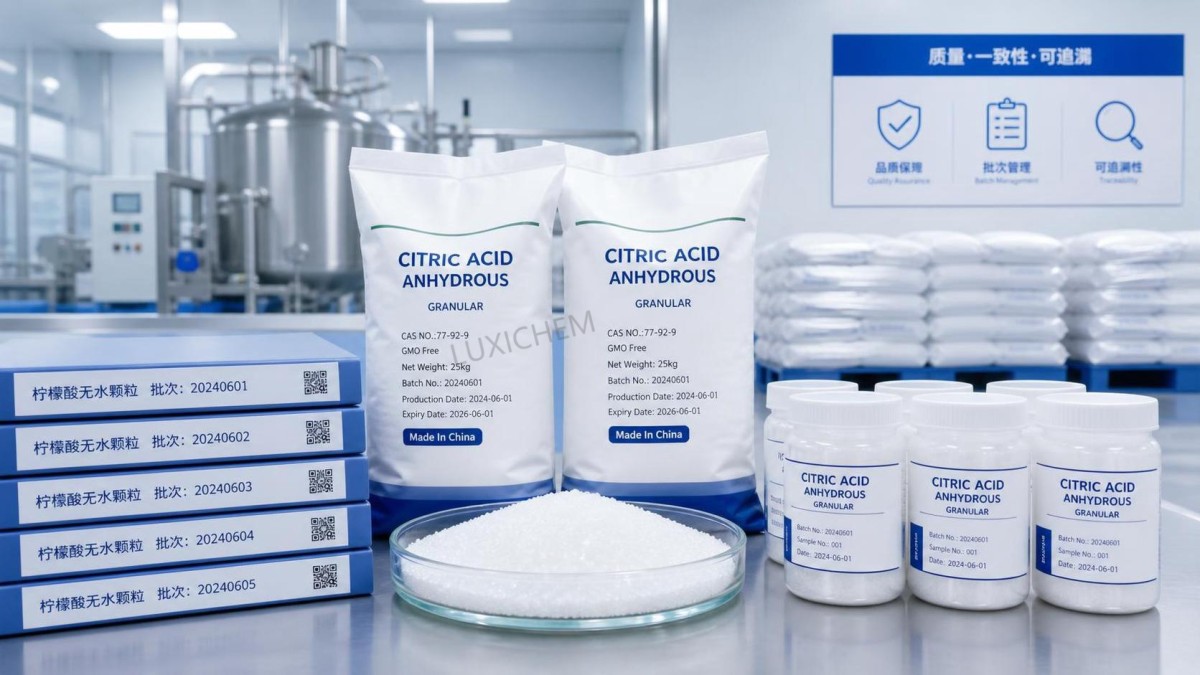
Use the first order to test the supplier’s process, not just the material
A sensible first order is an opportunity to observe the full transaction cycle. The goal is not to create unnecessary friction; it is to see whether the supplier can execute ordinary requirements consistently. Communication before shipment often reveals more than a polished quotation does.
Pay attention to whether order confirmation matches the agreed grade, quantity, packaging, labeling language, incoterms, shipping instructions, and required documents. Notice whether questions receive direct answers or generic assurances. If there is a change in vessel schedule, warehouse timing, or document availability, a dependable supplier should communicate it clearly enough for the receiving team to plan around it.
At goods receipt, preserve a practical record: outer-bag condition, pallet stability, label legibility, lot numbers, package count, seal condition where applicable, and alignment between physical labels and paperwork. These observations are useful even when everything arrives correctly. They create a reference point for later orders and make it easier to identify whether a later issue relates to transport, storage, packaging, or the supplied material itself.
For companies buying several categories of chemical materials, it can also be useful to review how a supplier handles unrelated products. A vendor that offers items such as p-Cresol CAS#106-44-5 may support consolidated sourcing, but product breadth should not replace product-specific verification. Each chemical has its own storage, documentation, transport, and application considerations. Consolidation is valuable only when traceability and technical clarity remain intact for every item.
Compare offers by total procurement exposure
Unit price is visible and easy to compare. The cost of uncertainty is harder to see until it affects production. Delayed paperwork, inconsistent packaging, unclear lot traceability, repeated follow-up, or an unresolved complaint can consume time across purchasing, quality, logistics, and operations. These effects should be included in a supplier evaluation even if they do not appear on the invoice.
This comparison is especially helpful when two quotations look similar. The supplier with a slightly higher material price may present lower operational exposure if it consistently provides timely records, stable communication, and a defined route for solving problems. Conversely, a low-cost source can become expensive if every shipment requires exceptional follow-up.
Look for change control before a change becomes disruptive
Long-term supplier reliability depends heavily on how changes are managed. Manufacturing conditions, raw material sources, packaging formats, warehouses, test methods, and transport routes can all change over time. Not every change affects the end user, but the buyer needs enough notice to assess whether internal review, trial work, or document updates are necessary.
Ask prospective suppliers how they handle changes that may affect product conformity or agreed commercial terms. A useful answer identifies the communication channel, responsible contact, type of notice provided, and the point at which a customer would be informed. Vague statements such as “quality will remain the same” are less useful than a practical explanation of the notification process.
Change control also includes the buyer’s own side. If the intended application changes from one product category to another, or if receiving conditions become stricter, inform the supplier. A dependable relationship is easier to maintain when both parties work from current requirements rather than assumptions made during the first quotation.
Assess supply resilience without asking for promises no one can guarantee
No supplier can eliminate every disruption connected with production, transport, ports, weather, inspections, or market conditions. A realistic assessment focuses on preparedness and transparency instead of absolute guarantees. Can the supplier discuss typical production and dispatch timing in a straightforward way? Are packing options and shipment configurations clearly defined? Is there a practical contact route if a document, booking, or delivery question emerges outside the original sales conversation?
For recurring demand, buyers can reduce exposure by sharing a reasonable forecast range, confirming the required lead-time window, and agreeing on the documentation sequence before urgent replenishment is needed. This does not require revealing sensitive business information. It simply gives both sides a basis for planning. When forecasts are impossible, a buyer can still identify minimum stock expectations internally and avoid treating every purchase as an emergency.
It is also wise to determine whether a second approved source is necessary for the application. Dual sourcing may be appropriate for critical use, but it should be managed carefully. Switching between sources without comparing specifications, documents, and performance can create a new risk while trying to solve an old one.
When a supplier looks reliable on paper but feels difficult to work with
A supplier may provide acceptable documents and still create operational strain through slow replies, unclear ownership, or repeated misunderstandings. These patterns should not be ignored simply because the material passes incoming tests. In a long-term relationship, response quality matters most when something needs clarification quickly.
Before removing a supplier, identify the exact point of friction. Is the issue technical accuracy, document timing, language clarity, freight coordination, or authority to make decisions? Put the requirement in writing with an example of the desired format. A supplier that improves after receiving clear feedback may remain a workable partner. If the same issue persists across orders, it is reasonable to reassess the supplier’s place in the approved source strategy.
The strongest selection decisions are built gradually. Begin with defined product requirements, verify who controls the supply path, examine documents for consistency, observe execution during early orders, and keep records of communication and receipt conditions. Over time, this evidence is more meaningful than a promotional claim, a single good sample, or the lowest initial quotation.
Reliable citric acid anhydrous manufacturers are identified by repeatable behavior: they make the material and its supporting information easier to evaluate, easier to receive, and easier to manage when conditions are not perfect. That is the standard that supports a purchasing decision long after the first shipment has been accepted.
Related Picks
 Butylated Hydroxytoluene Price Drivers: Supply, Purity, and Purchasing Risk FactorsOct 21, 2026Butylated Hydroxytoluene price trends depend on supply stability, purity, logistics, and purchasing risk. Learn how to compare quotes wisely and reduce sourcing costs.
 Sodium Tripolyphosphate Price Trends: Raw Material and Energy ExposureOct 20, 2026Explore sodium tripolyphosphate price trends, from phosphate and soda ash costs to energy exposure. Learn how to compare quotes, manage sourcing risks, and make smarter purchasing decisions.
 Acetonitrile Shipment to Vietnam Successfully Dispatched; RCEP Benefits Boost Fine Chemical Trade with ASEANSep 16, 2026A shipment of industrial-grade acetonitrile from our company has recently been loaded and dispatched following the completion of standardized hazardous material packaging and container securing procedures.
 Nigerian Client’s Order of 4 Containers of Vinyl Acetate Successfully Loaded and Shipped to West AfricaSep 16, 2026We recently completed the loading of a vinyl acetate order for a Nigerian client; four containers of the product have been successfully packed and are ready for shipment to Nigeria.




Question Consultation
Send Us Your Inquiry Today

Luxi Chemical is a professional chemical product supplier with ample stock of all chemical categories and excellent quality, welcome your purchase inquiry.

