


Why the CAS number 77 92 9 matters on chemical documentation
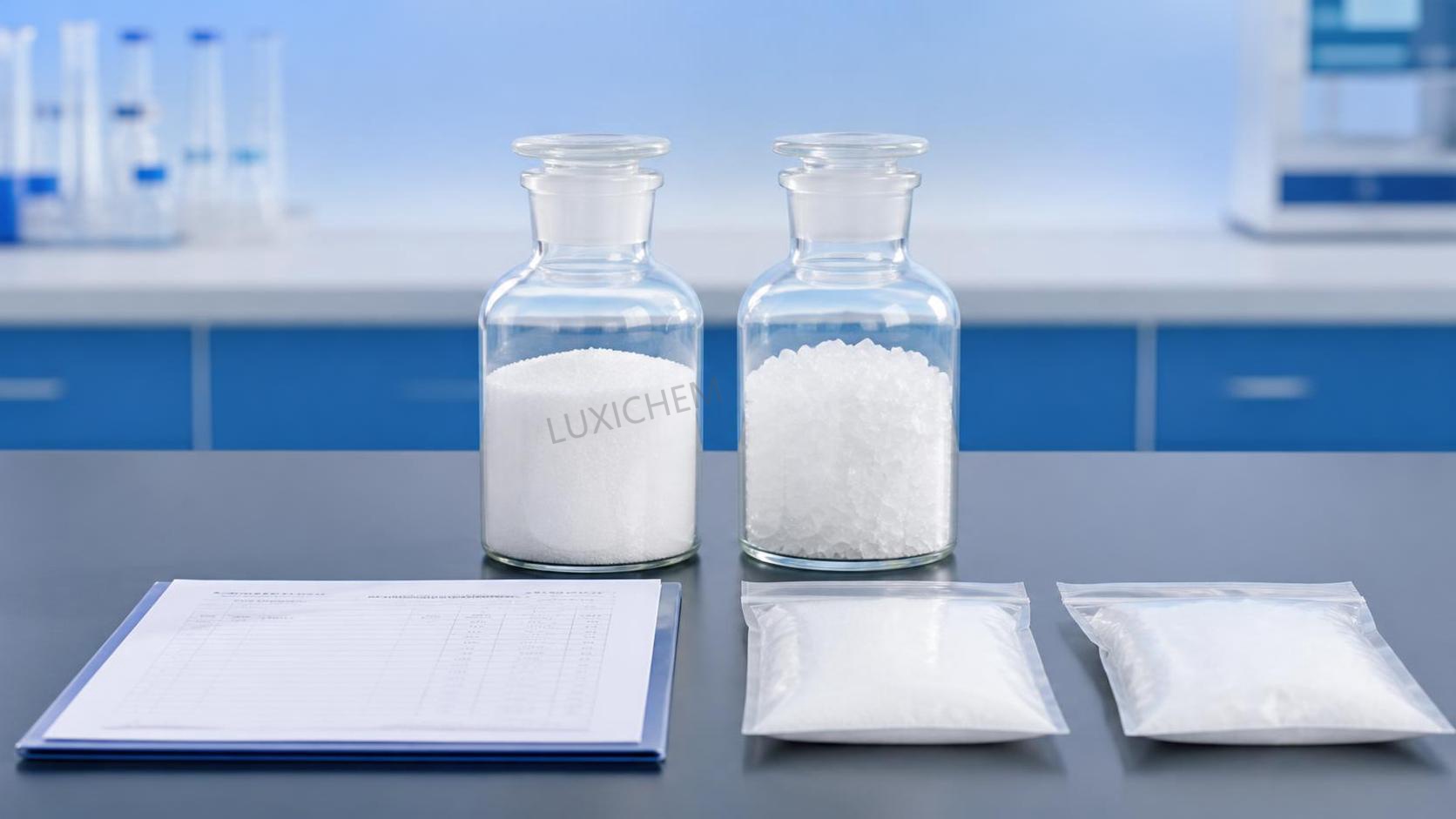
A documentation problem often starts with something that looks minor: a purchase request says “citric acid,” an incoming label says “citric acid anhydrous,” and a supplier document uses a chemical name that appears slightly different. The material may still be the intended one, but the mismatch can pause internal review, complicate a quality release, or create uncertainty when a product is being used in food processing, cleaning formulations, laboratory work, or industrial production.
In these situations, the CAS number 77 92 9 is more than a line on a safety data sheet. It is a practical reference point for identifying citric acid and separating the core chemical identity from commercial descriptions, grades, packaging formats, and supplier-specific naming. Used properly, it helps people read chemical documentation with less guesswork.
When a familiar name is not enough
“Citric acid” is a common name, but common names do not always tell the whole procurement or compliance story. A document may include terms such as acidulant, pH adjuster, chelating agent, organic acid, or citrate-related wording. These descriptions can be useful in explaining function, but they do not always confirm the exact substance being discussed.
This becomes important when several documents must agree. A purchase specification, certificate of analysis, safety data sheet, product label, transport paper, customs declaration, and internal inventory record may all be prepared by different people or systems. If each record relies only on a product name, a small wording difference can look like a material discrepancy even when the material is the same.
A CAS number is designed to provide a more stable reference. For citric acid, CAS number 77 92 9 is commonly associated with anhydrous citric acid. It can support a more direct comparison between documents than a trade name or a translated chemical name alone.
That does not mean the number answers every question. It identifies the substance, but it does not automatically confirm grade, purity, particle size, microbiological requirements, intended application, country-specific regulatory status, or whether a material is suitable for a particular formulation. Those details still need to be checked in the relevant documents.
A common source of confusion: anhydrous versus monohydrate
One of the most useful reasons to verify the CAS number is to avoid treating closely related forms as interchangeable without review. Citric acid may be supplied in anhydrous form or as citric acid monohydrate. The words can appear similar on an order, yet the forms have different chemical identifiers and different water content.
Citric acid monohydrate is commonly listed under CAS No. 5949-29-1, while anhydrous citric acid is commonly listed as CAS No. 77-92-9. This distinction matters where formulation calculations, moisture limits, storage behavior, dissolution procedures, labeling, or quality specifications are sensitive to the material form.
For example, if a formulation sheet was developed around an anhydrous raw material but an incoming document refers to the monohydrate form, the correct response is not simply to assume the names are close enough. The practical next step is to compare the purchase requirement, the technical specification, and the actual certificate of analysis. The question is whether the received material matches the approved material definition, not whether both products are broadly called citric acid.
Small differences in documentation can therefore point to a real operational issue. They may also turn out to be an administrative inconsistency, but that should be established through verification rather than assumption.
Reading the number in context
A CAS number works best when it is treated as one field within a complete identification record. When reviewing a document that lists CAS number 77 92 9, look at the surrounding information before deciding that the documentation is sufficient.
The chemical name should be recognizable
The name should clearly indicate citric acid, preferably with the relevant form stated where needed. “Citric acid anhydrous” gives more useful information than a vague term such as “organic acid.” If a document uses an abbreviation or internal code, there should be another field that connects that code to the full chemical identity.
The formula and molecular information can provide a cross-check
For anhydrous citric acid, the molecular formula is commonly shown as C6H8O7. A document may also state molecular weight. These fields should not replace the CAS number, but they can help reveal obvious transcription errors. If the name, CAS number, and formula do not appear to describe the same material, pause the review and request clarification.
Grade must be documented separately
Food-grade, industrial-grade, reagent-grade, and other commercial descriptions relate to quality and intended use. They are not determined by the CAS number. Two materials may both be associated with CAS 77-92-9 while having different impurity limits, testing items, handling expectations, or application suitability.
For this reason, a CAS number should never be used as a shortcut for approving a product solely on the basis of identity. It supports the first question—“What substance is this?”—but not every later question about whether it meets a defined requirement.
Where documentation mismatches usually appear
In day-to-day chemical work, the issue is rarely that every document is completely wrong. More often, one document has been copied from an older version, translated differently, or prepared using a product family name. The most useful approach is to identify which record is the controlling reference for the task at hand.
For purchasing, the approved specification and purchase order are usually central. For receiving and quality review, the label, batch information, certificate of analysis, and safety data sheet deserve close attention. For shipping or trade documentation, the description must be appropriate for the shipment and aligned with the applicable requirements of the destination and transport mode.
Typical warning signs include a missing CAS number, a CAS number that differs between the safety data sheet and certificate of analysis, an anhydrous description on one file and monohydrate wording on another, or an internal item code that cannot be traced to a current specification. None of these signs proves that the product is unsuitable. They do show that the record should be resolved before the information is reused.
A practical way to verify an incoming record
When a document names citric acid, start by locating the identity section rather than scanning for marketing descriptions or application claims. Safety data sheets often place substance identification near the beginning, while certificates of analysis may place it near the product heading or batch details.
- Match the stated chemical name to the requested material. Determine whether the requirement is for citric acid generally, anhydrous citric acid, or a defined grade with additional parameters.
- Compare the CAS number across the main documents. If the requested item is anhydrous citric acid, confirm that the identification supports CAS number 77 92 9 rather than a different hydrated form.
- Review the physical form and specification. Granularity, appearance, assay, moisture-related values, and other agreed parameters may matter even where the CAS number is correct.
- Link batch-level documents to the delivered goods. A certificate of analysis should be traceable to the batch or lot shown on the packaging or receiving record.
- Record unresolved differences clearly. If one field does not align, note the document name, revision or date, and the exact point requiring confirmation. This makes supplier communication more efficient.
This sequence is deliberately simple. It prevents a common mistake: treating a familiar chemical name as sufficient proof of identity and discovering later that the material form or supporting specification was not the expected one.
Why one number should not become the only approval criterion
It is tempting to see a CAS number as a universal product code. It is not. A CAS number does not identify the manufacturer, origin, grade, batch, concentration, packaging, or storage history of a product. It also does not replace an assessment of local legal or application-specific requirements.
For food-related use, for instance, the relevant specification may include controls that are not visible from chemical identity alone. For industrial cleaning or water-treatment applications, compatibility with the wider formula and process conditions may be more important than the number itself. In laboratory work, a required analytical grade can have criteria that differ from a general commercial material.
The correct habit is to use the CAS number as an anchor, then build outward: identity first, form second, specification third, batch traceability fourth, and application review where required. This order keeps documentation review focused without implying that one identifier can carry the whole compliance burden.
The same discipline applies beyond citric acid
Once people get used to checking chemical identity this way, the method becomes useful across a broader raw-material portfolio. A product name may look highly specific while still requiring confirmation of chemical form, assay basis, or intended grade. Rare-earth materials, organic intermediates, additives, and fertilizer inputs can all require the same careful reading of labels and technical documents.
For example, when reviewing a material listed as Neodymium oxide CAS#1313-97-9, the CAS reference can help distinguish the chemical identity from similar-sounding rare-earth products. It should then be read together with the product specification and the requirements of the intended process. The lesson is not that every product review is identical; it is that clear identification reduces avoidable ambiguity before other technical decisions are made.
Keeping records usable after the first review
A well-verified document can become confusing again if it is saved under inconsistent file names or separated from the item it supports. Internal records are easier to manage when the product name, chemical form, CAS number, supplier item reference, and document revision can be found together.
For citric acid anhydrous, an internal description such as “Citric Acid, Anhydrous, CAS 77-92-9” is generally clearer than a broad entry such as “acid powder.” It gives future reviewers enough information to identify the material quickly while leaving room for separate fields covering grade, approved supplier, packaging, and quality requirements.
When a supplier issues a revised safety data sheet or updated specification, compare the identity section against the previous version before replacing the file. Changes in layout are common and may be harmless. A change in CAS number, material form, or product name deserves attention because it may affect whether the revised document still applies to the same purchased item.
Questions that often come up during review
Can CAS number 77 92 9 confirm that citric acid is food grade?
No. It identifies the chemical substance associated with anhydrous citric acid, but food-grade status depends on the applicable specification, testing, documentation, and intended use. Review those materials separately.
If the CAS number matches, can other document differences be ignored?
Not automatically. A matching CAS number is a strong identity reference, but differences in grade, form, purity, batch number, or specification may still be important. The significance depends on the application and the approved requirement.
What should be done if a safety data sheet and certificate of analysis use different CAS numbers?
Do not merge the records based on the product name alone. Ask for clarification and confirm whether the documents refer to different forms of citric acid, different products, or an administrative error. Keep the discrepancy visible until it is resolved.
Is a CAS number required on every internal document?
Internal practices vary, but including a CAS number in material master records, technical files, and approval documents can improve consistency. It is especially helpful where similar product names, multilingual documents, or multiple forms of one chemical are involved.
The practical value of CAS number 77 92 9 is not that it removes every question from chemical documentation. Its value is that it gives those questions a reliable starting point. When the name, form, specification, and batch documents are reviewed around that identifier, routine paperwork becomes easier to interpret and less likely to create avoidable delays.
Related Picks
 Butylated Hydroxytoluene Price Drivers: Supply, Purity, and Purchasing Risk FactorsOct 21, 2026Butylated Hydroxytoluene price trends depend on supply stability, purity, logistics, and purchasing risk. Learn how to compare quotes wisely and reduce sourcing costs.
 Sodium Tripolyphosphate Price Trends: Raw Material and Energy ExposureOct 20, 2026Explore sodium tripolyphosphate price trends, from phosphate and soda ash costs to energy exposure. Learn how to compare quotes, manage sourcing risks, and make smarter purchasing decisions.
 Acetonitrile Shipment to Vietnam Successfully Dispatched; RCEP Benefits Boost Fine Chemical Trade with ASEANSep 16, 2026A shipment of industrial-grade acetonitrile from our company has recently been loaded and dispatched following the completion of standardized hazardous material packaging and container securing procedures.
 Nigerian Client’s Order of 4 Containers of Vinyl Acetate Successfully Loaded and Shipped to West AfricaSep 16, 2026We recently completed the loading of a vinyl acetate order for a Nigerian client; four containers of the product have been successfully packed and are ready for shipment to Nigeria.




Question Consultation
Send Us Your Inquiry Today

Luxi Chemical is a professional chemical product supplier with ample stock of all chemical categories and excellent quality, welcome your purchase inquiry.

