


How moisture in polyester polyol for polyurethane coatings causes defects
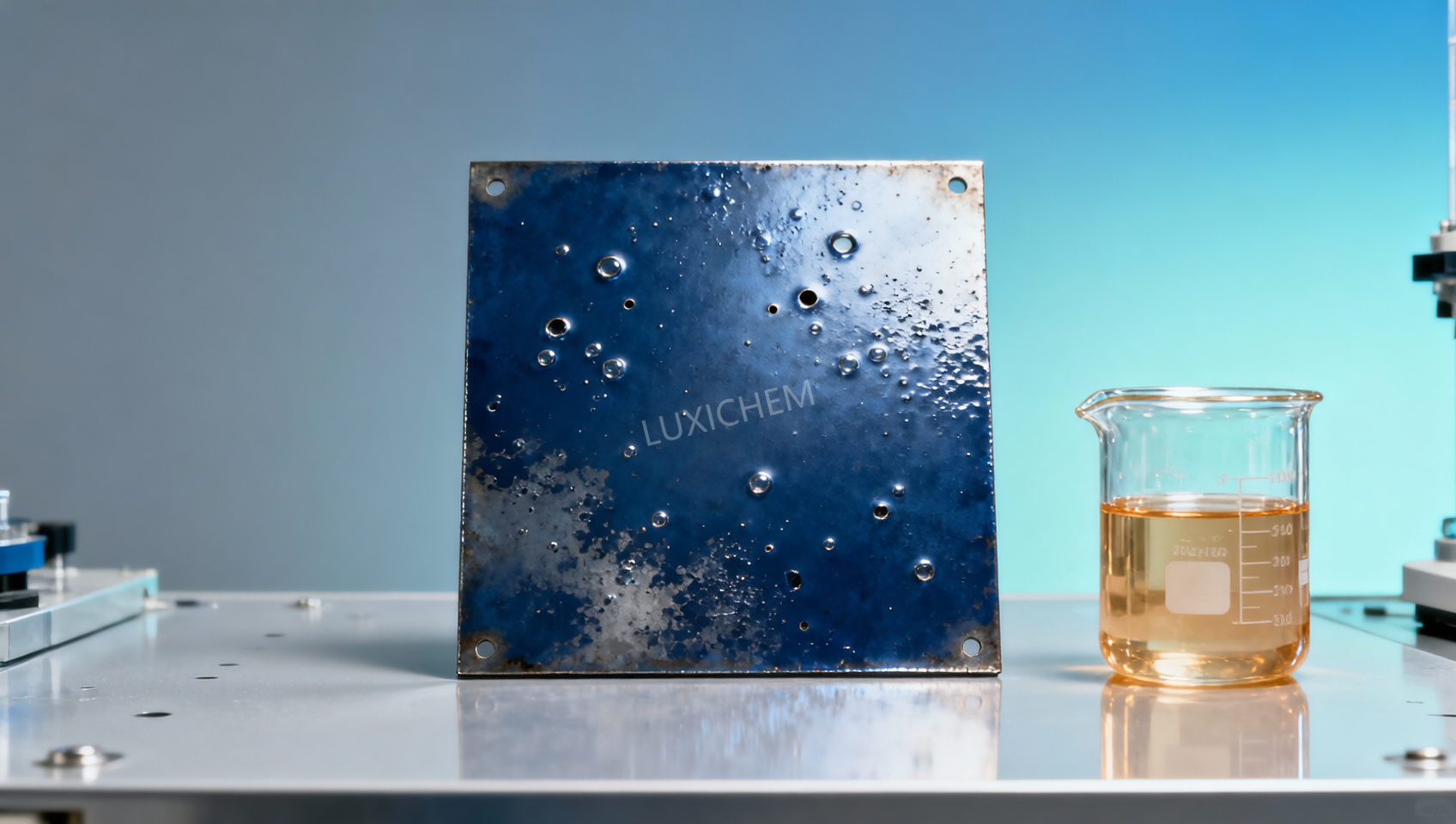
Moisture in a polyester polyol becomes a coating defect when the polyol is mixed with an isocyanate-containing curing component. Water reacts rapidly with isocyanate groups, consuming material that should form polyurethane linkages and releasing carbon dioxide gas. The reaction may begin before application, continue during spray or roll coating, and accelerate as the film warms. The visible result can be bubbles, pinholes, craters, foam, gloss loss, weak adhesion, or an uneven cure.
A coating can look acceptable immediately after application and still fail later. Small gas cells may remain below the surface until the film flows, flashes off, or enters an oven. If the surface skins over before the gas escapes, the expanding cells leave blisters or pinholes. If gas escapes while the coating is still mobile, the defect may appear as reduced gloss, orange peel, or a rough texture rather than obvious bubbling.
The chemical route from water to film defects
Polyester polyols contain hydroxyl groups that are intended to react with isocyanate groups and create the cured polyurethane network. Water competes for those isocyanate groups. The first reaction forms an unstable carbamic acid intermediate, which decomposes to carbon dioxide and an amine. The amine can then react with more isocyanate to form urea linkages.
This has two consequences at the same time. First, carbon dioxide creates gas in a liquid film. Second, the original stoichiometric balance changes because isocyanate has been consumed by water. The resulting polymer structure can contain more urea segments and fewer intended urethane linkages than the formulation was designed to produce. A small moisture excursion is therefore not merely a surface-quality issue; it can alter hardness development, flexibility, solvent resistance, and intercoat adhesion.
The severity does not depend on water content alone. A thin film at high temperature may release some gas before the surface closes, while a thicker film can trap the same gas load. Fast-reacting isocyanates, high-solids formulations, rapid bake schedules, and short pot-life systems leave little time for leveling and gas release. Conversely, a slow-drying system may show fewer pinholes but still develop a stoichiometry-related cure problem.
Defects that resemble moisture problems
Moisture is a common cause, but not every bubble or loss of gloss originates in the polyester polyol. Correct diagnosis prevents unnecessary changes to an otherwise sound resin batch.
A useful distinction is timing. Defects that appear immediately after atomization often point toward application conditions, trapped air, or solvent balance. Defects that intensify after the induction period or oven exposure deserve closer examination of water in the mixed coating, polyol, pigments, additives, and compressed air supply. A film that is visually smooth but later shows reduced solvent resistance can indicate a reaction-balance problem even when carbon dioxide did not form visible defects.
Where moisture enters a polyurethane coating system
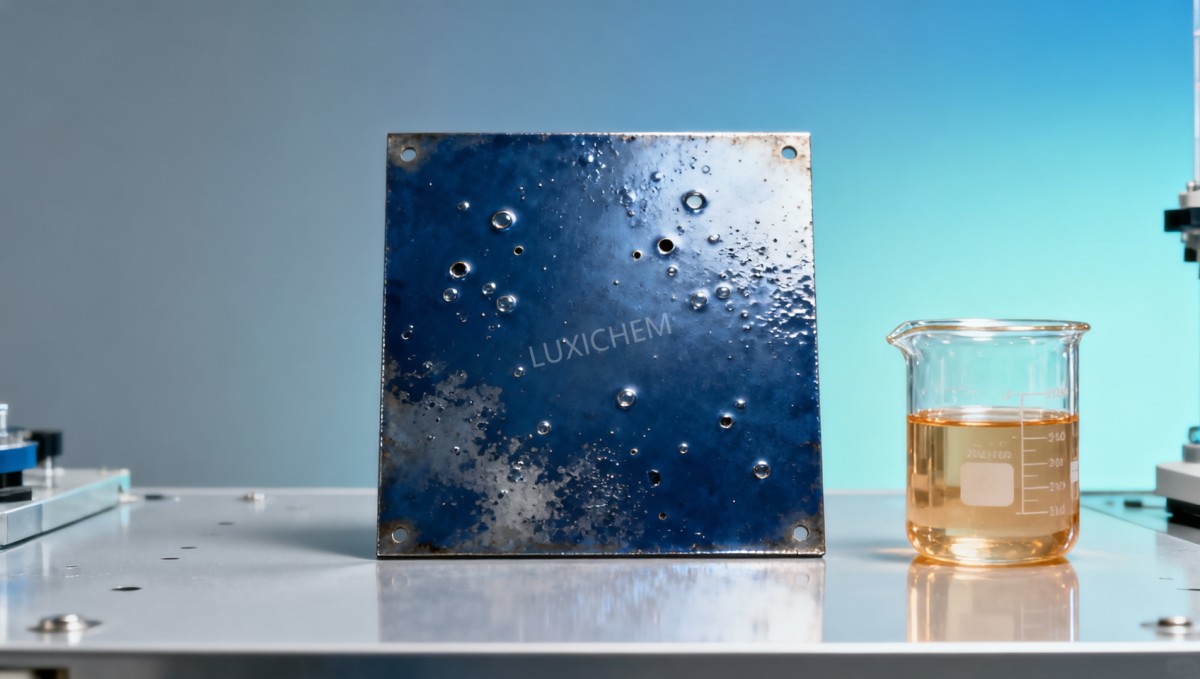
The polyester polyol is an obvious place to investigate, especially after storage, partial use, or transfer between containers. Polyester polyols may absorb water from humid headspace after a drum, pail, or tote has been opened. Repeated opening is more problematic than a single controlled withdrawal because each cycle replaces dry headspace with ambient air. A loosely fitted bung, damaged gasket, or vented storage connection can allow gradual moisture pickup without an obvious change in appearance.
Water can also enter before the polyol arrives at the mixing vessel. A transfer hose that was washed and not thoroughly dried, a pump with residual cleaning liquid, or a tank that was opened during wet weather can contaminate a full batch. Condensation deserves attention when a cold container is moved into a warm, humid area. Water can form on the outside, around fittings, and inside exposed openings; wiping the exterior does not prove the product and transfer path are dry.
Solvents are another frequent source. A solvent may meet its own purchase specification yet still bring more water into a high-solids polyurethane formulation than the process can tolerate. Hygroscopic solvents, reclaimed solvent streams, and containers left open during staging require particular scrutiny. Pigments, extenders, and matting agents can introduce water as adsorbed surface moisture. Their moisture condition may vary with warehouse humidity even when the same grade is used.
Compressed air is easily overlooked. Air used for tank blanketing, pneumatic transfer, spraying, or cleaning should be appropriately dry for the coating process. Oil-free air alone is not enough: untreated humid air can condense in hoses or enter an open vessel. A dry air system may still cause trouble when the desiccant is exhausted, a drain fails, or a long idle line has accumulated condensate.
Measure the material, not only the finished appearance
A water-content test on the polyester polyol is the direct way to establish whether the resin is within the formulation requirement. Karl Fischer titration is widely used because it measures water rather than inferring it from viscosity, appearance, or acid value. The sample must be representative. Settling, poorly mixed bulk storage, residual water near a bottom outlet, and sample bottles left uncapped can all create misleading results.
Test results need context. The acceptable moisture limit is set by the specific polyol, isocyanate type, target NCO/OH ratio, filler loading, film thickness, and cure schedule. A generic internal limit should not be applied blindly across flexible coatings, rigid coatings, clear coats, and pigmented systems. A result just below a material limit may still be unsuitable once the contributions from solvent, pigments, additives, and ambient exposure are added together.
Track water at decision points rather than only after a defect occurs: receipt of a new lot, after prolonged storage, before charging a sensitive batch, and after any deviation involving cleaning, transfer, packaging damage, or weather exposure. Where defects recur intermittently, retain samples of both the individual components and the mixed material. Comparing retained samples with the actual production lot is more informative than testing only a replacement container after the fact.
Viscosity is not a dependable moisture screen. Water pickup can be substantial enough to affect the isocyanate reaction while producing little initial viscosity change in the polyester polyol. Acid value, hydroxyl value, and color also answer different questions. They remain useful quality indicators, but none substitutes for a direct water determination.
Drying and recovery need a controlled decision
Heating a wet polyester polyol in an open vessel is rarely an adequate response. It can increase exposure to humid air, promote oxidation or color change, and remove volatile components unevenly. When drying is permitted by the material specification and process design, it is commonly performed under controlled heat and vacuum with agitation or circulation, followed by moisture verification. The objective is not simply to remove water quickly; it is to restore a uniform material without changing the resin beyond its allowed properties.
Drying should be evaluated against more than the final water result. Confirm that viscosity, hydroxyl value, acid value, appearance, and application performance remain acceptable for the intended formula. A resin that reaches a low water value but has undergone excessive thermal history may create a different processing problem. Once a component has reacted with isocyanate, post-mix drying is not a repair option. Carbon dioxide generation and viscosity rise may already be underway.
Do not attempt to correct uncertain moisture by arbitrarily increasing the isocyanate charge. Extra isocyanate can change crosslink density, cure speed, brittleness, and residual reactive content. The calculated adjustment also becomes unreliable when the actual water contribution from every component is unknown. A controlled formulation decision requires measured water values and a clear understanding of the intended stoichiometry.
Handling practices that stop repeat contamination
Keep polyester polyol containers tightly closed except during a planned transfer. Use dedicated, dry hoses and fittings, and cap them immediately after use. Where the process supports it, dry nitrogen blanketing reduces contact with humid air during storage and dispensing. Nitrogen does not remove water already present, so it should be treated as prevention rather than correction.
- Before transfer, verify that tanks, pumps, filters, and hoses are dry after cleaning or maintenance. A visual inspection is insufficient where internal low points can retain liquid.
- Stage cold materials long enough to avoid condensation at openings and fittings. Do not open a chilled drum immediately in a humid production area.
- Control the exposure of pigment and filler packages after opening. Materials with high surface area can carry enough adsorbed moisture to disrupt a sensitive two-component coating.
- Record lot numbers, opening dates, water-test results, storage conditions, and any rework action. A useful record ties a coating defect to the actual material path rather than to a broad assumption about the resin.
Mixing practice matters after dry materials have been selected. Excessive vortexing can entrain air and imitate gas-related defects. Low-shear incorporation followed by suitable deaeration is preferable where the formulation permits it. The mixed coating should be protected from humid air during hold time, because the water-control effort can be defeated between mixing and application.
Formulation details that change the visible outcome
High-solids and solvent-free polyurethane coatings are often less forgiving because their high viscosity restricts bubble escape. A clear coat also exposes fine pinholes that a pigmented coating may partially conceal. Matte systems add complexity: a gloss change caused by moisture can be masked by matting agents, while the same water reaction still creates weak points in the film.
Waterborne polyurethane dispersions are a separate category and should not be evaluated by the same logic as solventborne two-component polyurethane coatings. Water is intentionally present in many waterborne systems, and their curing chemistry is formulated accordingly. The moisture concern addressed here is the unintended water introduced into a polyester polyol and isocyanate reaction system that was designed to remain dry until cure.
Acidic materials should not be introduced casually as a response to a moisture or cure issue. For example, Trifluoromethanesulfonic acid CAS#1493-13-6 is a strongly acidic, hygroscopic material used in certain synthesis applications; it is not a drying aid for a polyurethane coating mix. Its presence could introduce incompatible chemistry and create a separate safety and formulation problem.
When a defect appears, isolate the stage at which water could have entered, test the retained components, inspect the transfer and air systems, and compare the defect timing with the cure profile. That sequence turns moisture from a vague explanation into a testable process variable. Stable polyurethane coatings depend on preserving both dry raw materials and a dry route from storage container to applied film.
Related Picks
 Butylated Hydroxytoluene Price Drivers: Supply, Purity, and Purchasing Risk FactorsOct 21, 2026Butylated Hydroxytoluene price trends depend on supply stability, purity, logistics, and purchasing risk. Learn how to compare quotes wisely and reduce sourcing costs.
 Sodium Tripolyphosphate Price Trends: Raw Material and Energy ExposureOct 20, 2026Explore sodium tripolyphosphate price trends, from phosphate and soda ash costs to energy exposure. Learn how to compare quotes, manage sourcing risks, and make smarter purchasing decisions.
 Acetonitrile Shipment to Vietnam Successfully Dispatched; RCEP Benefits Boost Fine Chemical Trade with ASEANSep 16, 2026A shipment of industrial-grade acetonitrile from our company has recently been loaded and dispatched following the completion of standardized hazardous material packaging and container securing procedures.
 Nigerian Client’s Order of 4 Containers of Vinyl Acetate Successfully Loaded and Shipped to West AfricaSep 16, 2026We recently completed the loading of a vinyl acetate order for a Nigerian client; four containers of the product have been successfully packed and are ready for shipment to Nigeria.




Question Consultation
Send Us Your Inquiry Today

Luxi Chemical is a professional chemical product supplier with ample stock of all chemical categories and excellent quality, welcome your purchase inquiry.

