


Selecting polyester polyol for polyurethane coatings in marine service
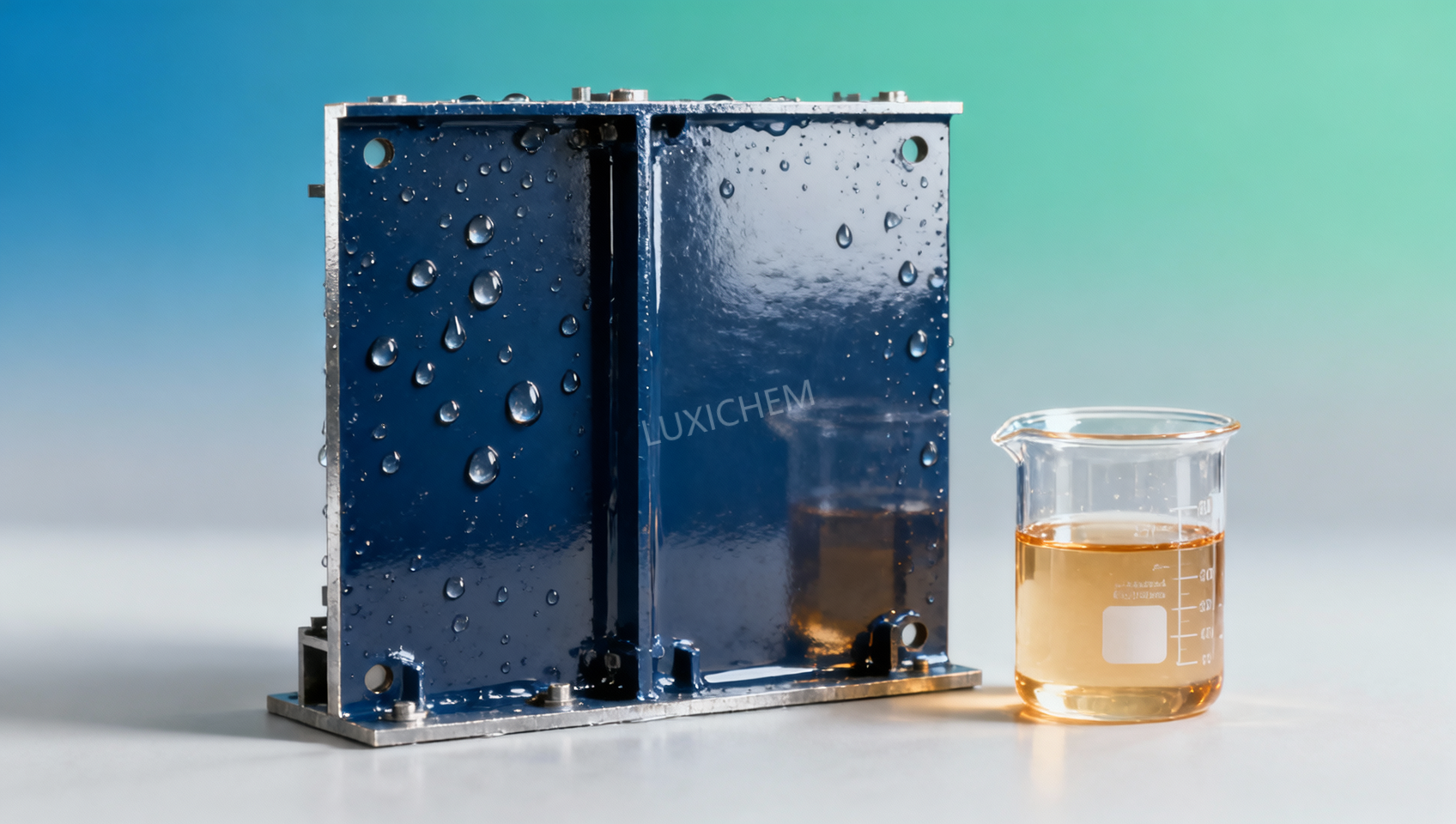
Marine coating decisions often become urgent when a steel structure, deck component, tank exterior, or offshore support system begins showing early gloss loss, blistering, edge corrosion, or difficult touch-up performance. In these conditions, the resin selection made before application can determine whether the coating system remains a protective barrier or becomes a recurring maintenance issue. Salt spray is only part of the exposure: wet/dry cycling, standing water, ultraviolet radiation, temperature changes, abrasion, and chemical cleaning can act together.
For marine service, selecting a polyester polyol for polyurethane coatings should begin with the required coating role, not with polyol type alone. A polyester polyol is usually appropriate where strong adhesion, hardness, chemical resistance, pigment wetting, and durable crosslinking are needed. However, the selected grade must be matched to the intended isocyanate, solvent package, film thickness, application method, substrate preparation standard, and exposure severity. A highly crosslinked film may resist chemicals well but become too brittle for a flexible deck assembly; a softer film may tolerate movement but lose abrasion resistance or retain water more easily.
Start with the marine exposure rather than the resin datasheet
“Marine environment” covers several very different service conditions. A coating on sheltered equipment inside a port building does not face the same stress as a topside structure exposed to salt-laden air, nor does it behave like an immersed component. Before comparing polyester polyols, define where the coated item will operate and what failure mode is least acceptable.
- Atmospheric coastal exposure: UV resistance, gloss retention, salt contamination tolerance, and corrosion protection are usually central concerns.
- Splash and tidal zones: Repeated wetting, drying, salt concentration, impact, and underfilm corrosion demand a robust barrier film and sound adhesion.
- Intermittent water contact: Hydrolysis resistance, water uptake, and resistance to cleaning agents become more important.
- Continuous immersion: The coating chemistry must be evaluated as part of a complete immersion-grade system; a general-purpose aliphatic polyurethane topcoat is not automatically suitable.
- Decks, walkways, and handling areas: Abrasion, slip-resistance additives, mechanical impact, and repairability may control the selection.
This first distinction prevents a frequent specification error: choosing a resin mainly because it produces a hard, attractive cured panel under laboratory conditions. A marine coating must maintain performance after water exposure, salt deposition, thermal movement, and routine maintenance. The cured film, primer interaction, and application quality matter as much as the initial appearance.
What the polyester polyol contributes to coating behavior
Polyester polyols react with isocyanates to form polyurethane networks. Their backbone chemistry, hydroxyl functionality, hydroxyl number, molecular weight, acid value, and branching influence how the coating processes and performs after cure. There is no single “marine-grade” polyester polyol that suits every polyurethane formula. The practical question is whether a particular material supports the intended balance of hardness, flexibility, water resistance, adhesion, and application latitude.
Hydroxyl number and crosslink density
The hydroxyl number helps formulators calculate the ratio between hydroxyl groups and isocyanate groups. In practical terms, it affects potential crosslink density and therefore the coating’s hardness, solvent resistance, cure response, and flexibility. A higher hydroxyl functionality or lower equivalent weight can support a tighter network when paired correctly with the curing agent. That can be useful where chemical resistance and hardness are priorities, but excessive crosslinking may reduce flexibility and make the film more prone to cracking around edges, weld seams, fasteners, or vibrating parts.
Project specifications should not simply request “high OH value.” They should identify expected film movement, target dry-film thickness, cure conditions, and the selected isocyanate system. A resin supplier or formulator can then assess whether the stoichiometric balance and final network are appropriate.
Acid value and storage stability
Residual acidity deserves attention in two-component polyurethane systems. An elevated acid value can affect compatibility, viscosity stability, pigment dispersion behavior, and interaction with moisture-sensitive isocyanates. It may also contribute to unwanted gas formation or shortened pot life when formulation control is poor. For field-applied marine coatings, where ambient humidity is often difficult to control, stable and well-characterized raw materials reduce avoidable application variability.
Ask for the acid value specification and batch consistency, not only a typical value. A project that requires repeated batches over a repair cycle benefits from controlled raw-material properties more than from a single favorable laboratory sample.
Backbone composition and hydrolytic resistance
Polyester chemistry contains ester linkages, which can be affected by prolonged moisture, heat, and chemical exposure. This does not mean polyester polyols should be avoided in marine coatings; they are widely used because they can provide excellent mechanical strength, adhesion, and chemical resistance. It does mean that the backbone must be selected with the actual water exposure in mind.
For frequent wetting or severe humidity, evaluate the polyol’s expected hydrolytic stability in the complete cured coating. Factors such as branching, hydrophobic character, crosslink density, pigment volume concentration, and the isocyanate used can all influence water uptake and degradation. A resin that performs well in a dry industrial coating may require a different formulation approach for splash-zone or high-humidity duty.
Match the polyol to the polyurethane system, not to a generic product description
A polyester polyol cannot be judged in isolation. The isocyanate type, catalyst package, solvent blend, pigments, fillers, additives, and primer determine the final coating response. During selection, confirm which chemistry the polyol was designed to support.
Aliphatic isocyanates are commonly considered where exterior color and gloss retention are important. Aromatic systems can offer strong mechanical and chemical properties but may not retain appearance in sunlight without appropriate protection. The project requirement should distinguish between the coating layer that provides corrosion protection and the layer expected to maintain visual appearance. A polyurethane topcoat may be selected for weatherability, while primers and intermediate coats carry much of the barrier and anticorrosive duty.
Do not confuse hardness with marine durability
One of the more expensive mistakes in coating selection is treating pencil hardness or early solvent resistance as proof of long-term service suitability. Marine structures move. Steel expands and contracts. Weld zones and edges experience stress concentration. Equipment may be struck, walked on, washed, or exposed to vibration. A very hard polyurethane film can still fail if it lacks sufficient elongation, impact tolerance, or adhesion to the underlying system.
When comparing polyester polyols, request evaluation of the cured coating in terms that reflect the service condition. Depending on the system, useful comparisons may include adhesion after water exposure, flexibility, impact resistance, abrasion resistance, humidity resistance, salt exposure behavior, chemical resistance, and accelerated weathering. These results should be interpreted carefully: test panels are useful for screening, but they do not replace correct substrate preparation or control of film build in the field.
Film thickness is especially important. Excessive dry-film thickness can trap solvent, slow through-cure, increase internal stress, and make edge cracking more likely. Insufficient thickness can reduce barrier protection and allow defects to become pathways for moisture. The selected polyester polyol should give workable viscosity and leveling at the required solids level so applicators are not forced into repeated uncontrolled dilution.
A practical specification path for engineering teams
Instead of sending a broad request for “polyester resin for marine PU paint,” prepare a short technical brief. It makes supplier comparison more meaningful and helps identify incompatible proposals early.
- Define the substrate and its preparation. State whether the surface is carbon steel, galvanized steel, aluminum, concrete, or another material. Include the intended cleaning and profile requirements because adhesion cannot be designed into the resin alone.
- Describe the exposure zone. Identify outdoor coastal atmosphere, splash exposure, intermittent water contact, interior humidity, or another condition. Mention UV exposure, cleaning chemicals, fuel contact, abrasion, and temperature cycling where relevant.
- Set the coating architecture. Clarify whether the polyester polyol will be used in a primer, intermediate coat, topcoat, direct-to-metal system, or repair coating. Each role shifts the priority between barrier protection, appearance, and mechanical properties.
- Provide application constraints. Include spray, brush, roller, plural-component equipment, or factory application; also identify expected temperature and humidity limits. Pot life and recoat time may be as important as final cure properties on a tight maintenance schedule.
- Request key raw-material controls. These normally include hydroxyl number, acid value, viscosity, moisture content, color, nonvolatile content where supplied in solution, and recommended storage conditions.
- Require formulation-level validation. Compare candidate polyols only after they are combined with the planned curing agent, pigments, solvents, and additives. A substitution based on one raw-material parameter can alter cure, gloss, adhesion, or water resistance.
Supply details that can affect project execution
Marine maintenance work is often scheduled around access windows, weather, vessel movements, shutdowns, or limited labor availability. For that reason, the purchasing decision should include more than resin performance. Confirm packaging, batch identification, shelf-life requirements, storage temperature, and moisture protection. Polyester polyols can vary in viscosity with temperature, and some materials may require conditioning before use. Containers that are repeatedly opened in humid environments need careful handling to reduce contamination and inconsistent formulation behavior.
Documentation should keep unrelated materials clearly separated from the coating raw-material list. For example, Vitamin B12 CAS#68-19-9 is identified for medical and nutritional applications and has hygroscopic storage considerations; it is not a polyurethane coating input. In mixed-product procurement or warehouse systems, clear item descriptions, CAS verification, and application classification help prevent an administrative substitution from becoming a manufacturing error.
Questions to resolve before approving a substitute polyol
A substitute may look acceptable because its hydroxyl number or viscosity appears close to the original material. That is not enough. Differences in monomer composition, functionality distribution, acidity, solvent compatibility, or molecular-weight profile can shift the finished coating’s behavior. Before approval, ask whether the replacement has been evaluated with the same isocyanate and whether any catalyst, solvent, or pigment adjustment is required.
Also determine whether the change affects pot life, dry-to-recoat time, cure at lower temperatures, gloss, sag resistance, and adhesion after moisture exposure. For factory coating, production-line conditions may control the decision. For field maintenance, tolerance to variable humidity and application technique may matter more. A technically sound substitution is a formulation decision, not merely a purchasing comparison.
Questions that often arise during selection
Can a higher-solids polyester polyol always reduce application cost?
Not necessarily. Higher solids can reduce solvent demand, but the coating still needs suitable sprayability, leveling, film formation, and curing behavior. If viscosity becomes difficult to control or the film traps solvent, the apparent material saving can be lost through rework or slower application.
Is a polyester polyol always better than a polyether polyol for marine coatings?
No. Polyester polyols are often selected for strength, adhesion, hardness, and chemical resistance, while polyether polyols may be favored in systems needing particular flexibility or hydrolysis-related performance. The correct choice depends on the exposure, coating layer, and full formulation.
Which supplier data should be reviewed first?
Begin with product identity, hydroxyl number, acid value, viscosity, moisture content, solids and solvent information where applicable, storage requirements, and compatibility guidance with the proposed isocyanate. Then review coating-level test evidence relevant to the intended marine exposure rather than relying on generic resin descriptions.
Related Picks
 Butylated Hydroxytoluene Price Drivers: Supply, Purity, and Purchasing Risk FactorsOct 21, 2026Butylated Hydroxytoluene price trends depend on supply stability, purity, logistics, and purchasing risk. Learn how to compare quotes wisely and reduce sourcing costs.
 Sodium Tripolyphosphate Price Trends: Raw Material and Energy ExposureOct 20, 2026Explore sodium tripolyphosphate price trends, from phosphate and soda ash costs to energy exposure. Learn how to compare quotes, manage sourcing risks, and make smarter purchasing decisions.
 Acetonitrile Shipment to Vietnam Successfully Dispatched; RCEP Benefits Boost Fine Chemical Trade with ASEANSep 16, 2026A shipment of industrial-grade acetonitrile from our company has recently been loaded and dispatched following the completion of standardized hazardous material packaging and container securing procedures.
 Nigerian Client’s Order of 4 Containers of Vinyl Acetate Successfully Loaded and Shipped to West AfricaSep 16, 2026We recently completed the loading of a vinyl acetate order for a Nigerian client; four containers of the product have been successfully packed and are ready for shipment to Nigeria.




Question Consultation
Send Us Your Inquiry Today

Luxi Chemical is a professional chemical product supplier with ample stock of all chemical categories and excellent quality, welcome your purchase inquiry.

