


How polyester polyol for spray foam influences spray stability
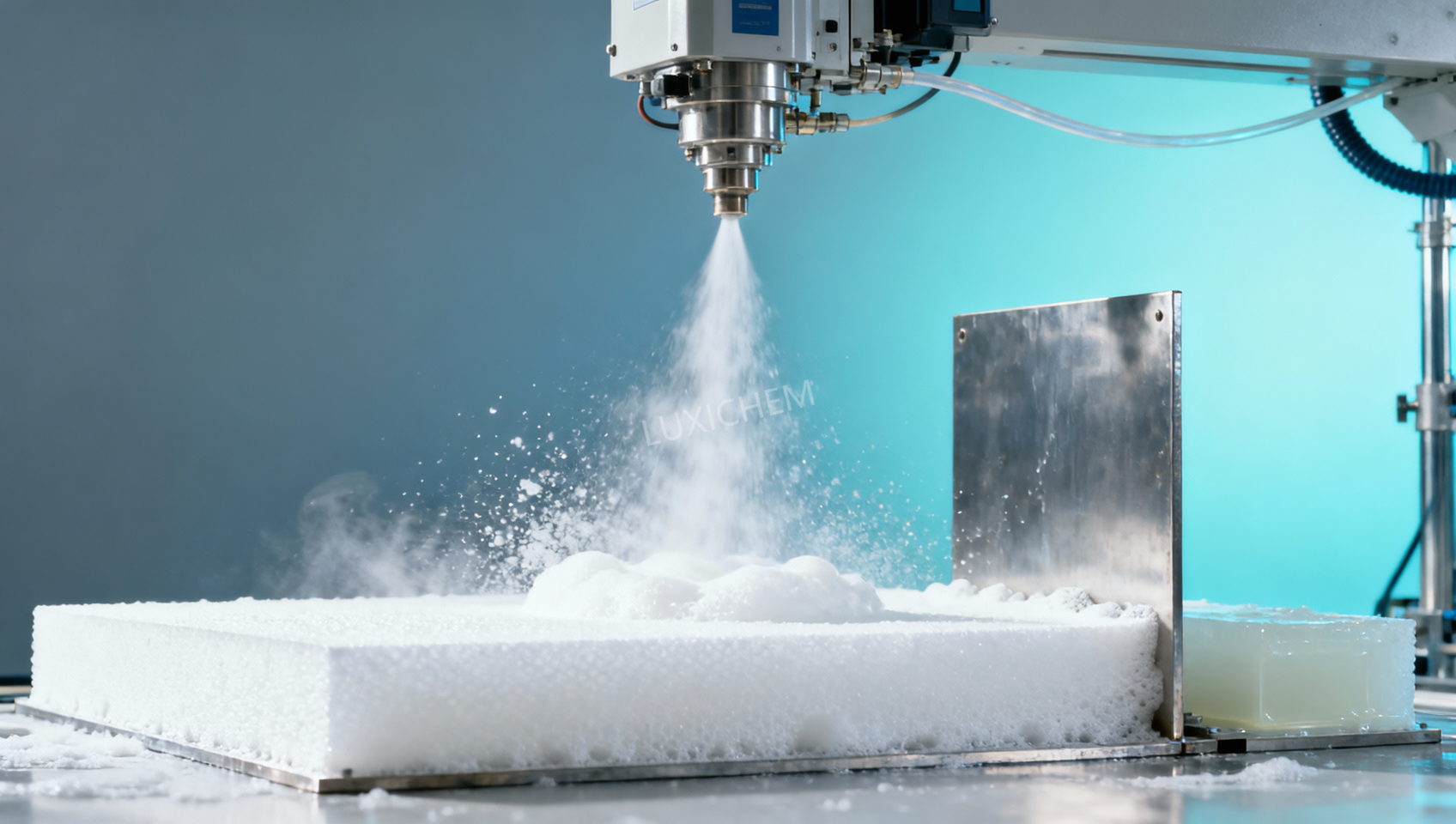
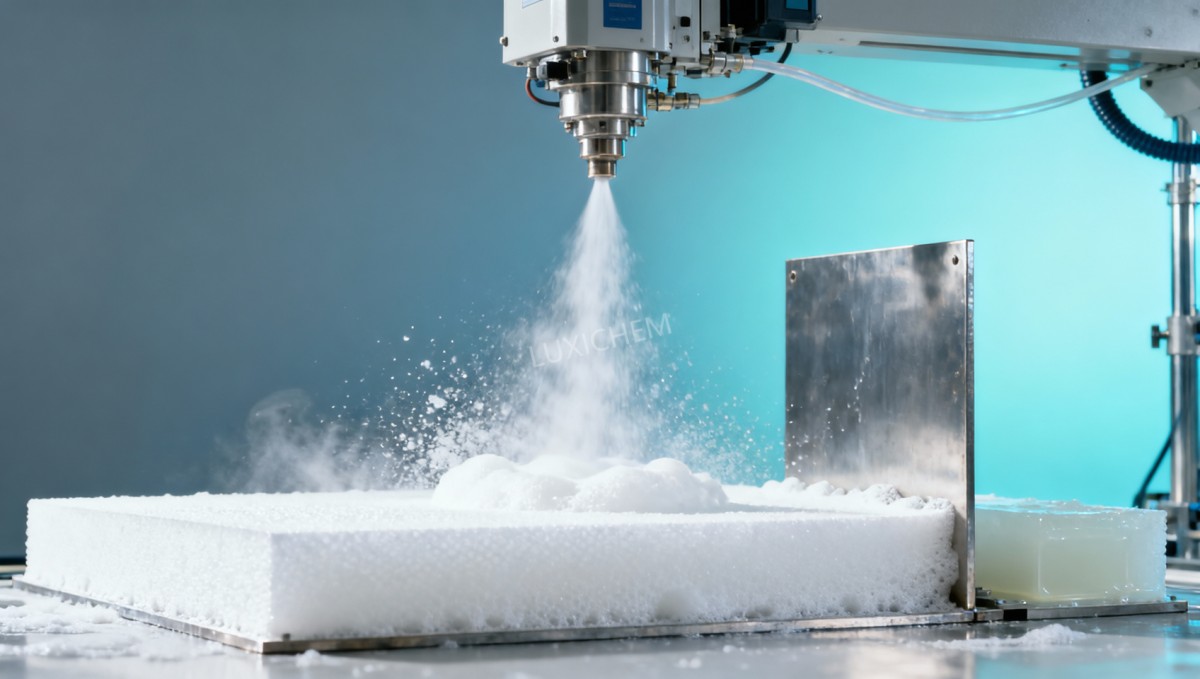
Spray stability begins with the behavior of the liquid blend before it becomes foam. A polyester polyol for spray foam influences how evenly the resin side mixes with isocyanate, how long the material remains workable after atomization, and how reliably the rising foam holds its shape on the substrate. When the polyol is poorly matched to the formulation or job conditions, the result may appear as sputtering, uneven expansion, coarse cells, sagging, poor overlap between passes, or inconsistent density across the sprayed area.
The visible spray pattern is only part of the issue. Stable application requires a workable balance between viscosity, chemical reactivity, compatibility with additives, and the developing strength of the polymer network. A foam system can leave the gun with an acceptable fan pattern yet still lose stability after impact if the reaction profile is too slow, too fast, or uneven through the thickness of the pass.
Why polyester polyol chemistry affects the spray window
Polyester polyols contribute hydroxyl groups that react with isocyanate to form the polyurethane network. Their molecular structure, hydroxyl value, functionality, molecular weight distribution, and aromatic or aliphatic content influence both the rate and the character of this network formation. In spray foam, this chemistry has to work within seconds. The material needs enough flow to wet the surface and merge with the previous pass, then it needs enough early strength to resist collapse, drainage, or slide on vertical and overhead areas.
A polyester polyol with relatively high functionality often supports a more highly crosslinked foam structure. This can improve dimensional retention and support rigid foam performance, but the formulation must be balanced carefully. Excessively rapid network formation can shorten the time available for atomized droplets to coalesce into a continuous layer. The surface may look rough or granular, and poor knitting between adjacent spray passes can occur. Conversely, a system that develops strength too slowly can remain soft while blowing gases expand the cells, leaving the foam vulnerable to shrinkage, sagging, or internal voids.
Hydroxyl value should not be read as a stand-alone indicator of sprayability. It signals the concentration of reactive hydroxyl groups, but its practical effect depends on the isocyanate index, catalyst package, blowing agent system, surfactant selection, and temperature. Two polyester polyols with similar hydroxyl values can produce very different spray behavior when their functionality, viscosity, acid value, or compatibility differ.
Viscosity changes more than pump load
Viscosity affects resin transfer, metering consistency, mixing quality, and atomization. If the resin side is too viscous at the actual drum or hose temperature, pump pressure may rise and proportioning can become less consistent. High-viscosity material also resists breakup at the spray gun, producing larger droplets and a less uniform deposit. Those droplets have less opportunity to merge before reaction progresses, which can give a textured surface or local density variation.
Low viscosity is not automatically preferable. A resin blend that flows too freely can run on a cool vertical substrate before sufficient polymer strength develops. It may also make a formulation more sensitive to changes in spray distance, gun movement, and substrate temperature. The preferred viscosity range is therefore linked to the equipment, hose heating capability, spray orientation, target thickness per pass, and the formulation's cream and gel behavior.
Material temperature must be considered with viscosity. Polyester polyols often become substantially thicker when stored in a cold area, and a drum that appears adequately warmed at the outside can still contain a colder, more viscous center. Heating only enough to permit transfer is not the same as reaching a stable, uniform processing temperature. Inconsistent temperature through a container can lead to changing pressure and spray appearance over the course of a job.
Before charging a system, the resin side should be mixed according to the formulation requirements and allowed to reach a uniform temperature. Agitation must be appropriate for the product: insufficient mixing can leave settled or separated components unevenly distributed, while aggressive mixing may entrain air. Entrained air is easily mistaken for a spray gun problem because it can create irregular output and unstable cells after application.
Reactivity must be matched to application conditions
Spray foam needs a controlled sequence: wetting, rise, gelation, and cure. Polyester polyol selection influences every stage, but catalysts and blowing components determine how that influence appears in the field. A formulation tuned for a warm substrate may react differently on a cold surface because heat is removed from the growing foam more quickly. The first pass can then show slow rise, reduced adhesion, or a skin that appears cured while the interior remains weak.
Fast reactivity is often used to improve vertical hold and build thickness, yet an overly fast system can cause several separate defects. Material may set before it spreads evenly, creating poor surface continuity. Gas can become trapped in a rigidifying matrix, which promotes coarse or irregular cells. At higher ambient temperatures, the same formulation may develop excessive exotherm in thick lifts. A surface defect caused by over-fast reaction should not be corrected simply by increasing pressure; pressure may change atomization while leaving the chemical imbalance unchanged.
Slow reactivity has its own pattern. The foam may look smooth immediately after spraying but later pull back, slump, or show open cells because the polymer skeleton did not gain strength at the same rate as expansion. Slow rise can also increase sensitivity to substrate contamination because the wet layer remains mobile for longer. A stable system is not the one with the fastest tack-free time; it is the one whose flow and strength development remain coordinated under the expected temperature and application thickness.
Cell structure is a practical indicator of blend balance
Cell structure links the liquid-stage behavior to final insulation and mechanical performance. Polyester polyols affect cell opening tendencies, rigidity, and compatibility with silicone surfactants. A suitable surfactant stabilizes the expanding cells until the polymer network can support them. If the polyol and surfactant are poorly compatible, the cells can coalesce prematurely or the foam can show uneven pore size across a pass.
Coarse cells, friable edges, and local collapse do not always identify the same cause. Coarse cells can result from poor mixing, inadequate surfactant stabilization, excess moisture, overly rapid gas generation, or incorrect temperature. Friability can be linked to an off-ratio condition, excessive crosslink density, poor cure, or a formulation whose reaction profile is unsuitable for the lift thickness. Looking only at the finished surface invites misdiagnosis. The pressure trace, component temperatures, proportioning ratio, and fresh foam rise should be reviewed together.
Moisture control deserves particular attention with polyester polyol systems. Water reacts with isocyanate and contributes carbon dioxide generation. Small, unintended moisture changes can alter rise behavior and cell pressure, even when the main formulation ratios have not changed. Moisture may enter through improperly sealed containers, humid air exposure during storage, wet transfer lines, or contaminated additives. A sudden increase in foam expansion accompanied by irregular cells is often treated as a catalyst issue, although water contamination should also be investigated.
Adhesion and spray stability are connected
Stable foam has to wet the substrate before it gels. Polyester polyols can support adhesion through their polarity and chemical structure, but adhesion remains dependent on the whole system and surface condition. Dust, oil, loose coatings, frost, surface moisture, and very low substrate temperature can all interrupt bond formation. A formulation with a short gel time may be especially sensitive on uneven or porous surfaces because it has little time to penetrate and conform before it becomes immobile.
When foam detaches in sheets, distinguish between failure at the substrate interface and weakness inside the foam. Interface failure points toward contamination, insufficient wetting, unsuitable substrate temperature, or an adhesion mismatch. Internal tearing can indicate that the foam bonded well but its cohesive strength was inadequate at the time it was stressed. These observations matter because increasing resin temperature or changing spray speed may improve one condition while worsening another.
Pass thickness also changes the interpretation. A thin flash coat may adhere well and establish a stable base on a difficult surface, while a heavy first pass can trap heat, rise unevenly, and stress the interface. On overhead work, a heavy pass places a larger gravitational load on material that has not yet developed full strength. The appropriate pass thickness is therefore tied to reaction speed and substrate heat loss, not simply to the desired total thickness.
Material consistency between deliveries
Spray settings established with one lot should be confirmed when a new material lot is introduced. Polyester polyols are specified using several properties, but handling behavior may still change when the resin-side blend, storage history, or additive package changes. Receiving controls should retain the lot identification, container condition, storage temperature, and any observed separation. This record makes it easier to separate a raw-material shift from a mechanical problem when application behavior changes.
Acid value is one specification that deserves context. Residual acidity can affect catalyst behavior and reaction balance, and it may indicate differences in the polyester polyol's composition or condition. The significance depends on the formulation rather than on a single universal limit. A change in acid value alongside altered cream time or cure behavior is more informative than either observation in isolation.
Compatibility matters whenever additives are introduced into the resin side. Flame-retardant packages, pigments, catalysts, surfactants, and blowing components can alter viscosity or separate over time. A component that appears clear after blending may still lose uniformity during storage. Trial blending should include observation after a realistic holding period and at the anticipated processing temperature, not only immediately after mixing.
Separate material identification also prevents a basic but disruptive source of contamination. Warehousing chemicals with different uses, such as Pyridoxine hydrochloride CAS#58-56-0, should remain clearly segregated from foam-formulation components so that labeling, transfer tools, and storage controls do not create avoidable mix-ups.
Reading common field symptoms
Adjustments should follow a controlled order
When stability changes, avoid making several adjustments at once. First confirm component identity, temperature, pressure balance, and ratio. Then inspect the gun, filters, transfer path, and resin-side mixing condition. Only after those checks should formulation-related changes be considered. Changing catalyst level, temperature, and spray technique simultaneously can hide the original cause and create a new defect pattern.
A short trial on the actual substrate is more useful than judging material from free-rise foam alone. Observe the fan pattern, immediate wetting, rise uniformity, vertical hold, surface texture, and condition after the foam has developed initial strength. Repeat at the intended pass thickness. A free-rise sample can reveal gross reaction problems, but it does not reproduce cooling from the substrate, gravitational effects, or overlap between adjacent passes.
Polyester polyol for spray foam should therefore be selected as part of a processing system. Its viscosity must suit the equipment temperature range, its reactivity must fit the application orientation and lift thickness, and its compatibility must support controlled cells rather than merely fast expansion. When these relationships are verified together, spray stability becomes easier to maintain and application defects become easier to diagnose.
Related Picks
 Butylated Hydroxytoluene Price Drivers: Supply, Purity, and Purchasing Risk FactorsOct 21, 2026Butylated Hydroxytoluene price trends depend on supply stability, purity, logistics, and purchasing risk. Learn how to compare quotes wisely and reduce sourcing costs.
 Sodium Tripolyphosphate Price Trends: Raw Material and Energy ExposureOct 20, 2026Explore sodium tripolyphosphate price trends, from phosphate and soda ash costs to energy exposure. Learn how to compare quotes, manage sourcing risks, and make smarter purchasing decisions.
 Acetonitrile Shipment to Vietnam Successfully Dispatched; RCEP Benefits Boost Fine Chemical Trade with ASEANSep 16, 2026A shipment of industrial-grade acetonitrile from our company has recently been loaded and dispatched following the completion of standardized hazardous material packaging and container securing procedures.
 Nigerian Client’s Order of 4 Containers of Vinyl Acetate Successfully Loaded and Shipped to West AfricaSep 16, 2026We recently completed the loading of a vinyl acetate order for a Nigerian client; four containers of the product have been successfully packed and are ready for shipment to Nigeria.




Question Consultation
Send Us Your Inquiry Today

Luxi Chemical is a professional chemical product supplier with ample stock of all chemical categories and excellent quality, welcome your purchase inquiry.

