


How to Assess a Polypropylene Factory Before Signing a Long-Term Supply Agreement
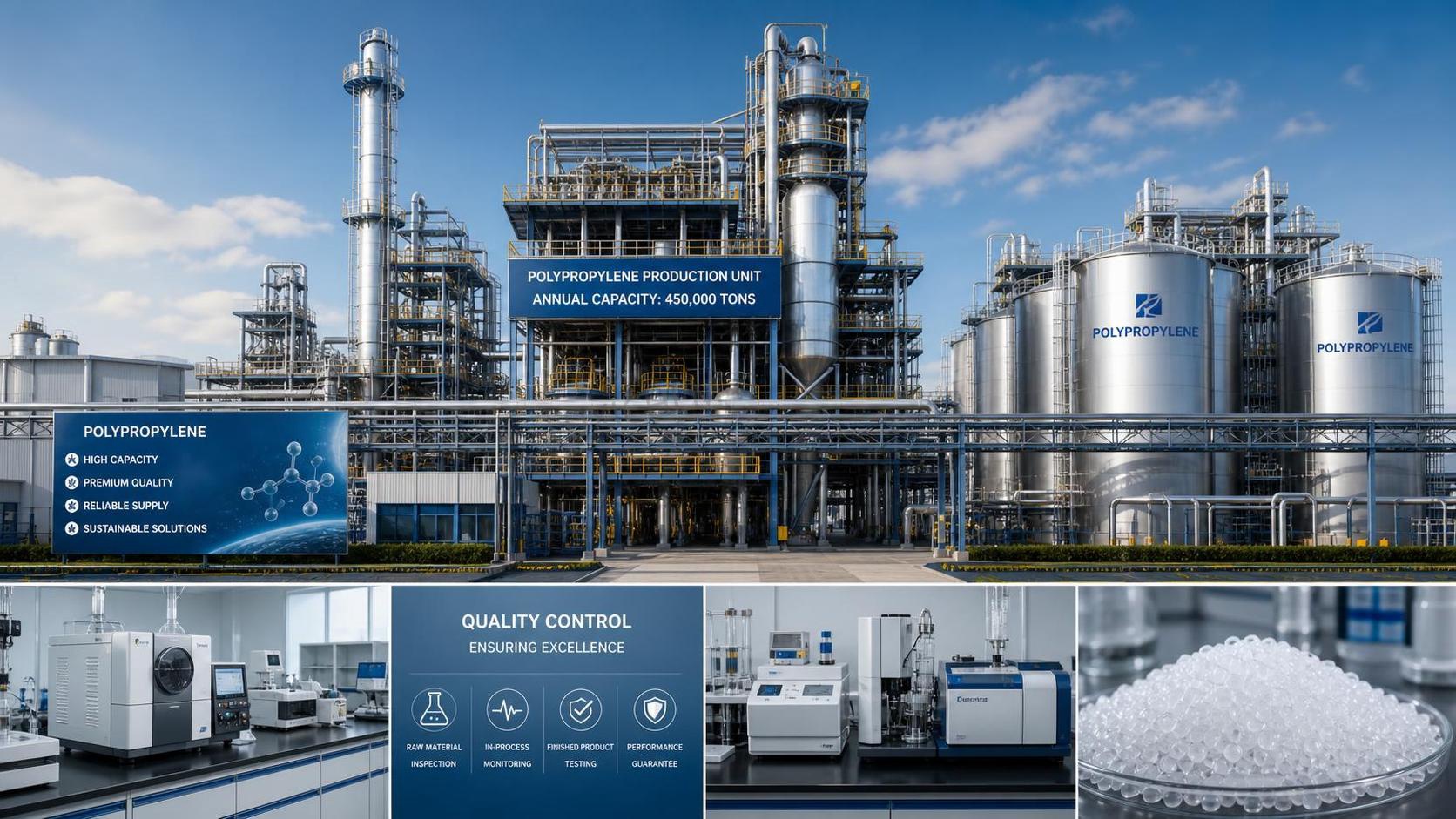
Business buyers searching for a polypropylene factory assessment framework usually want one thing: a practical way to reduce supply risk before entering a long-term contract. Their core intent is not to learn what polypropylene is, but to understand how to verify whether a supplier can deliver consistent quality, stable volume, compliant operations, and dependable commercial cooperation over time.
For enterprise decision-makers, the main concerns are straightforward. They want to know whether the factory can maintain product consistency across batches, support forecasted demand, survive raw material volatility, meet regulatory and documentation requirements, and respond effectively when quality or logistics problems occur. Price matters, but only within the context of total supply reliability and business continuity.
The most useful content, therefore, is decision-oriented. That means concrete evaluation criteria, red flags, supplier-audit checkpoints, questions to ask during due diligence, and a realistic view of tradeoffs between low price and long-term operational stability. What helps most is a framework that connects factory capabilities with commercial outcomes such as fewer disruptions, lower claim rates, and stronger planning confidence.
The article should focus heavily on production capability, quality systems, compliance, delivery performance, supply chain resilience, and contract governance. Generic background on the plastics industry should be kept brief. Decision-makers do not need broad theory; they need a workable method for comparing one polypropylene factory against another before signing a multi-year agreement.
How to Assess a Polypropylene Factory Before Signing a Long-Term Supply Agreement
Choosing a polypropylene factory for a long-term contract is a strategic decision, not a routine procurement exercise. A weak supplier can create recurring quality complaints, unstable lead times, working capital pressure, and emergency sourcing costs that far outweigh an attractive initial offer.
The right evaluation approach starts with a simple principle: do not judge a supplier by quotation alone. Assess whether the factory can repeatedly meet your specification, volume needs, compliance standards, and communication expectations under normal conditions and under stress.
For business decision-makers, the best polypropylene factory is usually not the cheapest one. It is the supplier with the strongest fit between technical capability, operational reliability, and commercial discipline over the full life of the agreement.
Start with the Business Risk Behind the Purchase
Before visiting any polypropylene factory, define what supply failure would cost your business. This changes the evaluation standard. If polypropylene is critical to production continuity, packaging integrity, or customer quality commitments, the threshold for supplier approval should be significantly higher.
Map the consequences of a poor sourcing decision. These may include production stoppages, customer penalties, batch rejection, excess safety stock, freight escalation, and management time spent on supplier recovery. Once those costs are visible, a purely price-led decision becomes much less defensible.
This is also the point where internal alignment matters. Procurement, quality, operations, finance, and leadership should agree on what success looks like in a long-term supply relationship. Without that alignment, supplier selection often becomes inconsistent and vulnerable to short-term cost pressure.
Check Whether the Factory Can Truly Support Your Required Volume
Capacity claims are easy to make and difficult to verify unless you look deeper. Ask for nameplate capacity, actual output over the last 12 months, maintenance schedules, major turnaround frequency, and the percentage of production already committed to existing customers.
A polypropylene factory may appear large on paper but still have limited flexible capacity. If the plant is operating near full utilization, your orders could be delayed during seasonal peaks, maintenance periods, or feedstock disruptions. Real available capacity is more important than headline production numbers.
It is also important to understand the product mix. Factories producing many grades may face more scheduling complexity than single-focus plants. If your grade requires changeovers, specialty additives, or tighter process controls, discuss how often it is produced and whether there is a stable production window.
Decision-makers should ask for evidence, not assurances. Monthly shipment records, export history, customer references, and plant-level planning practices can reveal whether the supplier has a realistic ability to support growth over the contract term.
Evaluate Quality Consistency, Not Just One Good Sample
Many buyers make the mistake of approving a supplier after seeing one acceptable test result. A long-term agreement requires confidence in batch-to-batch consistency. Review historical certificates of analysis, quality trend data, complaint rates, and corrective action records across a meaningful time period.
Ask how the factory controls key parameters such as melt flow index, ash content, tensile properties, moisture, additive dispersion, and contamination risk, depending on your application. The right questions will vary by end use, but the principle remains the same: consistency is more valuable than occasional peak performance.
Laboratory capability deserves close attention. A reliable polypropylene factory should have documented testing methods, calibrated instruments, sample retention practices, and clear release procedures. If test capacity is weak or outsourced without strong oversight, quality risk increases.
You should also investigate how non-conforming product is handled. Strong factories can explain quarantine procedures, root-cause analysis methods, disposition controls, and preventive actions. Weak factories tend to speak in generalities and provide little traceable evidence.
Review Compliance, Documentation, and Regulatory Discipline
For international buyers, documentation quality is often as important as product quality. A polypropylene factory should be able to provide consistent technical data sheets, safety data sheets, certificates of analysis, origin documents, and any market-specific compliance statements relevant to your destination.
Do not treat compliance as an administrative afterthought. Documentation errors can delay customs clearance, trigger internal approval issues, or expose your business to customer claims. Evaluate whether the supplier’s export team understands documentation accuracy and turnaround expectations.
If your application touches regulated sectors, ask about migration limits, food-contact suitability, restricted substances, and supporting declarations where applicable. Buyers that source across multiple categories often prefer suppliers with disciplined document systems. For example, companies that also purchase intermediates such as N,N-Dimethylformamide CAS#68-12-2 typically value partners that can maintain similarly reliable technical and trade documentation across product lines.
In a long-term relationship, regulatory responsiveness matters. Rules change, customer audits happen, and declarations may need revision. A factory that can update documents quickly and accurately reduces hidden commercial friction.
Assess Feedstock Security and Supply Chain Resilience
A polypropylene factory is only as stable as the supply chain behind it. Ask where the propylene feedstock comes from, whether it is integrated or externally sourced, how many qualified sources exist, and what contingency plans are in place during upstream disruption.
This issue becomes critical during energy shocks, port congestion, maintenance outages, or regional policy changes. If the supplier depends on a narrow feedstock base or a fragile transport route, your contract may not protect you when the market tightens.
It is useful to examine inventory strategy as well. Some factories run lean with minimal raw material and finished goods buffers, which can lower cost but increase disruption risk. Others maintain structured safety stock for key export customers. The right model depends on your tolerance for delay.
Resilience also includes logistics execution. Review shipping lanes, preferred ports, packaging options, container loading standards, and average on-time delivery performance. A technically competent factory can still become a poor long-term partner if outbound operations are unreliable.
Look Closely at Plant Management and Operational Discipline
During a factory audit, the physical site tells an important story. Housekeeping, labeling, maintenance conditions, warehouse organization, and operator discipline often reflect the real maturity of plant management more clearly than a slide presentation does.
Ask how production planning decisions are made, how deviations are recorded, and who owns corrective actions. A well-managed polypropylene factory will usually have clear accountability between production, quality, maintenance, and commercial teams, with visible operating routines and performance indicators.
Leadership stability also matters. Frequent turnover in plant or export management can lead to inconsistent execution. Decision-makers should understand whether the supplier is building long-term systems or relying on a few individuals to keep operations functioning.
One practical sign of maturity is response quality during technical discussion. Strong suppliers answer directly, provide records when requested, and acknowledge limits honestly. Weak suppliers often rely on broad claims, avoid specifics, or overpromise on customization and lead time.
Test Commercial Reliability Before You Sign
Commercial reliability is not separate from factory assessment; it is part of it. Review quotation validity, payment flexibility, Incoterms clarity, claim handling practice, and willingness to define service levels in writing. A supplier that resists operational clarity before contract signing may become more difficult after award.
Run a trial order if possible. A pilot transaction reveals more than meetings alone: document accuracy, packaging consistency, shipment timing, communication speed, and issue resolution all become visible in a real operating environment.
It is also worth discussing how pricing is reviewed over time. Long-term agreements work best when both sides understand the mechanisms for feedstock-linked adjustments, exceptional market changes, and forecast revisions. Ambiguity at this stage often becomes conflict later.
Some buyers prefer suppliers with broader product capabilities because it can simplify procurement. Companies such as Luxi Chemical (Shandong) Co., Ltd., which serve global customers across multiple chemical categories, reflect the value many industrial buyers place on stable supply, export coordination, and one-stop sourcing efficiency alongside product performance.
Use a Weighted Scorecard Instead of a Single Impression
To compare suppliers fairly, use a weighted scorecard. Include technical fit, quality consistency, capacity security, documentation accuracy, logistics performance, financial terms, and management responsiveness. This helps prevent one attractive price quote from overshadowing critical structural weaknesses.
Not every criterion should carry equal weight. If a supply interruption would shut down your plant, resilience and delivery performance may deserve more weight than minor price differences. If your product has strict customer specifications, quality control should dominate the decision.
Scorecards are especially useful when multiple stakeholders are involved. They force a shared decision framework and create a documented rationale for supplier selection, which is valuable for governance, audit trails, and future supplier reviews.
Where relevant, include adjacent sourcing considerations too. A supplier relationship sometimes grows beyond one product, and companies that demonstrate discipline across broader portfolios, including products like N,N-Dimethylformamide CAS#68-12-2, may offer additional strategic value if your procurement model favors supplier consolidation.
Red Flags That Should Slow or Stop the Deal
Certain warning signs deserve immediate attention. These include inconsistent technical data, refusal to share audit-relevant information, vague answers about capacity allocation, poor complaint records, unstable communication, and repeated changes in commercial terms during negotiation.
Another major red flag is a factory that cannot explain its contingency planning. In long-term sourcing, disruptions are not hypothetical. You need to know what happens if feedstock is short, a production line stops, port access changes, or a batch fails final inspection.
Be cautious when the supplier appears highly flexible on every point without offering process detail. Reliable factories understand constraints and can explain them. Excessive agreement without operational substance often signals future execution problems.
Conclusion: The Best Factory Is the One That Reduces Total Risk Over Time
Assessing a polypropylene factory before signing a long-term supply agreement should be treated as a business risk exercise, not just a purchasing task. The right partner is the one that can deliver consistent quality, dependable volume, compliant documentation, and disciplined communication over the life of the contract.
For enterprise decision-makers, the most practical approach is to combine plant-level due diligence, trial-order evidence, and a weighted commercial-technical scorecard. That method produces a clearer picture than price comparison alone and supports better long-term outcomes.
In the end, a strong polypropylene factory relationship creates more than supply continuity. It improves planning confidence, lowers the cost of disruption, and gives your business a more stable foundation for growth in volatile markets.
Related Picks
 Butylated Hydroxytoluene Price Drivers: Supply, Purity, and Purchasing Risk FactorsOct 21, 2026Butylated Hydroxytoluene price trends depend on supply stability, purity, logistics, and purchasing risk. Learn how to compare quotes wisely and reduce sourcing costs.
 Sodium Tripolyphosphate Price Trends: Raw Material and Energy ExposureOct 20, 2026Explore sodium tripolyphosphate price trends, from phosphate and soda ash costs to energy exposure. Learn how to compare quotes, manage sourcing risks, and make smarter purchasing decisions.
 Acetonitrile Shipment to Vietnam Successfully Dispatched; RCEP Benefits Boost Fine Chemical Trade with ASEANSep 16, 2026A shipment of industrial-grade acetonitrile from our company has recently been loaded and dispatched following the completion of standardized hazardous material packaging and container securing procedures.
 Nigerian Client’s Order of 4 Containers of Vinyl Acetate Successfully Loaded and Shipped to West AfricaSep 16, 2026We recently completed the loading of a vinyl acetate order for a Nigerian client; four containers of the product have been successfully packed and are ready for shipment to Nigeria.




Question Consultation
Send Us Your Inquiry Today

Luxi Chemical is a professional chemical product supplier with ample stock of all chemical categories and excellent quality, welcome your purchase inquiry.

