


What Is Powdered Citric Acid Used for in Food, Cleaning, and Industrial Formulas?
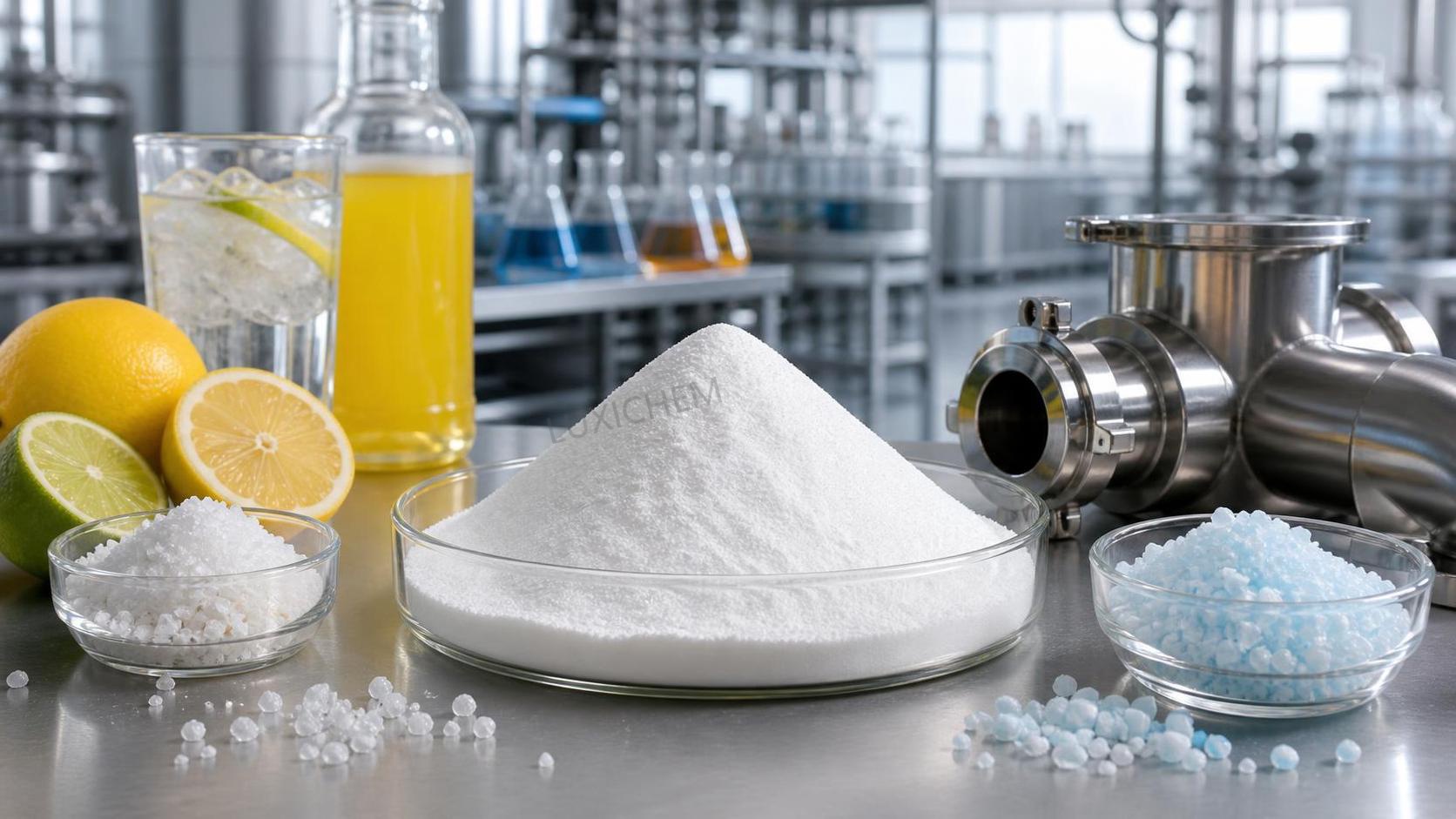
Powdered citric acid is one of those chemical ingredients that appears simple on paper but becomes surprisingly important once you look at how many formulations depend on it. In food, it helps control acidity, stabilize flavor, and extend shelf life. In cleaning products, it is valued for descaling and chelation. In industrial processing, it supports pH adjustment, metal ion control, and equipment maintenance. For researchers, buyers, and market watchers, the real question is not just what powdered citric acid is, but why it remains relevant across such different use cases.
The answer lies in its combination of practicality and formulation efficiency. Few acidulants or processing aids are as widely accepted, as easy to handle in dry form, and as adaptable across sectors. That does not mean it is interchangeable in every application, however. Its value depends on concentration, purity, compatibility with the final system, and the regulatory or performance expectations of the end market.
Why the powdered form matters
Citric acid is available in different forms, including anhydrous and monohydrate grades, and the powdered format is often preferred because it is easy to dose, store, transport, and blend into dry or liquid systems. For manufacturers, this matters operationally. A powdered ingredient can simplify warehousing, reduce packaging waste compared with dilute liquid acids, and support more flexible batch formulation.
In sectors where moisture control matters, the choice between grades also affects flowability, stability, and dissolution behavior. Buyers sometimes treat powdered citric acid as a commodity with little difference between suppliers. In practice, particle size distribution, caking tendency, impurity profile, and consistency between lots can all affect downstream processing. That is especially true in food premixes, detergent powders, and technical formulations where dispersion and reaction rate matter.
Its core functional roles across industries
Powdered citric acid is used because it does several jobs at once.
One role is acidification. It lowers pH efficiently, which can influence taste, microbial stability, and chemical reaction conditions. Another is chelation. Citric acid binds certain metal ions, helping reduce water hardness effects, improve cleaning performance, or limit undesirable interactions in processing. It is also used for buffering when paired with citrate salts, allowing formulators to maintain a target pH range rather than simply drive acidity downward.
That multi-functionality is what gives citric acid such broad commercial life. A formulator can use one ingredient to influence sensory profile, preservation, mineral control, and process behavior. In cost-sensitive industries, that matters more than technical descriptions alone suggest.
How powdered citric acid is used in food applications
Food remains one of the most visible application areas. In beverages, confectionery, jams, sauces, dairy-adjacent systems, and processed foods, powdered citric acid is commonly used to provide tartness and brighten flavor. Sour candies are the obvious example, but the larger commercial role is in balancing sweetness, improving taste perception, and supporting product consistency.
Acidity control also has preservation implications. By lowering pH, citric acid can help create conditions less favorable to microbial growth, though it is not a standalone preservative in every system. Its effect depends on the complete formulation, water activity, packaging, and process controls. This is an area where non-technical summaries often oversimplify. Citric acid contributes to shelf-life strategy, but it does not replace validated food safety design.
In processed fruits and vegetables, citric acid is also used to reduce enzymatic browning and maintain appearance. In emulsified or mixed products, it can help optimize the chemical environment for other ingredients. Beverage systems often rely on it because it offers a familiar acid profile and broad global acceptance, subject to local food additive regulations and labeling rules.
For food buyers, the key distinction is not simply “food grade” versus “industrial grade,” but whether the supplier can deliver the documentation needed for the intended market: specification sheet, certificate of analysis, traceability, relevant compliance declarations, and contaminant control information. Different countries and customer categories may require different levels of supporting documentation.
Cleaning formulations: where it earns its reputation
In household and institutional cleaning, powdered citric acid is best known as a descaling and chelating agent. It is frequently used in products designed to remove limescale, soap scum, and mineral residues from kettles, coffee machines, bathroom fittings, dishwashing systems, and other surfaces exposed to hard water.
This use is grounded in a simple formulation reality: mineral deposits are not just a cosmetic problem. They reduce heat transfer efficiency, affect equipment performance, shorten service life, and make detergents work harder. Citric acid helps dissolve these deposits and can improve the performance of companion cleaning ingredients by binding calcium and magnesium ions.
Its appeal has grown in markets where buyers prefer alternatives to harsher inorganic acids in selected cleaning applications. That said, “milder” should not be confused with universally safe for every substrate. Surface compatibility still matters. Contact time, concentration, water temperature, and the presence of other actives all influence whether a formulation will clean effectively without damaging metal finishes, stone surfaces, grout, or coatings.
One common mistake is assuming citric acid alone determines cleaning performance. In reality, the final result depends on the whole formulation system: surfactants, builders, solvents, anti-redeposition agents, fragrance, and packaging format. Effervescent tablets, descaling sachets, and powder cleaners all use citric acid differently.
Industrial formulas: less visible, often more strategic
Outside food and consumer cleaning, powdered citric acid has a quieter but important industrial role. It is used in water treatment-related cleaning processes, metal cleaning and passivation support in some contexts, electroplating-related formulations, textile processing, cosmetics and personal care systems, pharmaceutical processing support, and technical chemical blends where pH or metal ion control is required.
Its industrial value often comes from being predictable and easy to integrate. In closed systems and maintenance programs, citric acid can support descaling of pipelines, boilers, heat exchangers, and processing equipment, depending on the material of construction and operating conditions. In formulation work, it may be selected when a strong mineral acid would be too aggressive or when residue profile and handling characteristics matter.
It also appears in some polymer and specialty chemical processing environments where careful pH management is required. Industrial buyers dealing with broad raw material portfolios often compare such ingredients not only by price per kilogram but by effect on total process economics. A raw material that reduces maintenance downtime or lowers dosage of another additive can be more valuable than a cheaper but less functional alternative.
That broader sourcing logic is common across chemical procurement. A company evaluating acids, additives, and specialty materials may be comparing products with very different functions but similar purchasing requirements: stable quality, documentation, and reliable logistics. In that sense, chemical buyers often apply the same supplier-screening discipline to ingredients like powdered citric acid as they would to materials such as Polyvinyl Chloride Paste Resin CAS#9002-86-2, especially when one-stop procurement and export compliance are part of the supply strategy.
What determines whether it is the right choice
For an information researcher, the useful question is not whether powdered citric acid has many applications. It clearly does. The more practical question is what conditions make it the right ingredient.
The first factor is target function. If the job is flavor adjustment, descaling, metal ion sequestration, or pH reduction in a moderate range, citric acid often makes sense. If the application requires very strong acidity, extreme thermal stability, or a different sensory profile, another acid may be better suited.
The second factor is compatibility. Citric acid interacts with minerals, alkalis, preservatives, flavors, and active ingredients. In some systems it improves stability; in others it may accelerate unwanted reactions or alter appearance. That is why pilot-scale testing matters more than assumptions based on generic product descriptions.
The third factor is regulatory fit. Food, cosmetics, detergents, and industrial products all operate under different frameworks. Claims about “natural,” “safe,” or “eco-friendly” should be treated carefully and verified against the destination market’s rules. Regulatory status may be straightforward in one region and more documentation-heavy in another. Where exact claims or standards are needed, the relevant local rules should be checked directly or marked as 【待核实】 if not confirmed.
The fourth factor is economics. Powdered citric acid is usually not chosen because it is exotic. It is chosen because it solves multiple formulation problems at a workable cost. Freight, moisture sensitivity, packaging size, and supplier consistency all influence true landed cost.
Common misconceptions worth clearing up
One misconception is that citric acid is only a food ingredient. In reality, many of its high-volume practical uses sit outside direct food consumption, especially in cleaning and technical processing.
Another is that all citric acid grades perform the same. Grade selection affects compliance, impurity tolerance, and application risk. A food processor, a detergent blender, and an industrial maintenance contractor may each require a different specification approach even if the base chemistry is similar.
A third misconception is that being widely used means it is automatically simple to source. In commodity-linked chemicals, buyers often underestimate batch consistency and logistics reliability. Delays, caking during shipment, poor packaging integrity, and insufficient paperwork can create more commercial friction than the product chemistry itself.
There is also a tendency to overstate sustainability without context. Citric acid is often seen positively because of its broad usability and compatibility with many formulations, but sustainability claims depend on production route, energy use, packaging, transport distance, and end-use substitution effects. Serious evaluation requires supply chain data, not just market positioning.
What market observers should watch
From a market perspective, powdered citric acid remains relevant because it sits at the intersection of three durable trends: processed food demand, cleaning efficiency requirements, and ongoing industrial maintenance needs. It is not a niche additive dependent on a single downstream sector.
What can change is the balance of demand between regions and applications. Food and beverage consumption patterns affect volume. Hard water conditions and appliance maintenance culture influence cleaning product demand. Industrial output and infrastructure maintenance cycles shape technical consumption. Supply dynamics can also shift with fermentation feedstock economics, energy costs, environmental controls, and freight conditions.
For companies researching the space, the most useful approach is to view powdered citric acid as a mature but still strategically relevant ingredient. Mature does not mean low importance. It means the differentiation often happens in quality control, supply reliability, documentation, and application support rather than novelty alone.
That is especially true for international trade. Importers and distributors rarely win on chemistry basics only. They win by matching the right specification to the right application, reducing customer uncertainty, and integrating sourcing with other chemical categories where possible. A supplier capable of stable exports across additives, intermediates, and technical chemicals can create efficiency beyond the unit price of any single material, whether the purchase is powdered citric acid or another industrial input such as Polyvinyl Chloride Paste Resin CAS#9002-86-2.
The practical takeaway
Powdered citric acid is used in food, cleaning, and industrial formulas because it solves real formulation problems in a flexible and commercially efficient way. It can acidify, chelate, descale, buffer, and support preservation strategies depending on the context. That versatility explains its staying power.
For anyone researching the material, the important next step is to move beyond broad definitions and look at application fit: required grade, concentration, compatibility, documentation, and supply conditions. That is where the difference lies between knowing what citric acid is used for and understanding when it is genuinely the right solution.
Related Picks
 Butylated Hydroxytoluene Price Drivers: Supply, Purity, and Purchasing Risk FactorsOct 21, 2026Butylated Hydroxytoluene price trends depend on supply stability, purity, logistics, and purchasing risk. Learn how to compare quotes wisely and reduce sourcing costs.
 Sodium Tripolyphosphate Price Trends: Raw Material and Energy ExposureOct 20, 2026Explore sodium tripolyphosphate price trends, from phosphate and soda ash costs to energy exposure. Learn how to compare quotes, manage sourcing risks, and make smarter purchasing decisions.
 Acetonitrile Shipment to Vietnam Successfully Dispatched; RCEP Benefits Boost Fine Chemical Trade with ASEANSep 16, 2026A shipment of industrial-grade acetonitrile from our company has recently been loaded and dispatched following the completion of standardized hazardous material packaging and container securing procedures.
 Nigerian Client’s Order of 4 Containers of Vinyl Acetate Successfully Loaded and Shipped to West AfricaSep 16, 2026We recently completed the loading of a vinyl acetate order for a Nigerian client; four containers of the product have been successfully packed and are ready for shipment to Nigeria.




Question Consultation
Send Us Your Inquiry Today

Luxi Chemical is a professional chemical product supplier with ample stock of all chemical categories and excellent quality, welcome your purchase inquiry.

